

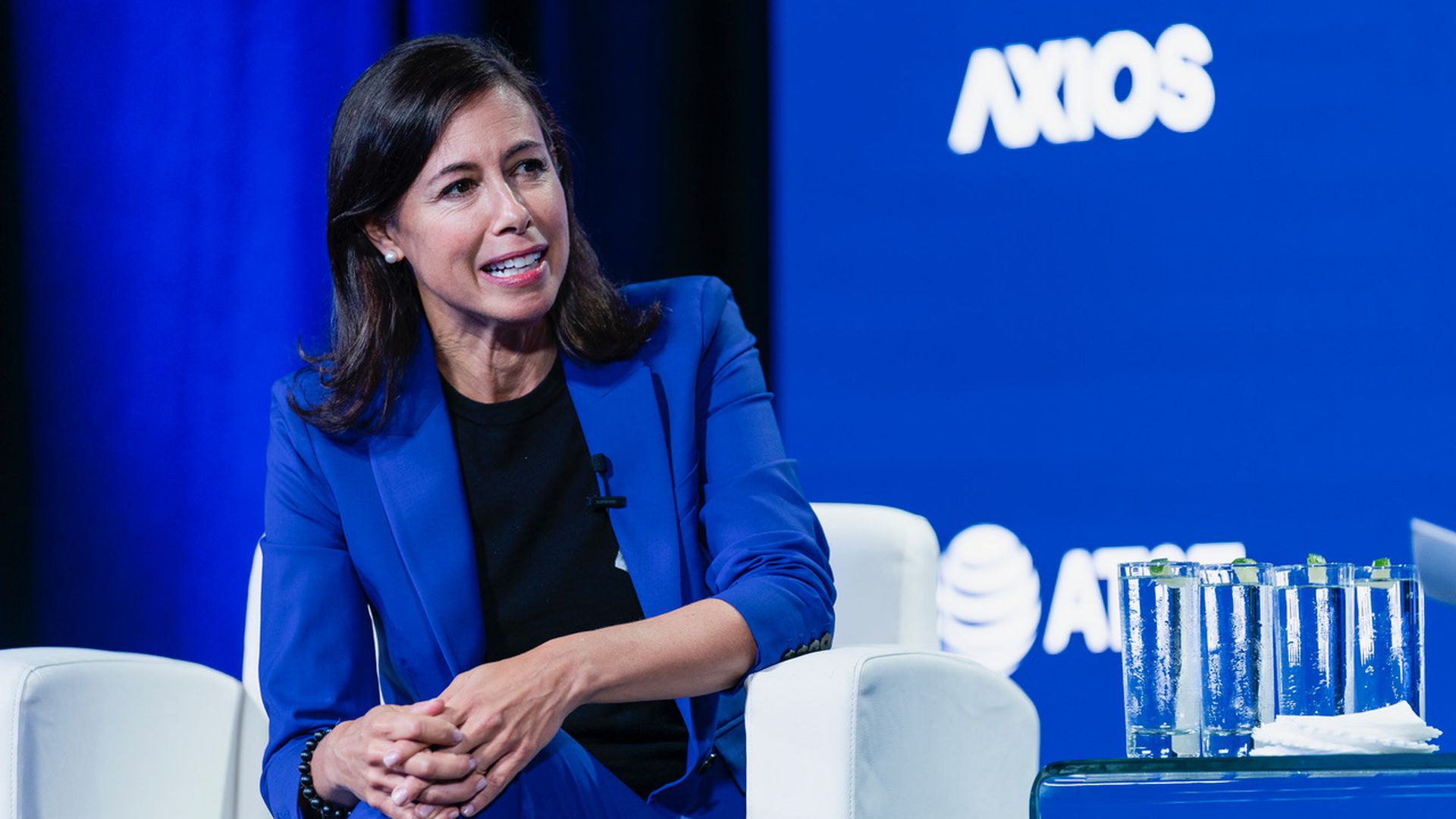
Rosenworcel speaks during an Axios event on Sept. 27. Photo: Eric Lee/Axios
FCC Chair Jessica Rosenworcel is reviving the historically contentious net neutrality debate now that the agency has a Democratic majority.
Why it matters: A lot has changed since net neutrality rules were last in place and later revoked. There's a greater appreciation for connectivity as an essential resource and the government has invested billions of dollars into getting all Americans online.
What they're saying: "I think the pandemic changed us as a nation. It was more than three years ago, but remember, we were all told to go home, hunker down and live life online," Rosenworcel said during an Axios event on Wednesday.
- "We decided as a nation that broadband is no longer a luxury good. It's a necessity for everyone everywhere."
- "And we committed to make sure it reaches everyone everywhere like never before. You see that in all the legislation that Congress passed, and especially in the bipartisan infrastructure law, which commits $65 billion to closing the digital divide."
- "So now that we've decided that this infrastructure is so essential for modern life, I think we should decide it remains open."
Driving the news: Rosenworcel on Tuesday announced plans to restore rules aimed at ensuring internet companies treat all traffic equally.
- The net neutrality rules would place providers under the same classification as phone companies, allowing the FCC to treat the internet as an essential service subject to greater regulation.
- Anna Gomez's confirmation earlier this month gave Democrats the majority on the FCC they needed to move forward.
Of note: "I think we should make it a national policy to make sure it's open and not just leave this issue to the states, which is where it resides right now," said Rosenworcel.
- Some states like California and Washington already have net neutrality rules, and the agency's move is an effort to replace what they call a patchwork of rules with one federal standard.
- "So the truth is across the country, we are living in a world with open internet policies in place, but they're coming from state capitals. And I think in a modern digital economy, we should have a uniform national law," she said.
- Whether federal regulations should preempt state ones will be a key issue to watch for in the rulemaking process.
Flashback: The Obama-era rules to reclassify broadband under what's known as Title II were fought by the telecom industry in court and eventually rolled back under former President Trump's FCC Chair Ajit Pai.
- "The FCC had rules: Blocking was not allowed, paid prioritization was not allowed, throttling was not allowed. And those rules were upheld by the courts," Rosenworcel said Wednesday.
- "So I'd like to see them put back in place because we've made it a national policy to make sure broadband reaches everyone everywhere."
The intrigue: Sen. Ben Ray Luján said during the same event that he's been supportive of reclassifying broadband under Title II, but he's open to any legislation that would get more people access to high-speed broadband and could pass both chambers of Congress.
- "If more people can get connected, if that's going to be the goal of what a legislative initiative would result in, it's something I'd be open to," he said. "I'm open to ideas and solutions that show me how we can get there without creating loopholes.
- On the FCC's policy priorities, Luján said he hopes for a focus on efforts to fight digital discrimination.
- "If we're all committed to connecting America with broadband connectivity, let's not make it harder. Let's look at these rules and find ways to ensure people that are not currently connected, or that I would say were discriminated from being connected … let's get them connected."
What's next: The commission on Oct. 19 will vote on whether to advance the draft rules.
- "The whole effort right now is to make sure that we kick off a rulemaking and take in a whole lot of comments. Ask how the world has changed since these rules were last in place. Across the board, I think we need to have a fresh record on that," Rosenworcel told Axios.
