TV reach vs revenue debate consumes sports industry

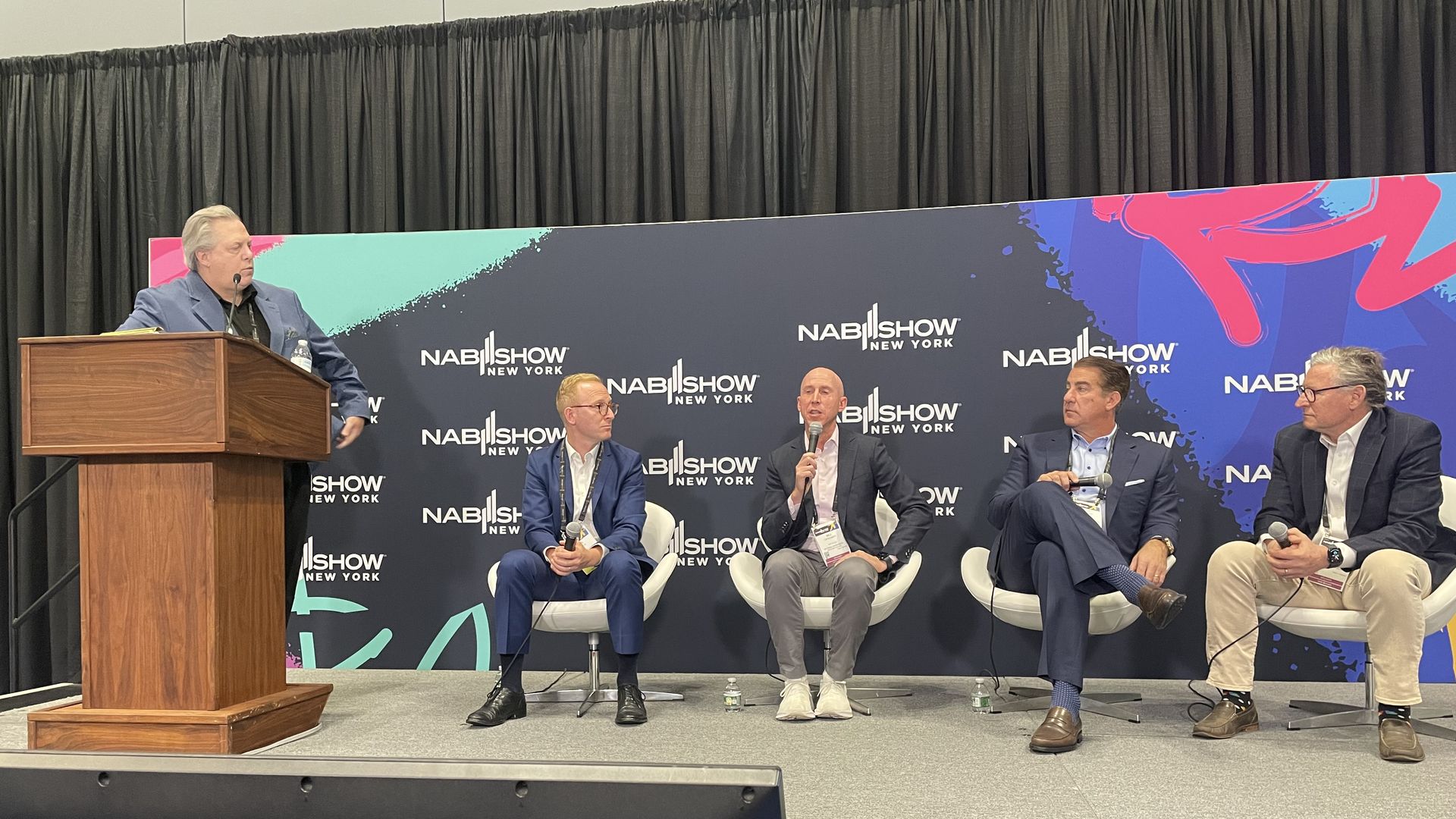
(L to R) Front Office Sports' Michael McCarthy, Octagon EVP Daniel Cohen, NWSL EVP Bill Ordower, Sports Media Advisors Doug Perlman and Gray Media co-CEO Pat LaPlatney. Photo: Tim Baysinger/Axios
The sports industry's media rights debate — take the most money, or reach the most people — doesn't have a clear answer, according to an expert panel.
Why it matters: Media revenues are what drive the sports business, but the fragmented landscape makes it harder than ever to reach a mass audience.
State of play: The topic dominated a sports media rights panel during the NAB Show New York on Wednesday afternoon.
- The decline of the regional sports network model forced teams to leave their local cable networks for less lucrative deals with broadcast stations.
- Pat LaPlatney, Gray Media president and co-CEO, argued that the broader reach outweighed the short-term decline in rights fees because it trickles down to more ticket and merchandise sales.
- Daniel Cohen, EVP of Octagon's media rights consulting division, worried about the short-term impact of lower rights fees. "I am concerned with how the revenue trickles down to the players," he said.
Zoom in: The ongoing bankruptcy of Diamond Sports Group is driving many teams to seek new deals elsewhere.
- Additionally, teams are spending money to stand up their own streaming services for fans who don't have a TV subscription.
- "Every major league baseball team that has a Diamond Sports deal counts that local media rights deal somewhere between 32% and 56% of their total local revenues," Cohen said. "It's a lot of money going out the door."
Between the lines: Major League Soccer made a bold bet last year by going all in on a streaming deal with Apple TV+, putting all of its games behind a paywall.
- To Cohen, that deal is a cautionary tale: "It's not working out very well."
- Apple doesn't release subscriber numbers, but MLS Season Pass reportedly has around 2 million customers. Cohen says the data that Octagon's brand clients get from Apple points to a small audience.
- "We've got 13 clients that are brand sponsors of Major League Soccer, and they struggle with trying to find the right balance of media exposure," he said.
The other side: The Apple deal was a gambit for MLS, which had struggled with getting wide coverage in the past from traditional TV networks.
- "When you critique that deal, you honestly have to compare it to the other options that were available at the time," said Doug Perlman, founder and CEO of Sports Media Advisors.
The bottom line: For the past two decades, teams and leagues didn't have to choose between the two. But the decline of cable and the rise of multiple streaming platforms has forced them into an uncomfortable choice.
