July 23, 2024


1 big thing: Biosecure Act stokes Q2 lobbying
The China biotech crackdown and lawmakers' continued interest in site-neutral payment reforms helped drive health care interests to shell out millions on lobbying in the second quarter, Victoria reports from the latest federal disclosures.
Why it matters: Drugmakers, hospitals and their allies continue to push for their priorities — or to fight envisioned crackdowns — with an eye toward a possible lame duck health package.
By the numbers: There was an uptick in activity surrounding the Biosecure Act, which could freeze out select Chinese contract manufacturing firms from U.S. markets starting in 2032 and which is being eyed for inclusion in the annual defense authorization bill.
- WuXi AppTec, one of the targeted companies, more than doubled its spending from the first quarter of 2024, to $210,000. An affiliated company also named in the legislation, WuXi Biologics, spent $125,000 in Q2.
- Pharma interests that rely on the companies for testing, raw materials and other services also weighed in on the legislation. Among the big Q2 spenders listing the Biosecure Act as an issue were Amgen ($2.7 million), Biogen ($1.7 million), GlaxoSmithKline ($1.5 million) Takeda Pharmaceuticals ($1.1 million) and Vertex Pharmaceuticals ($980,000).
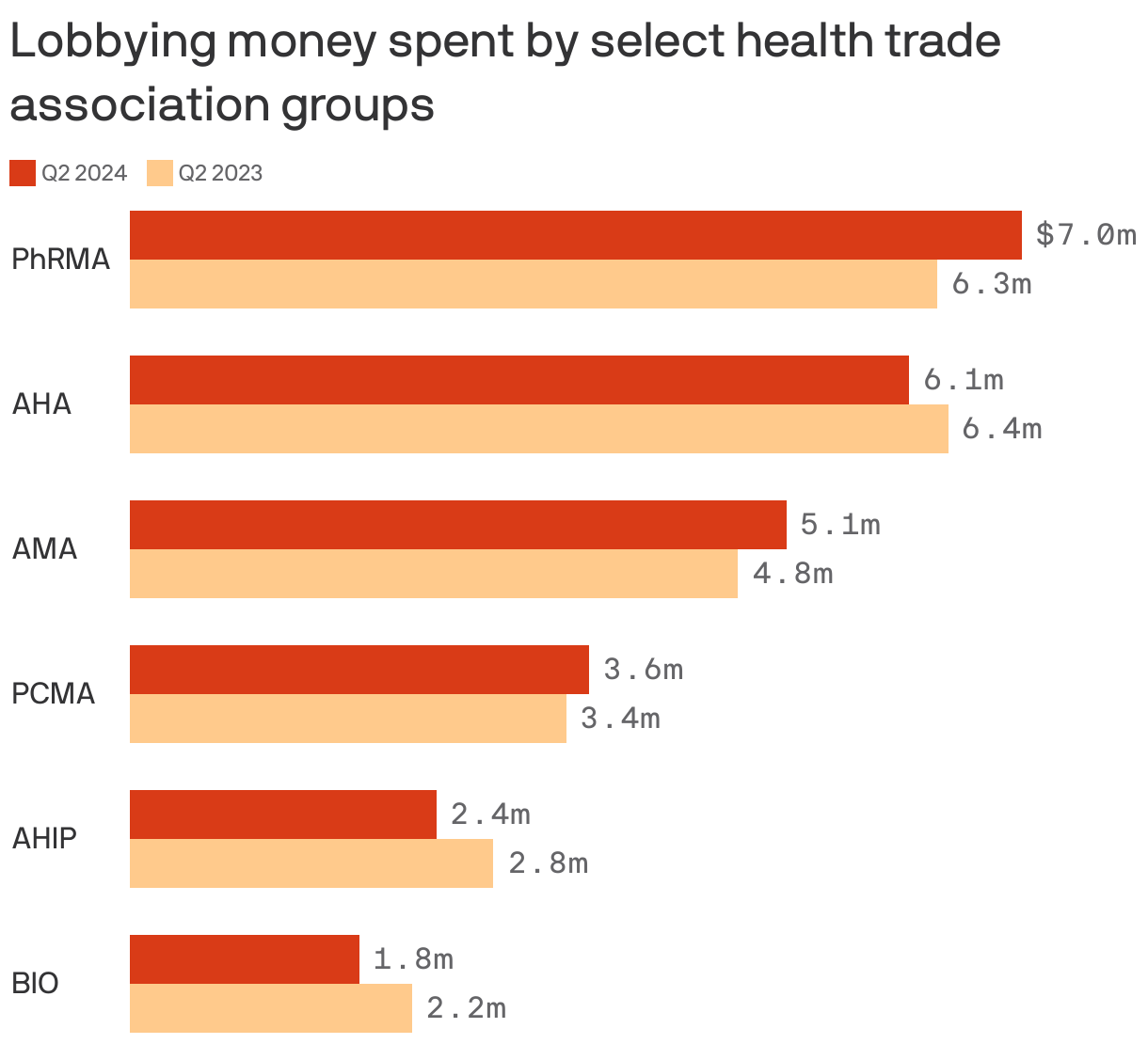
- The Biotechnology Innovation Organization (BIO), which originally lobbied against the Biosecure Act but then switched its stance, spent $1.8 million in Q2, about the same as in the first quarter of this year.
The American Hospital Association had among the biggest increases in Q2 spending among health interests — likely a reflection of the industry's continued wariness of potential Medicare payment reforms that could change how facilities are compensated for outpatient care.
- AHA spent $9.1 million in Q2 2024, up from $6.4 million in Q2 2023.
- The House's transparency package that passed on the floor last year included some narrow site-neutral measures, but the Senate hasn't taken much action in the policy area.
PhRMA, which consistently tops quarterly spending lists, laid out almost $7 million in Q2, up from $6.3 million a year ago.
- The American Medical Association spent $5.1 million in the second quarter of 2024, compared with $4.8 million in Q2 2023.
- The Pharmaceutical Care Management Association spent $3.6 million in Q2, compared with $3.4 million in Q2 2023.
- AHIP's lobbying dropped off slightly, to $2.4 million from $2.8 million in Q2 2023.
Between the lines: Both drugmakers behind the blockbuster GLP-1 anti-obesity drugs Wegovy and Zepbound increased their spending from a year ago.
- The activity came while the House Ways and Means Committee approved a narrow version of the Treat and Reduce Obesity Act that would reverse a long-standing prohibition on Medicare covering the treatments for weight loss.
- Novo Nordisk spent $1.1 million in the second quarter of 2024, up from $846,000 in the same period in 2023. The company also spent $2.2 million in Q1 2024.
- Eli Lilly spent almost $2.5 million in Q2 2024, up from $1.6 million in Q2 2023. And in Q1 2024 the company spent $1.7 million.
2. PBM execs face bipartisan heat
3. Catch me up: Harris' agenda, BARDA and more
View archive