October 26, 2023

Good afternoon ... Mike Johnson is still speaker. So far, so good!
- We'll be back in your inboxes Monday, or sooner if someone decides to make news before then.
1 big thing: Speaker Johnson's staff to know

Illustration: Gabriella Turrisi/Axios
Now that the House finally has a speaker again, here's a rundown of Mike Johnson's circle of staffers and outsiders who may influence his health policy decisions, Victoria, Peter and Axios' Nick Sobczyk write.
The big picture: It's worth getting to know his senior aides, but he doesn't have a big personal staff, and a lot of them don't have much experience. So he's going to have to hire up, and fast.
What they're saying: Dan Ziegler, a principal at Williams & Jensen who worked with Johnson's staff on the Republican Study Committee, says Johnson has a strong interest in policy. "To work for Mike Johnson, you've got to really know your policy," he said.
- But it's important to note that former Speaker Kevin McCarthy's health staffer, Ryan Long, and Majority Leader Steve Scalise's health staffer, Alye Mlinar, have recently left the Hill.
- That means GOP leadership will have to hire health staffers, and with Johnson not having much of a background in health care, the staffers will likely wield a lot of influence over policy.
Hayden Haynes, Johnson's chief of staff
Haynes has been chief of staff for Johnson since he took office in 2017, per Legistorm. He was previously Johnson's campaign manager for his first congressional race in 2016. He's also from Johnson's district.
- Before that, he worked for a fellow Louisianan, former Sen. David Vitter, as a "regional representative."
- As the regional representative, Haynes was plugged in with local groups and governments, which is part of how he ended up as Johnson's chief, per a D.C. source who knows Johnson's staff from the Hill.
- "Hayden's a really effective political operator" who "knows Louisiana extremely well," Ziegler said.
- He is still relatively young, especially for a chief of staff to the now-speaker, having graduated from college (Louisiana Tech) in 2011.
- You can check out his Twitter feed here, though much of it is about Louisiana Tech sports and Saints football.
Garrett Fultz, Johnson's deputy chief of staff
Fultz has been handling policy in Johnson's office since 2017, rising to the deputy chief role this year, per LinkedIn.
- He's handled a huge slate of issues for the Louisiana Republican, including energy and appropriations.
- Before heading to law school at Tulane, he worked briefly as a petroleum landman for Hunter Energy.
- Landmen typically manage and negotiate leasing and exploration agreements, so it's a fitting role for a future on the Hill.
Drew Keyes, senior policy analyst at Paragon Health Institute
Keyes is not currently on the Hill, but he was a professional staff member when Johnson was chair of the Republican Study Committee and ran his Health Care Task Force portfolio.
- According to his Paragon bio, he wrote legislation and letters for RSC members, provided bill analysis and drafted policy papers and messaging memos.
- Keyes also stayed on at RSC as a staffer under Rep. Jim Banks, who also had a health care policy playbook as chair.
- He's worked at Paragon since July 2022, where he's recently focused on public health policy and the Pandemic All Hazards Preparedness Act.
- Before working at the RSC, Keyes also worked for as a legislative assistant for Reps. Tom McClintock and Louie Gohmert.
2. Wyden targets MA "ghost networks"
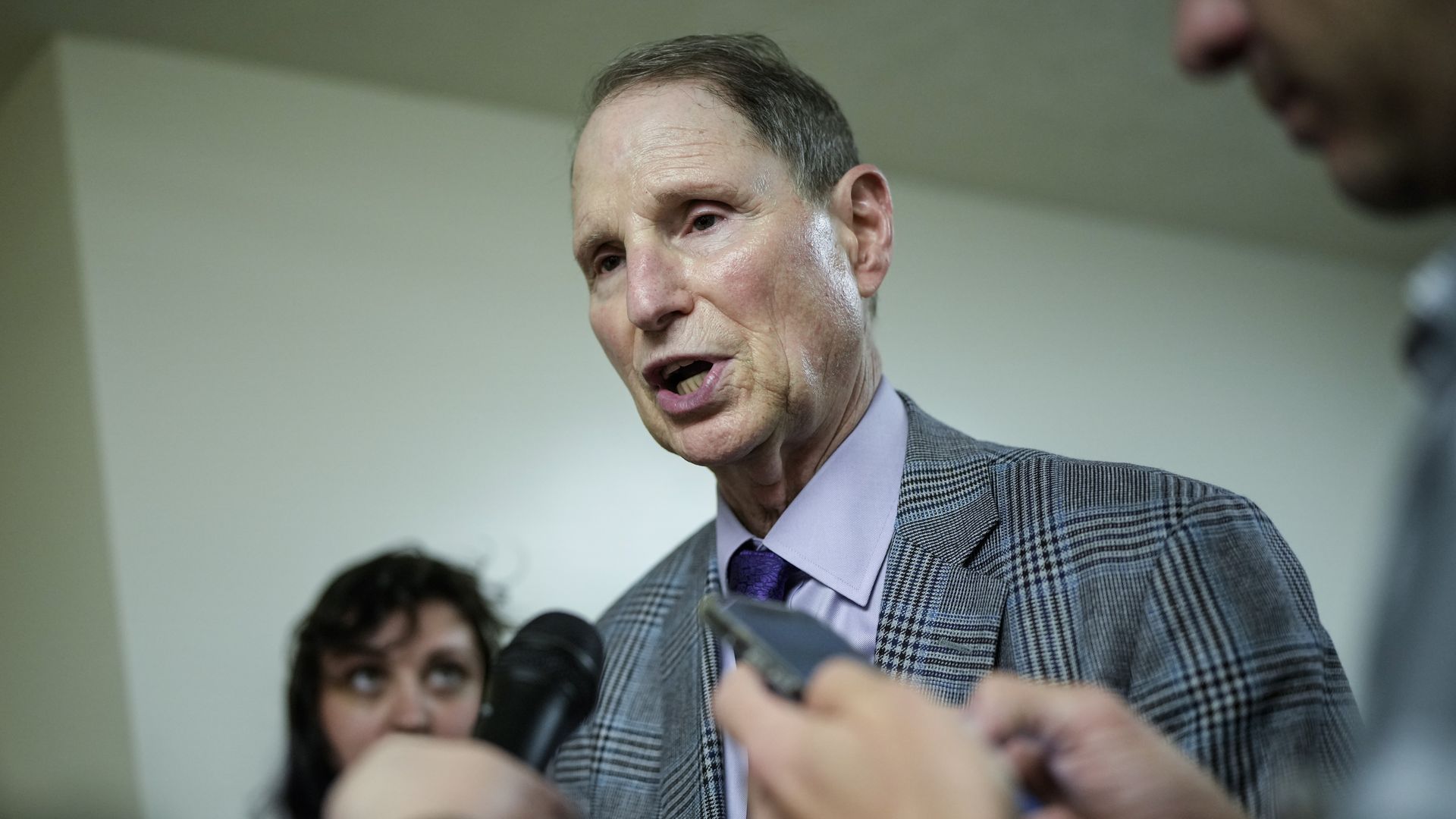
Wyden speaks with reporters Sept. 11. Photo: Drew Angerer/Getty Images
Senate Finance Chairman Ron Wyden is hoping to get a new bill cracking down on "ghost networks" in Medicare Advantage into an end-of-year package, he told Peter.
Why it matters: The effort is part of a push to improve access to care, especially for mental health, and make sure insurers' provider directories are up to date so that patients can actually find providers who are covered.
Driving the news: Wyden introduced the bill last week with Sen. Michael Bennet and, notably, a Republican, Sen. Thom Tillis.
- The bill strengthens requirements for MA plans to have up-to-date and accurate provider directories, and prevents patients from having to pay higher out-of-pocket costs if their insurer said a provider was in-network when it actually wasn't.
What they're saying: "I hope that we can make that part of the end-of-year package," Wyden said of the bill.
- Finance Ranking Member Mike Crapo is not currently a sponsor, but Wyden said "Sen. Crapo and I continue to have conversations," which he declined to detail.
Yes, but: Some Republicans, as well as health insurers, have raised concerns with the ghost network push before, as we reported regarding Wyden's bill with Sen. Tina Smith, which applies to employer-sponsored plans.
- It remains to be seen whether objections bubble up on this MA-focused push. America's Health Insurance Plans did not respond to a request for comment.
- Tillis has been active on mental health issues, helping launch a Senate mental health caucus this month.
- "Far too often, North Carolinians, especially seniors enrolled in Medicare Advantage and those in need of mental health services, find themselves unable to access the care they need due to inaccurate provider directories," he said in a statement.
The big picture: Aides and lobbyists say the Finance Committee could have a markup next month on mental health issues, including some provisions left over from the working groups the panel created last year.
- Asked about a markup, Wyden said: "We're working on some ideas and hope to be able to give you and the good people at Axios here some additional information, but I don't want to front-run Sen. Crapo, and we're working through that."
- He added that they are still working on "scoring issues" at CBO.
3. House Budget task force looks at CBO and IRA

Burgess leaves a meeting at the Capitol Hill Club in 2022. Photo: Bill Clark/CQ-Roll Call Inc. via Getty Images
The House Budget Committee's health care task force is ramping up its efforts to examine how health care spending is affecting the budget, Victoria writes.
Driving the news: Today, Rep. Michael Burgess hosted the first of the health care task force meetings, which was focused on discussing the Inflation Reduction Act's drug pricing provisions.
- Health task force members met with current Congressional Budget Office director Phillip Swagel, former CBO director Doug Holtz-Eakin, and other experts to discuss and understand how CBO determined how drug development would be affected by the IRA.
- CBO estimated last year that the IRA's drug pricing provisions would result in only one fewer drug being introduced in the U.S. market over 10 years.
- That's despite pharmaceutical companies arguing that the IRA significantly affects how many new drugs will be developed.
What they're saying: Burgess told reporters after the meeting that the goal wasn't necessarily to challenge what CBO has put out, but to understand the data and how they come to the conclusions that they do.
- "We didn't want to keep score with the CBO. We wanted to understand what goes in to their development [model]. Why would they make a statement that it's one drug a year that we're going to miss?" Burgess said.
✅ Thank you for reading Axios Pro Policy, and thanks to editor David Nather and copy editor Brad Bonhall.
- Do you know someone who needs this newsletter? Have them sign up here.
View archive