
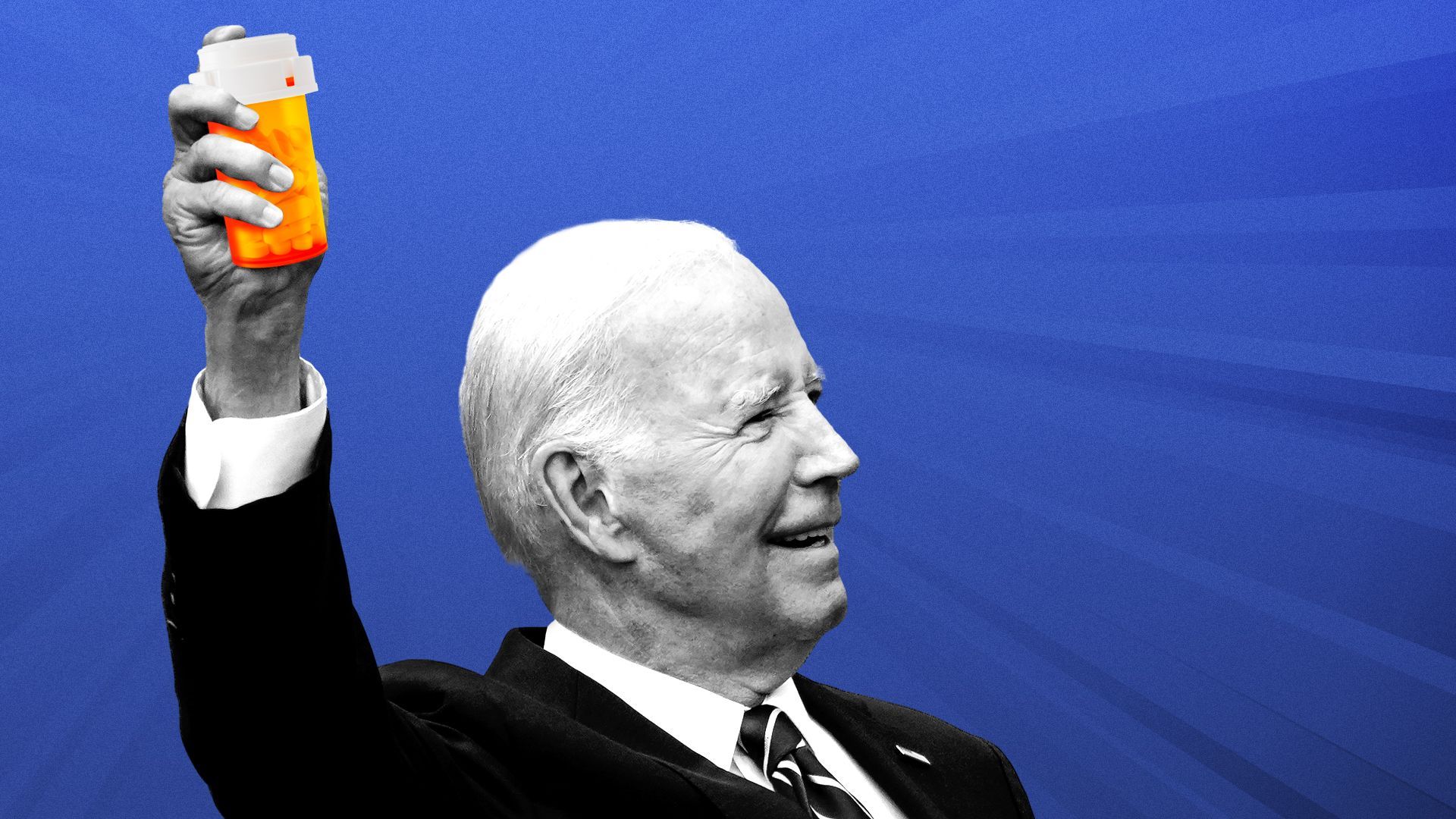
Photo illustration: Sarah Grillo/Axios. Photo: Drew Angerer/Getty Images
Hill Democrats are taking a victory lap today after Medicare released the results of its first round of drug price negotiations. Republicans, who unanimously opposed the law that authorized them, are much quieter.
Why it matters: The vibe signals how hard Democrats are going to lean into lowering health costs as Election Day nears. That's despite the fact that the new prices won't take effect until 2026.
- President Biden and Vice President Kamala Harris will make their first joint appearance since he dropped out of the presidential race today in Maryland, where they're expected to tout the results.
What they're saying: Top congressional Democrats and progressive outside groups framed this morning's announcement as the culmination of a decades-long policy fight.
- Senate Majority Leader Chuck Schumer called it a "huge, long-sought-after breakthrough."
- House Energy and Commerce Ranking Member Frank Pallone called it "historic," adding that a "top priority" next year will be expanding the negotiated prices to the private insurance market and to more drugs.
The other side: "Although affordable health care remains a pressing challenge for too many Americans, misguided government overreach is not the solution," said Senate Finance Committee Ranking Member Mike Crapo, one of the few Republican lawmakers to weigh in.
- He pointed to Finance's bipartisan PBM legislation as an alternative.
Between the lines: Beyond the political significance of the moment, policy experts differed on whether the results exceeded expectations.
- Tricia Neuman, senior vice president at KFF, called the projected $6 billion in savings to Medicare "quite significant."
- She, like other experts, noted that CMS's chart comparing the negotiated prices to drugs' list prices doesn't tell the full story, since Medicare doesn't pay the list price.
- But overall, CMS said it negotiated a 22% reduction from the net price for the 10 drugs, which will yield $1.5 billion in out-of-pocket savings for beneficiaries.
Yes, but: Raymond James analyst Chris Meekins wrote in a note that drugmakers came out winners, considering what could have happened.
- "The industry would have preferred to never have had negotiation in the first place, but the impact is far less than politicians proclaimed and the industry as a whole seems to be managing this fine so far," he added.
- Bristol Myers Squibb called for more of a focus on out-of-pocket costs and said the negotiated price for its blood-thinner Eliquis "does not reflect the substantial clinical and economic value of this essential medicine."
