
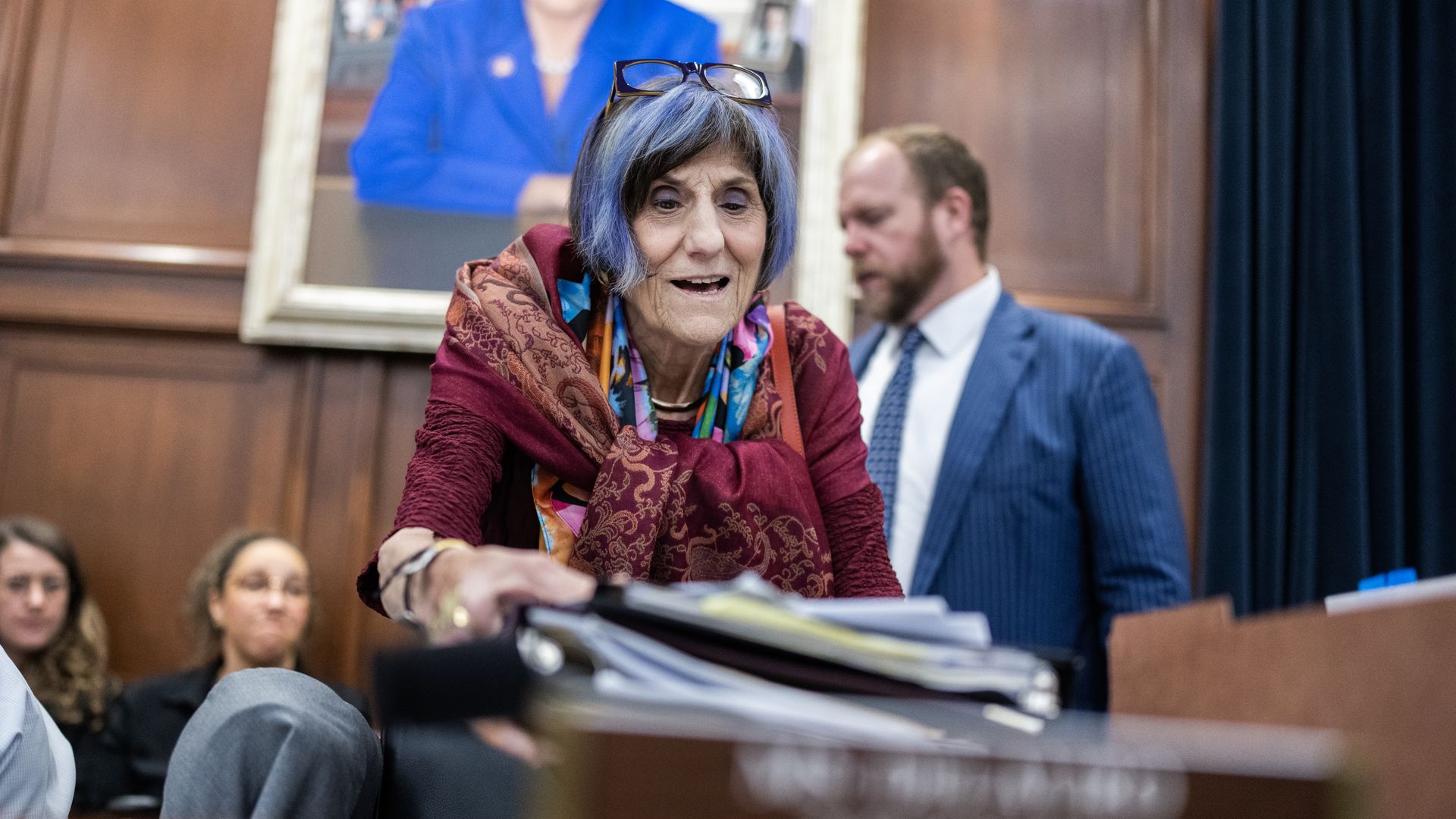
DeLauro at a House Appropriations hearing last year. Photo: Tom Williams/CQ-Roll Call via Getty Images
House Republicans' new allocations for FY25 health spending left the chamber's top Democratic appropriator today predicting another grinding and divisive spending fight.
Why it matters: A cut of as much as 11% to next year's spending bill covering HHS will likely cast a brighter light on federal health programs and priorities as the election cycle heats up.
Driving the news: House Appropriations Ranking Member Rosa DeLauro wasted no time in blasting the 302(b) allocations that House GOP appropriators released Thursday morning, warning of a "messy, chaotic, harmful and embarrassing" process that she said would resemble last year's spending brinkmanship.
- "The only difference between last year and this year is that their majority is even smaller," DeLauro wrote in a statement, calling on Republicans to raise defense and non-defense funding levels at least 1% as agreed to last year.
- Medical research groups also chimed in. Research!America signaled its disapproval, saying cuts would be "chilling" as the nation confronts health threats such as Alzheimer's, the opioid crisis and maternal mortality.
Catch up quick: House Republican appropriators offered a preview of allocations and said that they anticipate making a 10% to 11% cut to the Labor-HHS appropriations spending bill.
- They allocated $184.6 billion for the full Labor-HHS title, though it's still unclear what the federal health department will get.
- The Agriculture-FDA bill would get $25.9 billion.
- The topline allocation of $1.6 trillion includes $710.7 billion for non-defense discretionary spending.
Between the lines: House Appropriations Chair Tom Cole served as the Labor-HHS cardinal for six years and oversaw increases in funding for the NIH, driven in part by his own family's history with illnesses.
What we're watching: There's already talk on the Hill of passing a continuing resolution into next year to give a potential Republican president a say over agency funding levels.
