
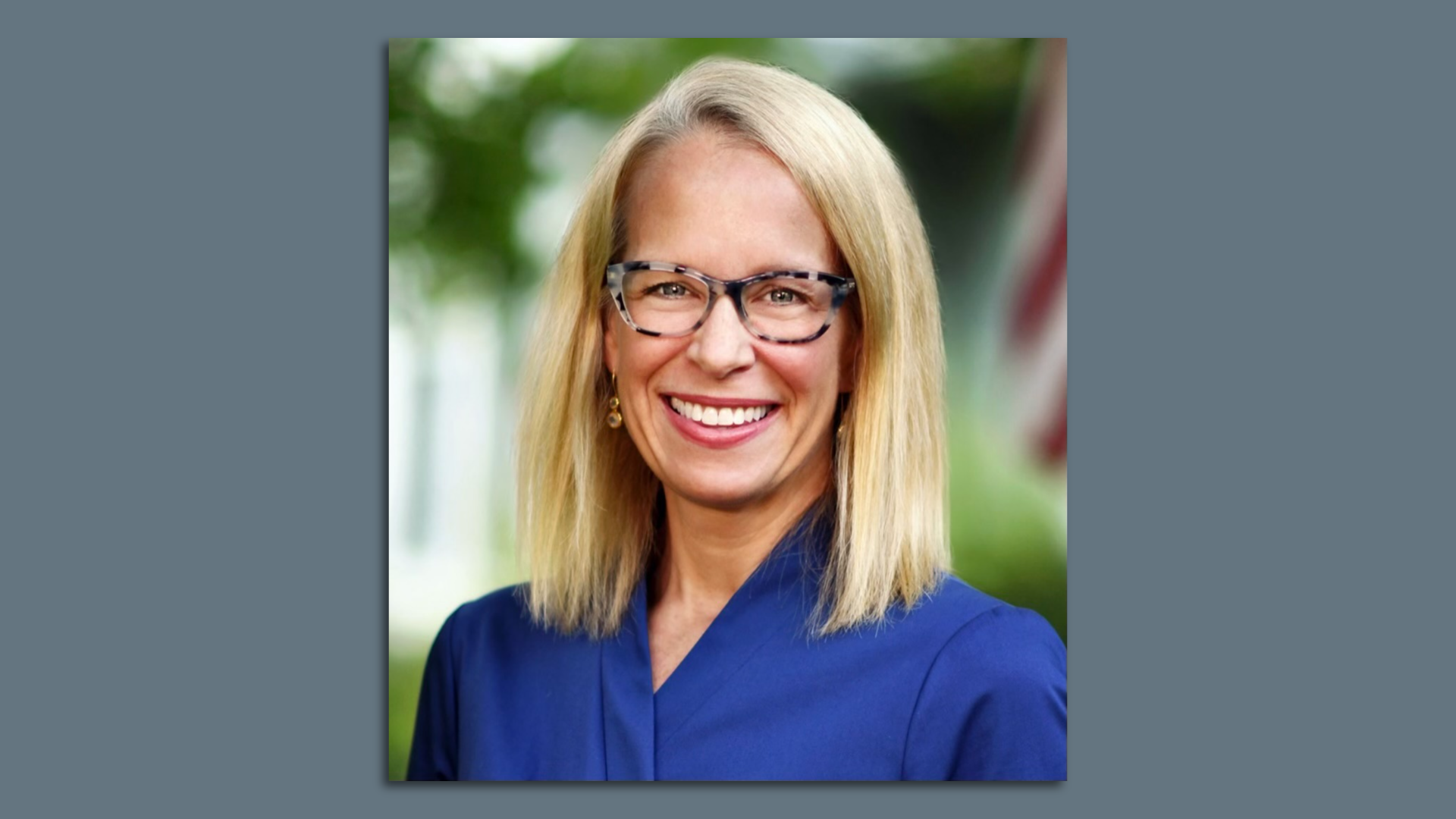
Minnesota state Sen. Kelly Morrison is running to replace retiring Rep. Dean Phillips. Photo: Kelly for Congress
A new wave of Democratic doctors is trying to seize on public concerns about reproductive health and medical costs to flip control of the House this fall.
Why it matters: Physician-lawmakers have traditionally led efforts to boost Medicare provider payment rates and used their real-world experience to weigh in on issues like access and affordability.
- Any newcomers could also offset the retirements of senior Republicans like Brad Wenstrup, a podiatrist on Ways and Means who was elected in 2012, and Michael Burgess, an OB-GYN and Energy and Commerce member who's completing his 20th year in the House.
State of play: At least six Democratic doctors are running for competitive House seats this cycle, several of whom are state legislators and are building their brands around addressing the high cost of health care.
- "It's a kitchen table issue," said Amish Shah, an emergency room doctor and Arizona state representative, who is trying to flip Rep. David Schweikert's seat. "People spend a large amount of their monthly income on health care costs."
- Kelly Morrison, an OB-GYN and Minnesota state senator who is running unopposed in the Democratic primary for Rep. Dean Phillips' seat, told Axios she wants to expand the list of drugs subject to Medicare price negotiations and apply the insulin price cap to the commercial market.
- She's also emphasizing her abortion rights credentials in a year when reproductive health is front and center. (Sen. Roger Marshall and Burgess are also OB-GYNs, but are anti-abortion.)
Other aspirants include Maxine Dexter, a pulmonary and critical care doctor running in a crowded Democratic primary to replace retiring Rep. Earl Blumenauer, and Tim Peck, an Indiana emergency physician, running to flip freshman Rep. Erin Houchin's seat.
- Dexter, who serves in the Oregon legislature, is taking aim at private equity's role in health care, PBMs and other factors like health care consolidation she said are "leeching revenue from patient premiums and out-of-pocket costs."
- Peck is charting a centrist course and focusing on expanding telehealth and promoting value-based care to increase patient access. He previously ran a health tech company that provided telemedicine services in nursing homes.
While few of the Democrats have grand designs on reshaping the health system, most still support universal coverage as a long-term goal.
Reality check: Most of the physicians still need to win primaries, and doctors didn't fare especially well during the 2022 midterms.
- Of the four Democratic doctors who ran for House seats two years ago, only Rep. Yadira Caraveo won, narrowly capturing Colorado's 8th congressional district.
The big picture: The number of physicians vying for congressional seats has been on the rise.
- "It's health care costs, it's how gun violence affects their patients, the effects of climate change and what that's doing from a public health side, attacks on women's health care," said Shaughnessy Naughton, director of 3.14 Action, a progressive pro-science PAC.
The other side: While several GOP doctors are running for the House this cycle, their messaging to date isn't as squarely focused on health care.
- Richard Moss, an Indiana otolaryngologist running to succeed retiring physician-lawmaker Larry Bucshon, told Axios that he wanted to address health care costs by increasing competition in plans and incentivizing a healthier lifestyle.
