
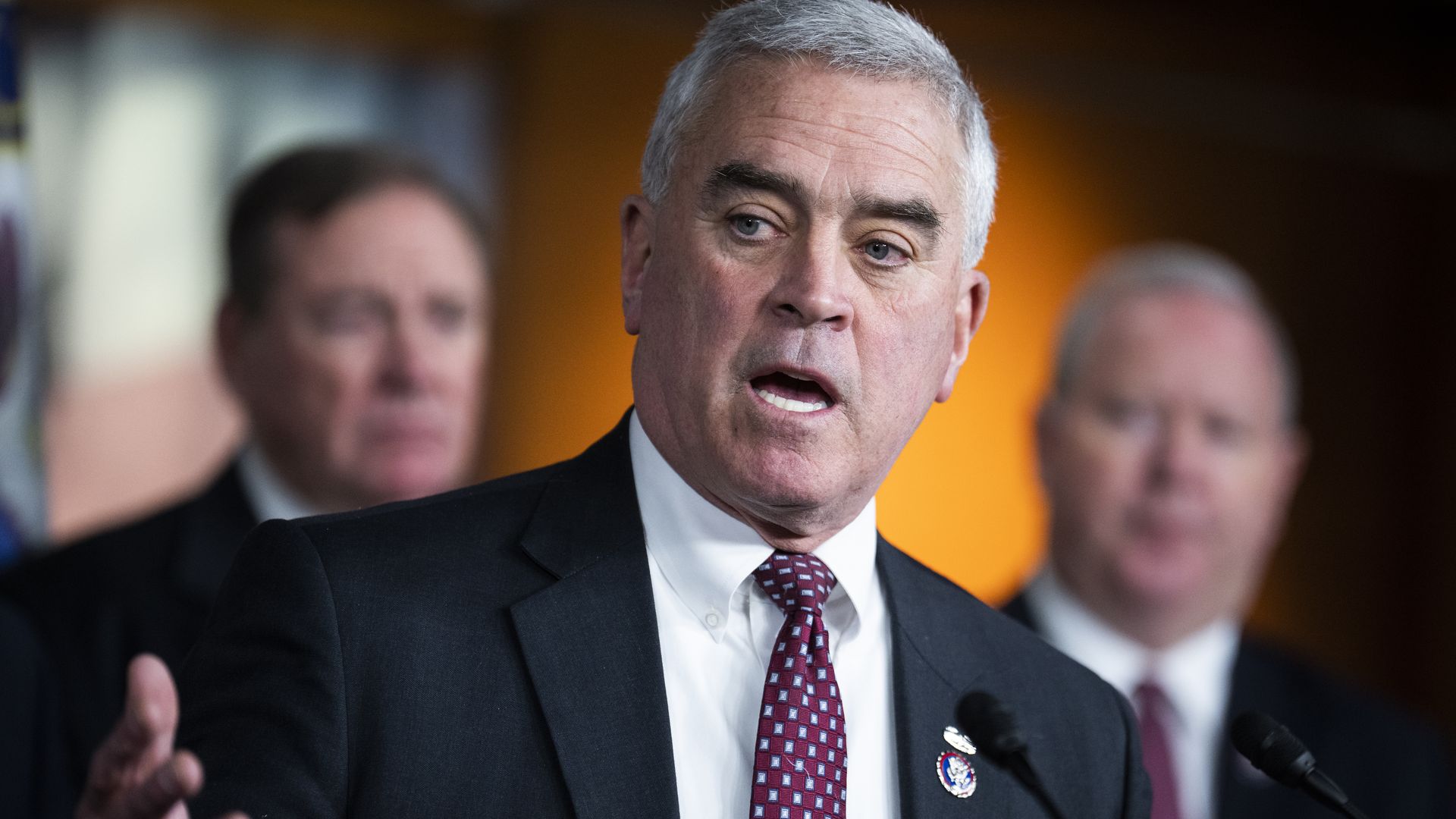
Rep. Brad Wenstrup. Photo: Tom Williams/CQ-Roll Call, Inc via Getty Images
Top House Republicans say they want their COVID origin hearings to help the U.S. prepare better for the next pandemic — and they'll get their next chance with the House Oversight Committee's first COVID origins hearing on Wednesday.
- But public health experts say the hearings are unlikely to find any definitive answers on how the pandemic started — and that's not what Congress needs to know to improve pandemic preparations anyway.
- They're fine with exploring the theories, but don't want Congress to wait to act. They also don't want lawmakers to go too far in restricting funds for gain-of-function research.
Details: The Oversight Committee's Select Subcommittee on the Coronavirus will question witnesses including Robert Redfield, former CDC director under President Trump, at Wednesday's hearing.
- It will be the first hearing since the reports that the Department of Energy concluded in a "low confidence" assessment that COVID-19 most likely arose from a laboratory leak.
What they're saying: Select Subcommittee Chairman Brad Wenstrup believes there will be positive policy outcomes. "You want to look and think, 'What policies did we implement? And were they effective?'" Wenstrup told reporters last week after the committee's first roundtable.
- "I just hope we can prepare a document at the end of these two years ... that will allow us to hopefully predict a pandemic, to prepare for a pandemic, protect ourselves in a pandemic, and maybe even prevent one," Wenstrup added.
Yes, but: Public health experts told Axios they're open-minded about whether the virus came from a laboratory, but want to see any evidence presented toward it in a scientific and fact-based manner.
- But they emphasized that knowing the origin of the virus doesn't necessarily matter to start improving pandemic policies now.
- Michael Osterholm, director of the Center for Infectious Disease Research and Policy at the University of Minnesota, says he's agnostic about the source of COVID, but he would like to see lawmakers to take steps to prepare for both laboratory leaks and animal spillover outbreaks regardless of the cause.
- "It's very likely this is going to be like the major criminal cold cases of this century, remaining unsolved," said Osterholm. "For those who want to believe it came from the lab, that will be the answer for eternity. For those who are agnostic, it could be a spillover or a lab leak."
- "We need to prepare for both anyways."
What they're watching: Tom Inglesby, director of the Johns Hopkins Center for Health Security, was a witness at the first E&C hearing. He said he's hoping the hearings will present summaries of current evidence for both a laboratory leak or an animal spillover event, any data gaps for either theory, and what declassified info from federal agencies has been made available.
- "The vision of success here would be that we get a definitive case for the source of COVID," said Inglesby. "Given the lack of information and the lack of data around the earliest cases and around what was happening in laboratories, I don't think it’s likely."
Flashback: House Energy and Commerce held the first COVID origins hearing at the beginning of February.
- The biggest policy outcome out of that hearing appeared to be an openness to reform how and to what institutions the federal government issues research grants.
- However, the NIH only oversees a portion of scientific viral research in the world, and can't do much to prevent other countries from conducting research with their own funds, said Osterholm: "A lot of the laboratory research is not funded by the U.S. government and we have no oversight over them."
- "If policymakers are considering any kinds of changes ... they should make sure the focus is very specific on this very small area of research," said Inglesby. "So they don't cause harm to so many other scientific research projects."
Reality check: But scientists will need to be willing to discuss research reform, said Chris Meekins, a health policy analyst with Raymond James.
- "At the end of the day, there has to be a real conversation about what the safeguards are and what the U.S. feels comfortable with," said Meekins.
- "The days where you could just trust a scientist have passed for many lawmakers, and they want to see are scientists going to be willing to come to the table and talk what responsible measures should be."
What we're watching: The Pandemic and All-Hazards Preparedness Act, known as PAHPA, is up for re-authorization at the end of this fiscal year and could serve as a vehicle this Congress to enact pandemic preparedness policies, if any do come out of the hearings.
