
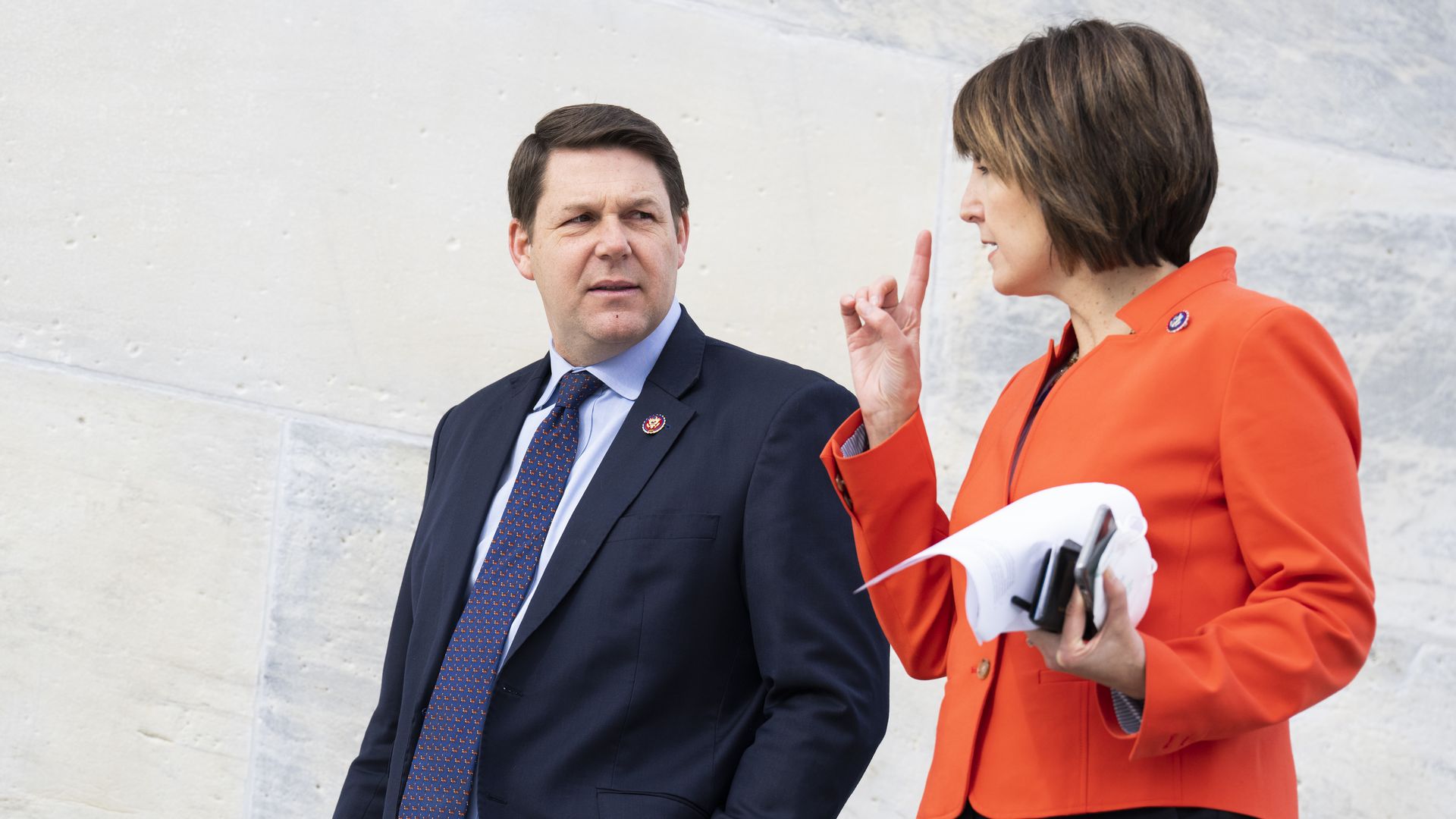
Chairs Jodey Arrington and Cathy McMorris Rodgers. Photo: Tom Williams/CQ-Roll Call Inc. via Getty Images
Key House GOP committees responded to President Biden's State of the Union speech not by saying they won't touch Medicare or Social Security, but by bringing up the programs' future insolvency and saying they're committing to strengthening them.
Why it matters: That means we could very well see the committees proposing changes to Medicare, even if they're outside of the debt ceiling negotiations.
- And how Republicans are talking about Medicare offers some hint of what they have in mind and how they'd message the policies.
The big picture: For Medicare at least, there are semantic distinctions that represent a significant difference.
- There are plenty of reforms that would reduce Medicare spending not by cutting seniors' benefits, but by reducing what the program pays to health industry groups — and Republicans may very well be signaling interest in the latter.
What they're saying: Here are the key pieces of E&C and House Budget's statements last week.
- Cathy McMorris Rodgers: "Republicans are committed to strengthening Medicare and Social Security, so these programs are sustainable for generations to come.... Republicans stand ready to strengthen and preserve these programs, without cutting benefits to seniors."
- House Budget Republicans: "Democrats’ should stop preying on the fears of seniors by accusing Republicans of cutting Social Security and Medicare and, instead, work with us on bipartisan solutions to address their insolvency."
When I asked Budget for more detail, spokesperson Sarah Flaim said, "Speaker [Kevin] McCarthy and others, including Chairman [Jodey] Arrington, have been very clear that Medicare and Social Security will not be part of the debt limit negotiations."
- "That being said, every reasonable person recognizes that the programs are unsustainable in their current forms, and that they must be saved and strengthened."
Between the lines: Budget groups have conveniently provided lots of examples over the years of policies that would reduce Medicare spending (and raise revenue for the program, but for Republicans, increasing taxes is off the table).
- A handful outlined by the Committee for a Responsible Federal Budget include two that would reduce payments to Medicare providers and another that would essentially reduce Medicare Advantage plan payments.
Yes, but: Industry groups will inevitably argue that cuts to their Medicare payments will negatively impact patients. And both parties have proved time and again that any reduction in Medicare spending — regardless of the specifics — proposed by the other party will immediately be weaponized.
- Republicans are doing it themselves right now, pointing to the Inflation Reduction Act as a Medicare cut. McCarthy did so Thursday on Twitter.
- The IRA's Medicare spending reductions came from reducing program payments to drug companies, not from cutting seniors' benefits. The pharmaceutical industry (and many Republicans) argue that these cuts will translate into fewer treatments for patients down the road.
What we're watching: Site-neutral payment reforms, which would pay the same rate for services regardless of site-of-care, stand out as a topic to watch.
- A one-pager on proposals by the House GOP's Healthy Future Task Force specifically mentions passing legislation to "ensure CMS pays the same Medicare rates for drugs and clinic visits at physician offices and hospitals."
- The policy has garnered bipartisan interest in the past, including from former Presidents Obama and Trump.
Editor's note: This story has been updated to correct the name of the Committee for a Responsible Federal Budget.
