Expert voices: Haun Ventures' Diogo Mónica on crypto investment competition

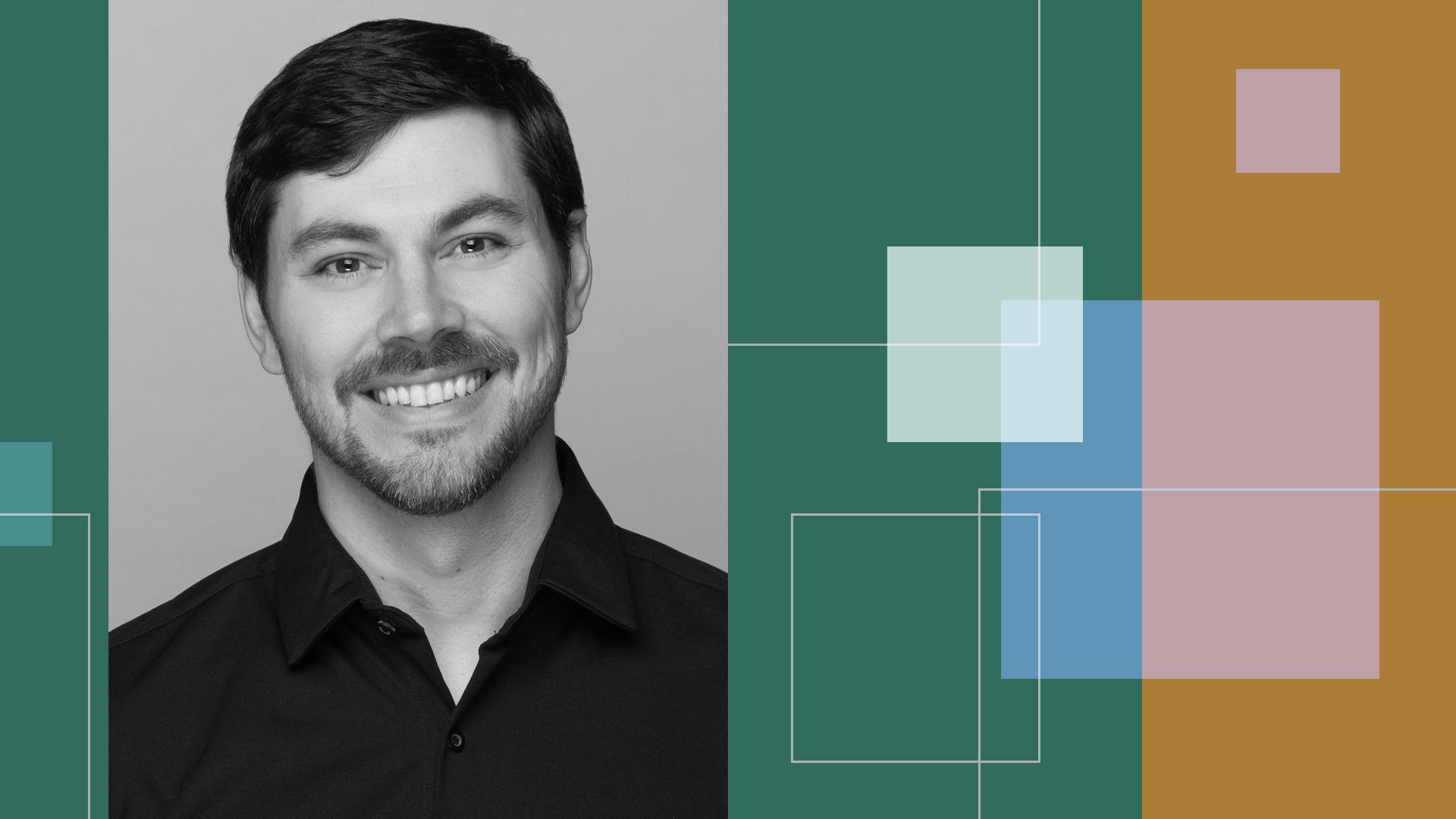
Photo illustration: Axios Visuals. Photo: Courtesy of Haun Ventures.
Haun Ventures general partner Diogo Mónica sees increasing competition in the crypto venture market as traditional institutional funds and digitally native crypto funds jockey for the best deals.
Why it matters: Large crypto deals have been few and far between over the last two years, but the market could be turning around for companies with real revenue.
Context: Mónica co-founded crypto custodian Anchorage Digital and was the first general partner hired to work alongside Haun Ventures founder Katie Haun.
- Last month, Mónica led his first venture deal — a $55 million Series A round for on-chain risk management startup Chaos Labs.
(This interview has been edited for brevity.)
Catch me up on the last six months since it was announced that you were joining Haun Ventures.
- When we announced it, it was a transition announcement. Technically, I only started three months ago, but I've already led two deals. The transition has been extremely fun to a large extent.
- I've been doing [deals] for a long time. Personally, I have over 150 angel investments. I feel like I was playing mini golf, but now I'm playing golf. Technically, the mechanics are the same: There's a ball and a club, but it's a very different sport.
Can you share more about how writing checks as an angel is different from leading a $55 million investment like Chaos Labs?
- The biggest thing is winning the deal becomes very different. For seed or Series A, it starts being a fight for allocation. The main thing is that there are only so many points on the cap table, and very quickly into the role, you have to decide whether to collaborate or whether to compete.
- I love competing. As an angel, I never really had to compete. But here, I'm actually competing — and I'm not just competing with crypto funds. I'm competing with big Tier 1 funds. And I'm competing with people who gave me offers to join their firms — and that is amazing. I love this.
How about the transition from operator to investor? What has that been like?
- I think I'm the only GP in a crypto fund who has actually been a crypto founder.
- It's been amazing to talk to founders and say: "Hey, I know what you are suffering through. I know what it looks like every two years to have 80% of your revenue go away like clockwork."
- Building a company in crypto is being a founder in hard mode. It's already insane, you know, "chewing glass and staring into abyss." But it's a harder version of the abyss, a darker version of the abyss.
You mentioned competition earlier. What's the crypto investing environment like these days, and who are you competing against?
- It's extremely competitive. There are two sources of competition: the traditional firms and the crypto funds.
- There are crypto deals that are palatable to traditional venture funds. In stablecoins, you're competing against a16z and Sequoia and USV and Ribbit and all the normal players. In crypto token deals, you're competing against all the crypto funds that you'd expect.
- We play on both sides, and we're one of the few that co-invest with all of them. So, depending on how a founder sees themselves, we also have to sell ourselves differently and showcase different strengths based on what they want.
Looking at the Chaos Labs deal, we haven't seen many $50 million deals in crypto lately, particularly at the Series A stage. Is this a sign that big crypto deals are back?
- If it's up to me, they are. We have a $500 million early-stage fund and a $1 billion late-stage fund. I have capital to deploy, and I want amazing deals that I can deploy lots of capital into.
- It depends on the type of deal. Layer-2s and ... these sort of derivative infrastructure plays that are not core Layer-1s are going down.
- But you're going to see a lot larger investments in companies that are actually working with real revenue. So I think [the Chaos Labs deal] is an archetype of that.
