February 12, 2025


❄️ Happy snow day, D.C. We trudged through the slush so you (hopefully) don't have to.
🎶 Today's last song comes from Charles Hua, executive director of the utility-modernization nonprofit PowerLines. He was just as enamored as Nick with the Super Bowl halftime show: "Not Like Us" by Kendrick Lamar.
1 big thing: E&C seat elevates freshman's electricity agenda
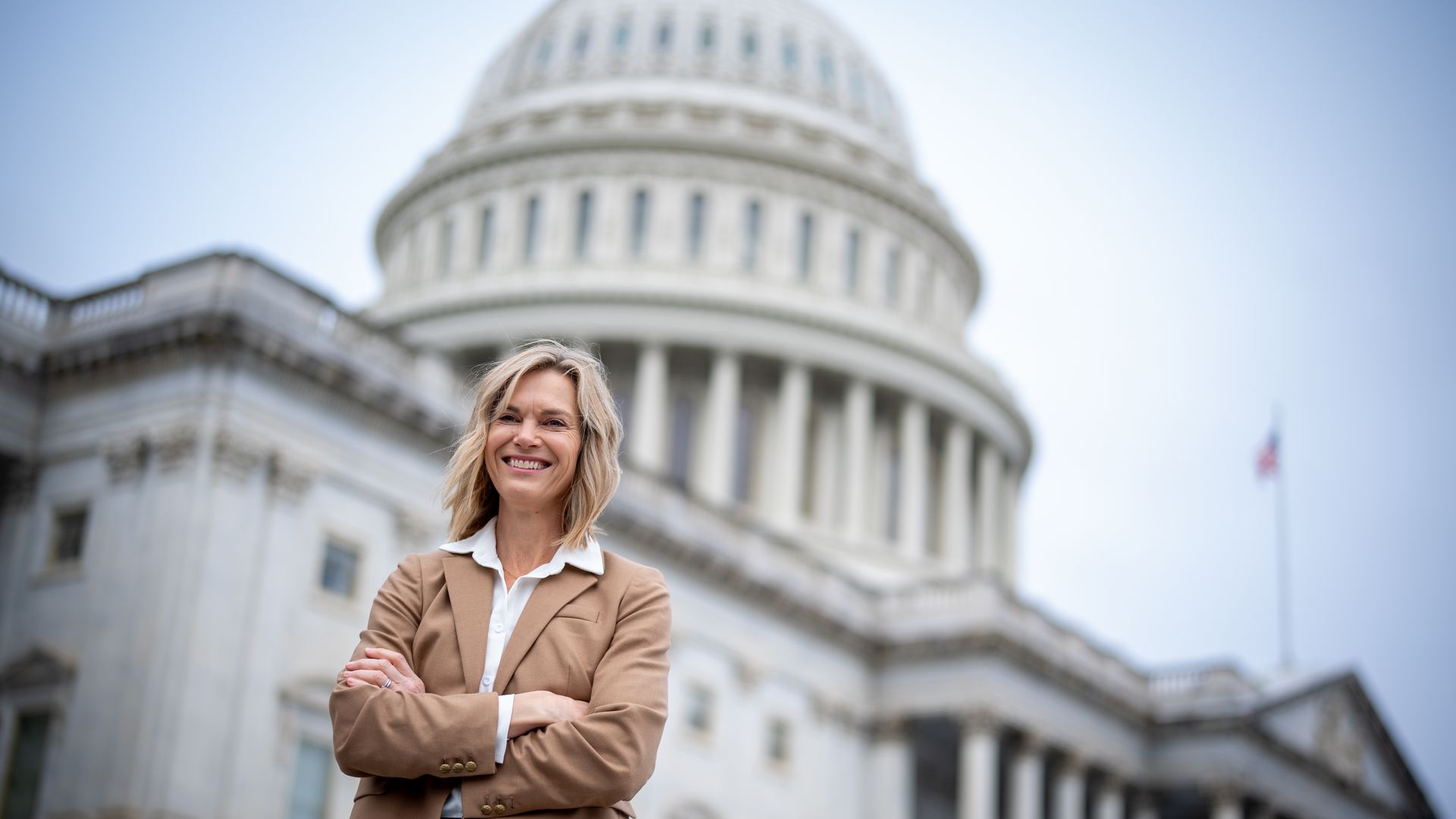
Freshman Rep. Julie Fedorchak is wasting no time pressing for a phaseout of renewable energy tax credits as well as regulatory rollbacks — two strategies to tackle complex grid issues, Daniel writes.
Why it matters: The North Dakota Republican's grid fluency earned her a coveted seat on Energy and Commerce — and what she hopes to be a prominent position in reconciliation and CRA talks.
- Fedorchak is on a texting basis with new Interior Secretary Doug Burgum, a fellow North Dakotan whom she prodded to roll back 20 Biden-era regulations on one of her first days on the Hill.
The big picture: Fedorchak's 12 years on the North Dakota Public Service Commission has informed her view that the rise of renewables and closure of coal and nuclear plants have contributed to a reliability problem.
- "It comes down to generation," Fedorchak told Daniel in her office before running to an E&C breakfast.
- D.C. policymakers need to understand the "pros and the cons of each of the fuel sources … beyond the kind of talking points that each of the advocacy groups for each of those types of fuel source are promoting," she said.
Zoom in: Fedorchak has been advocating for an end to the tech-neutral tax credits, arguing that the massive investment in wind and solar resources has adverse impacts on the power grid and energy markets.
- At the Ways and Means Committee and an E&C hearing, she dived into technical details about the divergence between wind and solar power capacity and what those projects can actually produce.
- "We need to stop telling the developers that we need more [wind and solar power] because we really can't adequately incorporate more [renewable projects] safely and reliably," Fedorchak told Daniel.
Yes, but: That may be a tough sell. Conservative Climate Caucus leader Mariannette Miller-Meeks has argued in favor of keeping the tax credits and recently met with solar advocates.
Between the lines: Reconciliation offers a way to speed up energy permitting and leasing as "a growth driver" that can "stimulate more production and more tax dollars into the Treasury," Fedorchak said.
- At the same time, "I hope we can take a scalpel, not an axe, to the IRA," she said, echoing other Republicans.
- She said sustainable aviation fuel, carbon capture and storage, and advanced nuclear reactors should all be priorities for continued federal investment.
2. FERC power-plant move could bring lawsuits

Energy regulators allowed the country's largest regional power grid operator to speed review of some power plants in its backlog of proposed projects, Daniel writes.
Why it matters: PJM Interconnection's program will show how grid operators plan to carry out President Trump's and congressional Republicans' desire to more quickly add more power generation to the grid to meet rising demand.
- The plan — which FERC approved last night — will provide clues on how grid operators define "dispatchable" power — generally assumed to be natural gas, nuclear, and coal and to exclude renewables like wind and solar.
Driving the news: PJM asked FERC to approve its Reliability Resource Initiative as a way to add up to 50 projects to be studied to connect to the grid to address near-term resource adequacy concerns.
Friction point: Renewable project developers and advocates argued that PJM's proposal ran afoul of the law.
- The decision will allow "PJM to fast-track gas projects over renewables," Charles Harper, senior power sector policy lead at Evergreen Action, said in a statement.
Between the lines: Any litigation would motivate lawmakers to advance the GRID Power Act, Timothy Fox of ClearView Energy Partners told Daniel.
- Fox also said: "We think renewable project developers and/or advocates may challenge the legality of the order to an appellate court," particularly as other grid operators in the Midwest and Great Plains may soon propose their own fast-track interconnection processes.
3. Trump taps oil and gas trade group chief for BLM

President Trump has nominated Kathleen Sgamma, longtime president of the Western Energy Alliance, to lead the Bureau of Land Management, Nick writes.
Why it matters: Sgamma's leadership at the agency would mark a sharp departure from its environmental and clean energy focus during the Biden administration.
- She's appeared frequently on the Hill and in the media to advocate for oil and gas development on public lands and scaling back regulation of the industry.
Driving the news: If confirmed, she would lead the administration's efforts to roll back BLM's controversial Conservation and Landscape Health rule, which seeks to add conservation as a priority alongside development in the agency's management of federal lands.
The other side: "This appointment will hand the keys to our public lands over to oil and gas companies," Center for Western Priorities policy director Rachael Hamby said in a statement.
Zoom in: Trump yesterday also tapped Audrey Robertson, an oil and gas exec and board member at Energy Secretary Chris Wright's Liberty Energy, to lead DOE's Energy Efficiency and Renewable Energy programs.
- And Aaron Szabo, a lobbyist and former official at NRC and the White House, was nominated to be an assistant administrator at EPA, reportedly to lead the agency's air office.
Other new nominees sent to the Senate yesterday include:
- Ned Mamula, a geologist and former DOE program director, to be director of the U.S. Geological Survey.
- Wayne Palmer, an official in Trump's first administration, to lead the Mine Safety and Health Administration.
- Brian Nesvik, a former Wyoming state official, to be director of the Fish and Wildlife Service.
4. What we're watching on reconciliation

A couple of notes from Nick on the GOP's reconciliation push…
💵 1. House money: The House Budget Committee unveiled its budget resolution for a one-bill reconciliation strategy today ahead of tomorrow's markup.
- Ways and Means would get $4.5 trillion in deficit increases for tax cuts.
- Energy and Commerce would get a $880 billion deficit reduction task, likely including changes to Medicaid on top of any IRA money they're able to repeal.
- And House Natural Resources would be tasked with bringing in $1 billion in revenue.
What we're watching: It's still not clear how IRA cuts will fit into this equation, but it puts the ball in play for the House.
🛢️ 2. Methane math: Senate Republicans, meanwhile, want to use their first reconciliation bill to repeal the IRA's methane fee — but it will present them with a budget math wrinkle.
- That's because CBO has estimated the policy would generate some $6 billion for the government, so cutting it would cost Republicans money.
- Senate EPW Chair Shelley Moore Capito is looking to compensate for that by cutting IRA money that flowed to EPA. She said yesterday that "it's still not 100% clear" how much Republicans will be able to claw back.
- "We feel pretty comfortable with what we're going to be able to deliver in EPW by removing the methane fee and then creating some savings on some IRA and other things," she told Nick.
What we're watching: The Senate Budget Committee is marking up its own budget resolution today and tomorrow.
✅ Thank you for reading Axios Pro Policy, and thanks to editors Chuck McCutcheon and David Nather and copy editor Brad Bonhall.
View archive