January 30, 2025


🍻 We made it (almost). We'll keep an eye on two remaining energy nominees this week and let you know what happens.
🎶 Today's last song comes from Jeremy Horan of ACORE: "Thankful Heart" from the Muppets' Christmas special, which his children have been playing on repeat even after the holidays.
1 big thing: Fusion's reconciliation push

The fusion industry sees an opportunity in the Republican reconciliation push with the GOP's focus on "energy dominance" and baseload power, Nick writes.
Why it matters: Fusion could be a grid game changer, but the industry thinks it gets paltry support relative to other energy technologies funded through DOE.
- "We actually think fusion fits a lot of the themes that President Trump and the Republicans in Congress are talking about," said Trent Bauserman, head of federal affairs for Commonwealth Fusion Systems.
Rep. Chuck Fleischmann, the House's top energy appropriator, predicted the Trump administration would be "pro-fusion" but wouldn't have the same "fiscal appetite" for it as the Biden administration.
Driving the news: The Fusion Industry Association is pushing the Hill to dole out nearly $10 billion over five years to various fusion programs in reconciliation, CEO Andrew Holland told Nick.
- That would include $2 billion for DOE's milestone-based fusion development program and $3.7 billion for test stands and research facilities at the Office of Science.
- It's an opportunistic play for something the budding industry has persistently asked for: supplemental federal funding to pump up commercialization and flesh out programs authorized — but not funded — by the CHIPS Act.
- Although Republicans aren't committing behind closed doors, "it's on the table," Holland said. "It's not a 'No, we're not doing that.'"
Zoom in: The milestone program has to date awarded $46 million across eight companies, which piles on top of billions in private sector investments in the U.S.
- Recent scientific advancements have led private players like Commonwealth to believe they'll hit "net energy" — producing more energy than their device consumes — in the next few years.
- Broadly, the goal is to put power on the grid by the early 2030s. But that almost certainly won't happen without significant DOE support for commercialization and materials science.
Reality check: It's going to be tough to persuade Republicans to spend that kind of money when they're trying to pay for tax cuts and programs they view as the "green new deal."
- To wit, fusion companies would like to see the IRA's tech-neutral energy incentives continue.
- Plenty of skepticism still exists about the technology.
Between the lines: Still, fusion may have an ally in prospective Energy Secretary Chris Wright.
- "The last decade has seen more progress than in my lifetime, and I would love to see that come to commercial power in the next decade," Wright said at his confirmation hearing.
What we're watching: Even if the industry's reconciliation push doesn't pan out, appropriators have steadily increased the budget for fusion energy sciences to around $800 million annually in recent years.
- "I hope that continues, but I think it's probably going to be tempered with a view towards, let's get the energy resources that we can count on now ramped up," Fleischmann said.
2. Lunch with South32's Judy Brown

Mining industry veteran Judy Brown is optimistic that the Trump administration and Congress will address a missing link in the mineral supply chain, Daniel writes.
Why she matters: Brown, who leads external affairs for South32's projects in the Americas, has watched the industry's D.C. influence grow in recent years.
- The South32 Hermosa project in Arizona is the country's only mine with two federally designated critical minerals, manganese and zinc.
Brown recently sat down over chicken durum at Zaytinya. Her remarks have been edited for length.
What are the biggest policy gaps today?
It's not necessarily economic to make critical minerals here, ship them to Korea or Morocco, have them put into components and then brought back to the U.S. So I think not missing part of that full supply chain would be really important.
What more can Washington do?
Looking at the foreign entity of concern regulations … I think some of that was confusing, and it's still really hard to judge how you then count out the offshoring of Chinese manufacturing to other parts of Southeast Asia, etc.
Your project has DOE and DOD grants. Are you concerned about Trump or Congress pulling those back?
I think there's a lot of support for those types of projects within the funding. As long as we can deliver, I think they still want to see that production in the U.S.
Is there a member of Congress you enjoy working with?
[Rep. Doug] LaMalfa has been very curious … and we had a great meeting. We were very late for our next meeting, because he kept asking questions.
The thing I would say about [Natural Resources Committee Chairman Bruce] Westerman is, he's very creative in terms of how do we solve this problem in order to move forward.
3. Catching up on confirmation moves
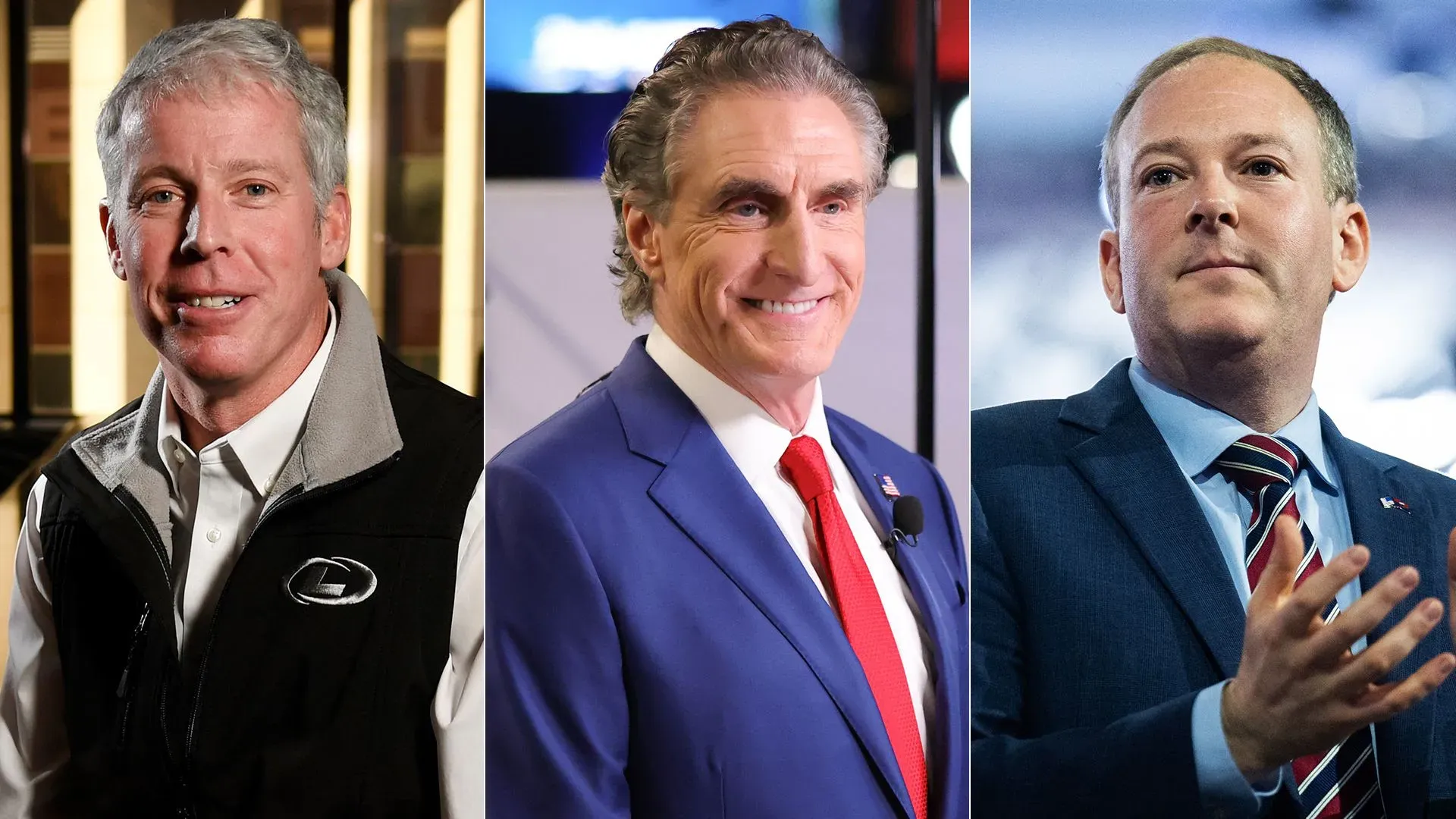
Trump should have all of his top energy and environmental deputies in place in the coming days, Nick writes.
Why it matters: That will kick-start the regulatory rollback process at EPA and bring some more certainty to DOE and Interior as they deal with any fallout from the administration's funding pause.
Driving the news: The Senate has lined up a vote late tonight to confirm Interior Secretary nominee Doug Burgum.
- Burgum cleared a filibuster-breaking cloture vote yesterday 78-20, with with 24 Democrats and Independent Angus King voting in favor.
- EPA Administrator Lee Zeldin has already been confirmed, as we told you yesterday.
- And Senate Majority Leader John Thune has already filed a motion to bring DOE pick Chris Wright to the floor.
✅ Thank you for reading Axios Pro Policy, and thanks to editors Chuck McCutcheon and David Nather and copy editor Brad Bonhall.
- Do you know someone who needs this newsletter? Have them sign up here.
View archive