December 05, 2023

🌮 Taco Tuesday's here, but we hope you already ate lunch.
🍻 Join Axios Pro on Thursday for the final Happenings on the Hill Happy Hour of 2023.
- Meet, network and drink with Pro Policy reporters and leaders within the policy space. And the first person to talk about hydrogen gets a prize.
🎼 Today's last tune is from Sen. Mark Kelly: "bad idea right?" by Olivia Rodrigo.
1 big thing: Permitting's tough road ahead
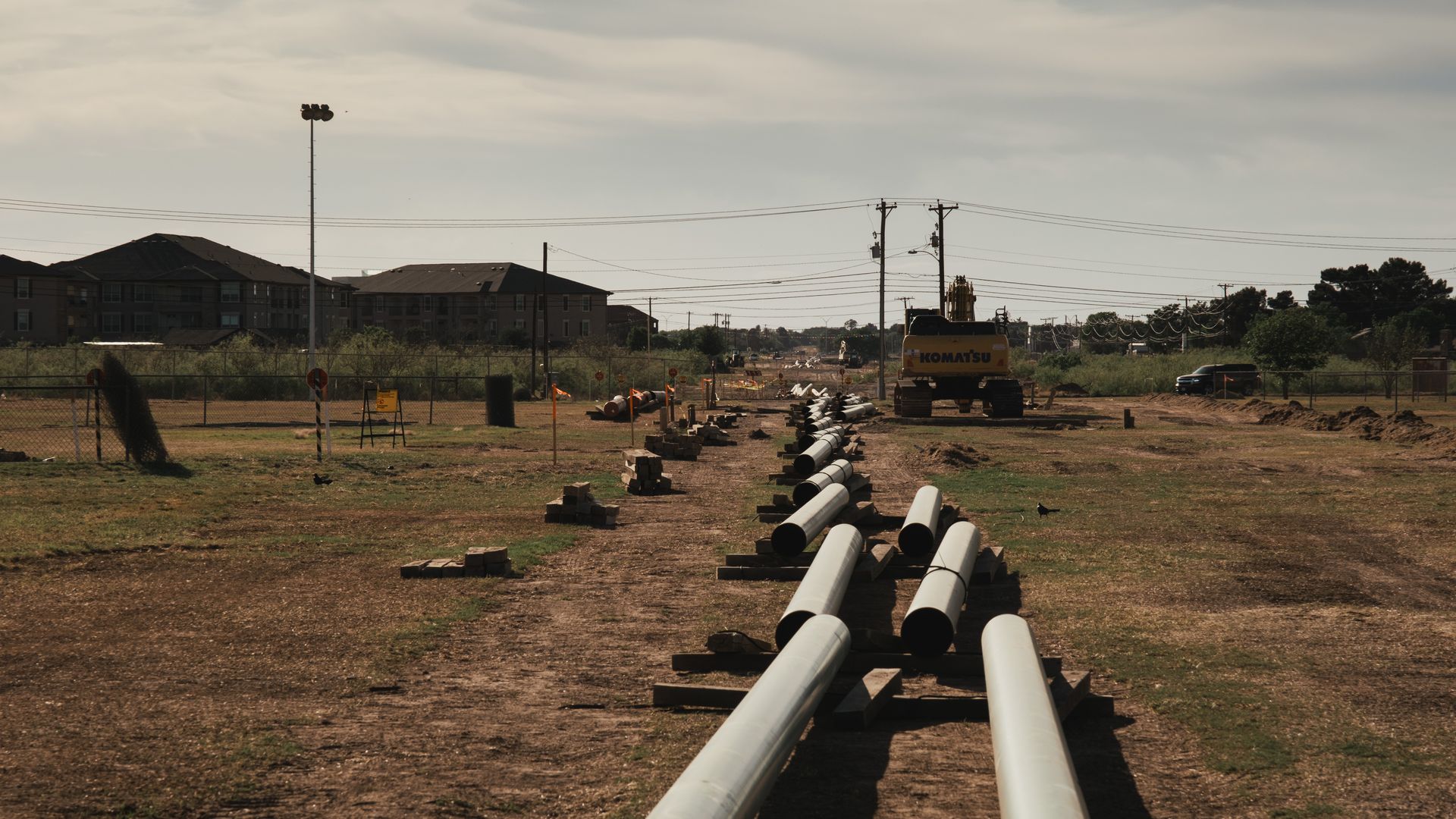
Pipeline construction materials in Midland, Texas. Photo: Jordan Vonderhaar/Bloomberg via Getty Images
Permitting talks look dormant right now — but some lawmakers and lobbyists see a narrow window to get something done before the end of 2024, Nick writes.
Why it matters: Fossil fuel, mining and renewable power companies are in agreement over the push for changes to environmental laws to make it easier to get projects underway.
- There's a ton of IRA and IIJA money at stake here, and the federal government has limited time to get it all out the door.
What's happening: In the House, the Energy and Commerce Committee today is marking up industry-specific permitting and licensing bills.
- That includes Cathy McMorris Rodgers' hydropower permits package and a bipartisan slate of bills to overhaul licensing and siting for advanced nuclear projects.
- In the Senate, meanwhile, Joe Manchin told Nick last night that he and John Barrasso are "about 60, 70 percent" of the way through writing a bipartisan permitting proposal.
- "I swear, the staffs are really deep into it, and I think everything's been going along pretty good," Manchin said as he strolled through the Senate basement. "We just have to find time to do it."
Yes, but: We're getting awfully close to election-season silliness. Talk of a broad permitting bill went quiet after the debt ceiling deal, when the Hill got consumed in tumultuous spending negotiations.
- Plus, even minor industry priorities — nuclear licensing and National Environmental Policy Act exemptions for semiconductor projects — look likely to drop out of the final defense bill.
- "The window seems to be closing," Sen. Sheldon Whitehouse told Nick today. "I think there's a lot of interest on the Democratic side. It's very difficult for the Republican side to find agreement on any subject at all."
What they're saying: "We need to get to permitting reform, but it has fallen by the wayside, simply because there's so much else on the plate," Sen. Shelley Moore Capito told Nick.
- Rep. Garret Graves said Republicans still harbor concerns about how the Biden administration is implementing the NEPA changes Congress made in the debt ceiling deal.
- Speaker Mike Johnson is "supportive" of a second round of permitting legislation, Graves said. "But we have to make sure the White House does the first round appropriately first."
Zoom in: American Clean Power sees a short legislative timeline to get something done before the election season really gets churning.
- "What's fundamentally changed is that there is now a pretty strong consensus across the energy industry about the need for permitting reform and the core elements of that package," said ACP CEO Jason Grumet.
- That means transmission policy overhauls paired with limitations on judicial challenges under NEPA and provisions to make it easier to build pipelines.
What we're watching: Any grand bargain is going to necessitate some kind of bipartisan gang, likely driven primarily by the Senate.
- Alex Herrgott, president of The Permitting Institute, said he doesn't think Johnson needs to be a major player for a bill to come together because there is so much bipartisan interest at the committee level.
- He likened permitting talks to a volcano simmering under the surface: "Although it might be extinguished by external events and other appropriations bills and international conflicts, the issues aren't going away."
- Sen. Martin Heinrich similarly told Nick he wants to be ready to move. "It's important that people continue to work on permitting reform, because at some point, we'll have an opportunity."
2. Scoop: Cardin hits Central Asian resource hub
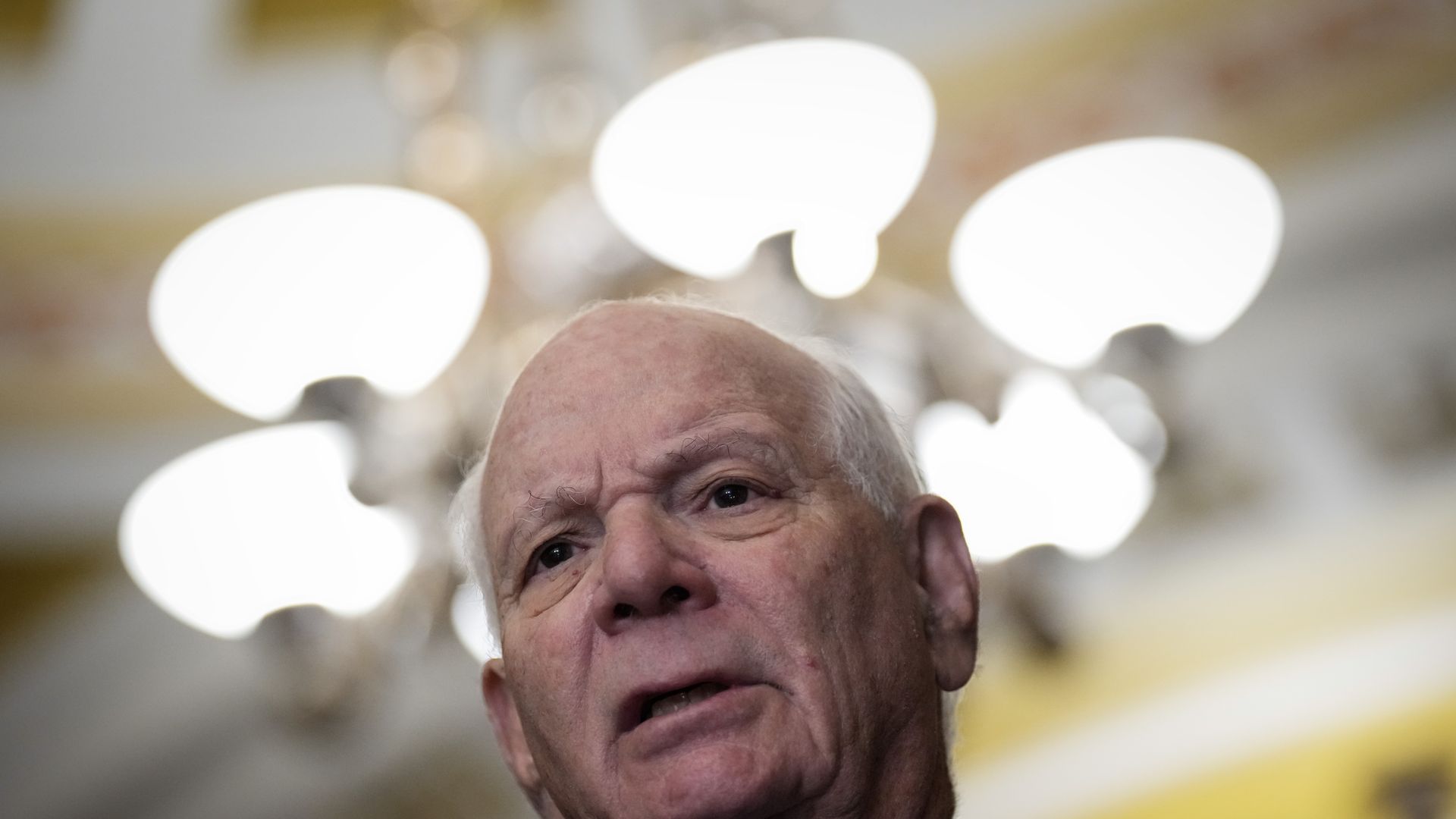
Cardin in October. Photo: Drew Angerer/Getty Images
Senate Foreign Relations Chair Ben Cardin is going after repressive tactics by the government of Tajikistan, a Central Asian resource hub, Jael has learned.
Why it matters: Countries like Tajikistan will become increasingly important as producers of low-carbon energy products try to get raw materials from places other than China.
- Tajikistan, home to one of the world's largest aluminum producers, wants to leverage its vast mineral reserves and ample hydropower capacity to help supply the energy transition.
- But Tajikistan, like many other options for resources outside China, has its own potentially toxic human rights issues. Cardin said officials have "used intimidation and abused judicial procedures" to go after people in other countries, citing State Department analysis.
Driving the news: Cardin sent a letter on Nov. 27 to Emomali Rahmon, Tajikistan's president, urging him to "immediately end the repression" of protesters, journalists and activists in his country.
- The letter, shared exclusively with Jael and not yet made public, threatens that a failure to change authoritarian behavior may impact how U.S. policymakers view a continued trade relationship. It doesn't specify what potential actions the U.S. might take.
- "The United States wants to strengthen its growing partnership with Tajikistan. Bolstering human rights and the rule of law will reap long-lasting benefits for Tajikistan through increased influence, foreign investment, tourism, and trade," the letter states.
Context: Tajikistan is a large producer of industrial and precious metals, and is home to TALCO, one of the world's largest aluminum-producing companies.
- The country's ample mineral reserves have not been fully assessed for potential battery minerals, according to the IEA.
- But that hasn't stopped the government of Tajikistan from inking a minerals cooperation agreement with Italy and pursuing a similar relationship with South Korea.
The big picture: Companies trying to sell EVs and solar panels in the U.S. will now often be looking to get resources from other countries, instead of China or Russia.
- That's because of sourcing requirements in the IRA, as well as the China-focused Uyghur forced labor law.
What's next: Cardin will hold a hearing tomorrow on political repression by authoritarian governments.
3. Hydrogen document leak dismays DOE

Illustration: Gabriella Turrisi/Axios
Deputy Energy Secretary David Turk said the Biden administration takes industry feedback "incredibly seriously" after a reported leak of draft rules for hydrogen tax credits, Nick writes.
Why it matters: The highly anticipated guidance for hydrogen incentives is one of the biggest IRA implementation fights on the Hill right now.
Driving the news: Bloomberg and Politico reported that the draft rules include guardrails to ensure hydrogen production that qualifies for the credit is produced with newly constructed renewable energy.
- "I'm incredibly disappointed that someone leaked this document," Turk told Axios on the sidelines of COP28 in Dubai. "I can't comment on this document, but we're still working to deliberate and put the final package together."
- The Treasury Department declined to comment.
For more details, click here.
✅ Thank you for reading Axios Pro Policy, and thanks to editors Chuck McCutcheon and David Nather and copy editor Steven Patrick.
View archive