
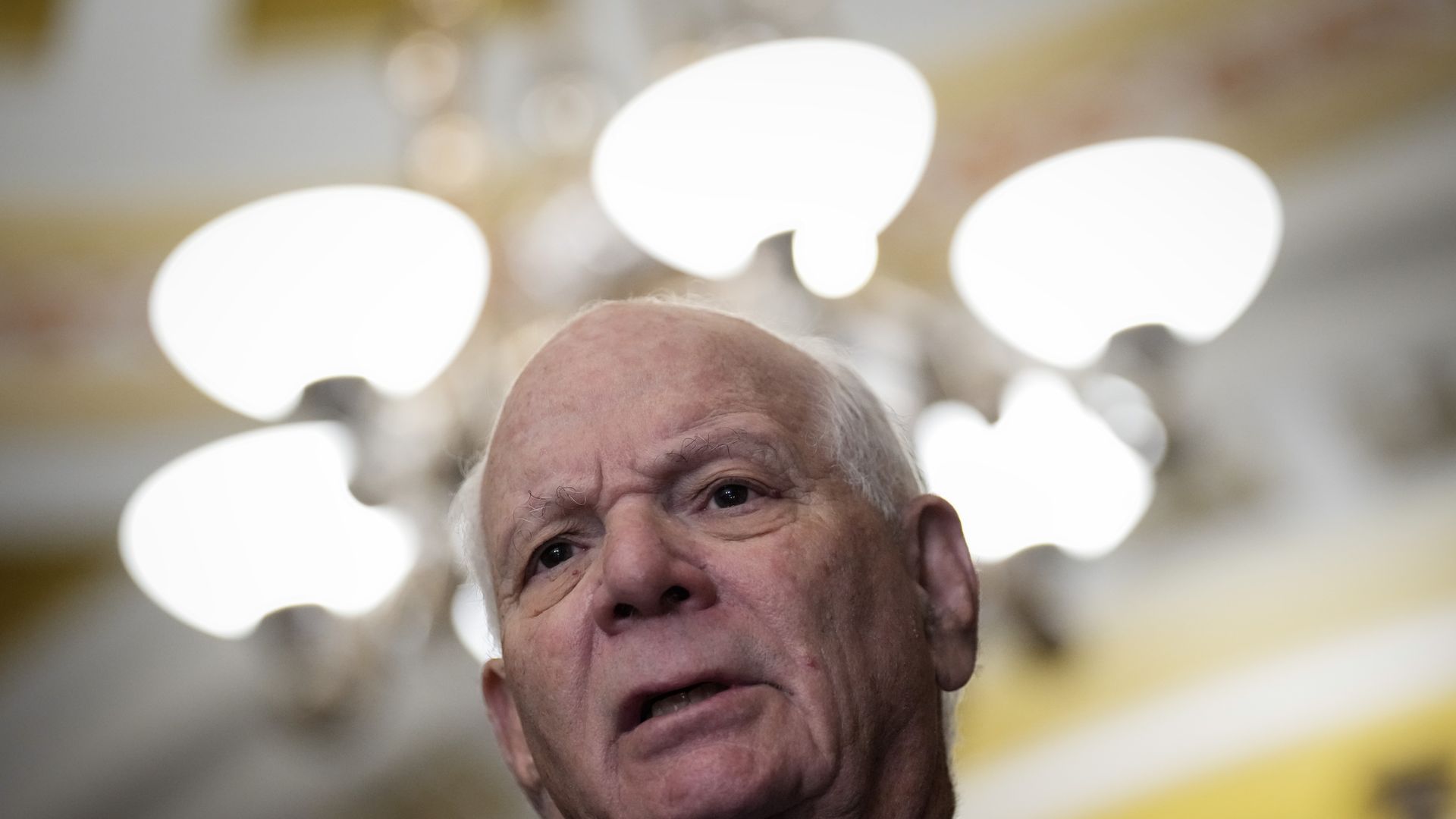
Cardin in October. Photo: Drew Angerer/Getty Images
Senate Foreign Relations Chair Ben Cardin is going after repressive tactics by the government of Tajikistan, a Central Asian resource hub.
Why it matters: Countries like Tajikistan will become increasingly important as producers of low-carbon energy products try to get raw materials from places outside China.
- Tajikistan, home to one of the world's largest aluminum producers, wants to leverage its vast mineral reserves and ample hydropower capacity to help supply the energy transition.
- But Tajikistan, like many other options for resources outside China, has its own potentially toxic human rights issues. Cardin said officials have "used intimidation and abused judicial procedures" to go after people in other countries, citing State Department analysis.
Driving the news: Cardin sent a letter on Nov. 27 to Emomali Rahmon, Tajikistan's president, urging him to "immediately end the repression" of protesters, journalists and activists in his country.
- The letter, shared exclusively with Axios and not yet made public, threatens that a failure to change authoritarian behavior may impact how U.S. policymakers view a continued trade relationship. It doesn't specify what potential actions the U.S. might take.
- "The United States wants to strengthen its growing partnership with Tajikistan. Bolstering human rights and the rule of law will reap long-lasting benefits for Tajikistan through increased influence, foreign investment, tourism, and trade," the letter states.
Context: Tajikistan is a large producer of industrial and precious metals, and is home to TALCO, one of the world's largest aluminum-producing companies.
- The country's ample mineral reserves have not been fully assessed for potential battery minerals, according to the IEA.
- But that hasn't stopped the government of Tajikistan from inking a minerals cooperation agreement with Italy and pursuing a similar relationship with South Korea.
The big picture: Companies trying to sell EVs and solar panels in the U.S. will now often be looking to get resources from other countries, instead of China or Russia.
- That's because of sourcing requirements in the IRA, as well as the China-focused Uyghur forced labor law.
What's next: Cardin will hold a hearing tomorrow on political repression by authoritarian governments.
