September 21, 2023

🫠 Happy Thursday. Another week of Congress doing the people's business!
🎼 Today's last tune is from Rep. Paul Tonko: "We Are Family" by Sister Sledge.
🚨 Situational awareness: The White House unveiled its new plans for calculating the "social cost of carbon."
🗓 Because of Yom Kippur on Monday, you'll next hear from us on Tuesday ... unless there's breaking news before then. (Always possible with this Congress.)
1 big thing: Budget problem traps energy, climate money

Illustration: Sarah Grillo/Axios
A wonky budget problem is holding back international funding for countering China's control over the energy transition, Jael writes.
Why it matters: Addressing the issue would help the U.S. challenge China's Belt and Road Initiative, its sprawling overseas investment strategy that has helped it lock up minerals worldwide.
Driving the news: Sen. Chris Coons told Jael he is privately pushing OMB to help the Development Finance Corporation, a U.S.-backed investment vehicle that puts equity — e.g. investment stakes — into early-stage energy, resource and infrastructure projects around the world.
- During a winding walk-and-talk, Coons outlined how a budget scoring problem has handcuffed the DFC because OMB automatically considers all of the corporation's investments to be a total loss to the government.
- The DFC is key to President Biden's global climate engagements, including countering China's power. The agency is involved in international renewables investments and linked to the Mineral Security Partnership, its transition mineral "friend-shoring" effort.
- "As China's economy is slowing," Coons said, "we have a critical window of opportunity to make a difference."
How it works: Coons shepherded the creation of the DFC in 2018 under former President Trump, whose administration then began investing in early minerals projects.
- The Biden administration has used the agency in a similar way, putting money into projects like a railroad in mineral-dense African nations and renewables projects in Egypt and India.
- But government data suggests the DFC spends less than is authorized in its budget.
- That's because — unlike other U.S. credit programs — the government's budgetary ledger doesn't consider anticipated returns from DFC equity investments.
The intrigue: The Delaware senator described this as OMB seeing the agency's investments as automatic losses when "we all know that's not true."
- "If you invest $100 million in 50 different ventures, you might not get every dime back, and you might not get every dollar back that you invested, but you'd have to be incompetent to get nothing."
- There's bipartisan support to make this change happen. Coons and Sen. John Cornyn put out a bill that would mandate this fix to the budget wrinkle, but it's not made headway in our mercurial Congress.
- Coons is pushing for OMB to find a workaround, a Senate Democratic aide told Jael. The effort involves the DFC, the African Development Bank and the Development Bank of Japan.
- "This little scoring is holding up the potential to leverage billions to really compete with [China] around the world," the aide said.
The other side: The administration supports this kind of "budgetary treatment," but it "requires a change in the law," OMB spokesperson Timothy White said.
2. Cantwell's update on hydro permitting bill
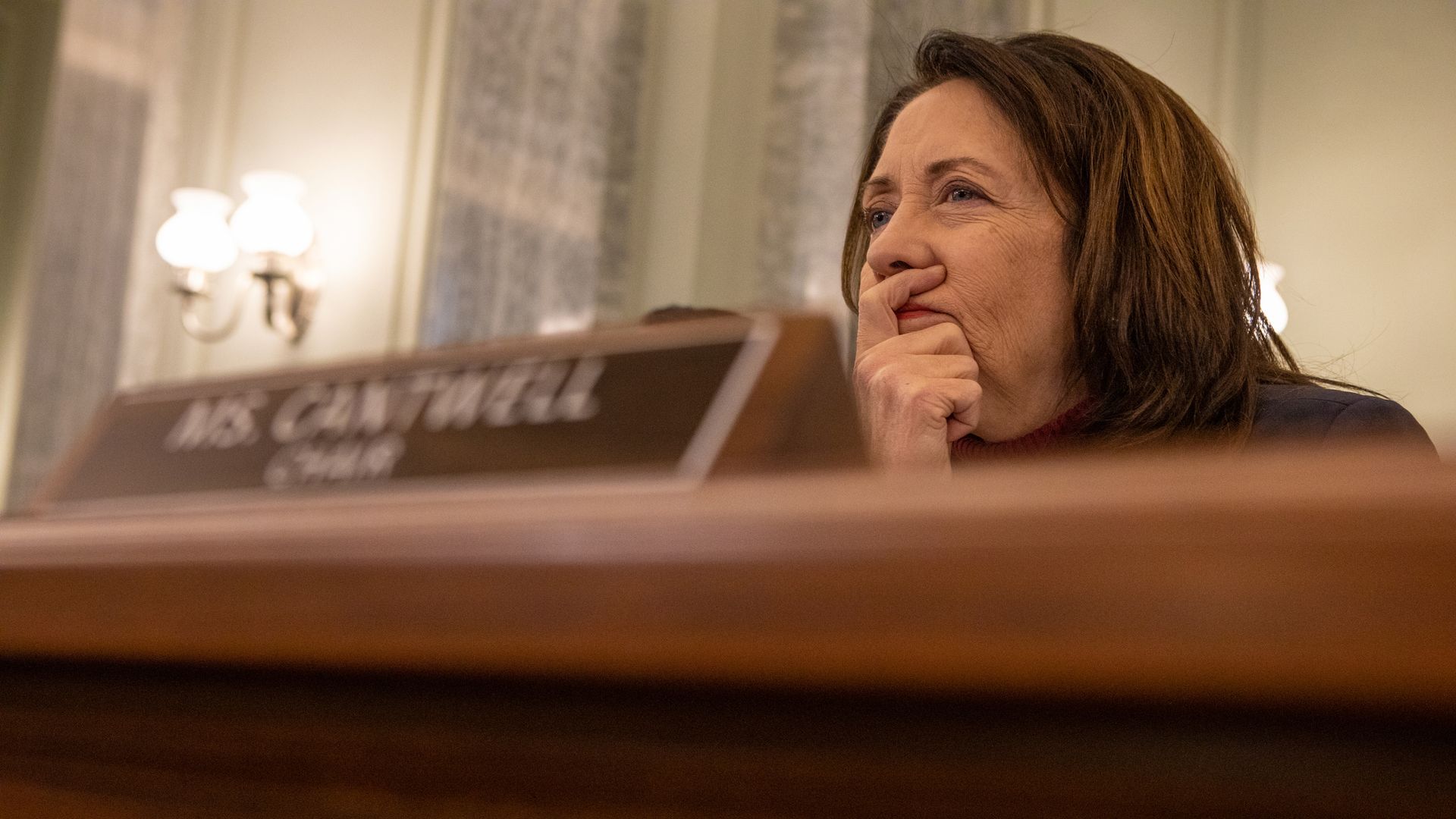
Cantwell in February. Photo: Anna Rose Layden/Bloomberg via Getty Images
Sen. Maria Cantwell's hydro permitting package didn't get a vote in Energy and Natural Resources like we expected, but its author isn't concerned.
Why it matters: Cantwell says she "never assumed" it would be marked up today and there's still work being done behind the scenes to get it through committee.
Details: The former top Democrat on Energy told Jael she's still in discussions with chair Joe Manchin to get him on board with a markup.
- "We're been adding Republicans to the bill," she said with one hand on an exit door from the Capitol. "We wanted to make sure all that happened."
The big picture: Cantwell is bullish on her bill's odds because it brings together disparate sides of the debate over hydro that have undermined dam upgrades and pump storage projects nationwide.
- "It has a lot of support — a coalition of people," she said.
Of note: The committee did report out the Mining Schools Act, as we previewed for you last week.
3. Whitehouse weighs calling insurers to testify
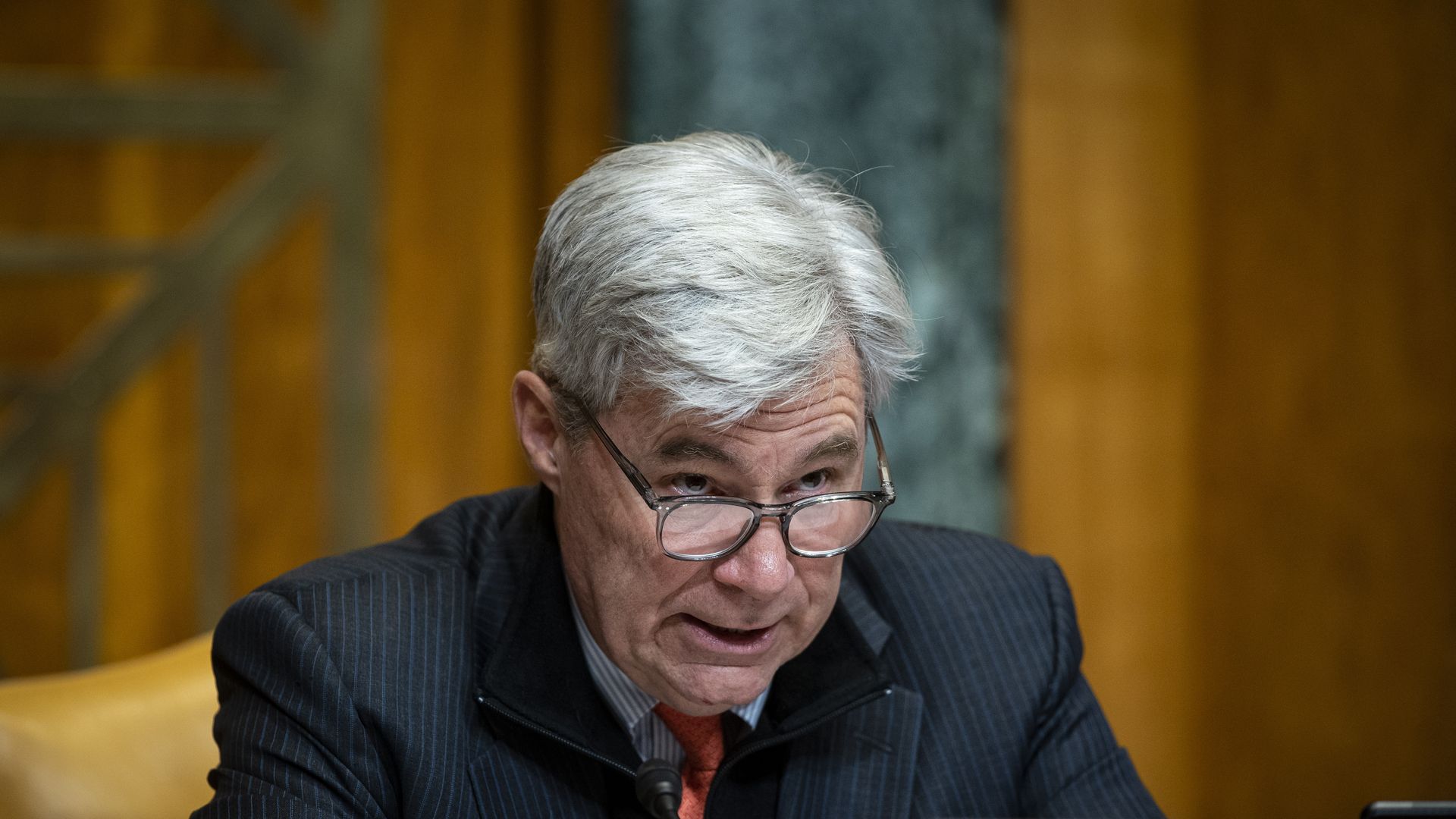
Whitehouse in March. Photo: Al Drago/Bloomberg via Getty Images
Senate Budget Chair Sheldon Whitehouse says he's open to calling private insurers to testify about their fossil fuel industry relationships.
Why it matters: Whitehouse wants answers on why insurance companies are paring back coverage in some areas due to climate hazards while continuing to insure oil and gas projects.
Driving the news: The Budget Committee is still waiting on answers after a second round of oversight letters were sent to insurers, the Rhode Island senator told Jael.
- Whitehouse declined to say if insurers have cooperated with the committee since it launched a probe into them over the summer.
- "We're still kind of in the middle of the process. I wouldn't want to start calling them out yet."
Once those responses come in, bringing them before his committee is "totally" on the table, he said.
- "It's weird. They have such huge economic incentives to head off the climate risks ... and the solution to withdraw from markets and shrink their footprint is hardly an ideal solution."
The bottom line: Insurers are increasingly under fire in Congress as coastal constituents feel the strain of increasingly hazardous storms and floods.
4. Catch me up: Farm bill, plastics, ethanol

Illustration: Shoshana Gordon/Axios
👋 LNG go bye: The House defense funding rule's failure today also means the chamber is unlikely to vote this week on that LNG exports bill.
💂♀️ Ag money guards: Conservatives joined with some enviros to call for "guardrails" on crop insurance programs in this year's farm bill.
🌽 Crop reload bill: GOP Rep. Mark Alford is introducing a bill to reauthorize a Trump program to let farmers recoup money they've lost from drought.
♳ Plastics push: Whitehouse and Rep. Lloyd Doggett reintroduced their bill targeting plastics pollution. The chemicals industry is not happy.
🛢️Let me-thane be: The American Petroleum Institute just laid out its plan for voluntary methane reductions. We're thinking about that methane fee.
⛽️ Ethanol rage: The Renewable Fuels Association's leader directly challenged the EPA's Science Advisory Board on the benefits of ethanol. Read his remarks.
✅ Thank you for reading Axios Pro Policy, and thanks to editors Chuck McCutcheon and David Nather and copy editor Steven Patrick.
View archive