February 16, 2023

☀️ Good afternoon, and thank you to the more than 200 guests who joined us at Hawk 'n' Dove for our launch happy hour last night!
- We expect more news this afternoon, but we'll bother you Friday only if we have breaking news.
- And because next week is a recess, we're planning to add only one story to your inbox then — but we'll have you covered if there's news you need to know.
1 big thing: Crypto climate crackdown
Illustration: Gabriella Turrisi/Axios
The Biden administration says it's moving forward with an effort to assess cryptocurrency's climate impacts, Jael writes.
Why it matters: Crypto is struggling after FTX’s demise, and Biden might be about to kick the industry while it’s down to keep it from stalling climate progress.
Driving the news: Sen. Elizabeth Warren told Jael as she rushed into a Senate subway car that she has "had conversations with the Department of Energy and I believe they will be making an announcement soon" on crypto mining and energy usage.
- Warren urged DOE to require crypto miners to disclose how much energy they use. The White House last year recommended that the department start obtaining this information in a report that raised red flags about the industry's energy consumption and climate footprint.
- Advocates have been pushing DOE to act now because the FTX collapse created a political window of opportunity.
- "Now’s a good time for so many reasons," said Jeremy Fisher of Sierra Club.
What they're saying: A DOE spokesperson confirmed it will be "outlining its efforts to evaluate crypto's energy intensity in the coming months."
- The spokesperson flagged that Energy Secretary Jennifer Granholm sent Warren a letter in November stating it has the authority to collect this data.
- "I welcome your input on how we can best partner to understand and mitigate any harmful energy and environmental impacts of the cryptocurrency industry," Granholm told Warren in the letter.
The big picture: Climate advocates are concerned that the sheer energy drag from crypto mining will help keep uneconomic coal, oil and gas power plants alive.
Who we’re watching: Sen. Cynthia Lummis is a leading advocate for the crypto business on the Hill, and being from Wyoming, she also advocates for coal and oil interests.
- Lummis noted that some crypto miners get power from otherwise-wasted natural gas flares or renewable energy.
- "These are just some of the innovative ways this industry is thinking outside of the box when it comes to energy usage," she said in an email.
2. Senate's carbon tariff debate

Sen. Kevin Cramer speaks at Axios event. Photo: Hector Emanuel for Axios
👀 The GOP might have competing carbon tariff proposals, Nick writes.
Why it matters: It shows how much interest the Hill has on the subject, even though the discussions are nascent.
Driving the news: We brought you a scoop this week about Sen. Bill Cassidy's forthcoming foreign pollution fee bill. Now, Sen. Kevin Cramer says he wants to develop his own framework.
- "I've settled on a position that I've taken that is what I consider to be the lowest-hanging fruit in the CBAM sweepstakes, or the carbon pricing sweepstakes. Sen. Cassidy's is a little more nuanced," Cramer told Nick during our newsletter launch event last night.
To be clear, neither Cassidy nor Cramer supports pairing a carbon border adjustment mechanism with a domestic price on carbon.
- In general, the idea is to put a fee on imports of carbon-intensive goods like steel and cement and to join a "carbon club" with the EU and other trading partners.
- The policy mechanisms here are complex, but for the GOP, carbon tariffs offer a way to punish China for its greenhouse gas emissions and prop up U.S. industry.
What they're saying: Cramer said he wants to put various proposals on the table to find a Senate consensus.
- "I believe that we'll find enough common ground among all of them to do one of them in a bipartisan way," Cramer said.
- There's "a process underway already of bipartisan conversation about that. I think it's serious and well-intentioned," Sen. Sheldon Whitehouse said in a gaggle after his first hearing as chair of the Budget Committee.
Of note: Whitehouse and fellow Democrat Chris Coons both have their own CBAM legislation.
- Whitehouse's bill would pair it with a conditional domestic carbon fee, an idea the GOP is unlikely to support.
- Democrats discussed including a carbon tariff in the IRA, but they ultimately dropped it.
3. Carper's anti-PFAS push
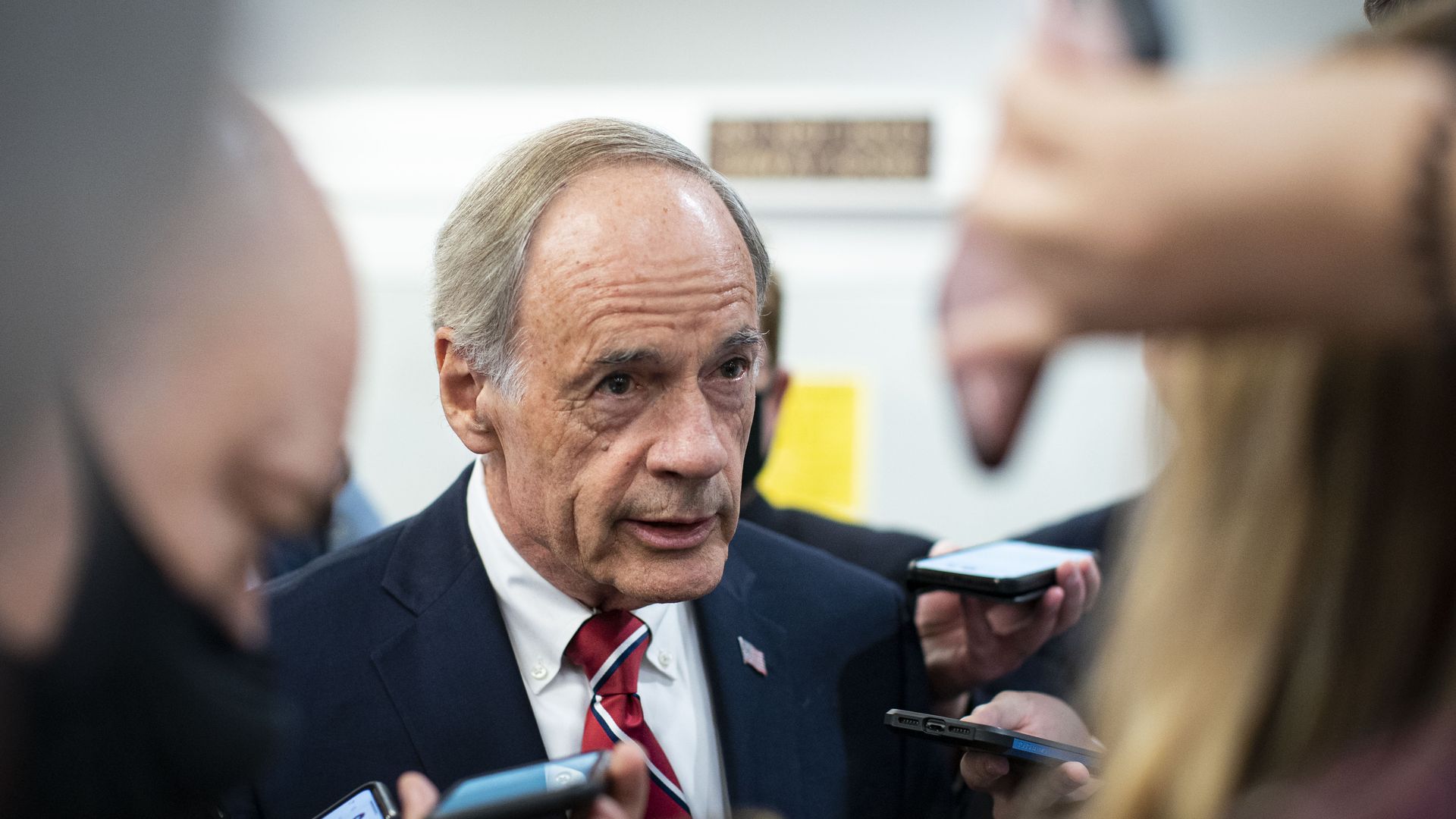
Sen. Tom Carper. Photo: Al Drago/Bloomberg via Getty Images
🧪 EPW Chair Tom Carper is looking to draft a bipartisan bill dealing with PFAS and other emerging contaminants during this Congress, he told Nick in a hallway interview.
Why it matters: This issue isn’t going away, and there’s plenty of appetite on the Hill to prod EPA and do more to clean up contaminated sites.
Context: EPA is already proposing to regulate PFOA and PFAS — two per-and polyfluoroalkyl substances linked to human health risks.
- Congress also gave the agency $2 billion to tackle emerging contaminants in the infrastructure law.
- Environmental activists want the agency to move faster.
Carper said he’s talking to ranking member Shelley Moore Capito and the relevant House committee chairs about what a bipartisan package might look like.
- “Even last year, we discussed seeing what we could do with respect to permanent chemicals and couldn't come together,” Carper said. “We're trying again this year, and I'm encouraged that we'll be able to do that."
What's next: Talks are early, and both Carper and Capito told Nick they don't know yet what a legislative package would include.
- "We're waiting for the EPA to give us a safe drinking level, but yes, we are going to work on this together," Capito said on her way to a vote this morning.
✅ Thank you for reading Axios Pro Policy, and thanks to editors Chuck McCutcheon and David Nather and copy editor Brad Bonhall.
- Do you know someone who needs this newsletter? Have them sign up here.
View archive