Mar 24, 2022 - Economy
Nearly 1 in 5 Americans now live in multigenerational households

Add Axios as your preferred source to
see more of our stories on Google.
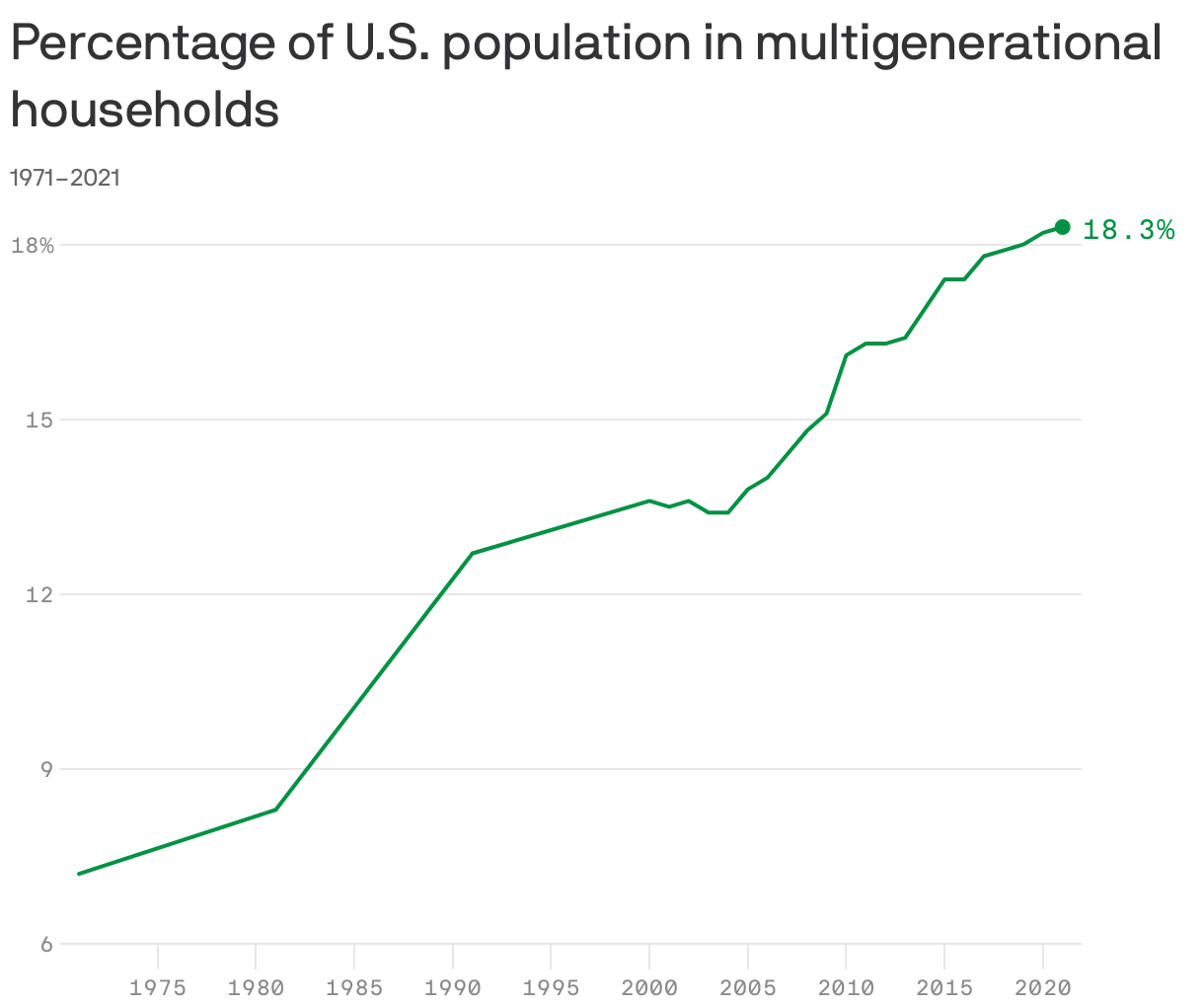
Americans are more than twice as likely to live in multigenerational family households than they were half a century ago.
Why it matters: Financial concerns, caregiving needs, marital trends and demographic shifts are driving changes in how we live.
- The number of people living in multigenerational households quadrupled from 1971 to 2021, while the share of the population in such an arrangement more than doubled to 18%, according to a Pew Research Center study released Thursday.
- Population growth among people of color is a big reason for the increase as they are more likely than white Americans to live with extended family, according to Pew, citing census data.
- "This is not a phenomenon that has peaked," D’Vera Cohn, one of the authors of report, tells Axios.
Be smart: A majority of adults who live in multigenerational households say financial issues are a key reason why.
- 50% of lower-income adults in such households say the arrangement helps them at least a little financially, compared with 36% of middle-income and 24% of upper-income adults.
- Young adults moving away from home, postponing marriage or getting jobs later in life is a contributing factor.
- Caregiving is a “major reason” for many, Pew concluded — whether it's caring for an adult, like an aging parent, or caring for someone else's kids.
What they're saying: "We found that living in multigenerational households is apparently a pretty good strategy to stay out of poverty," Cohn says.
- 57% of adults in multigenerational households said it's been very or somewhat positive experience, while 17% said it had been very or somewhat negative.
What we’re watching: Whether the strong job market or the effects of inflation alter people’s living arrangements.
