Axios World

May 13, 2019
Welcome to Axios World, where two evenings a week we break down what you need to know about the big stories from around the globe.
- Thanks for joining me! Please tell your friends and colleagues to sign up, and I'd love your tips and feedback: [email protected].
- Was this email forwarded to you? Sign up here.
1 big thing: Trump pushes China and Iran to the brink
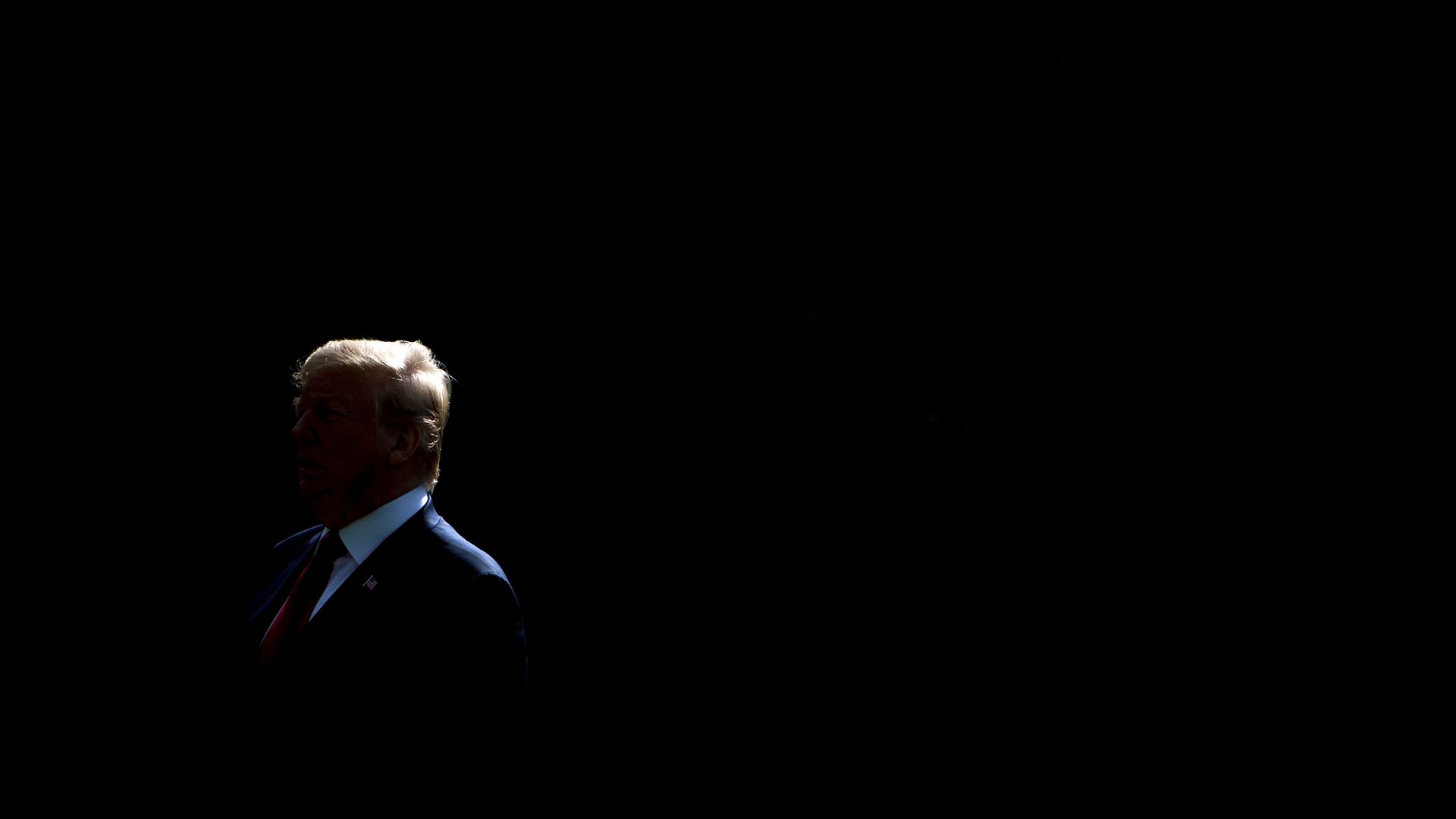
Photo: Brendan Smialowski/AFP/Getty Images
President Trump is pushing both China and Iran to the brink, betting theyâll capitulate and warning of dire consequences if they donât.
Why it matters: The stock market is already taking a beating as China retaliates to Trumpâs tariff hikes on $200 billion in Chinese goods, and analysts are warning of a possible global recession if he follows through with his threat to extend them to all Chinese imports.
- Meanwhile, Trumpâs warnings that Iran will âsuffer greatlyâ if âthey do anythingâ to provoke the U.S., paired with bellicose statements from senior officials, are deepening fears of another war in the Middle East.
- Even short of war, Trumpâs pressure campaign will likely mean higher oil prices, more suffering for the Iranian people and the collapse of the 2015 nuclear deal.
Between the lines: This is how Trump negotiates, Axiosâ Jonathan Swan emails:
- âHe believes in grand displays of hard power â extreme threats of military force ('fire and fury' for North Korea, sending the carrier to Persian Gulf) and punitive measures (tariffs and sanctions) â more than he does the subtler tools of statecraft.â
- âHe believes the only way to get what you want from another country is to first force them into a begging position. The leaders in both China and Iran are hardliners who put a premium on maintaining national pride and, as the Chinese explicitly said, âdignity.â"
- âBoth countries' leaders have indicated they're willing to be patient with Trump and intend to wait him out. The question is how impatient Trump becomes and how he reacts to the negative domestic effects of some of his punitive policies.â
The latest: China announced tariff hikes today on $60 billion in U.S. goods. Meanwhile, the Communist Partyâs propaganda machine kicked into high gear, Bill Bishop reports in his Sinocism newsletter.
- Chinese media âhas struck a defiant tone since Friday, blaming the US for the failure, playing the victim with its usual shrill skill, talking tough about being able to outlast the US in any prolonged trade fight, and ⌠threatening non-tariff retaliatory measures,â Bill notes.
Meanwhile, Secretary of State Mike Pompeo added a last-minute stop in Brussels to his schedule today in order to warn leaders there of the âescalating threatâ from Iran.
- Pompeo and national security adviser John Bolton have continued to raise such threats over the past week without offering specifics. Trump told reporters today that heâd been âhearing little stories about Iran,â adding: âIf they do anything, they will suffer greatly.â
âToday, the question in Washington â and surely in Tehran, too â is whether President Trump is making moves that will provoke, instigate, or inadvertently drag the United States into a war with Iran,â Robin Wright argues today in the New Yorker.
- âThe Administration has vowed to keep increasing pressure until Iran changes its behavior. ... So far, Tehran has not changed course.â
- The stated position from both civilian and military leaders is that the U.S. isnât seeking a military confrontation with Iran but is prepared for one if necessary.
- âThe problem, as U.S. history proves, is that the momentum of confrontation is harder to reverse with each escalatory step,â Wright contends.
What to watch: Last month, as the U.S. stepped up its attempts to block all Iranian oil exports, Iran threatened to close the Strait of Hormuz, the âworldâs most important oil chokepoint,â per Fortune.
- Today, Saudi Arabia announced that two Saudi tankers were damaged by an âact of sabotageâ over the weekend in the Gulf, without identifying any suspects. Iranâs foreign ministry distanced itself, calling the incident âworrisomeâ and âregretful."
- But now, AP is citing an anonymous U.S. official as saying an "initial assessment is that Iranian or Iranian-backed proxies" were responsible.
2. Trump lauds Hungary's "respected" strongman
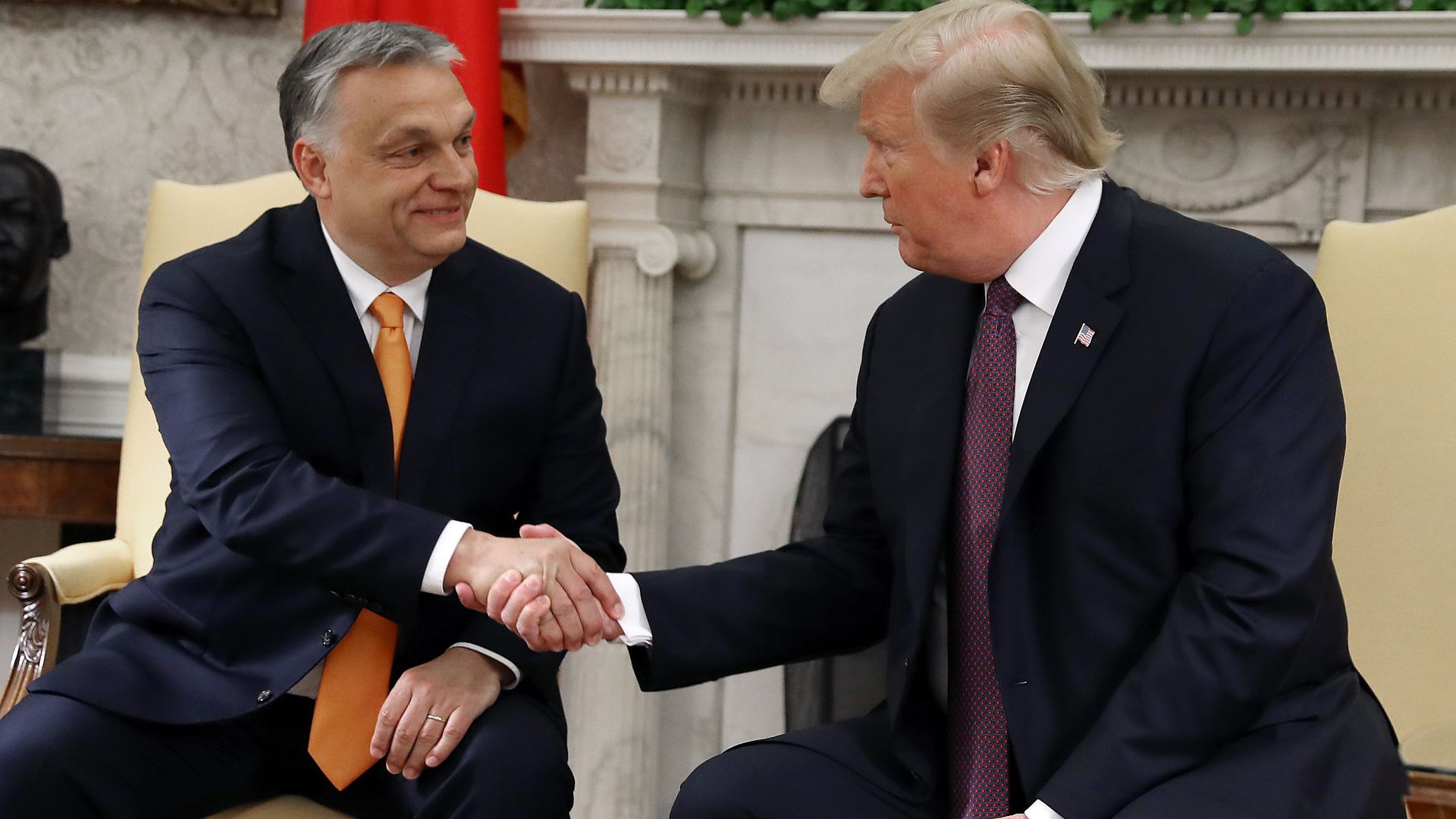
OrbĂĄn in the Oval. Photo: Mark Wilson/Getty Images
Trump praised Hungary's Viktor OrbĂĄn in an Oval Office meeting today as "respected all over Europe," lauded his draconian approach to immigration and brushed aside a question about his efforts to undermine Hungary's democratic institutions.
Why it matters: "OrbĂĄn's politics skew authoritarian: He has repressed civil society and the media while fueling corruption, xenophobia and anti-Semitism. Trump's meeting with him lends legitimacy to his illiberal agenda," Jonathan Katz of the German Marshall Fund writes for Axios Expert Voices.
- The meeting comes as OrbĂĄn and his populist allies "are contesting critical European Parliamentary elections. Trump is signaling support for them as he disavows our true friends â Merkel, Macron," tweets Nicholas Burns, a former senior U.S. diplomat.
Flashback: Barack Obama declined to host OrbĂĄn, and George W. Bush moved a 2001 meeting from the Oval Office over concern about his more controversial views. Bill Clinton did host the Hungarian prime minister in 1998, during his first stint in office.
- Then, as now, the focus from the press corps was on an issue that had nothing to do with Hungary. In Clinton's case, it was impeachment. Today, it was China, Iran and the Russia investigation.
Correction: This post previously stated that Bush declined to host OrbĂĄn altogether. I apologize for the error.
3. Latin America: Populism rebounds
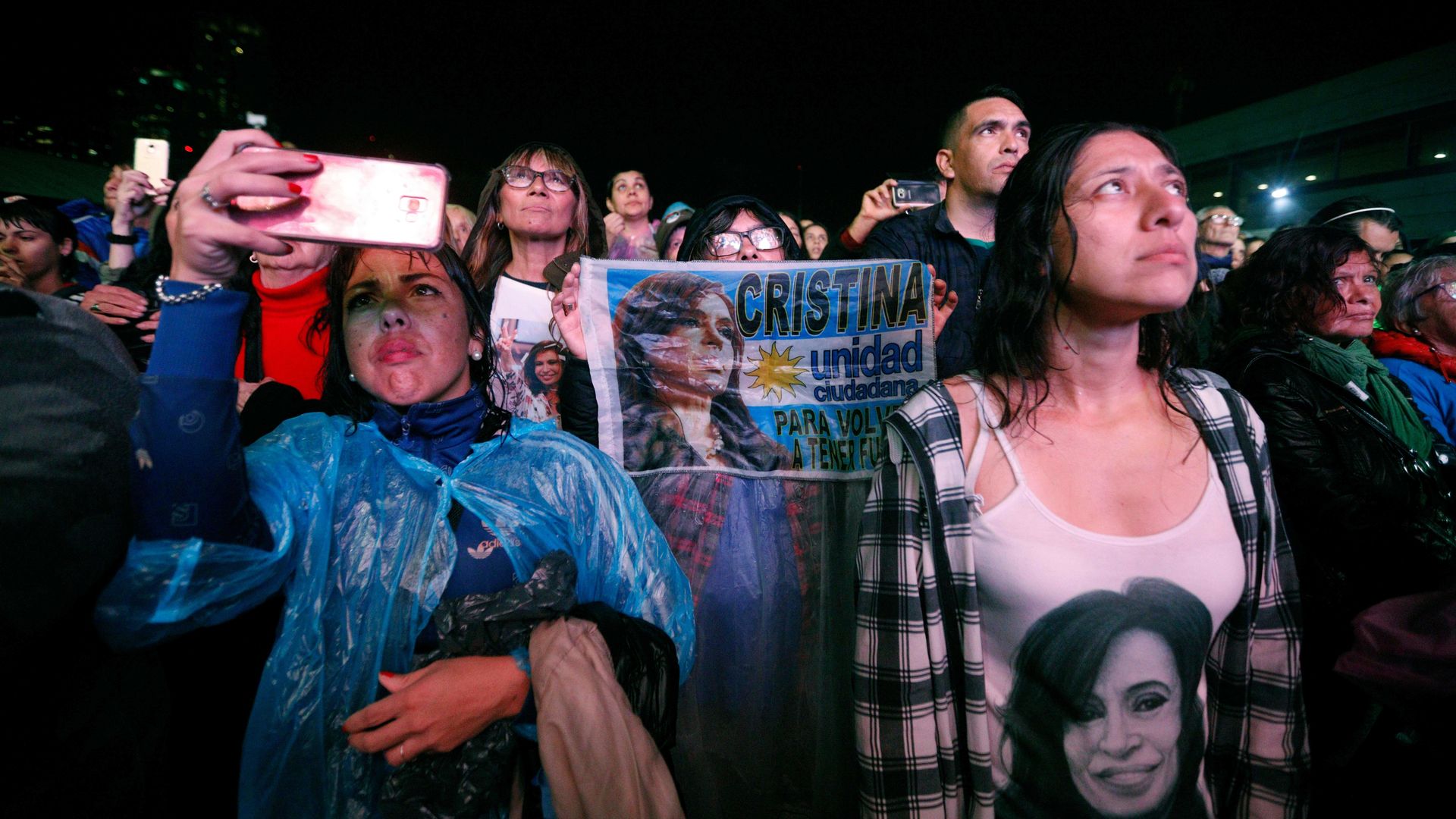
Not your average book club: FernĂĄndez supporters at the launch of her new book, "Sincerely." Photo: Emiliano Lasalvia/AFP/Getty Images
Argentina's center-right ruling coalition suffered a resounding defeat Sunday in regional elections, but the lessons ahead of October's presidential vote are less clear cut.
The big picture: The landslide winner in CĂłrdoba, incumbent Gov. Juan Schiaretti, falls between two pillars of Argentine politics â Mauricio Macri, the unpopular president, and Cristina FernĂĄndez de Kirchner, his populist predecessor. FernĂĄndez is aiming for a political comeback despite facing a slew of corruption charges.
- "Amid economic turmoil that has battered Argentinaâs markets, job losses and stubborn inflation, hard-hit voters have been losing faith in Macri, though many are wary of turning back to ... FernĂĄndez, seen as the likely main contender," per Reuters.
- What to watch: A recent poll put FernĂĄndez 9 points ahead of Macri in a hypothetical second-round matchup. FernĂĄndez held a campaign-style rally last week to launch her new book, which is already a smash hit, the FT reports.
Flashback, from the FT's outgoing Latin America editor John Paul Rathbone:
- "[F]our years ago, I was amazed, as were many, when [Macri] unexpectedly won Argentinaâs presidency. He was young, apparently sensible and open-minded. Most important of all, he was unencumbered by ideology or nostalgic nationalism."
- "Wonderful irony: perhaps the continent was at last rejecting the siren call of populism, just as the west had begun to embrace it. Yet now, the region, or at least Brazil and Mexico, have apparently returned to form and elected 'national saviors' as their leaders. Is there ever an escape from the labyrinth?"
Zoom out: The Economist lays out "clear signs of disenchantment with democracy" across Latin America in this week's edition.
4. Africa: World's biggest free trade area
The largest free trade area in the world, both by area and by population, will formally come into effect on May 30, now that Gambia has become the 22nd country to ratify the Africa Continental Free Trade Area, or AfCFTA, Axios' Felix Salmon writes.


The big picture: Africa has 1.2 billion people â more than double the EU or NAFTA. Almost every African country has signed the treaty; the one big exception is Nigeria. AfCFTA came together in record time, after first being proposed by Rwandan President Paul Kagame in March 2018. As a result, a lot of the implementation details are a bit fuzzy.
- "Whatâs been really impressive is how quickly theyâve agreed to and then ratified the deal," says Grant Harris, the CEO of Harris Africa Partners. "Now the real work begins in terms of how issues are worked through in practice."
Reality check: Africa's trade problems won't be solved overnight. The continent needs some $50 billion per year in infrastructure investment, and truckers are still likely to spend hours or days idling at international borders.
- By the numbers: The World Bank's Paul Brenton calculated in 2012 that passenger traffic between Brazzaville and Kinshasa â on opposite sides of the Congo River â was just 20% of the amount of traffic between East and West Berlin before the wall came down.
Why it matters: Almost every African country exports more outside the continent than it does within it. African supply chains are extremely weak, and the amount of prosperity that could be generated by strengthening them is enormous. AfCFTA, on its own, is not sufficient to create a booming market in intra-African trade. Still, it's an extremely important milestone on the way there.
5. Data du jour: Sharing, not trusting
People in emerging economies around the globe are becoming wary of using social media for political news due to the rampant amount of misinformation spreading on those platforms, according to a new Pew Research Center study.


Why it matters: Social media has largely democratized ideas and information, but people in developing countries now say that the technology also makes it easier for politicians to manipulate them â meaning it isn't as reliable as in-person communications, Axios' Sara Fischer writes.
Details: A median of 65% of respondents from the 11 countries surveyed say that social media increases the risk of manipulation by domestic politicians. A median of 57% say those same technologies increase people's ability to have a meaningful voice in politics.
- While most people in developing countries say they still rely on social media to introduce them to new ideas, most say they don't trust the news on those platforms.
Go deeper: Subscribe to Sara's Media Trends newsletter
6. What I'm watching: "Meeting Gorbachev"
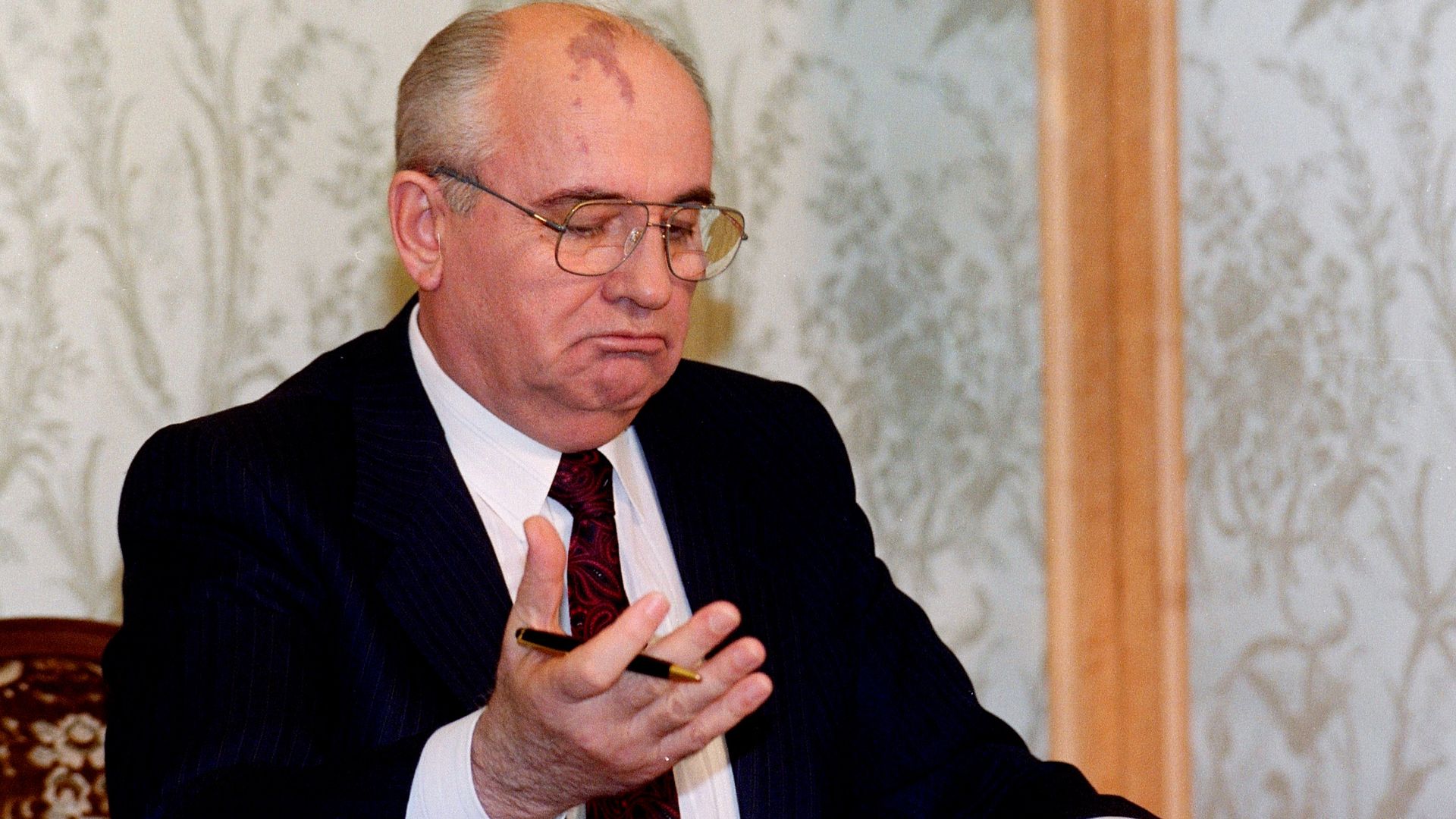
Gorbachev reads his resignation statement on Christmas, 1991. Photo: Vitaly Armand/AFP/Getty Images
Werner Herzog's portrait of Mikhail Gorbachev is of a profoundly lonely man for whom pride and regret have blended into a single emotion.
- Herzog's film uses historical footage, conversations with leading figures of the era (former Secretary of State George Schultz, former Polish President Lech Walesa) and three interviews with the man himself to trace Gorbachev's rise and the Soviet Union's fall.
- Gorbachev is now 88, overweight and exhausted, but he summons a mischievous smile and bursts of defiance.
- One key quote: âAmericans thought theyâd won the Cold War and this went to their heads. What victory? It was our joint victory; we all won! It would never have happened if the entire world didnât want it.â
Gorbachev blames "reckless" politicians like Boris Yeltsin for the collapse of the USSR:
- âAnd now I get asked, why didnât I stop them? But it was like hitting my head against a brick wall. ... I probably should have acted differently towards [Yeltsin]. But Iâm not that kind of person. Iâm not vengeful. I should have sent him off somewhere. He was playing up. I feel sorry for my own people.â
- âI regret it to this day," Gorbachev says of the dissolution of the Soviet Union. "Yes, itâs hard. Itâs my own internal problem."
Gorbachev brightens when asked about his good fortune in meeting his wife, Raisa, who died in 1999: âWhy do you say it was luck? I searched for her and I found her.â
- The camera lingers on his pain-stricken face after Herzog asks if he can remember her laugh, her smell. âWhen she died, my life was taken away from me," he says.
- As the film concludes, Gorbachev tells Herzog he has asked God for two more years, and recites a poem by Mikhail Lermontov titled, "I Go Out on the Road Alone."
"Meeting Gorbachev" is playing in select theaters and will come to DC's E Street Cinema later this month.
7. Stories we're watching
Sunday cricket on the beach in Elie, Scotland. Photo: Jeff J Mitchell/Getty Images
- Senior Palestinian official denied entry to U.S.
- Scoop: Former IDF chief warned Trump aides of West Bank escalation
- Venezuela's GuaidĂł seeks talks with U.S. military
- The case for taking Trump to Supreme Court over Yemen veto
- Farage's Brexit Party poised to dominate EU elections
- Cuba blames U.S. for struggles, but Venezuela plays a role
- Ireland bans U.S. pastor in first use of exclusion powers
âLetâs quarrel with Canada. I will declare war against them. Load that up on a ship and I will advise Canada that your garbage is on the way. Prepare a grand reception. Eat it if you want to.ââ Philippine President Rodrigo Duterte last month on a long-running garbage feud with Canada
Thanks for reading â see you Thursday evening
Sign up for Axios World

Take a tour of the most important stories shaping our world