Axios What's Next

October 05, 2022

People who switch to electric cars tend to stick with them, Joann reports today — a promising sign for long-term EV adoption.
Today's newsletter is 1,077 words ... 4 minutes.
1 big thing: Once you go electric...
Illustration: Sarah Grillo/Axios
People who buy electric vehicles (EVs) really like them, according to U.S. vehicle registration data, which shows most EV owners tend to buy an EV for their next car too, Joann Muller reports.
Why it matters: The data reveals a growing embrace of electric cars as automakers and the federal government pour billions of dollars into EV and battery production.
What's happening: Axios is tracking the historic shift away from gasoline by examining vehicle registration data from S&P Global Mobility. Here's a peek at the latest data:
- Roughly two-thirds (65.3%) of EV-owning households that bought a new car in 2022 got another electric.
- That's up sharply from the second quarter of 2021, when about 48% of EV-owning households in the market for a new car bought another EV.
- The trend has been consistent throughout 2022, notes Tom Libby, associate director of industry analysis at S&P Global Mobility.
- "To me, that's a very positive sign about the future of EVs," he tells Axios.
The big picture: The U.S. lags China and Europe when it comes to EV adoption, but the market is clearly shifting.
- Consumers have lots of options to choose from these days, and more affordable models are on the way.
- General Motors, for example, is introducing an electric version of its top-selling Chevrolet Equinox SUV with a roughly $30,000 base price.
- The number of EV models available in the U.S. jumped from 27 in July 2021 to 45 a year later. That number is expected to reach almost 150 by 2025, per S&P Global Mobility.
Where it stands: Tesla's Model Y and Model 3 continue to dominate. Those two models alone accounted for 51% of all new EV registrations in July (the latest available month).
- And Tesla brand loyalty is through the roof, notes Libby — 91% of Tesla owners who bought another EV opted for another Tesla.
- "That's an amazing statistic," says Libby. "Not only are they selling a lot, they’re keeping the owners. That’s a very powerful combination."
Yes, but: As rivals introduce new models, Tesla's U.S. market share will inevitably shrink as the overall pie grows. In fact, that's already happening.
- Tesla had 81% of the EV market at the beginning of 2019; today it has less than 60%.
Between the lines: EVs accounted for 5.8% of all new cars registered nationally in July, up from 3.4% a year ago.
- California remains the leading U.S. electric car market. In San Francisco, EVs accounted for a third of all July registrations.
- Texas is also seeing strong EV growth in places like Austin and Dallas, where EVs accounted for 9.6% and 8.6% of July new car registrations, respectively.
2. Elon’s risk tolerance and Twitter
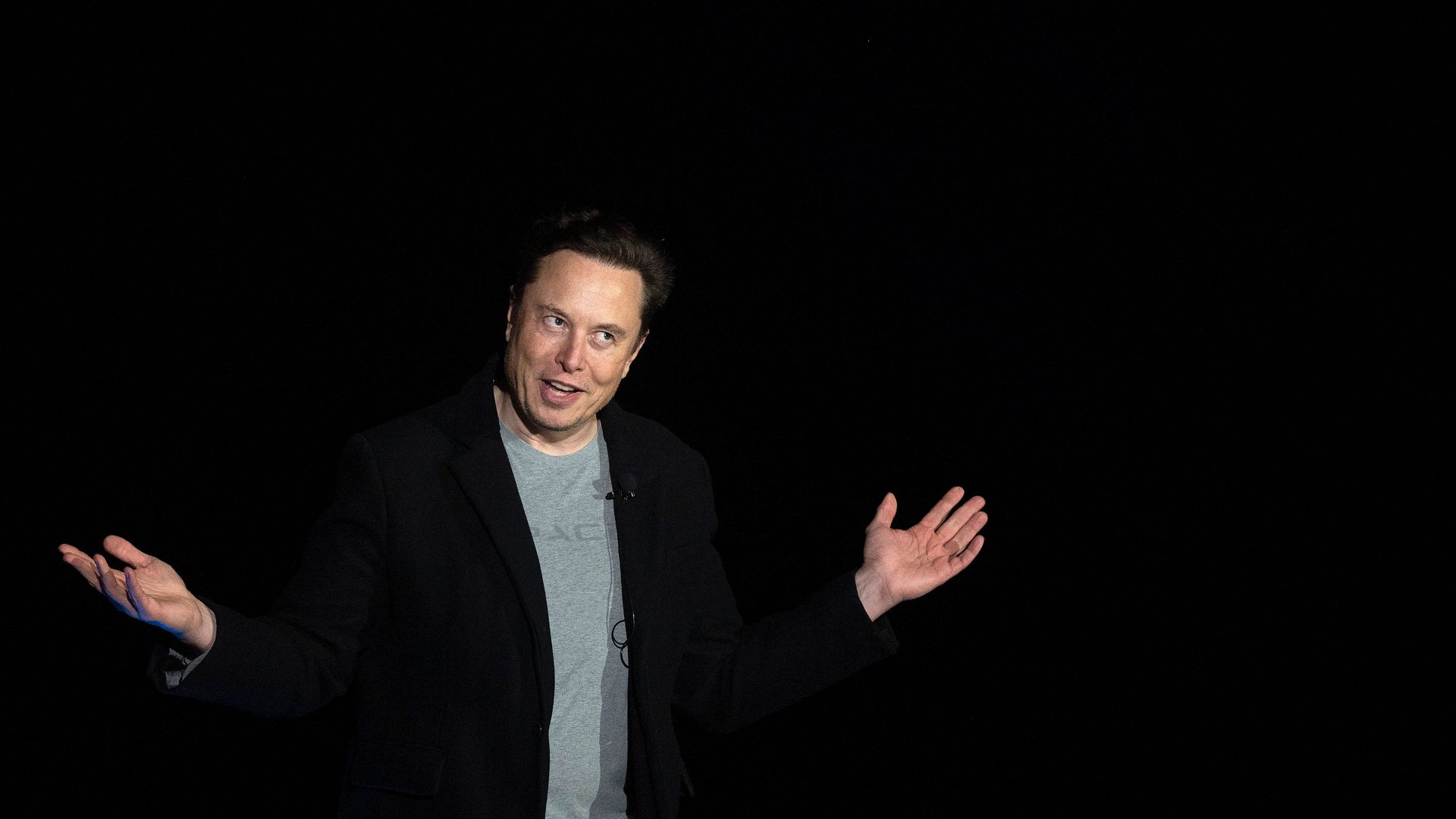
Elon Musk speaking during a press conference at SpaceX's Starbase facility on February 10, 2022. Photo: Jim Watson/AFP via Getty Images
Elon Musk's risk-taking at Tesla could offer a glimpse of how he'll manage the digital public square now that he wants to proceed with his offer to buy Twitter, Joann writes.
Why it matters: Musk's high risk tolerance has turned everyone into guinea pigs for his self-driving car experiment — even those who don't drive a Tesla but happen to share the road with them.
What's happening: While most other auto companies use trained safety operators to test their self-driving technology, Musk's approach is to release ever-more-advanced features to ordinary Tesla owners and collect feedback as they try it out.
- Tesla's Full Self Driving beta software is now available to 160,000 Tesla owners.
- The name is misleading; drivers are supposed to keep their hands on the wheel and pay attention in case something goes wrong.
And things do go wrong sometimes. Data released by the National Highway Traffic Safety Administration (NHSTA) identified 392 reported accidents as of May 2022 involving cars operating with assisted-driving features.
- Roughly 69%, or 273, of those crashes involved Teslas.
- The safety agency is investigating whether Tesla’s autopilot system increases the risk of accidents, and could issue a recall if it believes the technology's design is to blame.
What to watch: How Musk's approach to risk-taking in business might play out at Twitter.
🎧 Hear the story of Musk's meteoric rise on the newest season of our podcast, "How it Happened: Elon Musk vs. Twitter."
3. Recycled wastewater beer comes stateside
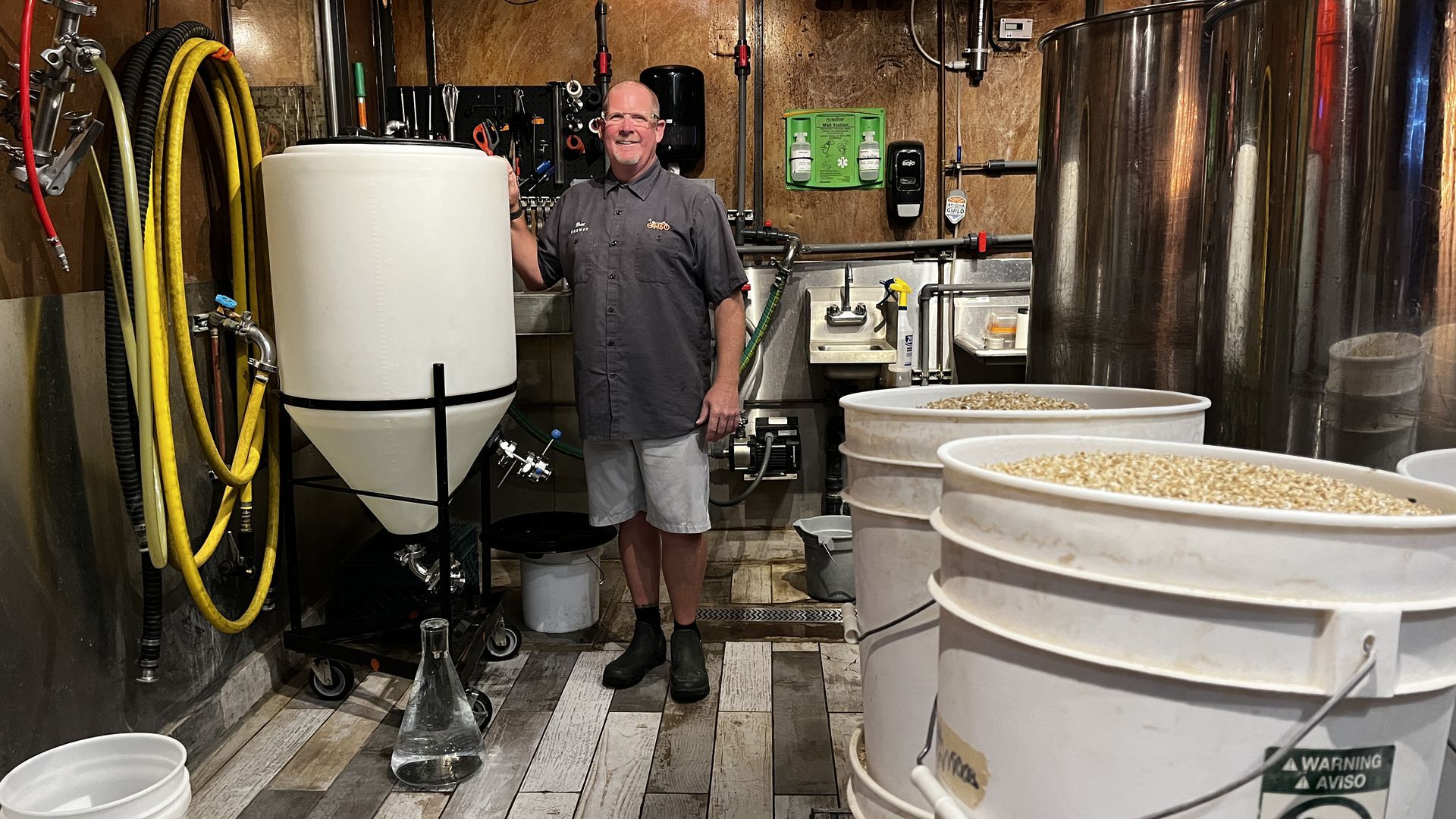
O.H.S.O. brewmaster Bret Waters shows off one of his water tanks. Photo: Jessica Boehm/Axios
Scottsdale, Arizona's water department is recapturing and purifying wastewater that's then given to local breweries to be recycled into beer, Axios' Jessica Boehm reports.
Why it matters: Water use is an increasingly urgent issue in the American West, and finding creative ways to reuse H20 will be vital for area communities and businesses.
You may have an understandable "yuck" reaction when you think about drinking the water you use to bathe, wash dishes, and flush the toilet.
- But Scottsdale's experts say the resulting product is purer than bottled water.
What they're saying: "We're trying to get more people used to the idea of recycled water because, with the drought and the Colorado River shortage, this is a new alternative water source that we will be using in the future," said Scottsdale Water's Valerie Schneider.
Look abroad: A Singapore brewery began a similar experiment earlier this year.
4. 📸 Eyy, I'm chargin' here!
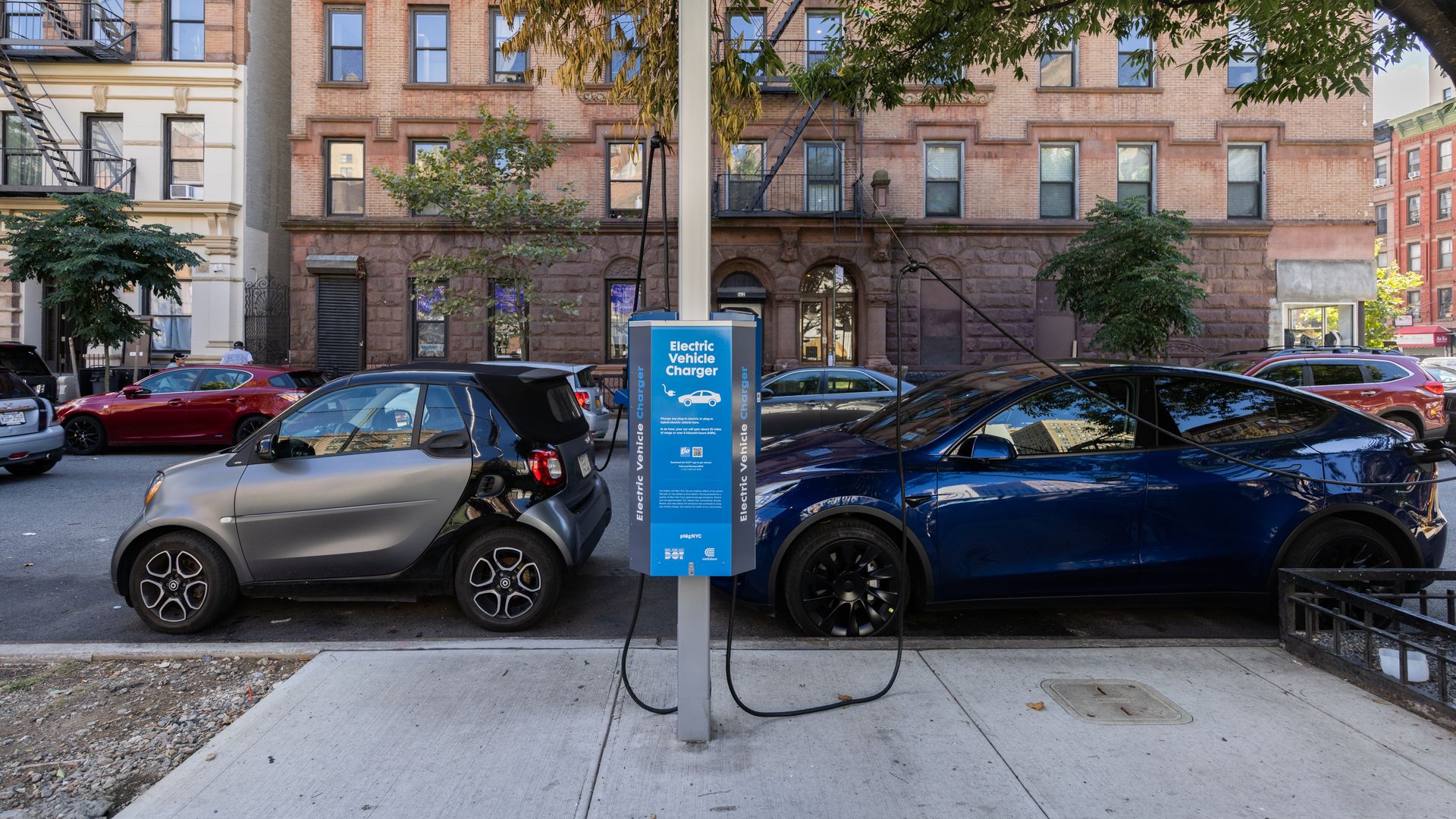
A curbside electric vehicle (EV) charger near New York City's Central Park. Photo: Jeenah Moon/Bloomberg via Getty Images
Electric vehicle charging stations now outnumber gas stations by 10 to one in Manhattan, per a new Bloomberg analysis.
Why it matters: Skeptics have long argued that EVs aren't practical in crowded cities like New York, where many car owners street park their cars and thus don't have easy access to a charger.
Yes, but: Manhattan has become lousy with chargers, which are often installed either beside EV-only street parking spots or in public parking garages.
- The island has just 29 gas stations left, compared to around 320 EV chargers, Bloomberg found.
Of note: If you include New York's other four boroughs, gas stations still outnumber EV chargers at about 700 to 520 — but chargers are catching up fast.
5. Australia protects its animals
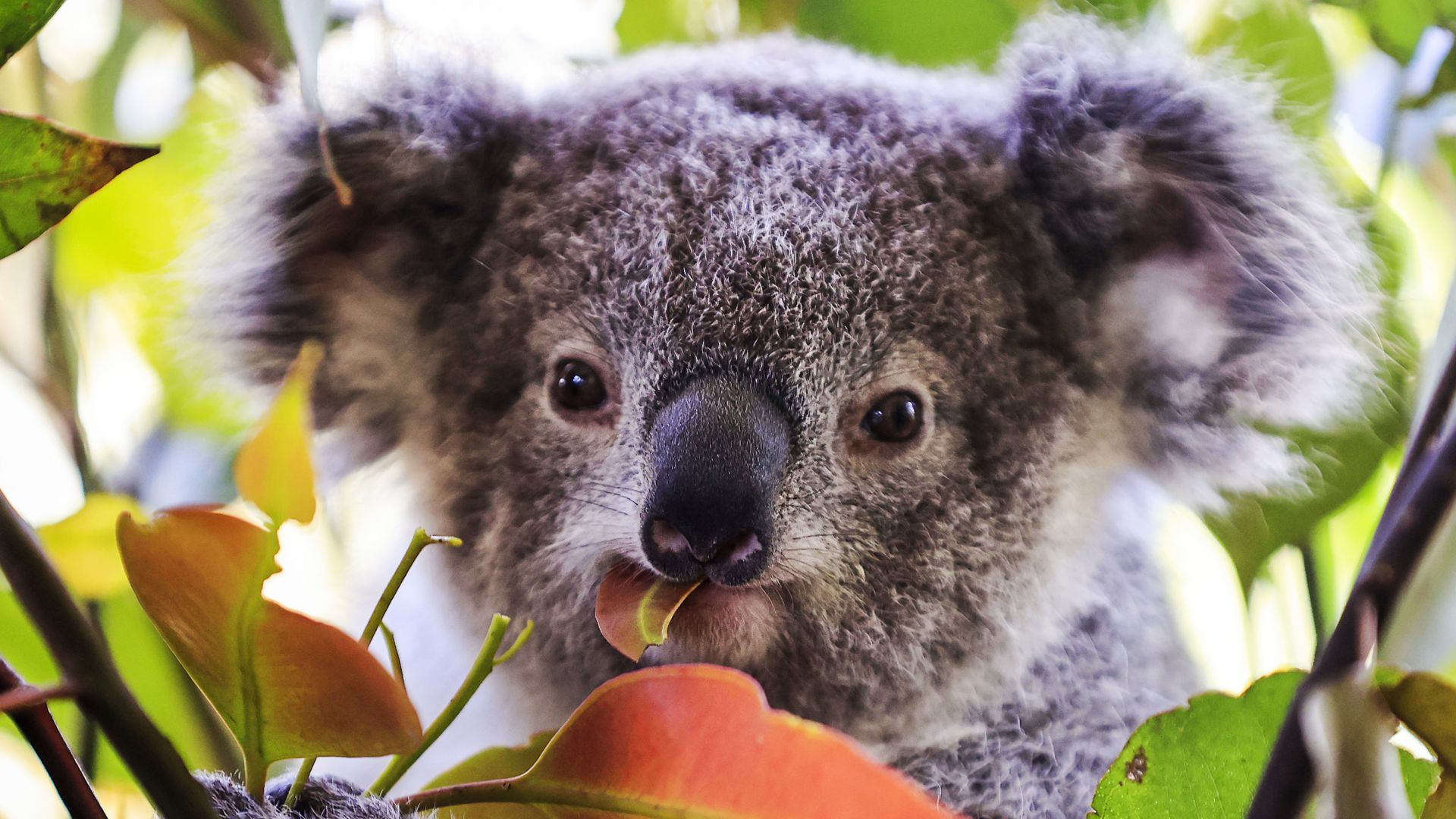
A baby koala at Wild Life Sydney Zoo in Sydney, Australia. Photo: Mark Evans/Getty Images
Australia will reserve at least 30% of its land mass for conservation to protect threatened plants and animals, Axios' Rebecca Falconer reports.
Why it matters: "Australia is the mammal extinction capital of the world," Australian Environment Minister Tanya Plibersek said in a statement announcing the 10-year plan.
Details: "Based on input from researchers and experts from the community, this plan identifies 20 priority places and 110 priority species and will guide recovery actions that will benefit a broad range of threatened species and their habitats," Plibersek said.
- Australia has lost more mammal species than any other continent, according to a July report.
- The number of listed threatened species increased by 8% since the last report five years ago.
A hearty thanks to today's What's Next copy editor, Patricia Guadalupe.
Was this email forwarded to you? Get your daily dose of What's Next by signing up here for our free newsletter.
Sign up for Axios What's Next

The next decade of big, sweeping changes will unfold in cities and communities where new technologies like 5G, AI and drones are transforming how we work, live and play together. What’s Next will guide you through the revolution.