Axios What's Next

August 31, 2022
Sure, fully electric cars are great — but plug-ins still make a lot of sense too, Joann reports today.
- 🎧 The new season of Axios' How It Happened podcast, "Elon Musk vs. Twitter," features exclusive reporting on Musk, the rise of Twitter and the ramifications of their collision. Subscribe here.
Today's Smart Brevity count: 942 words ... 3½ minutes.
1 big thing: Reconsider the plug-in hybrid

Illustration: Sarah Grillo/Axios
Plug-in hybrid vehicles (PHEVs) are a good bridge car for drivers reluctant to go fully electric — but they also make a lot of sense for the broader industry, given problems like a lack of charging infrastructure and battery scarcity, Joann Muller writes.
Why it matters: Lawmakers' efforts to get Americans to replace their gas-powered cars with EVs are about to run into two stubborn realities: Most consumers aren't ready to go electric, nor is the battery supply chain prepared to meet a surge in demand.
Driving the news: The Inflation Reduction Act, which President Biden signed into law earlier this month, purported to expand EV tax credits (though supply chain requirements mean fewer cars now qualify).
- Plus, a new California mandate would ban the sale of new gas-powered vehicles by 2035. Other states are expected to follow.
Yes, but: Expanding EVs' market share will be challenging if the industry can't produce enough batteries.
- Automakers are investing billions in new battery manufacturing while rushing to close deals with mining companies to lock in supplies of lithium, nickel and other critical metals.
- Many manufacturers anticipate a battery bottleneck in the latter half of this decade as EV demand takes off.
Plug-ins, which run on electric power for around 20-40 miles before switching to a gas engine, use much smaller batteries than full EVs.
- They still usually have enough electric driving range for most people's daily commute or errands, as long as their owners plug them in overnight.
The catch: Most PHEV owners don't plug in their cars, so they end up using gas anyway and missing the benefits of the partially electric life.
- For this reason, a recent study from the International Council on Clean Transportation found that real-world PHEV fuel consumption in Europe was 2.5 to 5 times higher than laboratory testing.
Of note: Many forecasters, including Boston Consulting Group, predict EVs will take off in the coming years, while PHEVs will stay flat or fade away.
The other side: Convincing people that plug-in hybrids are the best solution right now is "not the simplest argument to make," concedes Toyota's chief scientist Gill Pratt — especially when the government is pushing fully electric cars.
- Yet most EV owners are "dragging around expensive bricks" because they don't need 300 miles of battery capacity weighing down their car, he says.
Go deeper: "In an era of battery scarcity, we could have two 150-mile EVs for the battery capacity in every 300-mile EV," writes automotive journalist Edward Niedermeyer in a New York Times column.
- "Using the same 300-mile EV battery, you could have six plug-in hybrids with 50 miles of electric range for daily driving and a gasoline engine for those rarer road trips, or many, many more e-bikes," he writes.
The bottom line: If you want to make an immediate impact on carbon emissions, plug-in hybrids aren't a bad choice.
2. Turning cell phones into satphones
Illustration: Aïda Amer/Axios
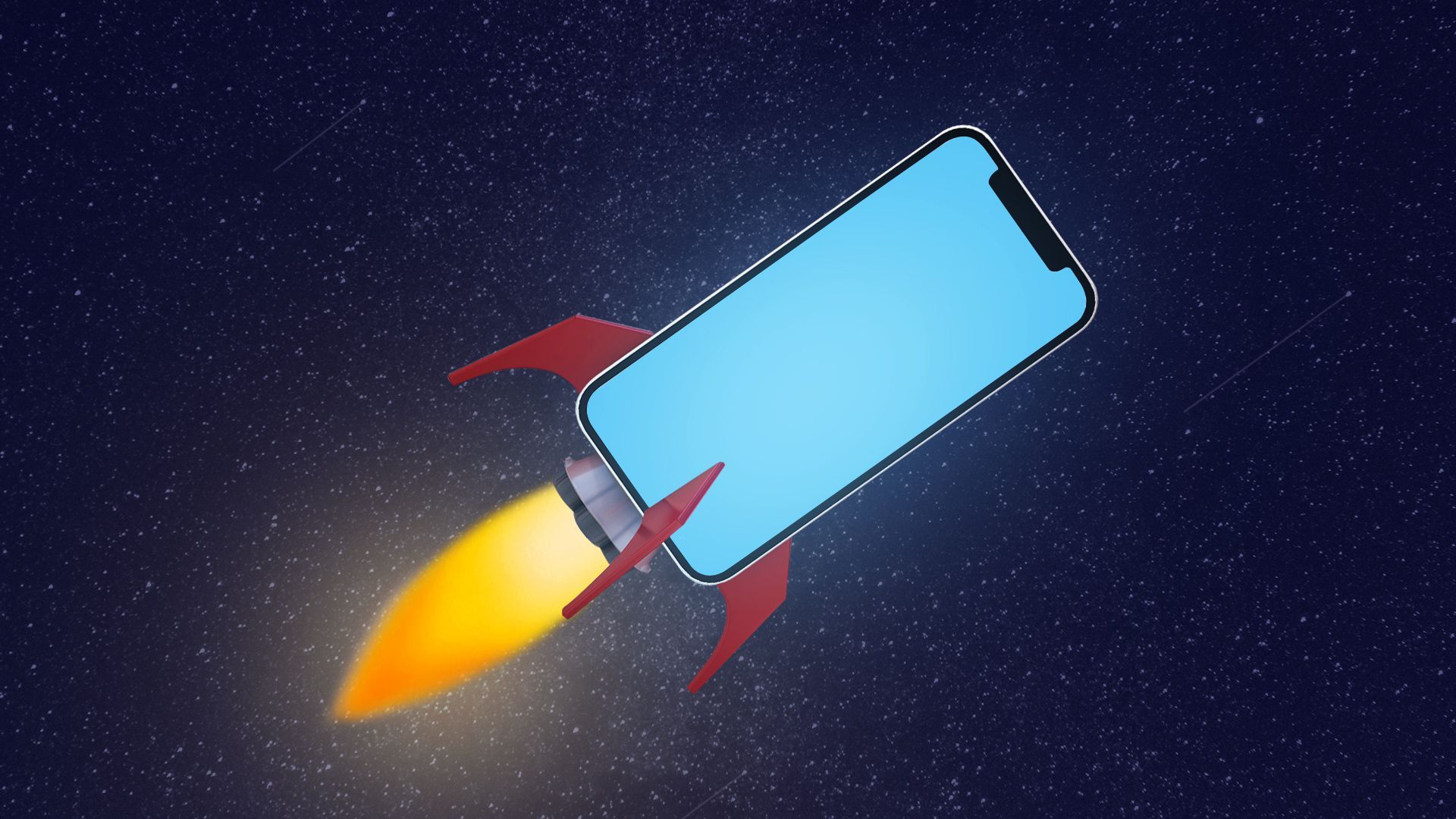
Satellite companies say they're on the precipice of blanketing the planet with mobile phone service, Axios' Hope King, Margaret Harding McGill and Miriam Kramer report.
Why it matters: Such efforts could eliminate dead zones and provide more reliable coverage to millions.
Driving the news: Elon Musk and T-Mobile CEO Mike Sievert recently announced plans to deliver service through SpaceX's Starlink by the end of next year in the U.S.
- Only text and certain messaging capabilities will be available at first, with the goal of eventually adding voice and data.
How it works: New satellites equipped with larger, more powerful antennas will pick up signals from mobile phones.
- Sievert described the vision as putting cell towers in the sky, but "a lot harder."
AST SpaceMobile and Lynk are also working on space-based mobile service.
- Amazon's Project Kuiper, meanwhile, is working with Verizon to provide rural communities with wireless coverage via thousands of satellites.
- And rumors are swirling that Apple will announce its own satellite iPhone partnership with Globalstar next week.
What they're saying: "The human race is becoming less and less tolerant of being disconnected," AT&T CEO John Stankey told Axios. "There's a market out there to keep people connected all the time."
3. $20 is the new $15

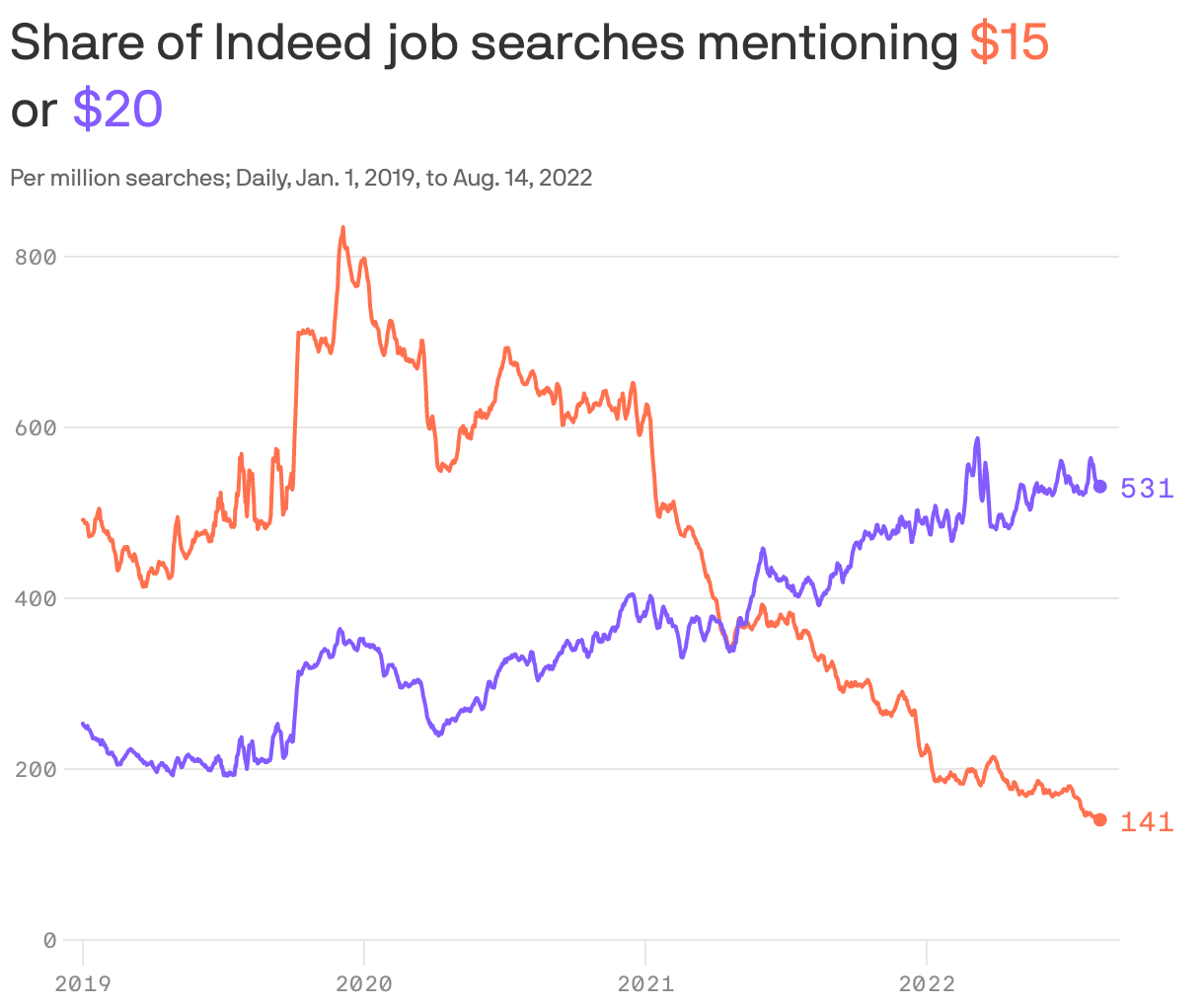
Searches for $20-an-hour jobs on employment site Indeed have surpassed those for $15-an-hour roles, Axios' Emily Peck reports.
Why it matters: It's a sign of how inflation and a labor shortage pushed up wages faster than anyone could have imagined a decade ago, when Fight for $15 — a union-led effort advocating for a higher minimum wage — was founded.
Case in point: California fast-food workers could soon start earning up to $22 an hour after state lawmakers passed a workers' rights bill.
What's next: "We're trying to encourage the original states and cities that moved to $15 to consider a higher [wage]," Mary Kay Henry, the president of Service Employees International Union (which backs Fight for $15), told Axios earlier this year.
4. 📸 Concentrated solar
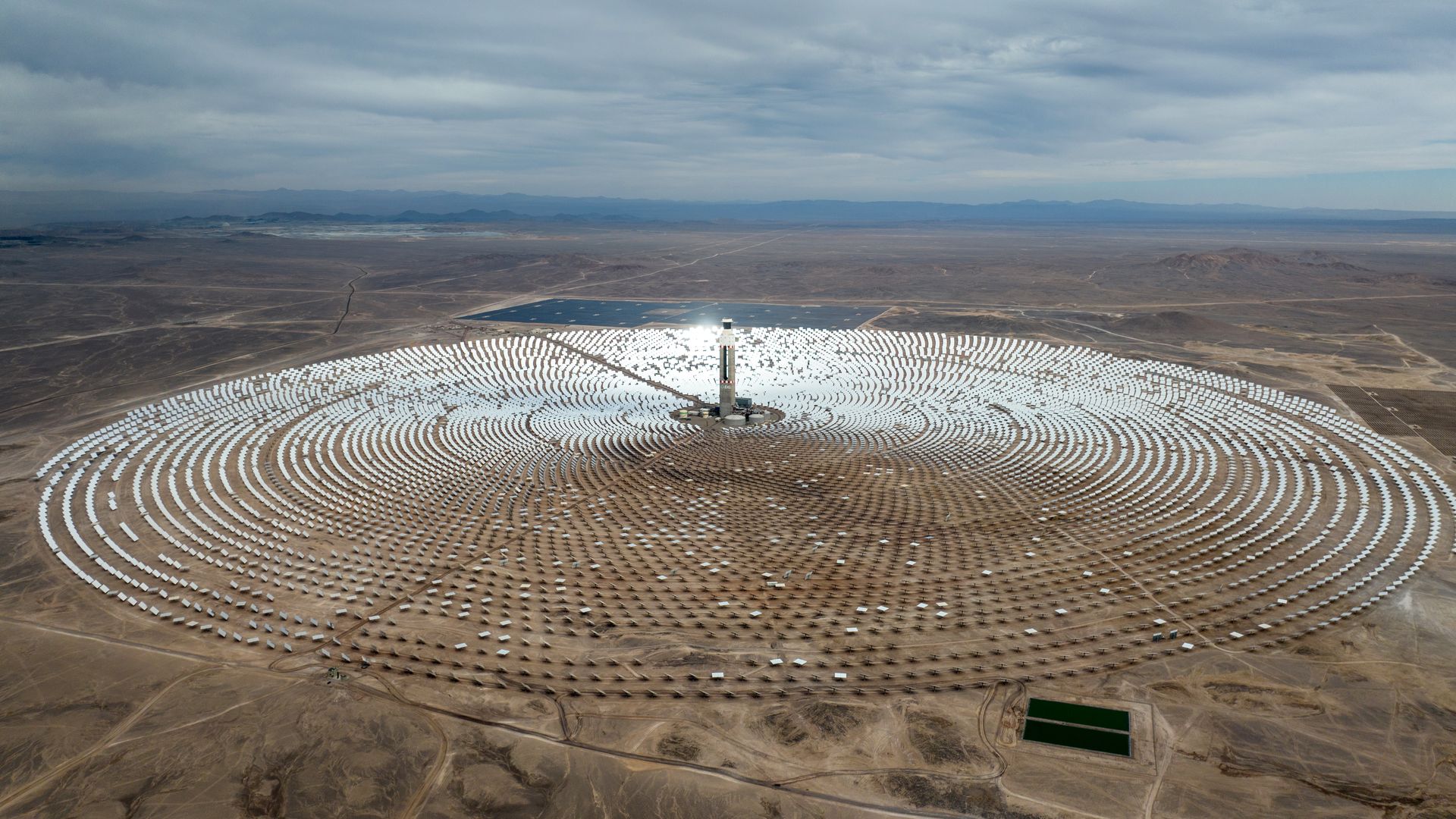
Photo: John Moore/Getty Images
An aerial view of Cerro Dominador, a concentrated solar power plant in Chile's Atacama Desert.
Details: Thousands of mirrors track the sun and reflect its rays toward a receiver atop the tower in the structure's center.
- The collected solar energy is eventually turned into steam, which then powers a turbine generating 110 megawatts of electricity for the regional grid.
- By comparison, the biggest U.S. coal-fired plants generate 3,000-3,500 megawatts.
5. One fun thing: Get weird!
Image courtesy of The Roku Channel
Alex here. I'd be remiss if I didn't suggest taking three minutes out of your day to watch the new trailer for "Weird: The Al Yankovic Story."
True to Weird Al's parody style, the movie is essentially a spoof of recent rock biopics, like "Bohemian Rhapsody" and "Rocketman."
- It stars Daniel Radcliffe, Evan Rachel Wood and Rainn Wilson, and is set for release Nov. 4.
A hearty thanks to What's Next copy editor Amy Stern.
Was this email forwarded to you? Get your daily dose of What's Next by signing up here for our free newsletter.
Sign up for Axios What's Next

The next decade of big, sweeping changes will unfold in cities and communities where new technologies like 5G, AI and drones are transforming how we work, live and play together. What’s Next will guide you through the revolution.