Axios What's Next

August 26, 2021
The gig worker delivering your food is increasingly likely to be a woman — and there are downsides to this, as Erica Pandey explains.
- What do you think the future of food delivery looks like? Send us a picture — on this topic or a different one — for our daily What's Next photo competition.
- Along with the photo, let us know why you think your image encapsulates "What's Next" in our lives: [email protected].
Today's Smart Brevity count: 1,016 words ... 4 minutes.
1 big thing: The rise of women in the gig economy

Illustration: Rae Cook/Axios
Women have been joining the gig workforce at a rapid clip during the pandemic, Erica writes.
Why it matters: Gigs offer the flexibility that so many working women seek, but the jobs can come with low, unstable wages.
What's happening: Women have been disproportionately hurt by the pandemic — both because they were overrepresented in hard-hit industries like hospitality and service, and because they were likelier than men to leave jobs to care for children.
- Many women who lost or left their jobs turned to gig work for income.
The big picture: Women have long dominated the gig workforces in areas like caregiving and home cleaning, but their rise in the delivery economy is more recent.
By the numbers:
- The number of women working for Uber's ride-share or delivery platforms has increased around 50%Â since January 2021, Uber says.
- Women now make up just under half of the delivery people on Uber Eats.
- DoorDash's delivery workforce is 58% women. "There’s been an uptick in the last year," says Elizabeth Jarvis-Shean, VP of communications and policy at DoorDash. "What we’re offering is the kinds of earning opportunity that women in particular have needed during this pandemic."
There are lots of reasons why women are turning to app-based gig work, but flexibility tops the list.
- 80% of women on DoorDash said flexibility was the main reason they did the job. And 60% said the flexibility allowed them to care for a child or loved one, compared with just 30% of men.
- 50% of women delivering for UberEats said that working for ride-sharing or delivery platforms provided them the flexibility they couldn't get from a traditional job, compared with 34% of men.
- Women also tend to prefer delivery work to ride-sharing work because it can be safer. "I don't want strangers in my car," says Katy Nolan, who drives for DoorDash in Seattle.
2. Why electric robotaxis might not save the planet
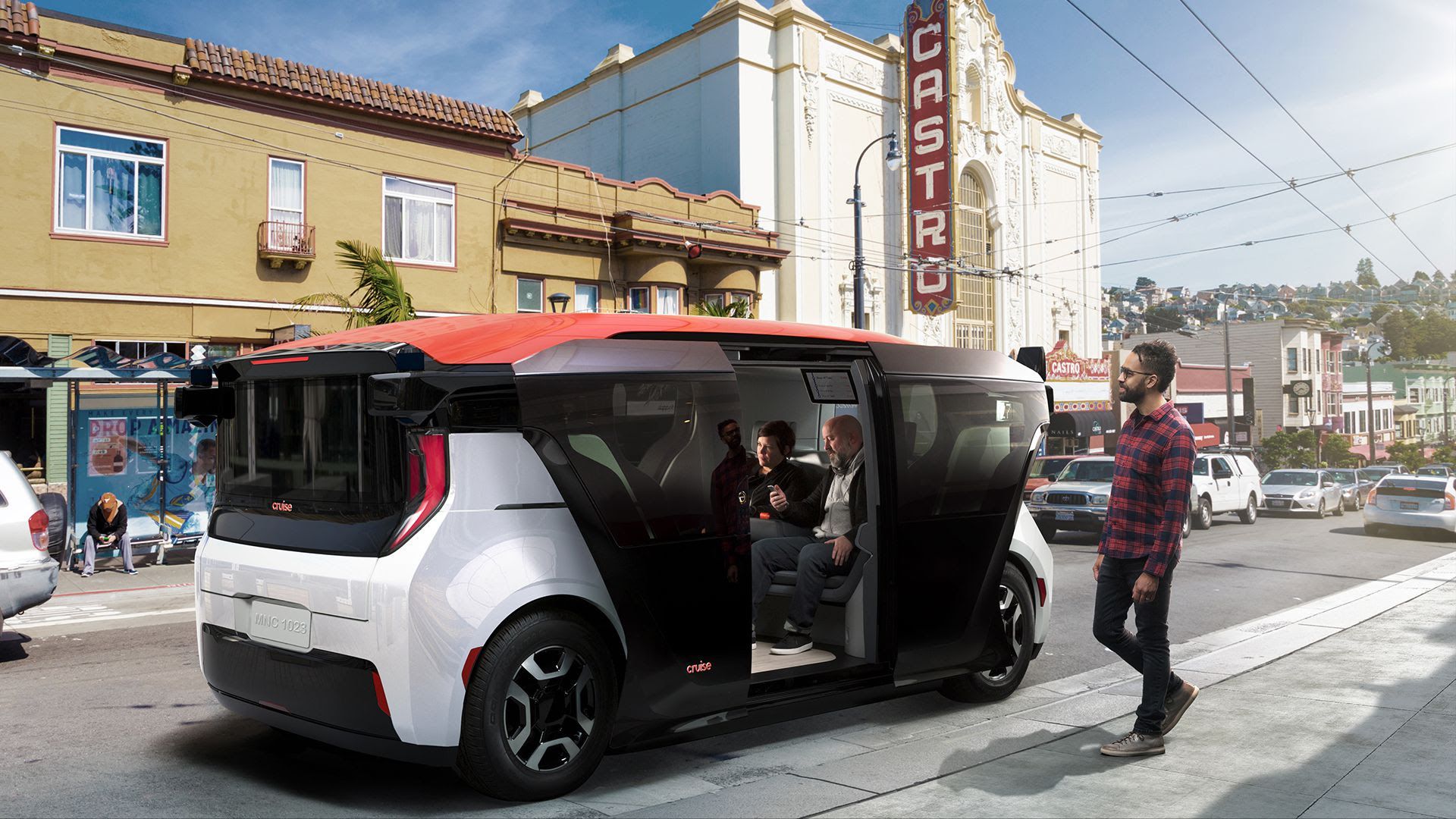
People will need to share electric robotaxis to avoid increased emissions, a study found. Photo: Cruise
Electric, self-driving taxis might not be the answer to our climate problems that many people think, a new study finds, per Joann Muller.
Why it matters: Transportation is the largest contributor to U.S. greenhouse gas emissions, which is one reason that the Biden administration is pushing for a rapid shift to electrification.
- But instead of reducing energy consumption and emissions that contribute to climate change, widespread deployment of electric robotaxis could exacerbate those problems, the joint Harvard-MIT study found.
What they're saying: “While electric vehicles themselves have lower emissions than traditional gasoline-powered ones, our work shows that deploying electric robocabs en masse on America’s streets could actually increase the number of trips, miles driven and overall emissions,” says Harvard law professor Ashley Nunes, the study's lead author.
What they did: By studying data from San Francisco, Nunes’ team concluded that the convenience of ubiquitous fleets of robotaxis would increase demand for rides, generating more trips and more vehicle miles traveled — erasing the electric vehicles' environmental benefits.
Key takeaway: To avoid worsening emissions, electric robotaxis would need to be 55% cleaner than today's EVs — or people need to stop riding solo, the study concluded.
3. We still want to live by the water

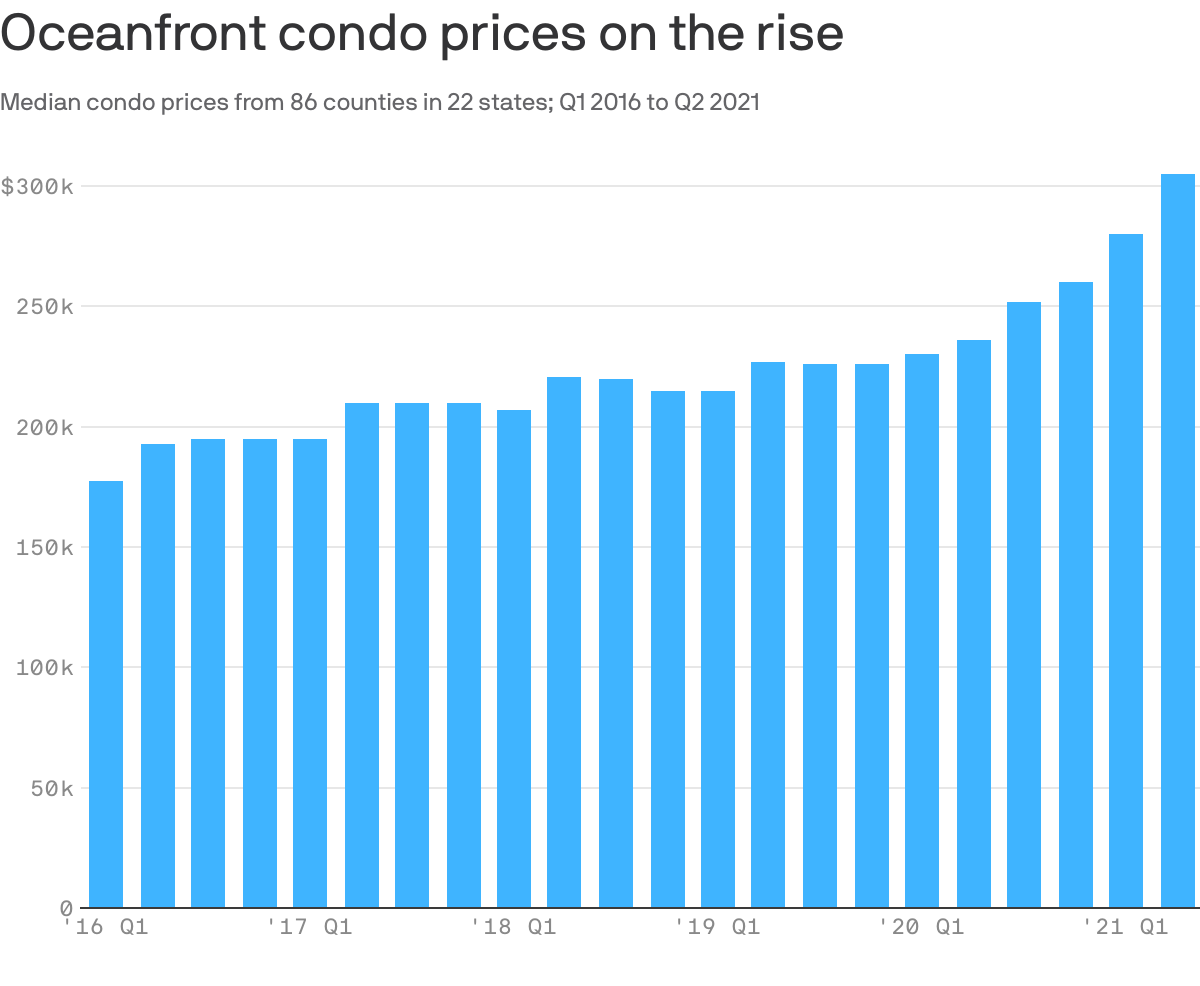
Despite the horrific condominium collapse in Surfside, Florida — which led to worries that structural flaws in beachside buildings could be more pervasive than known — prices continue to climb for oceanfront condos around the U.S., Jennifer A. Kingson writes using data from ATTOM, a property database company.
Driving the news: The national median condo value in 86 oceanfront counties was $305,000 in the second quarter of 2021, up from $236,000 in the same quarter last year, per data that ATTOM released Thursday.
- Prices rose by at least 20% year-over-year in slightly more than half of the 86 oceanfront counties ATTOM included in its report.
- "Less-expensive oceanfront condo markets, concentrated in the South, generally showed bigger year-over-year gains, while the most expensive counties, located mainly in the West, showed the smallest," ATTOM said.
Details: Four of the five highest median prices were in California — San Francisco County ($1,175,000); San Mateo County ($915,500); Kings County (Brooklyn, New York) ($876,250); Marin County ($723,000) and Santa Cruz County ($693,500).
- The lowest median prices were in Atlantic County (Atlantic City), New Jersey ($124,000); Jefferson Parish, Louisiana (west of New Orleans) ($135,000); Citrus County, Florida (north of Tampa) ($145,000); Mobile County, Alabama ($148,000) and Onslow County (Jacksonville, Florida), North Carolina ($155,000).
What's next: “We will keep an eye on this trend to see if it changes following the Florida incident,” says Todd Teta, chief product officer with ATTOM.
4. How Tampa is using data to better understand its trash
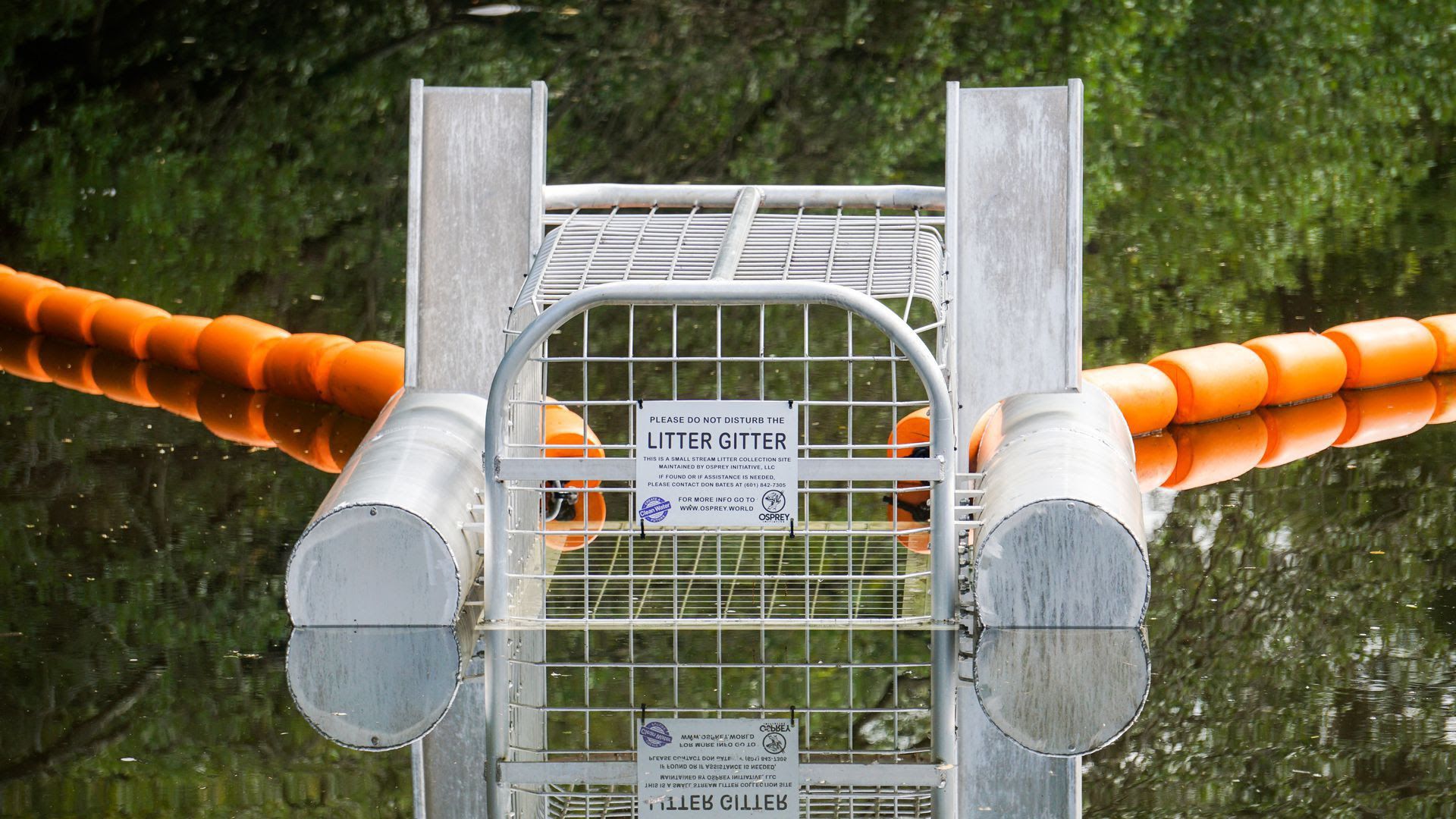
A "Litter Gitter" collects floating trash from a local waterway. Photo: Courtesy of Tampa Bay Estuary Program
To keep trash out of waterways, the Tampa Bay Estuary Program is trying to better understand ... the trash, writes Ben Montgomery of Axios Tampa Bay.
What's happening: With a federal grant, program officials are deploying devices called Litter Gitters into waterways so they can collect trash floating downstream, 83 Degrees reports.
- Then they'll use something called the Escaped Trash Assessment Protocol to record the trash's data — things like the type of trash, the brand, the condition and time in the water.
The big idea is to create a comprehensive profile of the litter in particular regions — and since about 75% of land litter winds up in the water, the localized data will be hard evidence of the main trash producers in the area.
- For example, are there loads of styrofoam cups from a particular fast food restaurant? Or cigar packaging from a particular brand?
- When the data is collected, the plan is to appeal to the businesses making the trash to curb their trash production.
5. Reader photo of the day
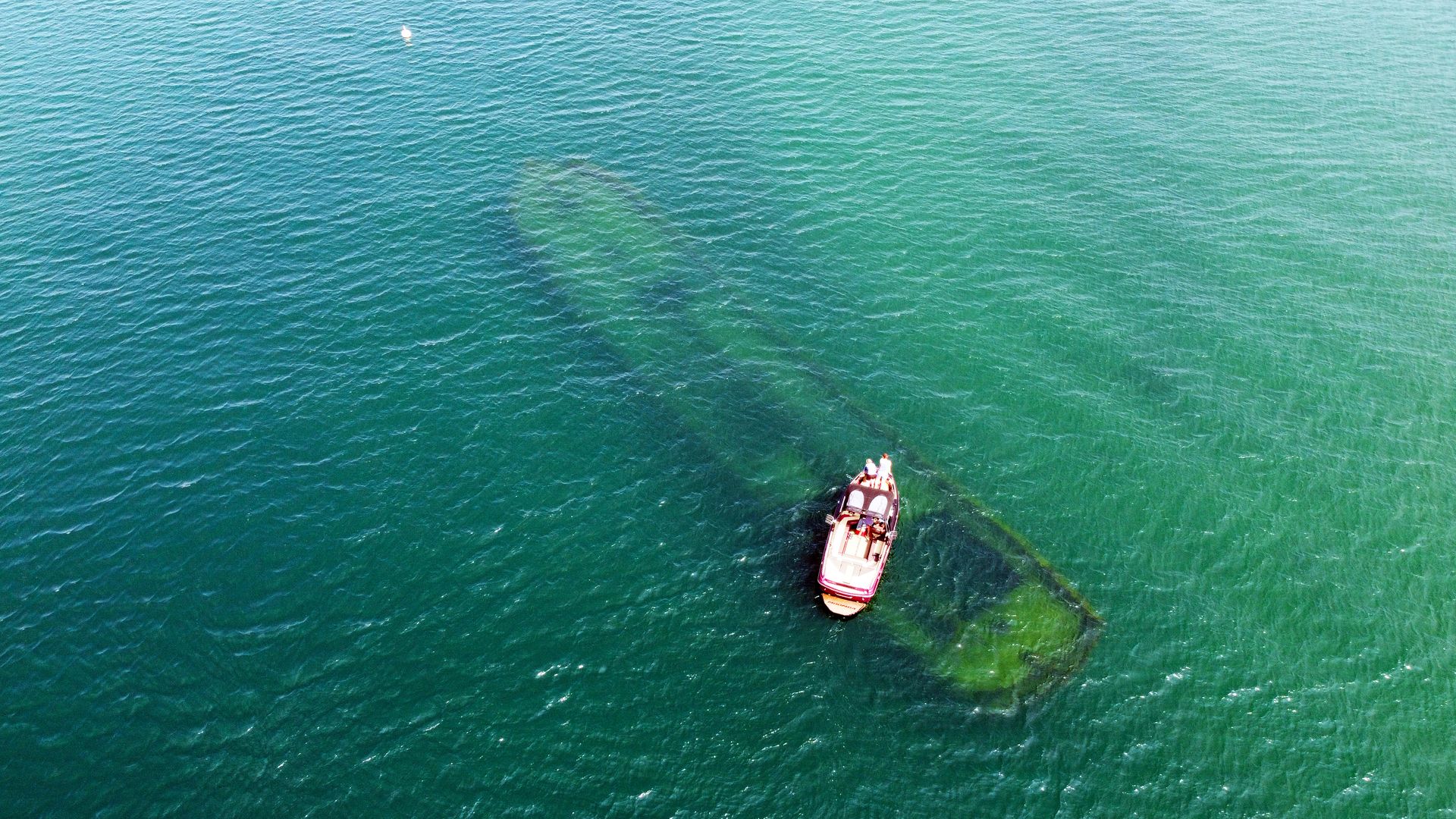
A shipwreck under a pleasure craft, as photographed by an aerial drone. Photo: Joel Leger
What's Next: Using drones for leisure photography
Amy Leger writes: "Our Mavic Mini drone has been a game-changer for how we appreciate our experiences outdoors. As full-time RVers, we love to capture some of our great locations we visit from the air (when a regular photo just doesn't cut it).Â
"Last week, we went onto Lake Superior just off of the Munising shoreline in the Upper Peninsula of Michigan, where we explored caves and the Pictured Rocks. The water was beautiful and clear. This photo we captured — using our drone — of a shipwreck under my brother-in-law and sister-in-law's Moomba boat turned out really cool!"
Thanks for reading! Please send photos and pheedback to [email protected].
And tell your friends to sign up for What's Next! Subscribe here.
Sign up for Axios What's Next

The next decade of big, sweeping changes will unfold in cities and communities where new technologies like 5G, AI and drones are transforming how we work, live and play together. What’s Next will guide you through the revolution.