Axios What's Next

June 18, 2024
Generative AI could power the next wave of self-driving cars, Joann reports today.
Today's newsletter is 1,108 words ... 4 minutes.
1 big thing: Self-driving cars — powered by AI
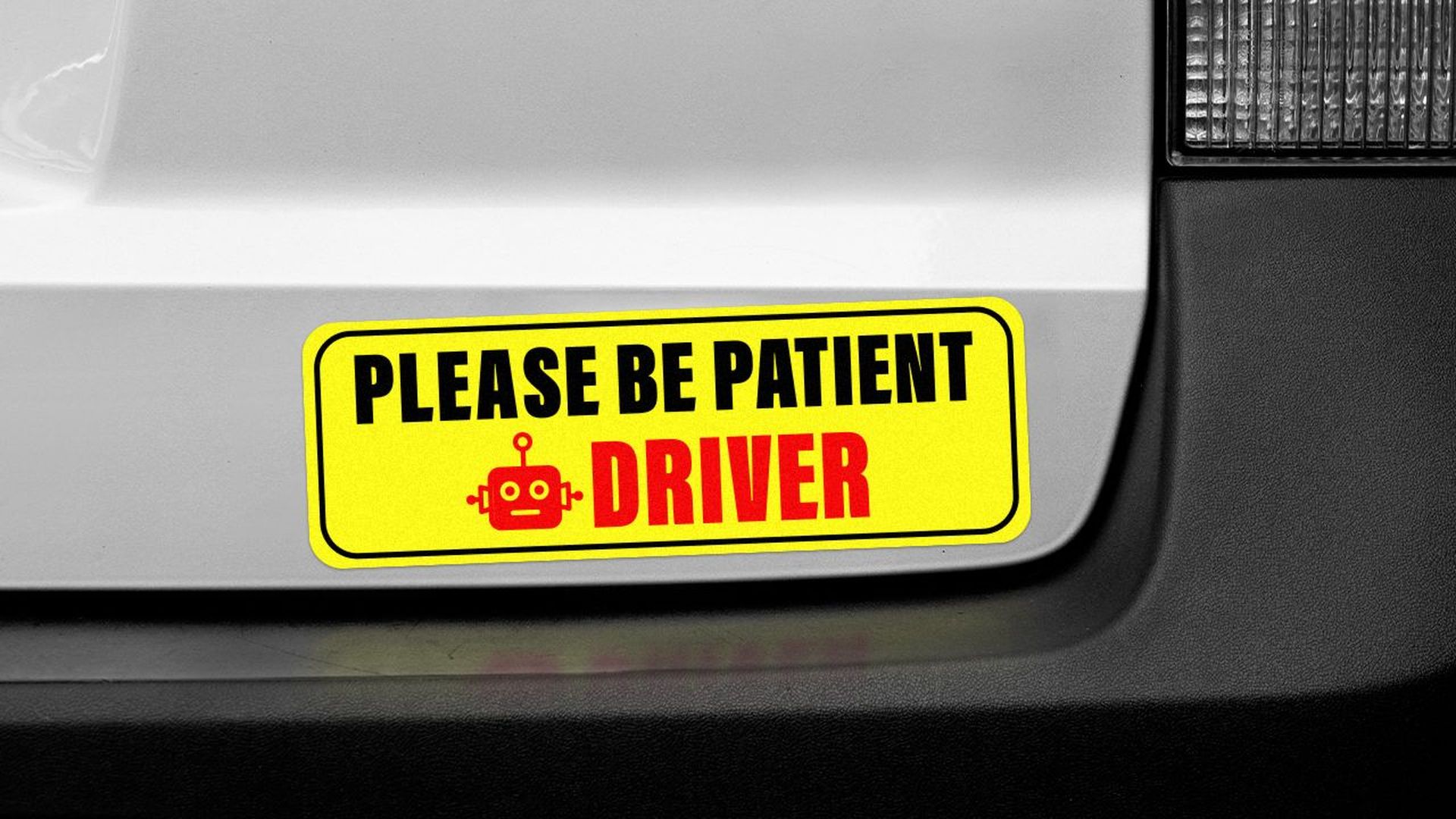
The advancements in artificial intelligence that brought us AI chatbots and image generators are now fueling a fresh approach to self-driving cars.
Why it matters: Autonomous vehicle (AV) development is essentially stuck — it's still too difficult and expensive to scale up the technology into a profitable business.
Driving the news: As AI begins to leap from the digital realm into the physical world, investors are pouring fresh capital into this next phase of AV development — "AV 2.0."
- Driverless truck company Waabi said today it had raised $200 million in an oversubscribed Series B round led by Uber and Khosla Ventures.
- That follows a huge deal last month by Wayve, a U.K.-born startup, which raised $1.05 billion in a Series C round led by SoftBank Group.
- Nvidia, one of the biggest names in AI, participated in both deals.
- SoftBank also invested a reported $1 billion last September in Stack AV, an automated trucking company founded by former Argo AI execs.
The big picture: These AV 2.0 companies are developing self-learning systems for autonomous driving.
- Using AI, their goal is to teach a virtual driver to reason like a human so it can make snap decisions correctly and safely — even in novel situations.
Catch up quick: The original approach to AV development involved racking up millions of miles in test cars, collecting data that could be used to program self-driving algorithms with step-by-step instructions.
- Companies drove around 24/7 hunting for "edge cases" — rare events like the woman in a wheelchair chasing a duck that a Waymo test vehicle encountered in 2018.
- Alternative testing methods such as simulation are useful, though it's still time-consuming and capital-intensive to write an AV instruction manual.
The latest approach, driven by extraordinary leaps in generative AI, is based on intuitive learning, enabling AV companies to accelerate tech development.
- Waabi, for example, was founded in 2021 — well behind industry rivals — but says it has made speedy progress and is aiming to launch fully driverless trucks by 2025, roughly the same timeline as its rivals.
Zoom in: Waabi's Spanish-born founder and CEO, Raquel Urtasun, is an AI pioneer who helped lead Uber's now-defunct autonomy project.
- The Toronto-based startup invented what's called an end-to-end AI system capable of human-like reasoning.
- It requires significantly less training data and compute resources than other approaches — and can be tested in "Waabi World," an advanced virtual simulator.
Yes, but: Waabi still faces the same bar for safety.
- "Learning-based AVs can be taught driving skills more quickly, but the black-box nature of machine learning-based behavior makes it more difficult to validate safety," AV safety expert Philip Koopman, an associate professor at Carnegie Mellon University, tells Axios.
- "Even if you drive a billion miles in simulation, you still need to make sure the simulation wasn't missing edge cases that will cause crashes in the real world."
What they're saying: Waabi's system is "provably safe," Urtasun tells Axios, because its decisions can be interpreted and traced, unlike other "black box" AV systems.
- "The industry needs a big step forward in terms of proving the safety of their systems," says Urtasan, whose claims will be outlined in an upcoming white paper.
- "Incumbents ... will say, 'If I have driven enough miles, I should be safe.' That's not a sign of whether you are safe. It's only a sign of how much cash you spent driving."
Reality check: Generative AI, as fascinating as it is, remains far from perfect, as anyone who has played around with ChatGPT has discovered.
- No one wants a self-driving car to experience the kind of AI hallucination that urges you to put glue on a pizza.
The bottom line: When artificial intelligence comes to the physical world, the stakes become a lot higher.
2. Surgeon General wants social media warnings

U.S. Surgeon General Dr. Vivek Murthy wants to require social media apps to display warning labels alerting users of the potential harms the platforms pose to teens' mental health.
Why it matters: Murthy's call for congressional action comes amid rising concerns about youth social media use.
Driving the news: "The mental health crisis among young people is an emergency — and social media has emerged as an important contributor," Murthy wrote in a New York Times op-ed.
- Warning labels like those that appear on tobacco products can raise awareness and change behavior, he says.
Zoom in: Teens who spend more than three hours a day on social media face double the risk of anxiety and depression symptoms, Murthy wrote.
- Almost half of teens say these platforms make them feel worse about how they look, he added.
- "We have the expertise, resources and tools to make social media safe for our kids. Now is the time to summon the will to act," he said.
Reality check: It's unclear how any such warnings would look or work, or whether they would be effective.
3. Where the women scientists are


The share of women researchers grew over the past two decades — but there is a wide gap across countries, according to a new report from publishing giant Elsevier.
Why it matters: Women's participation in science influences what topics are studied and what products are invented.
The big picture: Women made up 41% of researchers in 2022 compared to 29% 20 years earlier, per the Progress Toward Gender Equality in Research & Innovation 2024 Review.
- The report considered citations, grant awards, publications and other indicators of scientific participation.
Zoom in: The countries with the highest share of women researchers from 2018 to 2022 have Latin populations, like Portugal and Brazil.
- In the U.S., the proportion was 42% — just above the world average of 41%.
Yes, but: The share of women in mathematics and engineering remained low — just 27% and 28%, respectively.
- The report also found that women make up 39% of early-career researchers, but only 27% of those who are most established.
4. SF installing curbside chargers

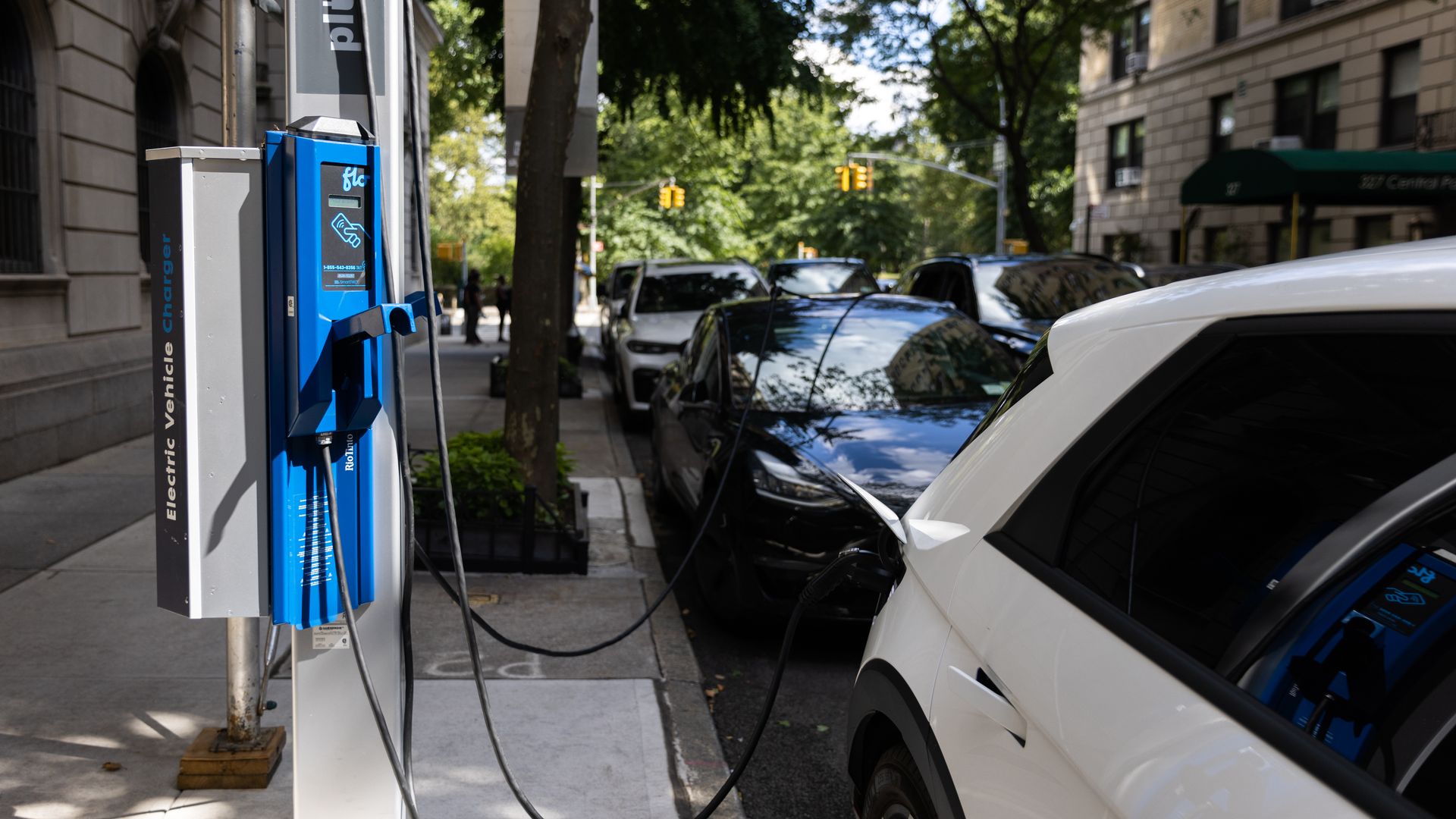
Curbside EV chargers are coming to San Francisco within the next six months.
Why it matters: The chargers are intended to make electric car ownership more convenient and affordable, especially for apartment dwellers.
How it works: A pilot program invites providers like Electrify America and Tesla to submit applications detailing their technology and proposed installation locations.
- Providers must participate in a data-gathering partnership with the city to monitor usage, demand and other key metrics.
- The city is also weighing demographics, equity and so on to help prevent charging deserts.
What they're saying: The goal is to "try to have as close to the home-charging experience as possible" by installing curbside chargers in places where people normally park overnight, SF clean transportation program manager Henna Trewn tells Axios.
Big thanks to What's Next copy editor Amy Stern.
Was this email forwarded to you? Get your daily dose of What's Next by signing up here for our free newsletter.
Sign up for Axios What's Next