
Axios What's Next

January 25, 2022
Want to charge your electric vehicle in a U.S. national park? Read on.
- See something cool or interesting that speaks to the way we'll live, work, play and get around in the days ahead? Take a picture for our reader photo slot. Email us at [email protected].
Today's Smart Brevity count: 920 words ... 3.5 minutes.
1 big thing: EV makers look to boost charging for outdoor rec
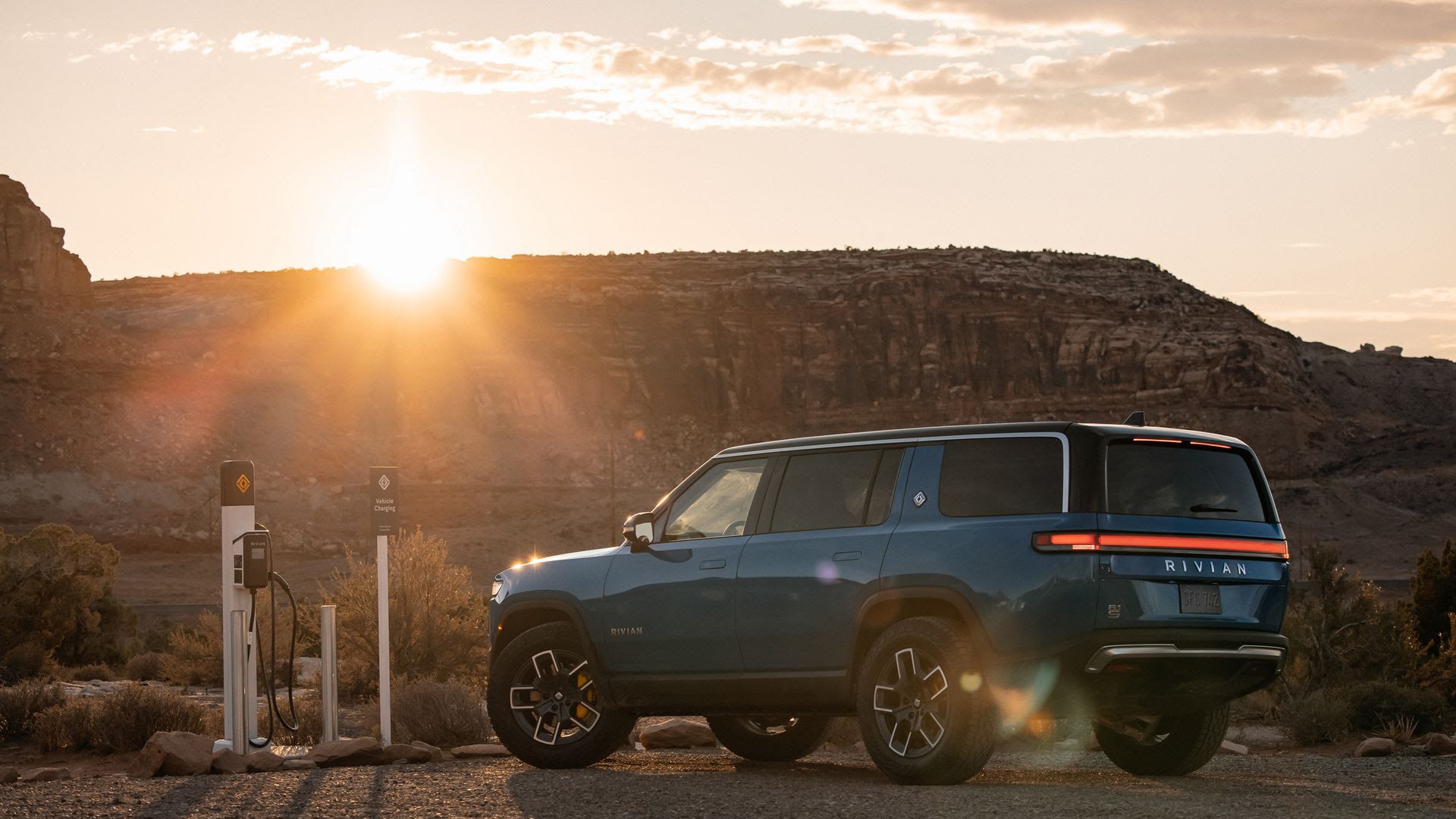
Rivian R1S SUV. Photo courtesy of Rivian
Pop-up fast-charging stations near remote outposts like hiking trails could give electric vehicle owners more confidence to take their EVs off the beaten path, Joann Muller reports.
Why it matters: Pickups, SUVs — even RVs — are now going electric, encouraging families to take outdoor adventures.
- But if you already have range anxiety about road tripping in an EV, imagine being stranded in the woods with a drained battery.
What we're watching: GM, Ford, Jeep and Rivian are touting the go-anywhere nature of their new electric and plug-in hybrid models.
- Last week, Winnebago unveiled an electric prototype RV with an 86-kWh battery pack that also runs interior appliances.
- The camper van's driving range is only about 125 miles, though — not great for long road trips.
You can find charging stations at some national parks like Yellowstone and Yosemite — 140 EV plugs to date, says the National Park Service.
- EV manufacturers are beginning to roll out branded charging stations at outdoor sites and trailheads.
- Rivian, for example, plans to install its Waypoint chargers at Tennessee's 56 state parks and also at upscale campgrounds operated by Under Canvas, starting with its Moab and Lake Powell-Grand Staircase locations in Utah.
- Jeep is installing charging stations at popular off-road sites like Moab, as well as Big Bear and Rubicon Trail in California, to support its new Wrangler 4xe plug-in hybrid.
The catch: Most are slow Level 2 (240-volt) chargers, making them best suited for overnight use.
What's new: General Motors might have a way to bring faster battery refills to the wilderness: portable fast-charging stations powered by hydrogen fuel cells.
2. America's kids get an internet librarian

Illustration: Shoshana Gordon/Axios
NewsGuard, a service that uses trained journalists to rate news and information sites, will be available to millions of public school students this week through a partnership with the American Federation of Teachers, Erica Pandey writes.
Why it matters: Kids increasingly turn to the internet when looking for homework help or doing research for school projects. But unlike books in a library or articles in a journal, online resources can be difficult to filter for quality and misinformation.
- "Imagine you walked into a library, and there were a trillion pieces of paper flying around in the air, and you grabbed one, and you didn’t know anything about it, or where it came from or who’s financing it," says NewsGuard co-founder Steven Brill.
- "That's the internet, that's your Facebook feed, that's your Google search."
- NewsGuard hopes it ratings will help students and teachers get smarter about the news and information online.
What's happening: The AFT teachers union is buying NewsGuard licenses for its 1.7 million teachers, who will then be able to share it with tens of millions students around the country.
- "We are constantly trying to help our students, particularly our middle, high school and postsecondary students, separate fact from fiction, as we help them develop their critical-thinking and analytical skills," says Randi Weingarten, AFT president.
The bottom line: Students with the skills to spot disinformation will grow into more thoughtful and better-informed citizens and voters.
3. New rights for food app delivery workers in NYC
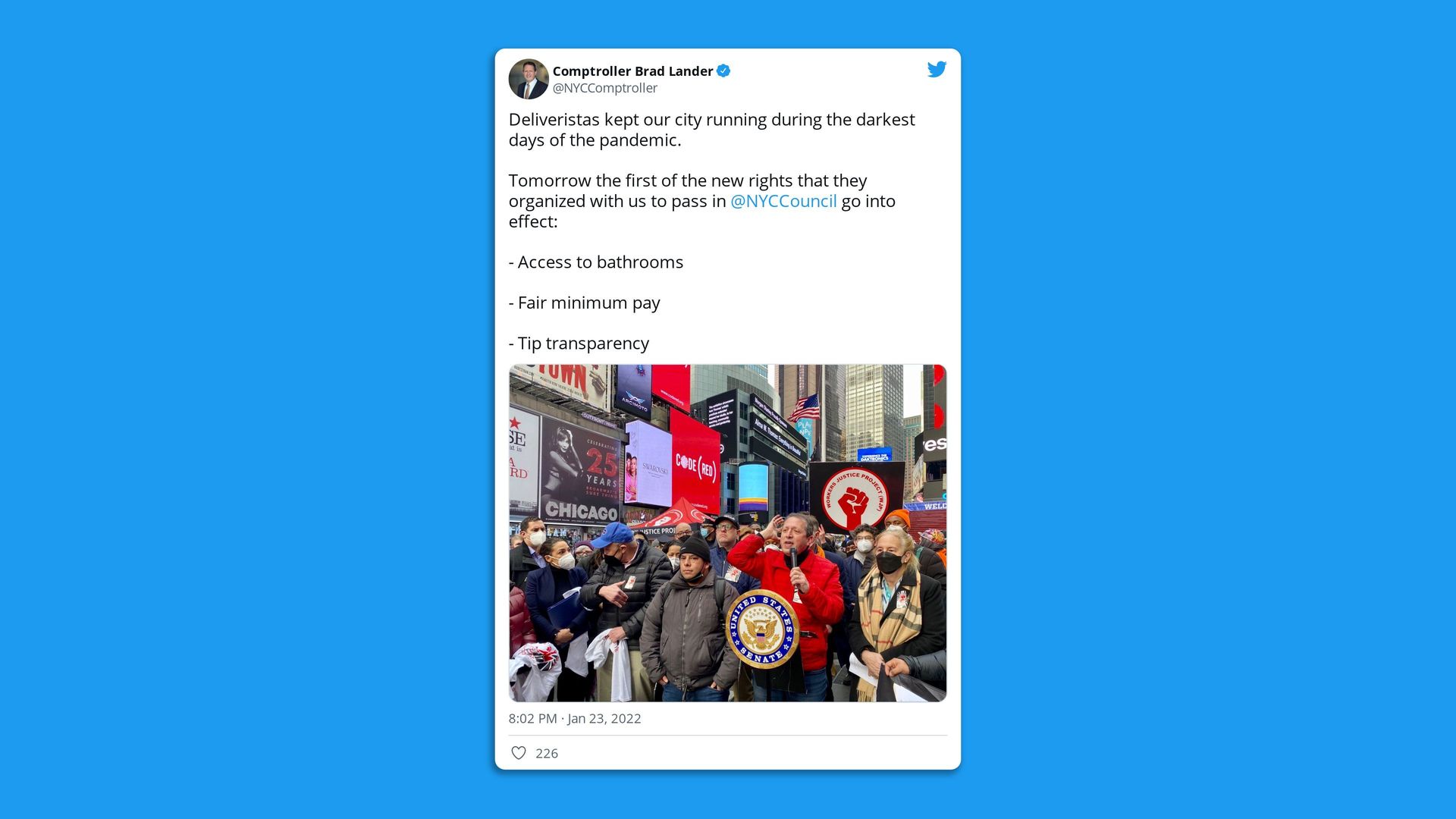
Screenshot of @NYCComptroller's Twitter feed.
Happening now: Better protections for the more than 65,000 people who deliver food on foot, bike, etc. in New York City.
Why it matters: A set of new laws championed by workers' rights groups offers some basic ground rules on safety and pay — and may serve as a model for other cities.
- Per Gothamist: "The six bills will establish minimum payments required for delivery workers, and allow workers to set a maximum distance per trip that they will travel."
- "They will stop apps from charging workers fees to receive their pay and require workers be paid at least once a week."
- One bill will force apps to disclose their tipping policies and make them more transparent to workers; another will stop apps from charging delivery workers for insulated bags, which can cost up to $50."
- "And one will require that restaurants allow workers to use their bathrooms."
4. White House unveils efficient buildings effort

The White House has created a new partnership with state and city governments aimed at boosting the energy efficiency of buildings, Ben Geman reports.
Why it matters: The commercial and residential buildings sector is a major source of greenhouse gas emissions.
What's next: The administration said the "Building Performance Standards Coalition" will seek to help bolster local policies.
- A White House summary Friday notes the bipartisan infrastructure law provides $1.8 billion for retrofits and to aid state and local policy implementation.
5. License plate rejects 👎🏽
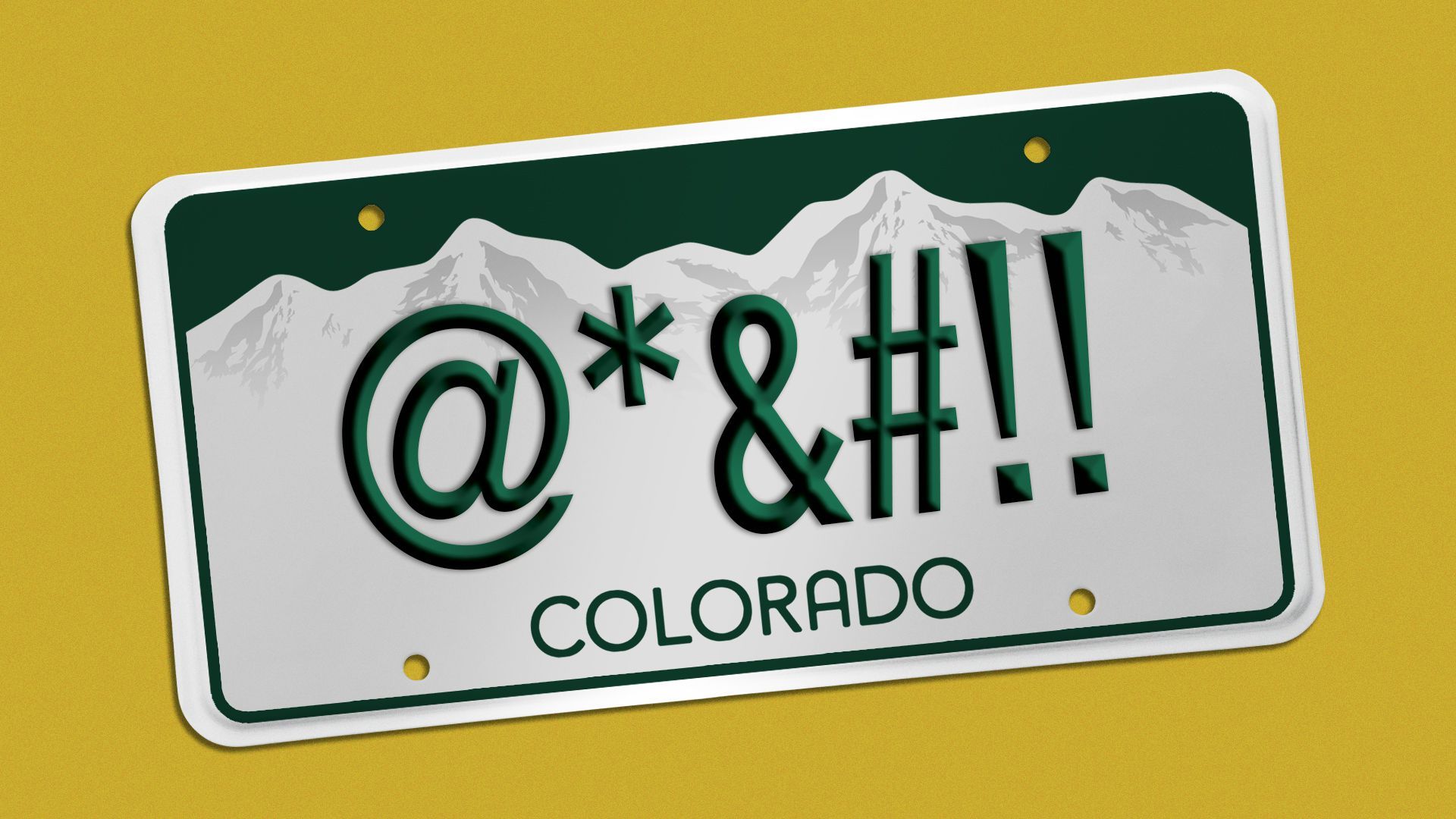
Illustration: Maura Losch/Axios
If your application for a vanity license plate in Colorado was RJCTD last year, you're not ALON, Alayna Alvarez writes in Axios Denver (sign up here).
Driving the news: More than 25,000 submissions for vanity license plates in Colorado were denied in 2021, according to records obtained by Axios Denver.
- Most of the rejected plates contained sexual, violent, drug-related or racist references, including more than a dozen nodding to white supremacy groups.
- Some spoke to the politics of our time, while others were just plain childish.
Why it matters: The lengthy list offers an unsettling — but sometimes hilarious — glimpse into the minds of the drivers around you.
In our review of the thousands of denied vanity plates, here are the themes and interesting submissions that caught our eye:
- The political: QANON, PUTIN, ACAB
- The substance-related: DOOBEE, HIGH, RLN*HRD, WEED, SAUCED, ON*METH, ECSTAZE
- The Spanish submissions: HUEVOS, CABRONA, PENDEJO, CHUPAPI
- The demanding: OBEY, HONK, HUSH, SMELME, MONIPLZ, COOK, MOONME, ZIPITUP
- TMI: IFARTED, SKNYDPR, MPOTENT, IHAVE2P, IAMNUDE
- The random: ABOOBOO, HECK, NOCURFU, OHMYGAWD, WTFCOLO, MANOPOZ
Was this email forwarded to you? Get your daily dose of What's Next magic by signing up for our free newsletter here.
Sign up for Axios What's Next

The next decade of big, sweeping changes will unfold in cities and communities where new technologies like 5G, AI and drones are transforming how we work, live and play together. What’s Next will guide you through the revolution.


