Axios What's Next

April 26, 2024

Can an electric car that roars like a gas-guzzling muscle car attract new EV buyers? Dodge thinks so.
Today's newsletter is 922 words ... 3½ minutes.
1 big thing: EVs, but make them loud
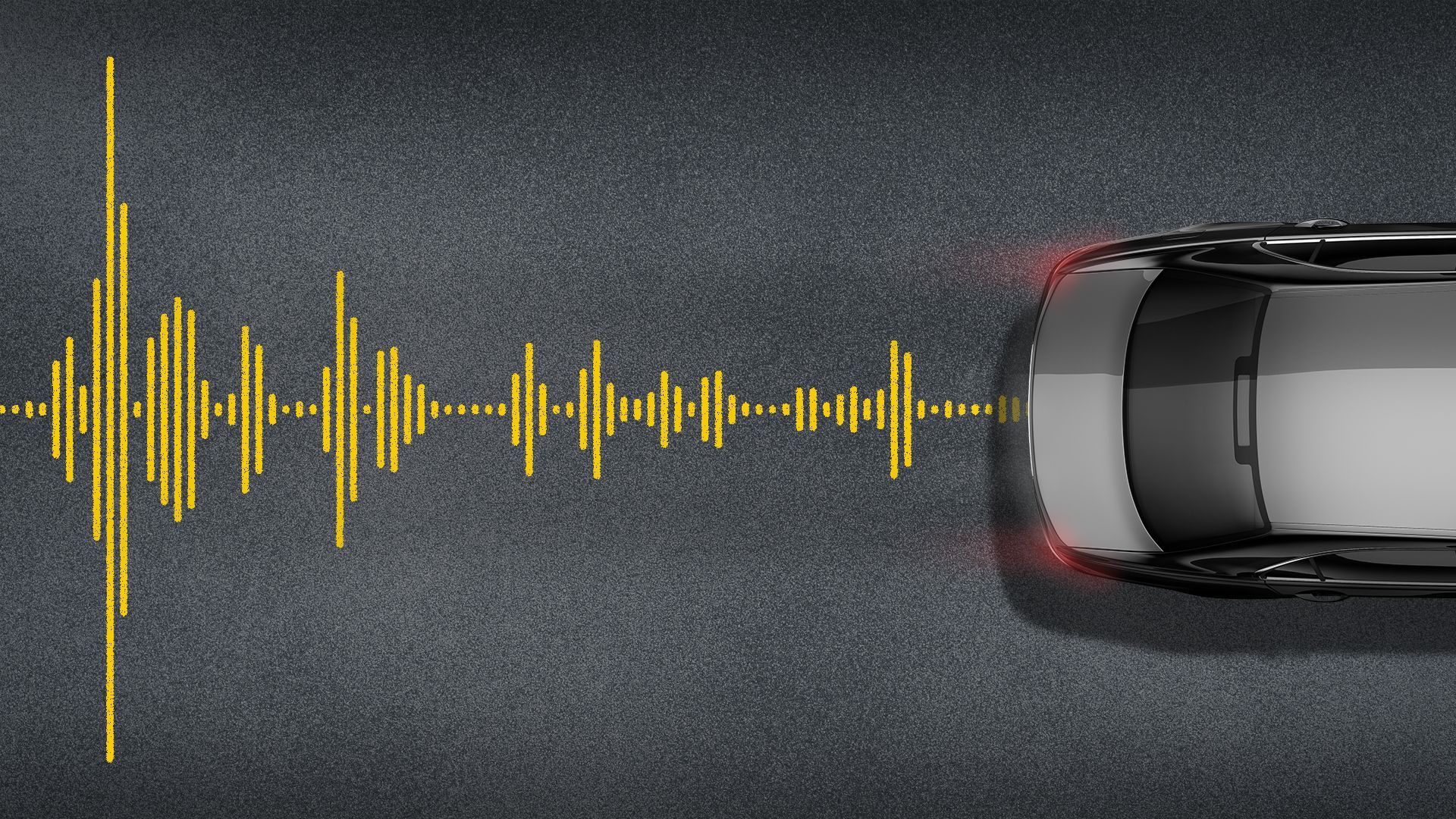
Illustration: Sarah Grillo/Axios
The guttural roar from a gas engine disappears in an EV — but some people want it back, Axios Closer's Nathan Bomey reports.
Why it matters: Making EVs feel — and sound — more like traditional gas-powered cars could help spur adoption as sales growth slows.
Driving the news: Longtime muscle car purveyor Dodge is debuting a "Fratzonic Chambered Exhaust" system in its new 670-horsepower 2024 Dodge Charger Daytona — the first electric version of its storied muscle car.
- The system replicates the deafening burble of a Hellcat V8 engine.
How it works: It "employs a series of chambers strategically placed underneath" the vehicle that work "in conjunction with woofers and mid-range speakers" to generate exhaust noises, according to enthusiast site MoparInsiders, citing a patent filing.
- Those noises are then channeled through dual pipes like those found in internal combustion engine vehicles.
- The system uses a combination of digital sounds and basic filtering.
The intrigue: Dodge isn't the first to realize that some drivers might want fabricated engine noise.
- A company called Borla Performance Industries sells an aftermarket system called Active Performance Sound that allows drivers to dial up fake engine noise in Ford's electric Mustang Mach-E.
What they're saying: "It's funny in one sense," Ivan Drury, analyst at car research site Edmunds, tells Axios.
- "Are they also going to have an aromatizer diffuse a gasoline scent? Is it going to give you a little shimmy in the morning when you start it up?"
"When I've driven the Dodge Hellcat, there has been a sense of vibration that goes right up your chest and comes out through your heart, if you will," Rebecca Lindland, an analyst at Cars.com, tells Axios.
- "I will be curious to see if these noises will incorporate some element of vibration as well."
Between the lines: What EVs don't have to fake is the instant torque they deliver when you hit the accelerator, providing 0-to-60 times that are the envy of their gas-powered ancestors.
- Yet the fake-noise features demonstrate how the human connection between drivers and their gasoline vehicles is becoming blurred in the transition to EVs.
Friction point: Many people who live and work near roads generally liked the idea that the EV revolution would make streets quieter.
- Drivers of sports cars like the Charger "want what they want — loud, noisy," Drury says. "Everyone else doesn't want to hear that."
Meanwhile, pedestrian safety advocates have long been concerned about EVs because they're harder to hear coming.
- That's why regulators implemented a new rule in 2022 requiring EVs and hybrids to emit safety sounds when they're operating below 18.6 mph.
Still, EVs are a lot quieter than gas-powered vehicles — unless they're emitting fake noise meant to trick people into believing they've got a V8 under the hood.
2. Southwest leaves airports amid Boeing delays

Illustration: Shoshana Gordon/Axios
Southwest Airlines is ceasing operations at four airports and reducing flights at others to cut costs, Axios' Jacob Knutson reports.
Why it matters: The company, which operates only Boeing 737s, said in an earnings call yesterday that it has been hurt by delayed Boeing deliveries stemming from the aerospace manufacturer's ongoing crisis.
Driving the news: Southwest plans to end operations at Bellingham International Airport in Washington state, Cozumel International Airport in Mexico, George Bush Intercontinental Airport in Houston and Syracuse Hancock International Airport in New York.
- It's also reducing flights at Hartsfield-Jackson Atlanta International Airport and Chicago O'Hare International Airport.
What they're saying: Southwest CEO Bob Jordan told CNBC that the decision to leave those airports was unrelated to delays in delivery of new Boeing planes.
Yes, but: "We're taking network actions regardless," Jordan added.
- "The Boeing delays are very painful. They cause us to replan, they hurt us on the revenue front, they cause us to be inefficient, and we're working all of that."
3. We tried it: Bean-free "espresso"

Illustration: Allie Carl/Axios
Food startup Atomo Coffee is now offering what it calls a sustainable "beanless espresso," Axios' Carly Mallenbaum reports.
Why it matters: Coffee farming is linked to deforestation, shipping beans produces carbon emissions, and climate change may ultimately affect the global coffee supply.
What to expect: Instead of coffee beans, Seattle-based Atomo uses millet, ramón seeds, sunflower seeds, date seeds, guava, fructose, pea protein, baking soda, lemon and fenugreek to get a coffee-like flavor.
- There are still 100 milligrams of caffeine per double shot, thanks to green tea.
Try it: Atomo's offering is now available at coffee shops in Seattle, New York, Los Angeles and more.
💬 Carly's thought bubble: Basic millennial that I am, I sampled Atomo's espresso as part of a hot oat milk latte.
- My reaction: "Not bad."
It doesn't make for a memorably great drink — but it does taste a lot like a regular latte, and could serve as a perfectly passable substitute.
- A bonus: It seemed to deliver a sustained caffeine buzz, as opposed to the usual coffee jolt.
4. Amazon tests buyers' subscription fatigue
Illustration: Allie Carl/Axios
Amazon is launching unlimited grocery delivery for $9.99/month for Amazon Prime members, Axios' Kelly Tyko reports.
Why it matters: Subscription fatigue is real and growing, testing consumers' limits.
How it works: The plan covers orders over $35 from Whole Foods and Amazon Fresh, plus local grocery stores and specialty retailers available via Amazon.
- Low-income customers can get a discounted rate of $4.99 per month without a Prime membership if they have a registered EBT card.
Zoom out: Adding grocery delivery will cost about $120 a year — on top of the $139/year or $14.99/month core Prime membership.
- Amazon also recently introduced a $2.99/month ad-free Amazon Prime Video option, plus monthly pharmacy subscriptions.
Big thanks to What's Next copy editor Amy Stern.
Was this email forwarded to you? Get your daily dose of What's Next by signing up here for our free newsletter.
Sign up for Axios What's Next

The next decade of big, sweeping changes will unfold in cities and communities where new technologies like 5G, AI and drones are transforming how we work, live and play together. What’s Next will guide you through the revolution.