Axios What's Next

March 29, 2024

1 big thing: Schools lock up kids' phones
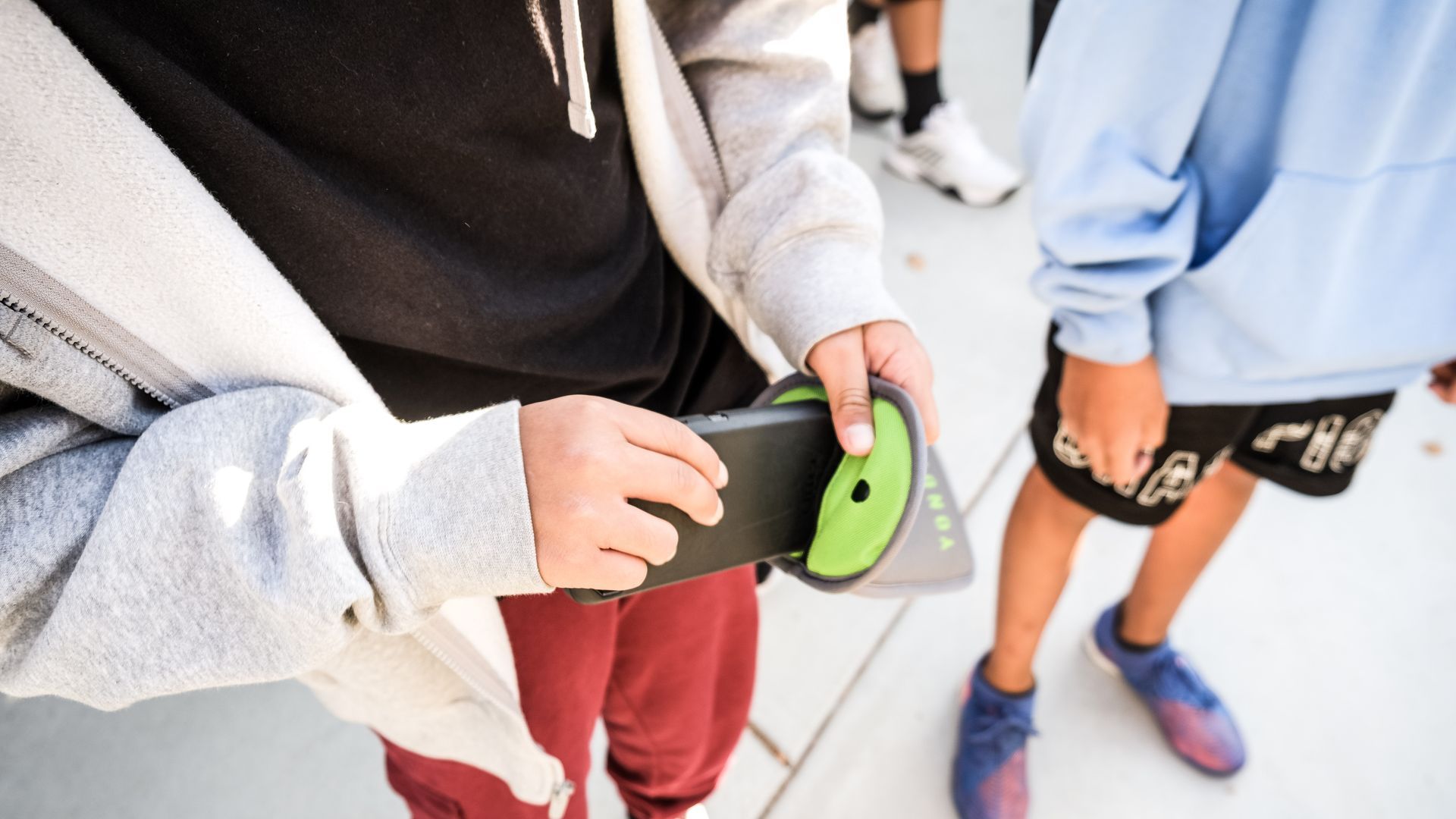
A student puts a cellphone into a Yondr pouch, where it will remain locked for the day. Photo courtesy of Yondr
A company called Yondr that sells lockable cellphone pouches is rapidly cornering the market in K-12 schools, Jennifer reports, as educators crack down on texting and social media use during class.
Why it matters: Banning cellphones in schools doesn't get students to stop using them there — but forcing them to use a Yondr pouch, which gets unlocked as they leave school, is working.
Driving the news: Quietly and with little marketing, Yondr has become the de facto standard for schools that want to solve the ubiquitous cellphone problem.
- Yondr was founded a decade ago by Graham Dugoni, a former soccer pro whose original goal was to banish cellphones from concerts.
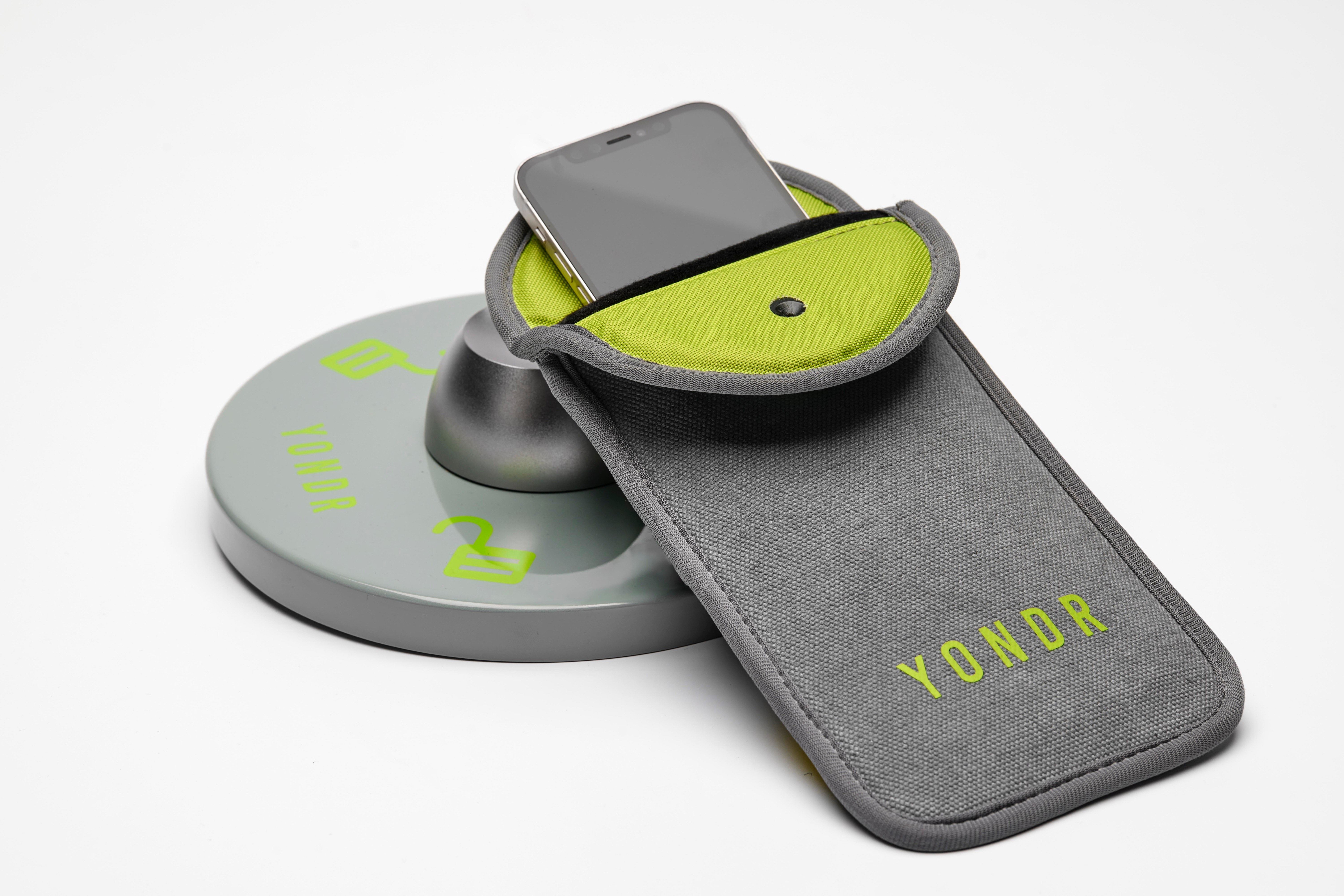
- The magnetic pouch — which Dugoni first pitched door to door to Bay Area schools and music venues — requires a proprietary device to unlock.
"Everything we've done has been by referral and word-of-mouth," Dugoni said at a recent conference for school superintendents.
- "We've gone school to school, and schools have helped us develop a program that works."
How it works: Each student is assigned a Yondr pouch — "like a textbook," Dugoni said.
- When students get to school, they have to lock their phone (and smartwatch, AirPods, etc.) in the pouch.
- They get to keep it with them throughout the day.
- When they leave for the day, they unlock the pouch by pressing it against a device stationed near the exit.
🚨 In case of emergency, they can go to the school office to get it unlocked. (Some classrooms also have unlocking devices.)
- For children with medical needs who require a cellphone — say, for glucose monitoring — there's a version of the Yondr pouch with a Velcro closure.
- If a kid forgets their pouch, they have to leave their phone at the school office for the day — and their parents get a reminder call.
- Unlike a Faraday bag, the Yondr device does not block electronic transmissions.
What they're saying: With Yondr, "you're never confiscating the phone," Dugoni said. "It creates a really simple ground rule."
- "These are kids that have grown up in a world where they don't know the difference of not walking through the world without a cellphone," he said at the conference.
- "Creating a phone-free learning environment is a concrete solution that gives them eight hours a day without it."
- That experience "allows them to see: Is their anxiety or their social issues tied to the phone and their distractions? We're giving them a reprieve from that."
By the numbers: Yondr says it has "over 3,000 school partners" in 21 countries.
- That's "expected to grow significantly for the '24-'25 academic year," a Yondr spokeswoman said by email.
- Over the past eight years, "school districts in 41 states have spent $2.5 million to buy pouches from Yondr," NBC News reports, citing GovSpend, a government purchasing database.
Yes, but: There's pushback from students — shockingly!
- "Students have been abusing these pouches, by breaking them, writing on them and cutting them open," according to a Change.org petition from a Berkeley High School student who wants Yondr banned.
- Another anti-Yondr petition from a student at a Missouri school argues: "Collective punishment isn't necessary for the people who DO pay attention in class, which is extremely unfair."
What's next: As more states pass laws to keep kids from watching Netflix in class, a parent-founded group called the Phone-Free Schools Movement is urging them to take the next step: requiring that phones be locked away rather than stowed temptingly in backpacks.
Go deeper: A modest proposal: No smartphones for kids
2. Boeing union wants say on safety

Illustration: Aïda Amer/Axios. Photos: Bettmann, Stephen Brashear, Ann Ronan Pictures/Getty Images
3. 📈 Immigrant biz boom


Immigrants started new businesses last year at about double the rate of U.S.-born citizens, Axios Latino's Astrid Galván reports from a new analysis.
Why it matters: Entrepreneurship can lead to financial success for immigrants, especially those who lack legal status to work.
- They in turn help fuel the nation's economic growth — yet anti-immigrant rhetoric this election season often paints immigrants as straining resources.
Driving the news: About 670 out of every 100,000 immigrants, or 0.67%, launched a new business each month in 2023, according to a new analysis of federal labor statistics and census data by UCLA economist and professor Robert Fairlie.
- That's compared to 0.35% for the overall population.
Zoom in: Latinos had significantly higher rates of new business creation compared to other racial or ethnic groups.
- That number was 0.6% for Latinos, 0.34% for Black Americans, 0.31% for Asian Americans and 0.28% for white Americans.
4. Astros debut facial recognition tech

Illustration: Brendan Lynch/Axios
Axios What's Next

The next decade of big, sweeping changes will unfold in cities and communities where new technologies like 5G, AI and drones are transforming how we work, live and play together. What’s Next will guide you through the revolution.