Axios What's Next

April 11, 2024

Gen Zers are abandoning Google in favor of social media giants like TikTok, April Rubin reports for us today.
Today's newsletter is 912 words ... 3½ minutes.
1 big thing: "Google it?" Hard pass, Gen Z says
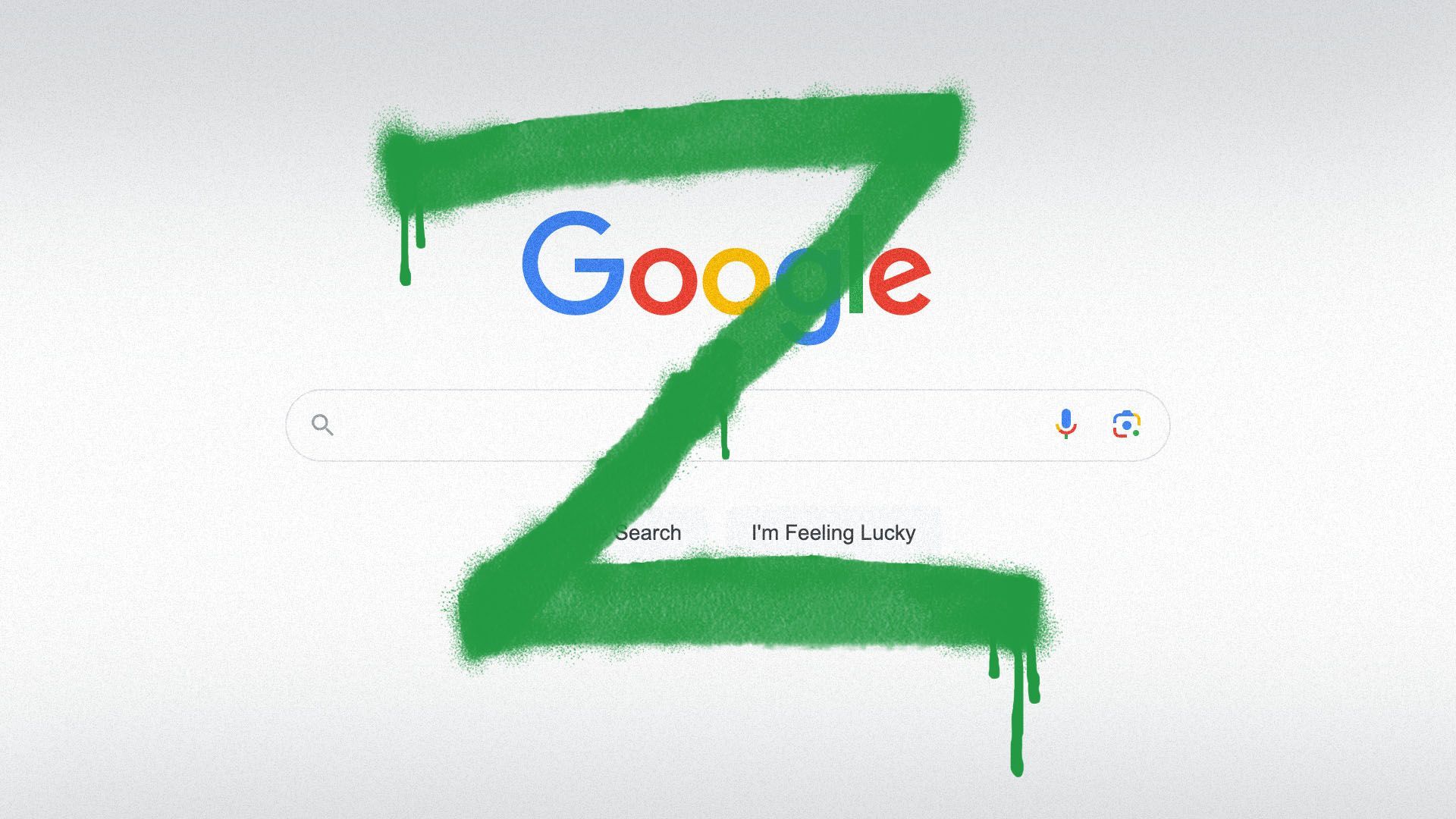
Illustration: Sarah Grillo/Axios
Gen Z is turning toward social media as a search engine, seeking quick, relatable answers amid dissatisfaction with Google's results, Axios' April Rubin writes for What's Next.
Why it matters: Young internet users' behavior marks a clear departure from that of millennials, who came of age in a golden era of online search and take pride in their "Google-fu," the art of searching like a pro.
- It's also a headache for Google, a nearly $2 trillion company that's still heavily reliant on ad revenue tied to search results.
Driving the news: 46% of those ages 18-24 start their information quests by searching on Google, per data shared exclusively with Axios from YPulse, a youth research firm.
- That's compared with 58% of those ages 25-39.
- 21% of 18- to 24-year-olds start with TikTok, while 5% start on YouTube.
The big picture: Social media platforms have "shifted so much from being a place to connect with friends and family to an information superhighway," MaryLeigh Bliss, chief content officer for YPulse, tells Axios.
Reality check: Google is still top overall for initial searches, followed by TikTok and YouTube.
Between the lines: Some users prefer to search on social media to get more authentic answers, especially as Google and others increasingly promote sponsored results.
- "You're getting more information in smaller bites from more, different sources," says Fred Cook, director of USC's Annenberg Center for Public Relations.
- Gen Zers are also true digital natives, having grown up in the social media era with no memory of Google's early days.
What they're saying: "People have many choices when it comes to accessing information," a Google spokesperson said.
- "We're focused on continuing to make Search a place where you can find high quality, reliable information as well as a variety of firsthand perspectives."
State of play: Google recently expanded its AI-powered results tool, Search Generative Experience, which compiles information about a search as well as reviews or comments.
- 18- to 24-year-old users have reported the highest satisfaction scores with using this AI tool, the company said.
- Late last year, Google also launched a feature that highlights results from forum websites such as Reddit, as well as one called Follow to automatically see updates on a topic tailored to users' interests.
- Google also began spotlighting the sources of information coming from profile pages.
Yes, but: Users have been increasingly dissatisfied with Google's search results, says Danny Goodwin, managing editor of digital marketing and tech site Search Engine Land.
- Low-quality results are well optimized to show up high on Google search result pages, per a study published this year by researchers in Germany focused on product searches.
What's next: An increase in AI-generated content could exacerbate those issues, the researchers warned.
- "The line between benign content and spam in the form of content and link farms becomes increasingly blurry — a situation that will surely worsen in the wake of generative AI," they wrote.
2. New "forever chemical" limits

Illustration: Natalie Peeples/Axios
The EPA yesterday issued the first-ever national rule to limit the presence of highly toxic "forever chemicals" in drinking water, Axios' Ivana Saric reports.
Why it matters: The new rule is expected to reduce exposure to the dangerous chemicals for about 100 million people, preventing thousands of related illnesses and deaths.
Driving the news: The rule targets certain synthetic compounds in a class of chemicals collectively known as per- and polyfluoroalkyl substances (PFAS).
- PFAS have been linked to cancers as well as immune and developmental damage in children, among other harms, the EPA says.
- They're considered especially harmful because they don't degrade in the environment.
The rule imposes the first national, legally enforceable limits on PFAS in drinking water, and requires public water systems to monitor their levels.
- The EPA is also making $1 billion in funding available via the 2021 infrastructure law to help states and territories implement PFAS testing and treatment.
3. Big bucks for community solar

Illustration: Sarah Grillo/Axios
Community solar company Nexamp has raised $520 million to increase its ownership stake in projects nationwide, the company tells Axios Pro: Climate Deals' Katie Fehrenbacher.
Why it matters: The sector's growth is being driven by lower costs, government support and a surge in electricity demand.
Catch up quick: Community solar projects enable residents or businesses to subscribe to clean electricity generated off-site.
- Residents who rent or have rooftops that aren't solar-friendly can use the projects to access low-cost solar electricity.
- Companies see community solar as a way to meet net zero goals.
By the numbers: The number of community solar projects in the U.S. grew 3% last year, according to Wood Mackenzie and the Solar Energy Industries Association.
Yes, but: Some community solar projects have faced headwinds in recent years because of grid connection queues.
If you need smart, quick intel on dealmaking in the climate industry for your job, get Axios Pro.
4. Detroit gets beach cleanup bot

The BeBot will patrol Belle Isle Beach. Photo: Courtesy of the city of Detroit
Don't expect this robot to gain sentience and challenge the human race any time soon — it just wants to pick up trash, Axios Detroit's Annalise Frank reports.
Driving the news: BeBot, a trash-removal robot, will start patrolling Detroit's Belle Isle Beach starting April 22 — Earth Day.
How it works: The electric, remote-controlled, beach-sifting robot can remove big litter as well as smaller plastic pieces that are 1 cm or larger.
- It will also collect data on how plastic pollution travels around Belle Isle and the Detroit River.
- It's part of the Great Lakes Plastic Cleanup campaign, which aims to clean up about 10,000 tons of plastics that enter the lakes annually.
Big thanks to What's Next copy editor Amy Stern.
Was this email forwarded to you? Get your daily dose of What's Next by signing up here for our free newsletter.
Sign up for Axios What's Next

The next decade of big, sweeping changes will unfold in cities and communities where new technologies like 5G, AI and drones are transforming how we work, live and play together. What’s Next will guide you through the revolution.