Axios Vitals

September 23, 2025


Happy Rosh Hashanah to those who celebrate. Today's newsletter is 1,014 words or a 4-minute read.
1 big thing: Tylenol warning could fuel new lawsuits
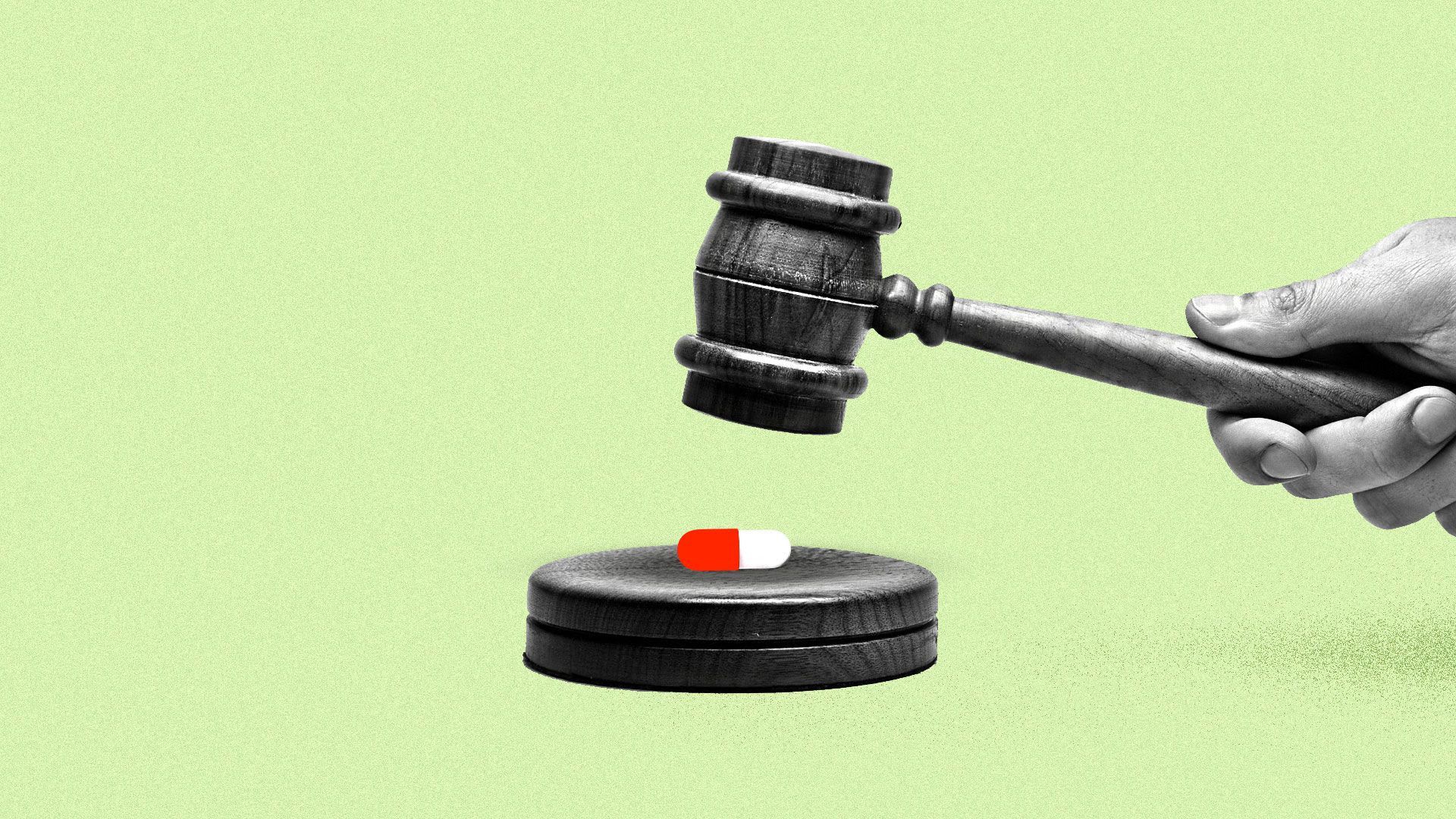
President Trump's linking Tylenol to autism could stoke a new round of litigation against the manufacturer of the painkiller and its generic versions.
The big picture: Trump's claim relies on evidence from scientists whose expert testimony was dismissed by a federal court as not sufficiently proving a link.
- Publicly asserting a connection the way Trump did may also encourage lawsuits around Tylenol use after birth, potentially upending the market for the ubiquitous drug.
- Kenvue, the Johnson & Johnson spinoff that makes brand-name Tylenol, said it strongly disagrees with the connection and that "independent, sound science clearly shows that taking acetaminophen does not cause autism." Still, the company's shares are down 20% in the last month.
Driving the news: Trump, Health Secretary Robert F. Kennedy Jr. and other federal health officials yesterday advised women not to take acetaminophen while pregnant or to give it to their babies.
- "If you're pregnant, don't take Tylenol," Trump said. "When you have your baby, don't give your baby Tylenol at all unless it's absolutely necessary."
- The FDA began a process to change the label for acetaminophen to say that it may be associated with increased risk of autism and ADHD when used during pregnancy.
Between the lines: Parents of children with autism and ADHD in 2022 began suing the makers of Tylenol and generic acetaminophen for failing to sufficiently warn about an increased risk of the conditions if the medication is taken during pregnancy.
- The plaintiffs engaged researchers from institutions including Harvard and the University of Southern California to present evidence they said shows a causal link between acetaminophen and autism and ADHD.
- But a federal judge in 2023 decided that the testimony and research of expert witnesses called in by the plaintiffs wasn't conclusive. The decision is being appealed.
What to watch: It's rare for government officials to weigh in so vocally on science related to a mass tort case, said personal injury lawyer Ron Miller.
- "It could influence the appellate court's view, encourage judges in state court cases to take plaintiffs more seriously if the litigation were to move there, and bring a surge of new parents into the litigation who might have otherwise stayed on the sidelines," he said in an email to Axios.
2. Trump backtracks after floating autism-vax link

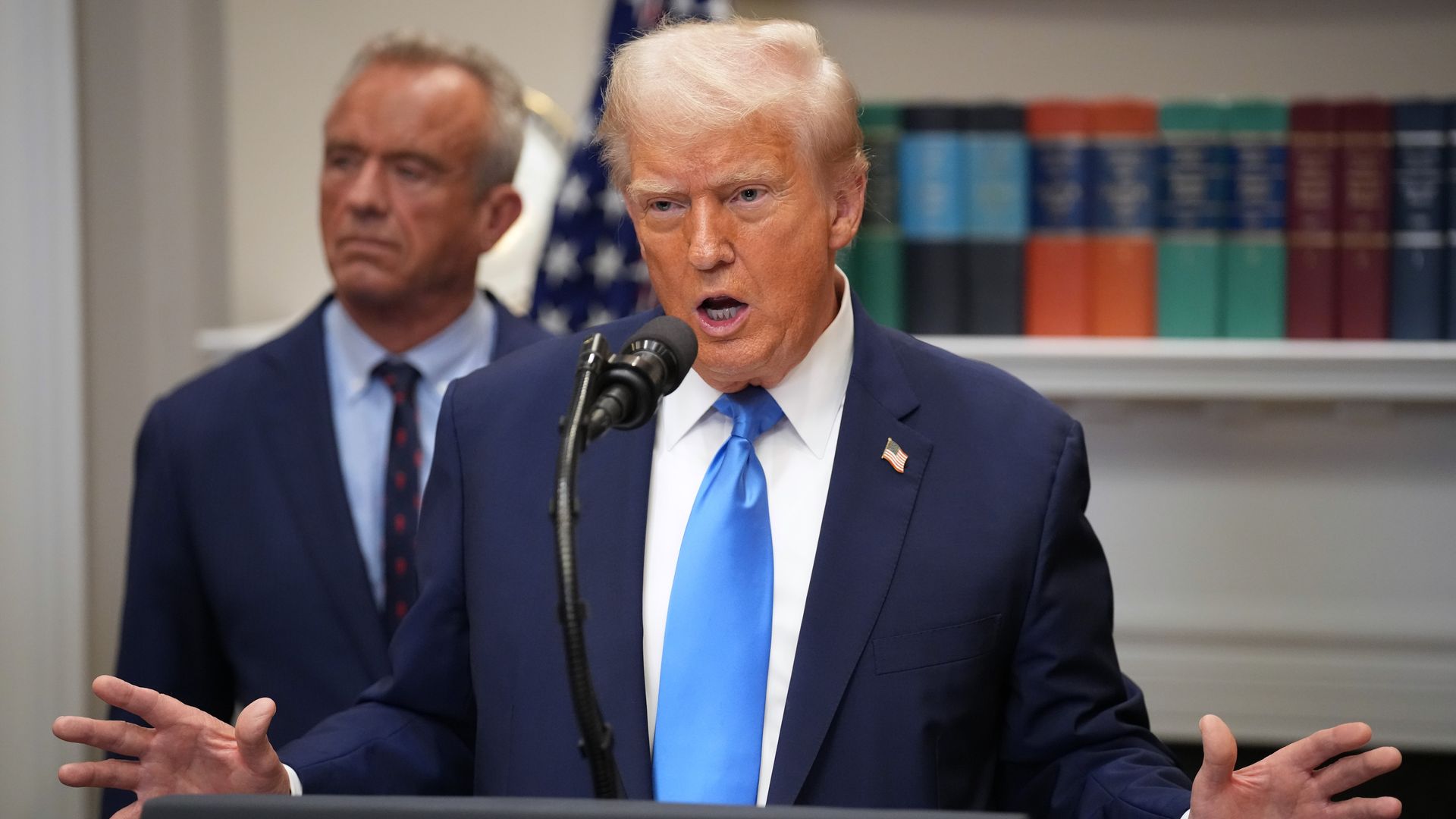
Just weeks after Trump said "pure and simple," vaccines work, he floated a slew of unproven theories linking vaccines to autism before praising shots during a wide-ranging press conference yesterday.
Why it matters: Trump's back and forth amid consistent science finding the shots effective risks confusing the public and undermining trust in U.S. medical professionals.
What he's saying: "There are certain groups of people that don't take vaccines and don't take any pills, that have no autism," Trump said.
- He repeated the myth that Amish communities have "essentially no autism" and said neither does Cuba, citing "a rumor — and I don't know if it's so or not —" that the island nation doesn't have Tylenol "because they don't have the money" for the drug.
Reality check: While research has found that some Amish people are likely under-vaccinated due to vaccine hesitancy, studies show that some Amish children do have autism.
At the end of the briefing, the president reversed course, saying that he's a "big believer" in vaccines because he has "seen how great" and "incredible" they can be.
3. Pfizer bets on weight-loss drugs in megadeal

Pfizer yesterday said it agreed to acquire obesity medicine company Metsera in a deal potentially worth up to $7.3 billion.
Why it matters: The obesity market remains among the hottest and most lucrative biotech sectors, Katherine Davis wrote first on Pro. Pfizer doesn't have any treatments in the space, which is dominated by Eli Lilly and Novo Nordisk.
- The deal also comes as Pfizer faces the loss of U.S. patent protection for blockbusters like the blood thinner Eliquis and cancer drugs Ibrance and Xtandi by 2028, WSJ noted.
Zoom in: Pfizer is buying Metsera less than a year after it went public and will gain four drug candidates in clinical trials, as well as several other earlier development programs.
- Pfizer abandoned efforts to develop two of its own weight-loss pills after encountering setbacks in clinical trials.
- The drug giant's stock has been sagging on weakened demand for its COVID-19 vaccines and on reports that the FDA might suggest a link between the shots and more than two dozen pediatric deaths.
If you need smart, quick intel on health tech dealmaking for your job, get Axios Pro.
4. H-1B exemptions could cover doctors: Report
The White House could exempt physicians and medical residents from the $100,000 fee it's imposing on highly skilled H-1B visa holders, Bloomberg reported yesterday.
Why it matters: There are fears the fee could dissuade doctors overseas from relocating to the U.S. and exacerbate a worsening doctor shortage.
Driving the news: The new fee hits workers with specialized skills in fields such as technology or engineering. But the Department of Homeland Security can make "case-by-case exemptions if in the national interest."
- The visas typically are good for up to three years, with the possibility of extensions lasting up to six years.
- A White House official told Axios it won't apply to existing holders of valid visas re-entering the country.
The White House did not respond to questions from Axios about whether exemptions would specifically apply to doctors. But physicians may be exempted, Bloomberg reported, citing a spokesperson.
- In May 3.2% of help-wanted ads for physicians and surgeons included an offer of visa support or green card sponsorship, per Indeed.
5. Catch up quick
💊 U.S. officials are considering a Trump-branded website that would enable patients to search for discounted drugs and connect them with platforms selling them. (Bloomberg)
🏥 Hospitals get fined for reporting too many infections. In some cases, the solution is not to test. (Stat)
💰 Big loopholes in hospital charity care programs mean patients still get stuck with the tab. (CBS News)
Thanks for reading Axios Vitals, and to senior health care editor Adriel Bettelheim and copy editor Matt Piper. Please ask your friends and colleagues to sign up.