Trump's Tylenol warning could fuel new lawsuits

Add Axios as your preferred source to
see more of our stories on Google.
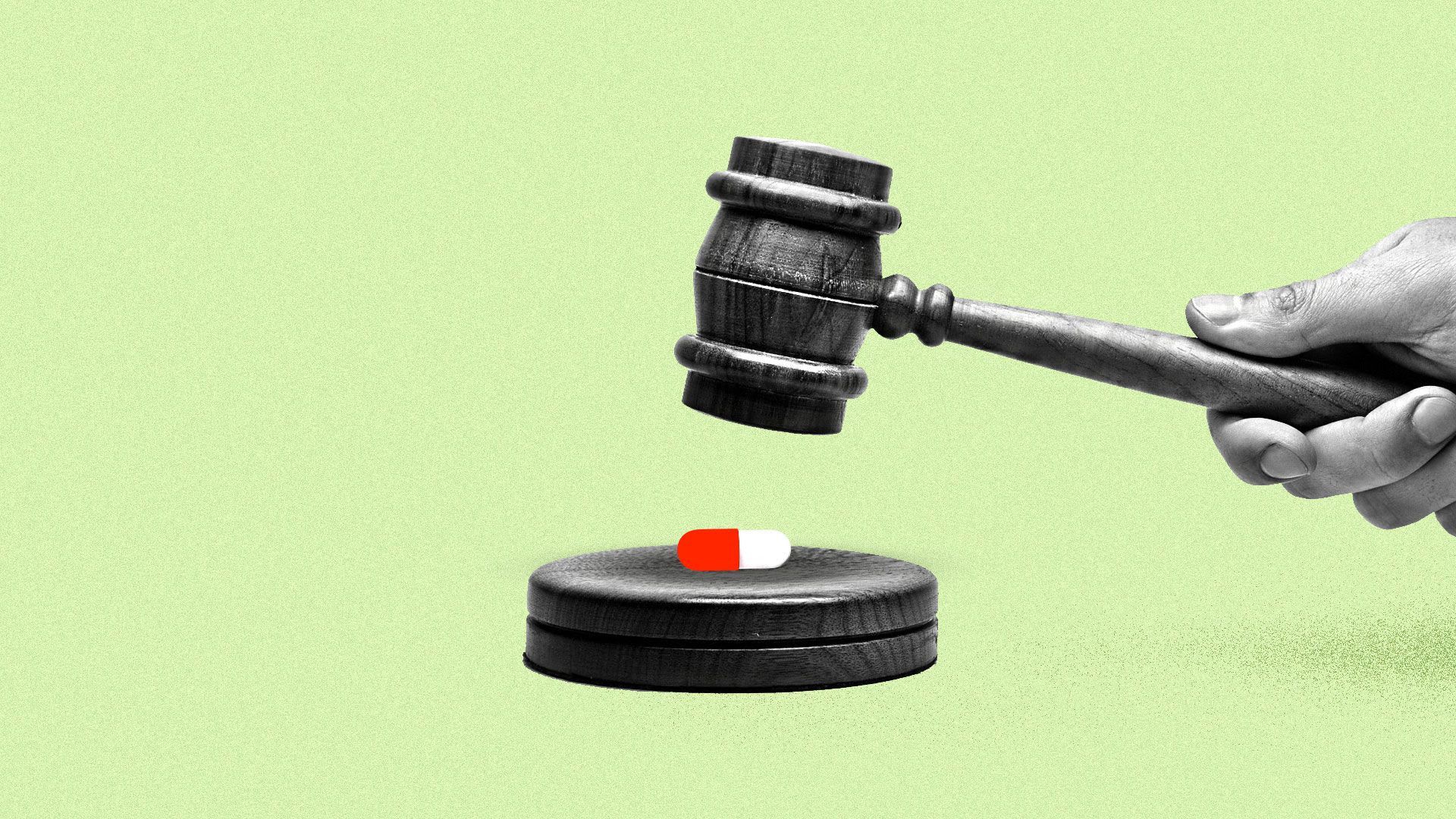
Illustration: Lazaro Gamio/Axios
President Trump's linking Tylenol to autism could stoke a new round of litigation against the manufacturer of the painkiller and its generic versions.
The big picture: Trump's claim relies on evidence from scientists whose expert testimony was dismissed by a federal court as not sufficiently proving a link.
- Publicly asserting a connection the way Trump did may also encourage lawsuits around Tylenol use after birth, potentially upending the market for the ubiquitous drug.
- Kenvue, the Johnson & Johnson spinoff that makes brand-name Tylenol, said in a statement that it strongly disagrees with the connection and that "independent, sound science clearly shows that taking acetaminophen does not cause autism," Axios' Nathan Bomey reported. Still, the company's shares are down 20% in the last month.
Driving the news: Trump, Health Secretary Robert F. Kennedy Jr. and other federal health officials on Monday advised women not to take acetaminophen while pregnant or to give it to their babies.
- "If you're pregnant, don't take Tylenol," he said. "When you have your baby, don't give your baby Tylenol at all unless it's absolutely necessary."
- The Food and Drug Administration began a process to change the label for acetaminophen to say that it may be associated with increased risk of autism and ADHD when used during pregnancy.
Between the lines: Parents of children with autism and ADHD in 2022 began suing the makers of Tylenol and generic acetaminophen for failing to sufficiently warn about an increased risk of the conditions if the medication is taken during pregnancy.
- The plaintiffs engaged researchers from institutions including Harvard and the University of Southern California to present evidence they said shows a causal link between acetaminophen and autism and ADHD.
- But a federal judge in 2023 decided that the testimony and research of expert witnesses called in by the plaintiffs wasn't conclusive.
- "Each of the plaintiffs' experts is well qualified to render an opinion in the areas addressed by their reports. The defendants do not contend otherwise. None of the plaintiffs' experts, however, has published research that expresses the ultimate opinions they offer here," wrote Denise Cote, a U.S. district judge in the Southern District of New York.
The plaintiffs appealed Cote's ruling to toss their experts' testimonies, and the U.S. Court of Appeals for the Second Circuit is still weighing their arguments.
What to watch: It's rare for government officials to weigh in so vocally on science related to a mass tort case, said personal injury lawyer Ron Miller.
- "It could influence the appellate court's view, encourage judges in state court cases to take plaintiffs more seriously if the litigation were to move there, and bring a surge of new parents into the litigation who might have otherwise stayed on the sidelines," he said in an email to Axios.
- But it could also change the way manufacturers approach the issue, and spur a new wave of evidence that validates or undermines the argument at the center of the cases, he said.
- "Once Washington starts putting resources into the question, it just becomes very unpredictable where it all ends up."
Reality check: A 2024 study of data from more than 2 million children in Sweden that took genetics and family environment into account found no link between the drug and autism.
- Some smaller studies have found that prenatal exposure to the pain medication increased the risk of both autism spectrum disorder and ADHD.
- Last year's study doesn't completely negate the possibility of a link, but the science remains unsettled.
- "To put out this statement that somehow we've solved it and we're going to just get rid of acetaminophen and that's going to take care of this problem I think concerns all of us, because we know that research into this is not over. It is not completed," Steven Fleischman, president of the American College of Obstetricians and Gynecologists, told CNN on Monday.
- ACOG guidance says Tylenol is appropriate for use in pregnancy when necessary, and the organization isn't changing its guidance at the moment.
The bottom line: There isn't strong scientific evidence to show that acetaminophen causes autism — but that isn't stopping Trump from saying so.
- Even the FDA's notice on the announcement acknowledges this.
- "It is important to note that while an association between acetaminophen and neurological conditions has been described in many studies, a causal relationship has not been established and there are contrary studies in the scientific literature," the notice says.
