Axios Vitals

March 30, 2026



Welcome back, Vitals fam. Today's newsletter is 899 words, a 3.5-minute read.
1 big thing: Health changes may help fund Iran war
Republicans are considering reductions in federal health spending to help pay for a budget bill containing as much as $200 billion to fund the Iran war and immigration enforcement.
Why it matters: New efforts to rein in health programs are sure to be controversial and open the GOP up to election-year attacks that they're cutting health care to pay for an unpopular war.
Driving the news: Top House Republicans are looking at health care offsets addressing fraud in federal programs, as they did during last year's debate over the budget law that made deep cuts to federal Medicaid spending and imposed first-time work requirements.
- "There's other items we're looking at right now, especially in the areas of fraud and waste and abuse that we're working through with our members," House Majority Leader Steve Scalise (R-La.) told Axios.
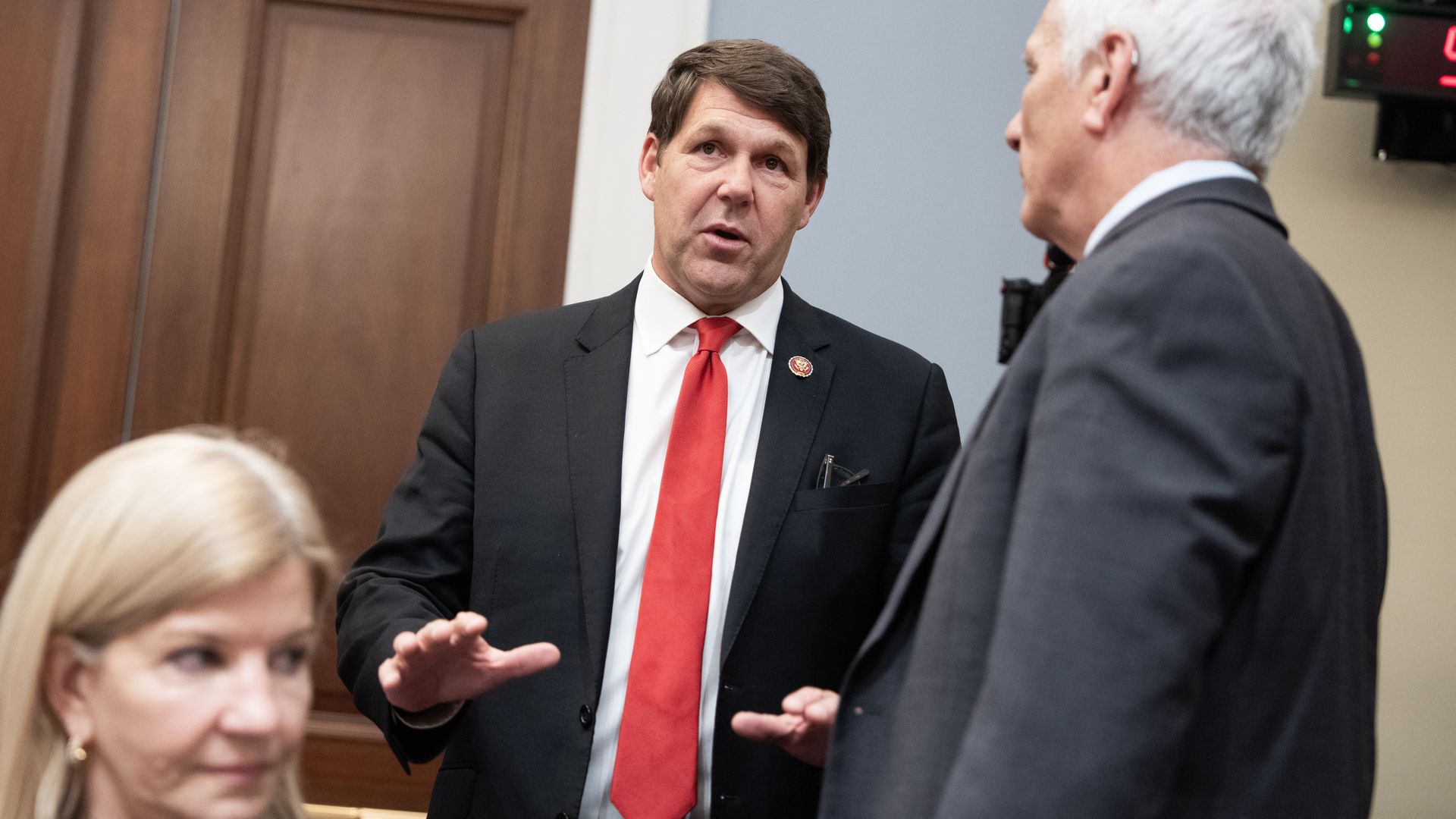
House Budget Committee Chairman Jodey Arrington (R-Texas) is reviving an idea that was considered last year to fund Affordable Care Act payments known as cost-sharing reductions.
- The Congressional Budget Office previously found the move would lower overall benchmark ACA premiums by 11% but result in 300,000 more uninsured people.
- It would have the effect of cutting the subsidy amount that some enrollees receive, thereby increasing out-of-pocket premium costs, while saving the government over $30 billion.
Between the lines: Discussions still are in the early stages, and it's not clear exactly how the goal of fighting fraud would translate into legislative language.
- The driving force is the need to pay for the war in Iran and fund ICE, the latter of which triggered the partial government shutdown. Democrats oppose both, leaving Republicans ready to use the party-line process known as reconciliation to get around a Senate filibuster.
- Many Republicans want any bill to be fully paid for, which is where potential health care changes come in.
Yes, but: Moderate Republicans are sure to push back against any policies that can be widely seen as cuts in an election year. Even a few defections could sink any effort in the House.
2. Medicare sued for details on AI experiment


A tech group is suing Medicare for details about how it's using AI-powered pre-treatment reviews for selected health services.
Why it matters: Using algorithms to determine the suitability of treatments can create unnecessary and possibly discriminatory delays or denials of care, the Electronic Frontier Foundation said in a federal court filing.
- The group wants CMS to turn over information about the software that's being used, agreements with vendors and how the government is tracking accuracy, bias or hallucinations.
Catch up quick: The program, called WISeR, launched in six states in January and requires extra approval before Medicare pays for certain outpatient services and procedures.
- It's a major shift for traditional Medicare, which has historically required little prior authorization compared with Medicare Advantage. It's also part of a broader effort to root out unnecessary care.
- EFF said the effort encourages the government's tech vendors to deny requested services by giving them a percentage of the savings. The group said the AI systems appear to be denying care at disproportionately high rates, pointing to an initial approval rate of just 62% in Texas.
Medicare officials have said they're focusing on items or services that previous reports linked to fraud, waste and abuse or that were already subject to prior authorization in Medicare Advantage.
3. ACA premium costs up after subsidies expire

Average out-of-pocket premiums for Obamacare enrollees rose 58%, or $65 per month, this year after the expiration of enhanced subsidies, new federal data shows.
Why it matters: The data helps quantify the effects of the fierce partisan battle in Congress over whether to extend the subsidies, which ended in no action.
By the numbers: The average Affordable Care Act out-of-pocket premium rose from $113 per month in 2025 to $178 per month in 2026, according to the CMS report.
- There are also more enrollees in "bronze" plans with higher deductibles this year: 40% of enrollees compared with 30% last year.
- Larry Levitt, executive vice president of health policy at KFF, wrote on X that the average premium increase would have been higher if some people had not switched into bronze plans with higher deductibles to try to keep their premiums down.
The big picture: 23.1 million people signed up for 2026 coverage, down 1.2 million from 2025.
- CMS touted its enforcement actions, which it said removed coverage or subsidies from nearly 1.5 million people found to be ineligible.
4. Quote du jour
"[The weight-loss drug boom] brings up all this comparison and second-guessing of our bodies, especially for people who were starting to maybe feel OK. ... Now they're questioning, 'Should I be doing more? Should I be smaller?'"— Social media content creator Cassandra Cavallaro on how GLP-1 use is undercutting the body positivity movement.
5. While you were weekending

🍽️ Health Secretary Robert F. Kennedy Jr. faces stiff pushback to efforts to close a loophole allowing food and supplement makers to determine whether new ingredients are safe. (NYT)
🦠 More than 140 measles cases have been confirmed in West Texas, with community spread linked to detention facility employees who visited public areas before diagnosis. (Fox 7)
👦🏻 Research suggests that the pandemic delayed the development of cognitive skills that help kids make plans, control their impulses and adapt to new situations. (CIDRAP)
Thanks for reading Axios Vitals, and to editors Adriel Bettelheim and David Nather and copy editor Matt Piper. Please ask your friends and colleagues to sign up.
Sign up for Axios Vitals