GOP weighs health care cuts to pay for Iran war

Add Axios as your preferred source to
see more of our stories on Google.
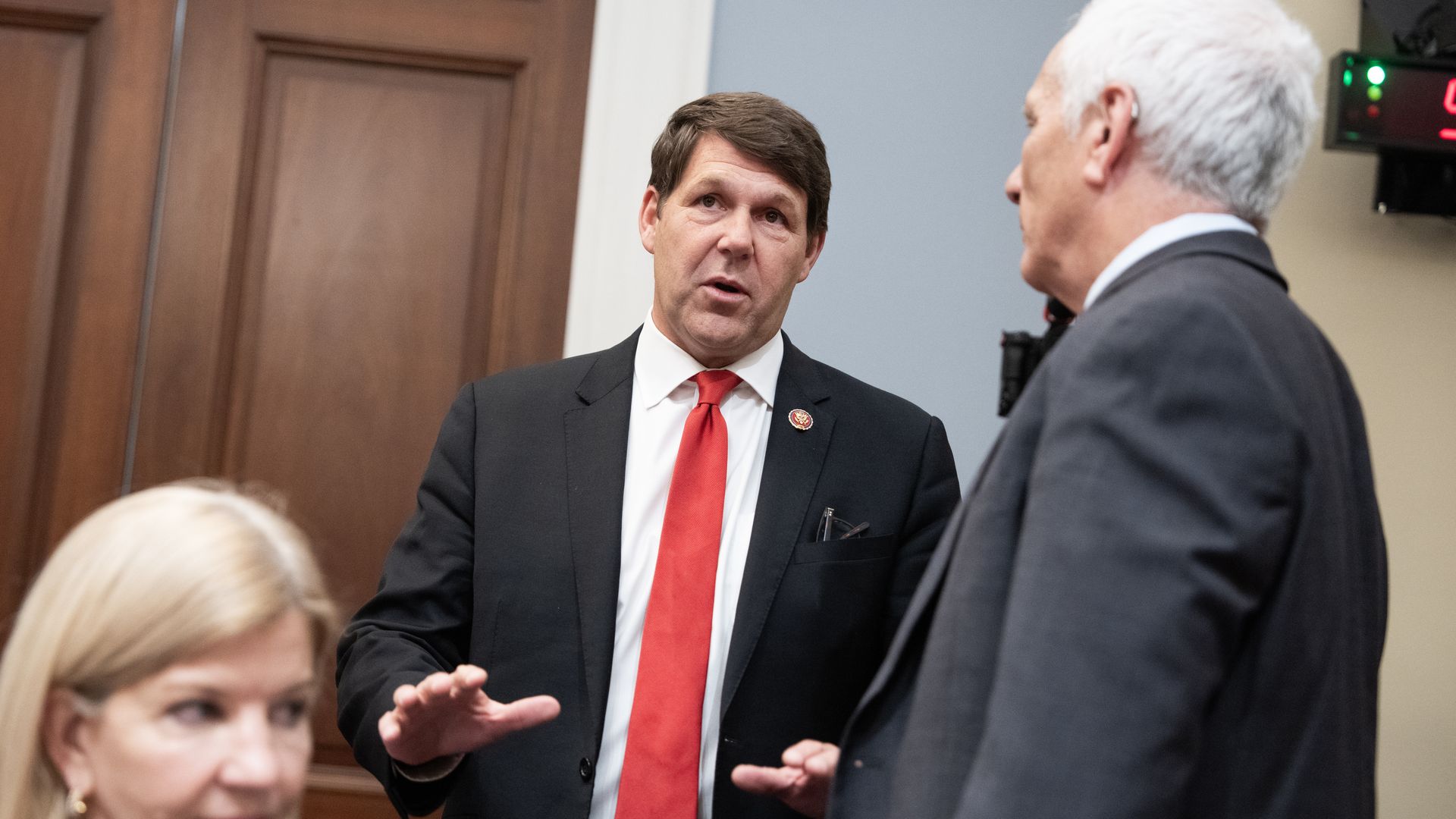
House Budget Chair Jodey Arrington is involved in discussions about health care payfors. Photo: Tom Williams/CQ-Roll Call Inc. via Getty Images
Republicans are considering reductions in federal health spending to help pay for a budget bill containing as much as $200 billion to fund the Iran war and immigration enforcement.
Why it matters: New efforts to rein in health programs are sure to be controversial and open the GOP up to election-year attacks that they're cutting health care to pay for an unpopular war.
Driving the news: Top House Republicans are looking at health care offsets addressing fraud in federal programs, as they did during last year's debate over the budget law that made deep cuts to federal Medicaid spending and imposed first-time work requirements.
- "There's other items we're looking at right now, especially in the areas of fraud and waste and abuse that we're working through with our members," House Majority Leader Steve Scalise (R-La.) told Axios.
House Budget Committee chairman Jodey Arrington (R-Texas) is reviving an idea that was considered last year to fund Affordable Care Act payments known as cost-sharing reductions.
- The Congressional Budget Office previously found the move would lower overall benchmark ACA premiums by 11% but result in 300,000 more uninsured people.
- It would cut the subsidy amount that some enrollees receive, thereby increasing out-of-pocket premium costs, while saving the government over $30 billion.
Between the lines: Discussions still are in the early stages, and it's not clear exactly how the goal of fighting fraud would translate into legislative language.
- The driving force is the need to pay for the war in Iran and fund ICE, the latter of which triggered the partial government shutdown. Democrats oppose both, leaving Republicans ready to use the party-line process known as reconciliation to get around a Senate filibuster.
- Many Republicans want any bill to be fully paid for, which is where potential health care changes come in.
Yes, but: Moderate Republicans are sure to push back against any policies that can be widely seen as cuts in an election year. Even a few defections could sink any effort in the House.
- Scalise noted the need to be able to find the votes, saying, "Obviously we need to put the vote coalition together."
- Asked if he was concerned about the potential offsets, moderate Rep. Don Bacon (R-Neb.) said, "I'll see."
- "I mean, I really don't know what they're gonna do," he added. "I think [Speaker] Mike Johnson will be smart."
The intrigue: President Trump is also pushing Congress to enact into law his "most favored nation" proposal to link U.S. drug prices to lower prices paid abroad.
- A new reconciliation bill could be a vehicle, though GOP congressional leadership remains cool to the idea after declining to include it in last year's bill.
- Scalise deflected when asked last week about including most-favored nation. "Right now, the committee hasn't moved anything," he said, pivoting to say that the House Energy and Commerce Committee is working on a "really important price transparency bill."
The big picture: Arrington told Axios that he'd personally like to include two major health care savers in Medicare.
- One, known as "site-neutral" payments, would equalize payment across hospital outpatient facilities and doctors' offices. A second would crack down on what critics say is insurance company gaming of the Medicare Advantage system through "upcoding" of patients' medical conditions.
- Arrington expressed skepticism that either would be included, saying they'd open up "a false narrative that we're cutting Medicare."
- On Medicaid, he said there is hesitancy "to open that back up," but that some policies discussed last year could be tried again, like limiting the ability of states to cover undocumented immigrants in their programs.
What we're watching: Arrington said he wanted something passed into law in "60 to 90 days," which is a speedy timeline.
- While the contours of any health care changes are not fully clear, Democrats are already going on attack.
- "Republicans in Congress want to cut Americans' health care to pay for more war in Iran," Sen. Elizabeth Warren (D-Mass.) wrote on X. "Let that sink in."
