Axios Vitals

November 12, 2025



Welcome back. Today's newsletter is 1,190 words or a 4.5-minute read.
Situational awareness: FDA veteran Richard Pazdur was tapped to be the agency's new top drug regulator yesterday, succeeding George Tidmarsh, who abruptly resigned last week amid questions about his personal conduct.
1 big thing: Dems find new attacks from shutdown loss


Democrats have already laid the groundwork to not only rebound from their failure to win Affordable Care Act concessions in the government shutdown but hammer Republicans on health care costs far beyond the ACA markets.
Why it matters: In a political climate where pocketbook issues are front-and-center, Democrats think the more health care cost issues they can pin on Republicans, the better.
Where it stands: Democrats caved on their demand that Republicans agree to extend the COVID-era enhanced ACA subsidies in order to reopen the government, only getting a commitment for a December Senate vote on some kind of extension.
- But their messaging indicates they're already building a case for blaming Republicans not just for higher ACA costs but for sticker shock in Medicaid and workplace insurance.
- Employer premiums are expected to spike next year, though how much that's tied to GOP policymaking is debatable. And looming cuts to state Medicaid programs from the Republican budget law are expected to leave millions more uninsured.
What they're saying: "Trump and the GOP are raising the cost of health care for everyone, including people who are covered through their employers," the Democratic-aligned group Protect Our Care said last week.
- Senate Democrats made similar arguments last week in a letter to the Trump administration, pointing to the way tariffs and a rise in uncompensated care are driving up health costs.
- "One of the best ways to play up the affordability issue is to play up out-of-pocket costs," said Democratic strategist Chris Jennings.
- "It would be policy and political malpractice not to do it. They have proof points."
The other side: Trump stepped up his attacks on the ACA subsidies in Truth Social posts, saying they benefit insurance companies and proposing that the money instead be sent directly to consumers.
- That call has been embraced by some Senate Republicans, including health committee chair Bill Cassidy, who has proposed funding flexible spending accounts with the money.
- Most Republicans maintain — both publicly and privately — that the ACA is fundamentally flawed and a major contributor to today's affordability problems.
Between the lines: Even in the unlikely event that Democrats and Republicans cut a year-end deal to narrowly extend the ACA subsidies, messaging on health care costs will feature prominently through the midterm elections.
- And the attack becomes all the more potent if the enhanced subsidies aren't extended.
- "The politics here are not a close call. If voters care about affordability above all, you simply can't risk [control of] the House by letting premiums spike," said Brendan Buck, a spokesperson for advocacy group Keep Americans Covered and a longtime GOP staffer on the Hill.
2. Shutdown deal extends Medicare telehealth

The Senate deal to reopen the government would extend Medicare telehealth coverage through Jan. 30 and pay retroactively for virtual care services delivered during the government shutdown.
Why it matters: If passed by Congress, the government funding deal would provide relief for seniors and providers who've come to rely on Medicare paying for virtual visits since the COVID-19 pandemic.
Where it stands: Medicare's authority to pay for virtual care outside of rural health settings expired when the shutdown began on Oct. 1, prompting providers to cancel appointments or face the prospect of not getting paid.
- Medicare telehealth coverage has broad bipartisan support — but it hasn't yet been made permanent, in part because doing so could cost billions of dollars.
Zoom out: The Senate deal would also extend other health policies that expired last month, including a program that allows hospitals to deliver institutional-level care in Medicare patients' homes.
- The bill also continues extra Medicare payments for hospitals with low patient volumes and disproportionate numbers of senior patients, as well as funding for community health centers, teaching health centers and the National Health Service Corps.
- It also delays scheduled Medicare payment cuts, including for laboratory tests, and a major cut to hospitals' Medicaid payments.
- The policies are all retroactively extended from Oct. 1 through Jan. 30.
3. How abortion could scuttle an ACA subsidy deal
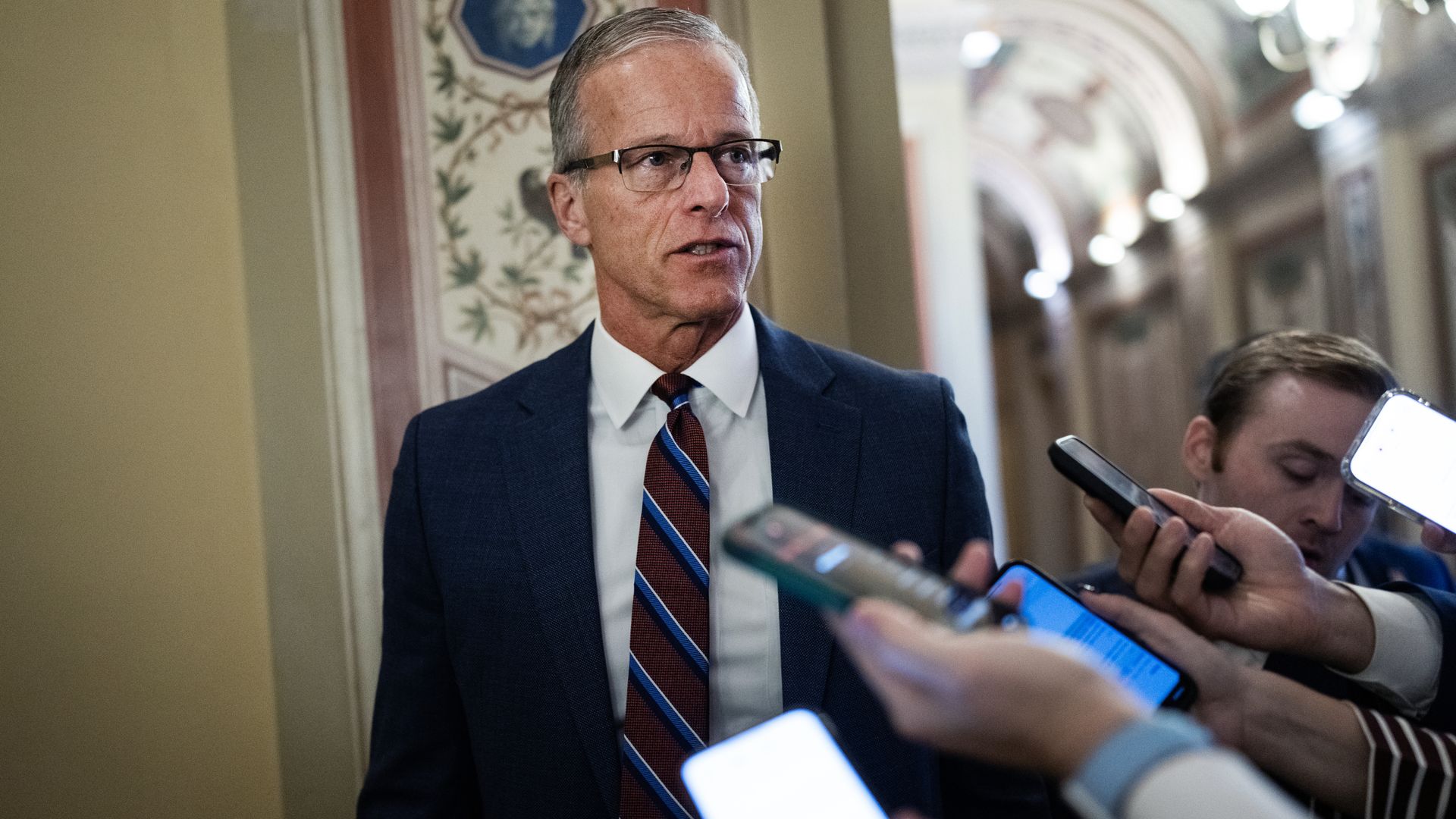
Any prospective ACA subsidy deal will collide with abortion politics if Republicans insist on attaching a Hyde Amendment ban on federal funding for abortion to an extension of the enhanced aid.
Why it matters: Such a demand could vastly complicate negotiations that already are shaping up to be politically challenging heading into an election year.
Driving the news: Senate Majority Leader John Thune (R-S.D.) said this week that stricter rules around the Hyde Amendment would be part of ACA talks once the shutdown ends.
- "A one-year extension along the lines of what [Democrats] are suggesting, and without Hyde protections — there's just not even, doesn't even get close," Thune said before the Senate passed a government funding bill to end the shutdown, per NBC News.
- Susan B. Anthony Pro-Life America is pressuring Senate Republicans on more stringent limits, saying any votes will be double-weighted on the group's congressional scorecard, per NBC.
- Democrats say the ACA already has a mechanism to separate taxpayer funds so they're not used to pay for the procedure and have accused Republicans of using the subsidy debate as a way to expand abortion restrictions.
About half of the states ban abortion coverage in ACA markets while the rest defer to insurers or require it with extra state funding.
The bottom line: Debate about the Hyde Amendment helped torpedo a bipartisan effort to shore up the ACA in 2018 and could be divisive enough to kill even a well-calibrated compromise.
4. California's plan to offset Trump science cuts


A coalition of California leaders, scientists and research institutions formally launched a campaign for a 2026 ballot measure that aims to offset federal cuts to scientific research funding.
Why it matters: The Trump administration's cancellation of billions of dollars in funds has led to lab closures, layoffs and hiring freezes across the nation.
State of play: The effort would use $23 billion in bonds to establish and fund a state version of NIH or the National Science Foundation, the New York Times reports.
- The California Foundation for Science and Health Research would have the authority to award grants and make loans to public and private universities, research companies and health care organizations in the state.
The big picture: At $6.2 billion, California received the most combined NIH and NSF funding in fiscal 2024. The University of California expects to lose $4–5 billion annually if the Trump administration eliminates more research funding from next year's federal budget.
5. Catch up quick
🔬 Executives from Regeneron and CRISPR Therapeutics will represent biotech at a "Make American Healthy Again" summit today in Washington. (Endpoints News)
♀ The FDA scrapped its highest-level safety risk warning on hormone replacement therapy for menopause, saying it can improve the health outcomes of older women. (Axios)
🍁 Canada lost its measles elimination status after 27 years, recording more than 5,000 cases since the fall of 2024. (CBC)
Thanks for reading Axios Vitals, and to editors Adriel Bettelheim and David Nather and copy editor Matt Piper. Please ask your friends and colleagues to sign up.
Sign up for Axios Vitals