Axios Vitals

May 26, 2022

1 big thing: Guns have become the leading cause of death for American kids
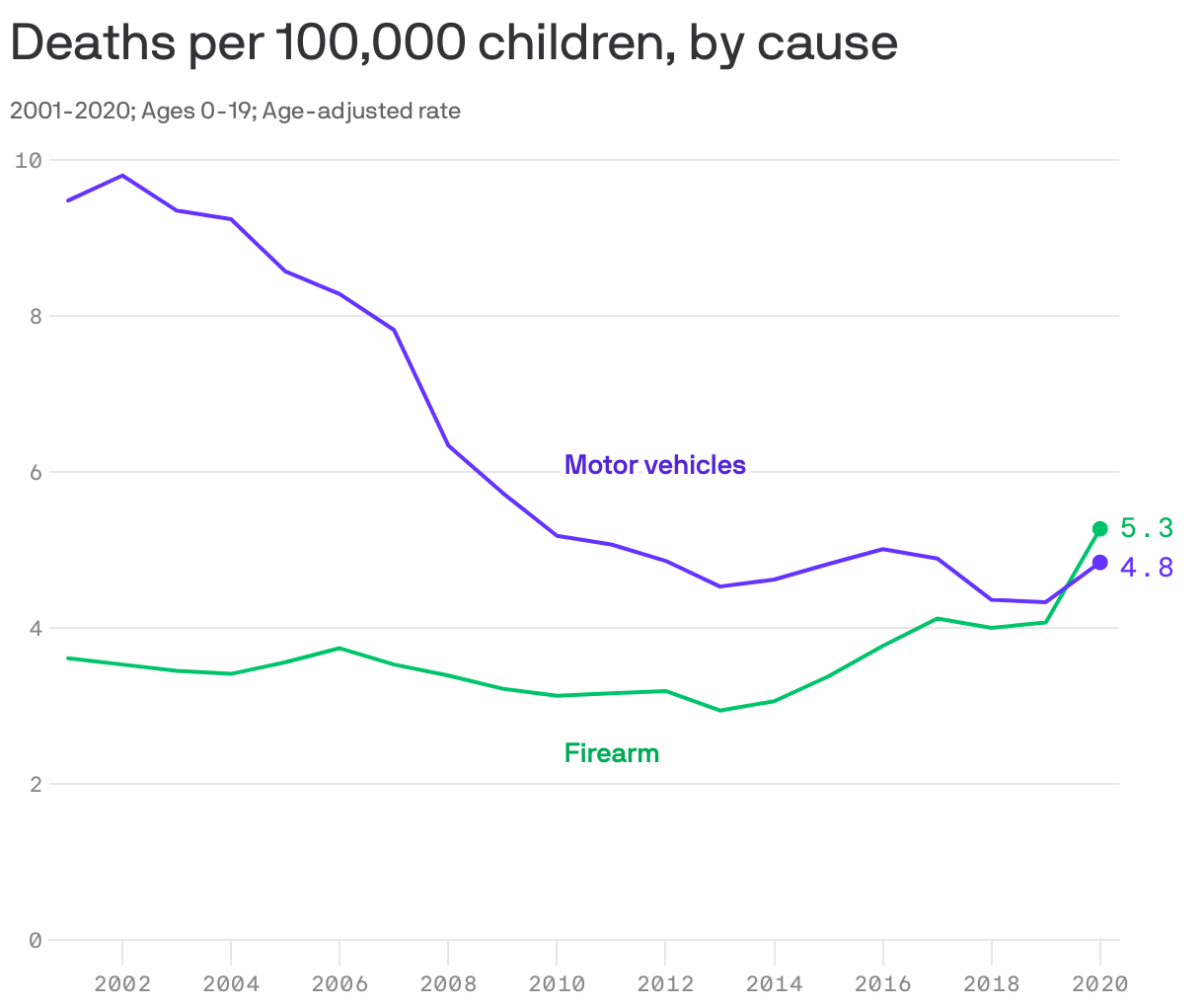
Firearms were the leading cause of death for kids one and older for the first time in 2020, the most recent year for which CDC data is available, Axios' Caitlin Owens reports.
Why it matters: The firearm death rate among children is steadily rising, as more kids are involved in gun-related homicides like Tuesday's mass shooting in Uvalde, Texas, as well as suicides and accidents.
By the numbers: Nearly two-thirds of the 4,368 U.S. children up to age 19 who were killed by guns in 2020 were homicide victims, per the CDC. Motor vehicle crashes killed 3,988 children.
- Another 30% of firearm-related child fatalities were suicides, 3% were accidental and 2% were of undetermined intent.
- Male youths were significantly more likely to be killed by guns, while vehicle crashes claimed more females.
- There were also stark racial disparities. The firearm death rate for Black children was more than four times that of white children, and white children were still more likely to be killed by motor vehicles than guns.
- D.C. had the highest firearm death rate, followed by Louisiana, Alaska and Mississippi.
What they're saying: "As the progress made in reducing deaths from motor vehicle crashes shows, we don't have to accept the high rate of firearm-related deaths among U.S. children and adolescents," researchers recently wrote in a New England Journal of Medicine article that highlighted the trend.
- The study noted that while the National Highway Safety Administration could take the lead in addressing road-traffic fatalities, firearms are one of the few products whose safety isn't regulated by a designated federal agency.
- It has taken 20 years to build a database of firearm-related deaths that includes data from all 50 states, the researchers wrote.
The bottom line: School shootings have become tragically common in the U.S., but constitute only a small fraction of gun deaths among children.
Related: How to talk to kids about Uvalde
2. Axios/Harris poll: Health brands' reputations rise
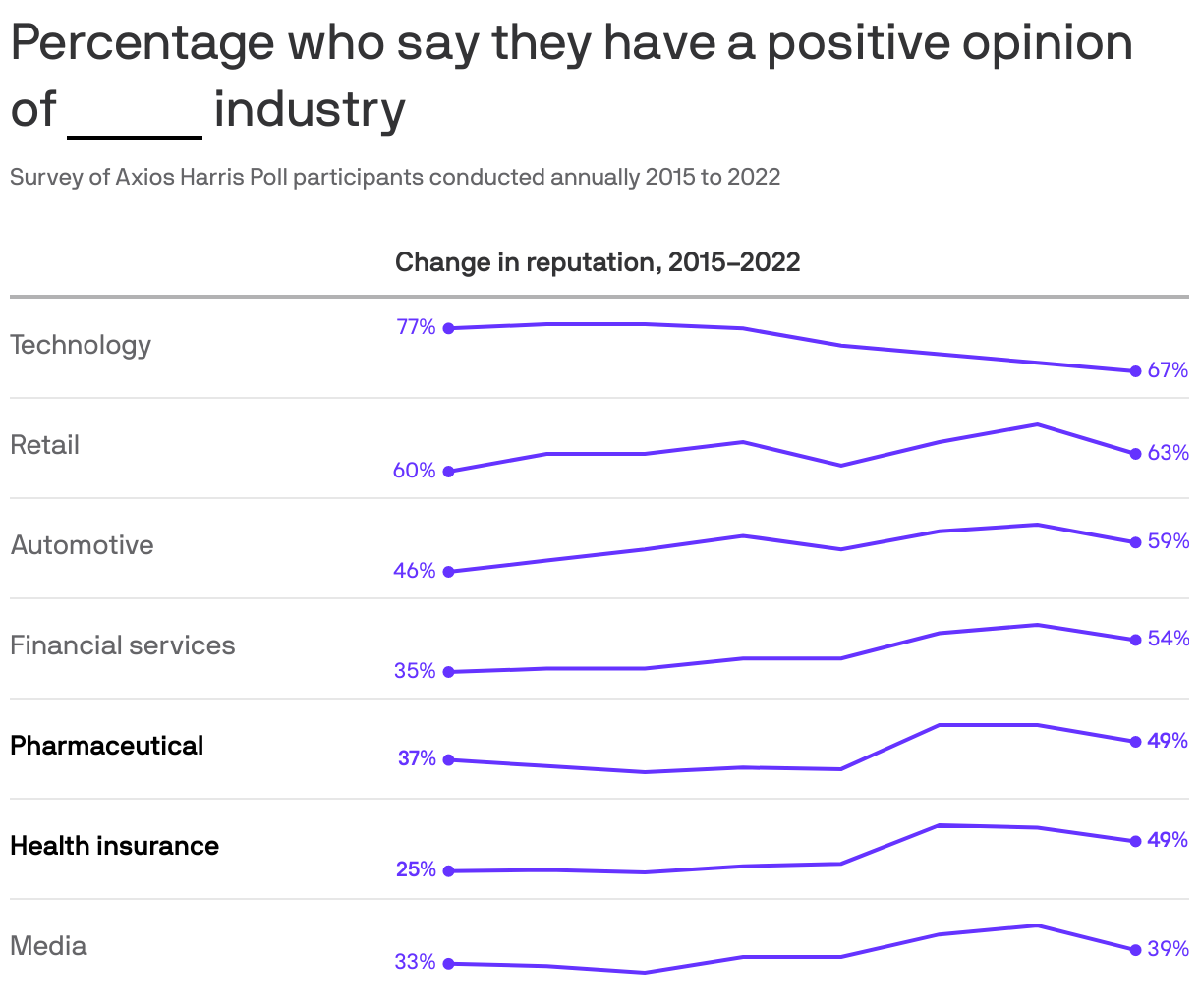
A renewed focus on health and wellness has been a boon to the reputations of health care companies, according to new rankings from the annual Axios Harris Poll 100.
The big picture: Health care brands helped Americans get through the COVID pandemic, improving their level of confidence and trust with consumers in the process.
- The Axios Harris Poll 100 is an annual survey to gauge the reputations of the most visible brands in the country.
Zoom in: Health insurance companies are now more visible than ever, with two — Blue Cross Blue Shield and UnitedHealth Group — returning to the list this year.
- Health care companies like Walgreens and CVS saw stronger scores across values like citizenship — or value to a community — and trust compared to attributes like products and services.
Yes, but: Not all health care firms fared as well coming out of the pandemic.
- Pfizer's reputation score, while still considered "very high," dropped significantly in the past year, reverting back to pre-pandemic levels as urgency around the COVID-19 vaccine subsided.
3. Hawaii posts highest number of COVID cases

An ongoing surge of reported COVID cases in the northeast showed signs of easing even as cases continued to jump around the rest of the country, Axios' Kavya Beheraj and I report.
Why it matters: While this data likely understates the actual number of cases, it's an indicator of a "hidden wave" burning through social circles across the U.S. right now even as America fights to get back to normalcy.
- By the numbers: There were roughly 108,000 new daily cases over the last week, up 28% from about 84,500 two weeks ago.
- Hawaii had the highest case rate, reporting 71 new cases per 100,000 people over the last two weeks. It was one of more than a dozen states with 40 or more new cases per 100,000 people in that time period.
Between the lines: Average deaths rose 1% over the past two weeks, staying at roughly 330 a day.
4. Drug importation from Canada OK'd

Illustration: Aïda Amer/Axios