Axios Vitals

March 26, 2026



Welcome to Thursday, gang. Today's newsletter is 1,239 words, a 4.5-minute read.
1 big thing: New push to classify COVID vaccine injuries
Trump administration health officials are giving serious consideration to a plan that would make injuries from COVID-19 vaccines a formal diagnosis that can be coded in medical records.
Why it matters: Increasing documentation of what's still a loosely defined condition could help lay the groundwork for future lawsuits against vaccine manufacturers.
Driving the news: CDC officials last week considered a proposal from a nonprofit representing individuals with COVID-19 vaccine injuries that would add a distinct code to the system doctors use to classify illnesses.
- The ICD-10 system already covers general vaccine injuries and reactions to some specific vaccines, but it doesn't have a designation for the COVID shot, whose safety has become a major point of contention within the administration.
- The new code could allow providers "to identify, track, and study patients who experience adverse effects specifically related to COVID vaccines," Mary Stanfill, a CDC health information specialist, said during a public meeting on code proposals last week.
- Codes are also used for insurance payouts, as well as research and statistical analysis.
HHS spokesman Andrew Nixon told Axios that next steps for the code will depend on public comments that are due by mid-May. The new code would take effect in the fall of 2027, if the plan is finalized.
State of play: Joel Wallskog, co-chairman of React19, the nonprofit that organized the petition, said a code is the first step toward improving care for people who've had serious side effects from the COVID-19 shot.
- Health Secretary Robert F. Kennedy Jr.'s handpicked vaccine advisers were due to discuss COVID-19 vaccine injuries at a meeting this month, but it was postponed after a federal judge stayed the advisers' appointments and previous votes.
Yes, but: Some public health experts say the effects of COVID vaccines need to be better understood before a code is created.
- Medical authorities haven't formally recognized a condition known as post-vaccination syndrome — whose symptoms include fatigue, brain fog and insomnia — and have urged more research about its underpinnings.
2. White House punts on picking new CDC director
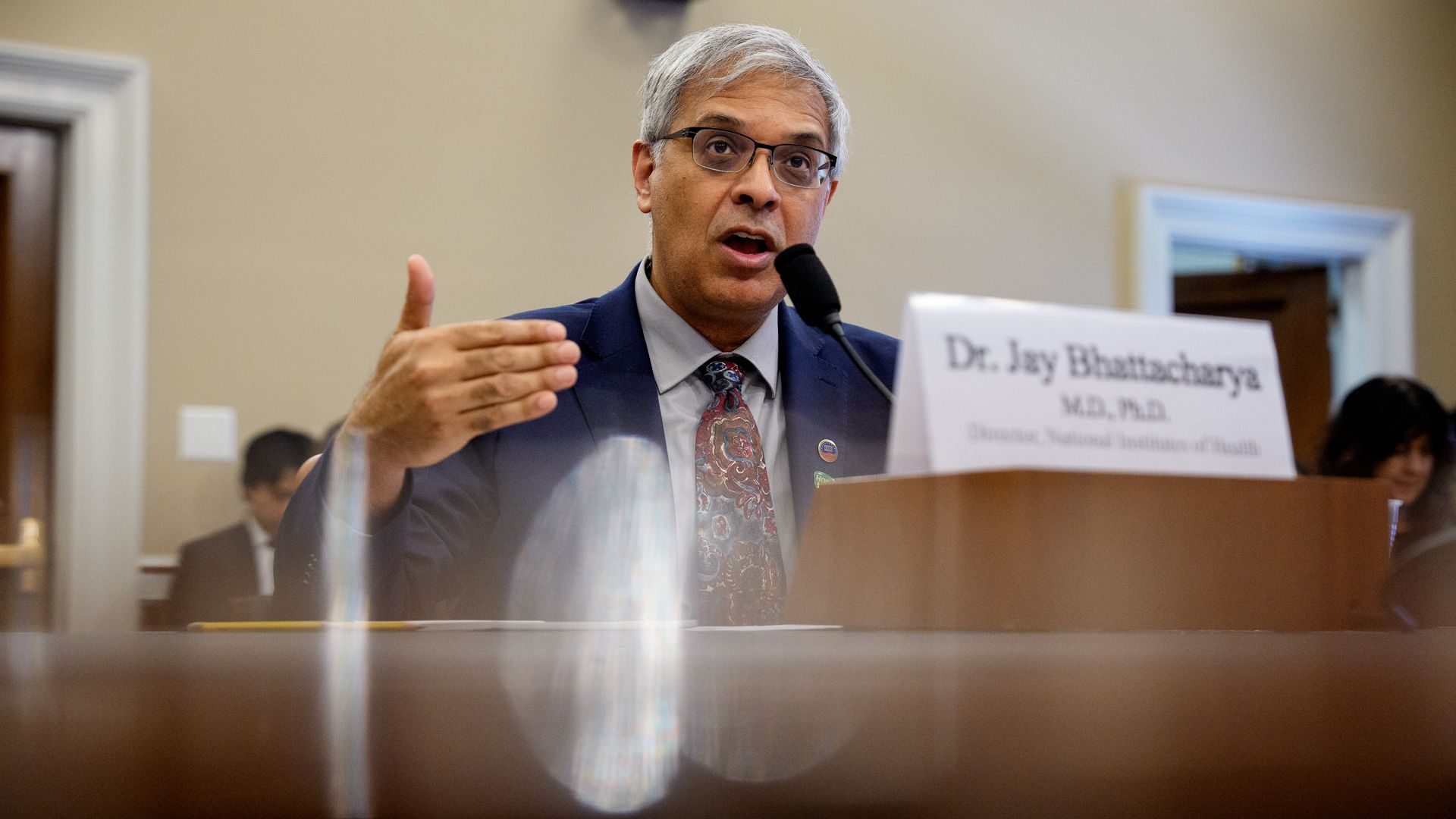
The White House yesterday indefinitely postponed its selection of a permanent CDC director, leaving acting head Jay Bhattacharya overseeing the agency past a key deadline.
Why it matters: The decision underscores the difficulty of finding a nominee who can be confirmed by the Senate and leaves the beleaguered public health agency without a full-time political leader.
What they're saying: "Dr. Bhattacharya will continue to oversee the CDC by performing the delegable duties of the CDC director," HHS spokesman Andrew Nixon said.
- "Secretary Kennedy and [HHS chief counselor] Chris Klomp are working with the White House on the CDC director search by evaluating candidates that can further the Trump administration's objective of restoring the CDC to its original mission of fighting infectious disease," he added.
Between the lines: The administration faced a Thursday statutory deadline for Bhattacharya to continue serving as acting CDC head without nominating a permanent replacement.
- However, Bhattacharya, who also is NIH director, will continue performing duties connected with the CDC post without officially holding it.
3. ChatGPT faulted in response to psychosis


Three different versions of ChatGPT performed poorly in response to signs of psychotic symptoms, with the free version performing the worst, according to a new study in JAMA Psychiatry.
Why it matters: The findings underscore concerns about AI chatbots being used by consumers for mental health care, especially amid reports of "AI psychosis," in which an AI tool can exacerbate delusional beliefs.
What they found: The study evaluated the responses of three versions of ChatGPT to 79 different psychotic prompts and compared them against control prompts.
- All three versions — GPT-5 Auto, GPT-4o and the free product — gave inappropriate or only partially appropriate responses to "at a rate that would be considered unacceptable in a clinical or public health context," the authors concluded.
- The free version of ChatGPT was significantly more likely to respond inappropriately than the other two versions.
- "This is notable because individuals with psychosis risk may be overrepresented among the economically disadvantaged," the authors write.
Yes, but: The study didn't evaluate the most recently available version of ChatGPT, a limitation the authors describe as inherent in trying to study AI models.
- "LLM chatbots continue to evolve rapidly, with at least two new versions of ChatGPT since our assessment, making it impossible to describe the current state of this product in a peer-reviewed forum," they wrote.
The other side: OpenAI said in response that the study evaluated outdated models that have since been replaced, overstated response failures and doesn't accurately reflect the way people actually use ChatGPT.
Go deeper: The dangers of using AI for mental health
4. Merck's patent cliff buying spree



Merck is making another big acquisition as it prepares for its blockbuster cancer drug Keytruda to come off patent by agreeing to buy biotech Terns Pharmaceuticals for around $6.7 billion in cash.
Why it matters: The path to patent cliffs is paved with deals.
- Merck now has announced three large acquisitions in the past year, all in preparation for Keytruda losing market exclusivity in 2028. The others were Verona Pharma ($10 billion) and Cidara Therapeutics ($9.2 billion).
By the numbers: Merck will pay $53 per Terns share — a 42% premium to the company's 90-day average price.
Driving the news: Terns is developing oral treatments for blood and bone cancers. Its lead candidate is a pill for chronic myeloid leukemia now in clinical trials.
- The FDA gave the experimental treatment an orphan drug designation in 2024.
- Leerink analyst Andrew Berens wrote in a note that the drug could reach blockbuster levels and hit peak sales of about $6.2 billion by 2040.
Merck CEO Robert Davis told analysts the company plans to do more deals, diversifying in oncology, hematology, immunology and ophthalmology.
- "We will, in a disciplined way, continue to look for opportunities," he said.
5. Senators revive push for monthly insulin cap
A bipartisan group of senators is mounting an election-year push to cap the out-of-pocket cost of insulin at $35 a month for individuals with private or workplace insurance.
Why it matters: Previous efforts to limit insulin costs outside of Medicare stalled, but the latest package could intersect with President Trump's broader efforts to bring down drug costs.
What's inside: The plan from Sens. Jeanne Shaheen (D-N.H.), Susan Collins (R-Maine), Raphael Warnock (D-Ga.) and John Kennedy (R-La.) would require group and individual market health plans to waive deductibles and limit cost-sharing to no more than $35 or 25% of list price per month for certain types and dosages of insulin.
- It would also mandate pharmacy benefit managers pass through 100% of insulin rebates and other discounts received from manufacturers to plan sponsors.
- The legislation would additionally create a pilot program to help 10 states identify uninsured diabetes patients and provide them with insulin at $35 a month.
What we're watching: Whether the plan passes muster with Senate leadership and Trump, and could be attached to a must-pass bill.
6. Catch up quick
🏥 Lawmakers in the Senate and House unveiled a plan that would deny Medicare funding to hospitals and nursing homes owned by private equity firms. (McKnight's)
⚠️ The FDA posted a warning about misleading statements biotech billionaire Patrick Soon-Shiong made on a podcast about his company's bladder cancer drug. (AP)
☕️ Consumers prioritizing higher-protein diets are blurring the line between breakfast and beverage by adding protein to coffee, according to Starbucks data. (Axios)
Thanks for reading Axios Vitals, and to editors Adriel Bettelheim and David Nather and copy editor Matt Piper. Please ask your friends and colleagues to sign up.