Axios Vitals

February 05, 2025

Welcome to Wednesday! Today's newsletter is 939 words or a 3.5-minute read.
1 big thing: How Trump tariffs may shake up health
A trade war with China could shock fragile global health care supply chains, driving up the cost of medical supplies, intensifying shortages of common drugs and limiting U.S. medical device makers' ability to import critical parts.
Why it matters: While President Trump's tariffs are billed as a boon to America's public health for the way they'll cut off sources of fentanyl, experts say they risk upending a health network that buckled during the pandemic and relies on components sourced from around the world.
- China has become a linchpin in biopharma manufacturing and is a key source of advanced pharmaceutical ingredients used in targeted therapies and starting materials for generic sterile injectable drugs.
- Many commonly used medical supplies like syringes, surgical gloves and personal protective equipment also come from China. The Biden administration last year raised tariffs on Chinese medical supplies to combat low-priced imports.
A Black Book Market Research survey of 200 industry professionals found more than 80% predicted costs for hospitals and health systems will surge by at least 15% in the next six months due to increased import expenses.
- About 7 in 10 predict drug costs will rise by at least 10% assuming the higher tariffs.
What they're saying: "Make no mistake, if there are widespread tariffs anywhere from the 10% to 25% range, I anticipate there will be corresponding price increases," Jason Hollar, CEO of health care services and products company Cardinal Health, said during the company's earnings call last week.
- "My number one concern is 'Will the provider population be able to withstand the increase?'" said Niobis Queiro, a revenue cycle management expert and CEO of Atlanta-based Queiro Group.
The industry is trying to determine whether Trump's tariffs are temporary threats or a new kind of normal.
2. Trump spreads autism mistruths in RFK lobbying

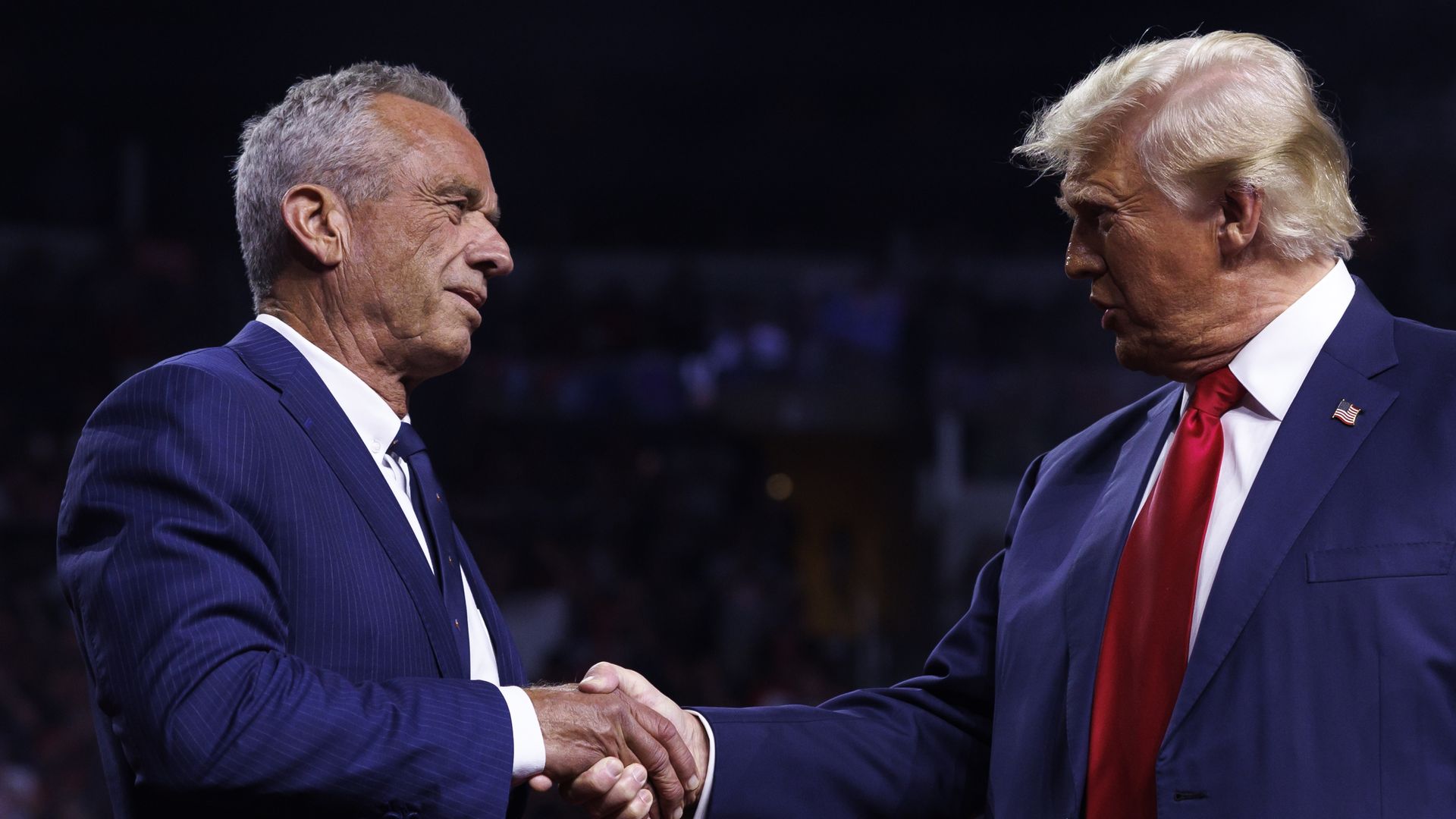
Trump on Tuesday cited inaccurate figures of autism diagnoses as a reason why the Senate should confirm Robert F. Kennedy Jr., his controversial pick to lead HHS.
Why it matters: Kennedy, who survived a 14-13 party line confirmation vote in the Senate Finance Committee on Tuesday, has been a leading proponent of a debunked theory linking autism and vaccines. The full Senate is expected to confirm him.
Driving the news: "20 years ago, Autism in children was 1 in 10,000. NOW IT'S 1 in 34. WOW! Something's really wrong," Trump wrote on Truth Social.
- That social media post wasn't the first time Trump has floated misinformation about autism spectrum disorder (ASD).
Reality check: Andrew Wakefield's 1998 study — which built the foundation for debunked theories tying vaccines to autism — was deemed fraudulent and retracted by the medical journal that published it.
- Many studies conducted since have shown that vaccines are not associated with ASD.
- Experts say broadening diagnostic criteria and rising awareness of the disorder has contributed to an uptick in autism diagnoses — rather than something being "really wrong."
3. Doctors sue Trump over removed health data
A national physicians group sued the Trump administration Tuesday for removing thousands of pages of health data and information from federal websites.
The big picture: Doctors for America claims that in taking public health data offline without advance notice, agencies including the CDC and FDA abused their discretion and arbitrarily deprived clinicians and researchers of tools necessary to treat patients.
State of play: The complaint in U.S. District Court for the District of Columbia also named HHS and the White House Office of Personnel Management, which directed agencies to remove or modify websites in accordance with executive orders from Trump.
Zoom in: The lawsuit seeks to compel the CDC, FDA and HHS to restore webpages and datasets and to stop the agencies from further removing or substantially modifying significant health information, when doing so would prevent timely public access to the information.
- The physicians group, which claims 27,000 members, is represented by lawyers from Public Citizen, a left-leaning consumer advocacy organization.
Context: Federal agencies on Friday started removing swaths of webpages, including CDC information on topics including contraception, HIV and vaccine guidelines. Some pages have come back online.
4. Costs, access top Americans' health concerns


Medical costs and access still top Americans' health concerns by a wide margin, ahead of food and water safety or reducing chronic diseases, according to a new poll from Gallup and Emory University.
Why it matters: The results show a disconnect with some of the current hot-button health debates around childhood vaccines, access to reproductive health and even maternal mortality.
- The sensitivity over costs and coverage could help explain the mounting public anger over health insurance and some state efforts to crank up oversight of carriers.
Zoom in: More than half (52%) of Americans ranked better health care access and affordability as one of their top three priorities when presented with a list of 15 options.
- 37% of those surveyed included ensuring safe food and water in their top three, while 32% picked reducing chronic disease.
- In contrast, 13% included ensuring access to comprehensive reproductive care, 11% listed ensuring childhood vaccination against preventable diseases.
- "People are still struggling to pay health health bills," said Stephen Patrick, chair of health policy and management at Emory University.
- "Even though we've made progress over the last 10 years in reducing the rates of uninsurance, we still have challenges in many communities in just getting in to see somebody."
5. Catch up quick
⚖️ Seven families with transgender or nonbinary children filed a lawsuit over Trump's executive order to halt federal support for gender-affirming health care. (AP)
💸 Pfizer beat earnings estimates on the strength of COVID product sales and broad cost-cutting efforts. (CNBC)
📲 Oura plans to deliver health advice to customers using AI that runs locally on the smartphones of owners of its smart rings. (Axios)
Thanks for reading Axios Vitals, and to senior health care editor Adriel Bettelheim, managing editor Alison Snyder and copy editor Matt Piper. Please ask your friends and colleagues to sign up.
Sign up for Axios Vitals