Axios Vitals

April 17, 2025


Happy Thursday! Today's newsletter is 1,230 words or a 4.5-minute read.
1 big thing: Moment of truth for drug development tech

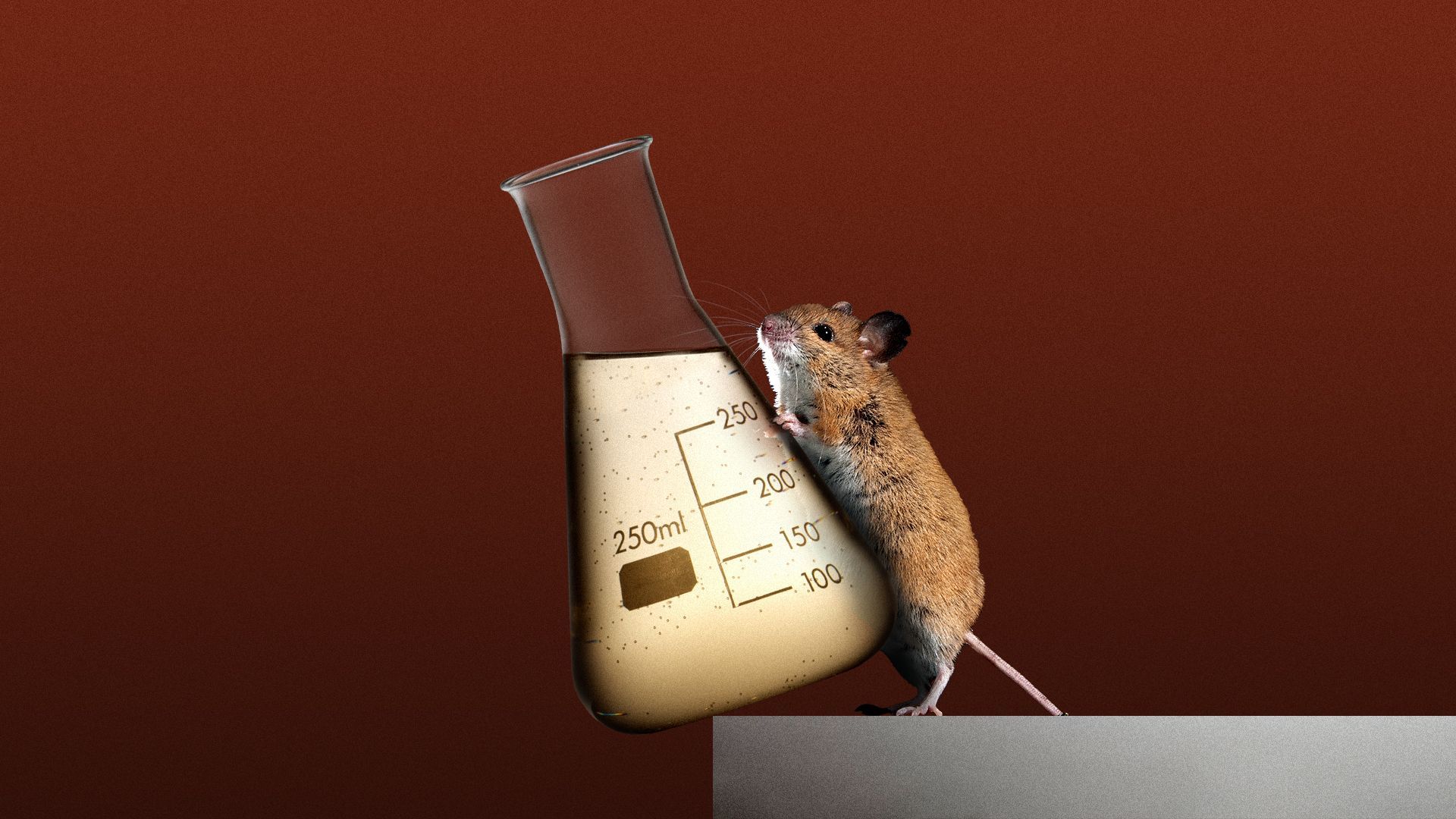
The FDA's decision to phase out animal testing in drug development is being hailed as a potential game changer, even though proponents say it may take years to get to a point where alternative methods can be used for all applications.
Why it matters: Pharmaceutical companies and biotechs say other methods could accelerate the process for bringing cures to market and give them more flexibility and predictability.
- In one instance, an "organ-on-a-chip" was shown to save the industry billions annually.
Driving the news: Last week, the FDA announced plans to phase out animal testing requirements for antibody therapies and other drugs and said companies that use other methods may receive streamlined product reviews.
- The new approach is one of the first initiatives launched by FDA commissioner Marty Makary. Bipartisan legislation recently introduced in Congress would also codify the change.
Between the lines: Alternatives to animal testing include methods such as organ-on-a-chip technology, AI models and human cell-based assays.
- Companies that might have previously used rabbits to test if a drug irritated the skin could instead test it on human skin cells grown on a microchip.
- A 2022 study of an organ-on-a-chip used to test for drug-induced liver injury found it could improve safety and efficacy testing and generate more than $3 billion annually for the pharmaceutical industry.
- But many companies still opt to use animal-testing models to cover their bets, said Donald Ingber, founding director of the Wyss Institute for Biologically Inspired Engineering at Harvard University.
- This announcement by FDA could ultimately not just make it clear companies can use alternative testing, but incentivize it.
Yes, but: If the ultimate goal is to predict drug efficacy using AI models, more data is needed, especially in areas like oncology and neurology, experts said.
2. People with autism seek dignity, not a cure


HHS Secretary Robert F. Kennedy Jr. describes autism as a disease that needs a cure, but people with autism would rather that time and money be spent allowing them to live their lives with dignity and independence.
Why it matters: Kennedy's insistence that vaccines or other environmental factors led to increased autism diagnoses in children, which he aired at a Wednesday press conference at HHS headquarters, undermines decades of advocacy work people with autism have done on their own behalf.
- "A lot of autistic people find that the idea of a cure, of making them not autistic anymore, is the same thing as proposing to make them a different person," said Zoe Gross, director of advocacy at the Autistic Self Advocacy Network, who has autism.
- "It's like saying, 'You're not good enough and we're going to change you for our own comfort.'"
Driving the news: One in 31 U.S. children age 8 or younger are now diagnosed with autism, according to a CDC study released this week.
- This increase is attributed to improved screening and earlier detection.
However, Kennedy, who has rejected research finding no link between autism and vaccines, pledged a "massive testing and research effort" to find autism's cause by September.
Reality check: Autism is hereditary, research shows. About 80% of cases can be linked to inherited genetic mutations.
- The remaining cases are likely from non-inherited mutations, per the UCLA David Geffen School of Medicine.
Zoom out: Kennedy's comments on autism follow the "medical model" that treats autism as a set of deficiencies or impairments to be addressed.
- Advocates for people with autism and other forms of neurodiversity have challenged that approach, instead placing autism on the natural spectrum of human diversity.
3. Study: Statin use low in high-need patients

About 1 in 4 adults with very high cholesterol had no evidence of ever having taken lipid-lowering medication like statins, a large study from Epic Research found.
Why it matters: The American Heart Association and American College of Cardiology recommend doctors prescribe statins to patients with high LDL — or "bad" — cholesterol to prevent heart issues. Statins can be relatively inexpensive, with some generics costing patients less than $10 a month.
The big picture: The study adds to a body of evidence showing that people who could benefit from lipid-lowering treatment aren't getting it.
- Almost half of patients ages 18-39 with very high cholesterol in the study sample did not have documentation of taking a statin.
What they did: Researchers examined more than 763,000 patients who received an LDL cholesterol test result at or above the level at which provider organizations recommended a statin prescription between January 1, 2019, and February 12, 2023.
- Two different research teams analyzed the data independently and came to similar conclusions.
4. Trump budget plan includes deep health cuts

A Trump administration budget proposal calls for eliminating programs like Head Start, funding for community mental health clinics and initiatives aimed at preventing teen pregnancy in fiscal 2026.
Why it matters: The 64-page document, called a budget passback, reveals the breadth and deep extent to which the Trump administration is eyeing cuts to the federal health bureaucracy.
- The Office of Management and Budget document is just a proposal but offers a preview of what President Trump's spending priorities are. Congress has the final say in how discretionary funds are allocated.
- The document was first reported by the Washington Post.
Zoom in: The proposal calls for about $20 billion appropriated to a new agency within HHS called the Administration for a Healthy America. Robert F. Kennedy Jr. announced last month that he planned to combine several existing agencies into this new entity.
- The document also requests $500 million to be allocated by the HHS secretary for activities that support the administration's so-called "Make America Healthy Again" initiative, per the document.
In all, about $40 billion, or one-third of the HHS discretionary budget, would be cut under the proposal compared with fiscal 2024 levels.
- The document suggests eliminating programs for rural health care providers, HIV treatment efforts, health care workforce initiatives and childhood lead poisoning. It does not say whether or how the work done by these programs would continue.
- Some offices that the document suggests could be eliminated, including the Administration for Preparedness and Response, have existing legal authorities, with officials confirmed by the Senate.
Reality check: No final funding decisions have been made yet, OMB communications director Rachel Cauley told Axios.
Zoom out: There had been earlier reports that Head Start, a storied program created as part of President Johnson's War on Poverty, was on the chopping block.
- That was an aim of Project 2025.
- Ending the program, which provides early childhood education, nutrition and health care help to nearly 800,000 kids and their families, would have "catastrophic" consequences for some of the poorest people in the U.S. — with outsized impacts in rural communities.
- "I had a very inspiring tour [of a Head Start program]," Kennedy said last month. "I saw a devoted staff and a lot of happy children. They are getting the kind of education and socialization they need, and they are also getting a couple of meals a day."
5. Catch up quick
🌎 World Health Organization members agreed to a legally binding treaty to improve coordination in future pandemics. (BBC)
💉 Advisers to the CDC voted to expand the use of RSV vaccines in high-risk patients aged 50-59. (Bloomberg)
⚖️ The Salvation Army faces a class-action lawsuit over preventing patients from using methadone and buprenorphine for addiction treatment. (Stat)
🐟 Salmon exposed to anti-anxiety drugs during their migration were more successful in reaching their destination than drug-free fish, a study found. (NPR)
Thanks for reading Axios Vitals, and to senior health care editor Adriel Bettelheim, managing editor Alison Snyder and copy editor Matt Piper. Please ask your friends and colleagues to sign up.