Axios Vitals

June 24, 2026



Hello to Wednesday! Today's newsletter is 834 words, a 3-minute read
📺 Investor and All-In Podcast co-host Chamath Palihapitiya tells Dan Primack on the next episode of "The Axios Show" that fears of an AI jobs apocalypse are misguided and not rooted in history. Watch a clip.
1 big thing: FDA's industry-friendly about-face

A series of FDA decisions following the departure of former commissioner Marty Makary signal a reset in the agency's relationship with the biopharmaceutical industry.
Why it matters: Global leadership in the sector is at stake with China's rapid ascendance in drug development — and biotech investors and executives had warned that the agency was undermining innovation, not supporting it.
Driving the news: The FDA has reversed several high-profile decisions made under Makary that caused discord inside and outside the administration, particularly around cell and gene therapies targeting rare diseases.
- Just this week, the Maryland biotech Regenxbio confirmed the FDA is reconsidering its experimental gene therapy for Hunter syndrome after it was rejected earlier this year.
- The FDA has also reversed course on a melanoma therapy from Replimune, and on UniQure's gene therapy for Huntington's disease, allowing both to move forward in the review process.
- "I would say these recent events ... have really been a breath of fresh air. These are dramatic, positive developments," said Tim Hunt, CEO of the Alliance for Regenerative Medicine. "It really discards the previous regime's, I would say, unhealthy fixation on methodological purity."
The agency also took the unusual step of publicly releasing a memo confirming that former top drug regulator Tracy Beth Høeg opposed an expanded approval of Sanofi's Tzield diabetes treatment for an additional pathway that's since been greenlit.
- Mike Davis, the current acting director of FDA's Center for Drug Evaluation and Research and the author of the memo, wrote that he disagreed with Høeg's assessment.
What they're saying: "The changes appear to be in the right direction but I think it hasn't been long enough to see a trajectory and know whether we can count on consistency," said RA Capital managing partner Peter Kolchinsky.
- "We've had 1.5 years of destructive chaos and decision-making by personality ... let's see the FDA function as an institution for maybe six months straight before we reach any conclusions."
2. Withheld COVID vax study sees light of day

A COVID vaccine study that was kept out of the CDC's flagship journal this spring appeared yesterday in JAMA Network along with a defense of its methodology.
The big picture: The study suggesting that adults can reduce the likelihood of severe illness by getting a COVID-19 shot had drawn concern from NIH director Jay Bhattacharya over its "test-negative" design.
- It had been under review for publication in CDC's Morbidity and Mortality Weekly Report, the customary venue for rapid communication of public health findings.
State of play: The study's publication is reviving accusations of political interference, with co-author Michelle Barron telling the Washington Post she believed it wasn't published because the findings did not support Health Secretary Robert F. Kennedy Jr.'s agenda to limit the use of COVID vaccines.
- In an accompanying commentary in JAMA, Emory biostatistician Natalie Dean said the study design has been used for decades and offers a pragmatic way to estimate vaccine effectiveness when outcomes are scattered across many databases.
The other side: "When questions arise about methodology — such as study design, representativeness, bias, or analytic assumptions — we address them directly," said HHS spokesperson Emily Hilliard.
- Bhattacharya has said observational studies like the one in question have limitations and can be subject to bias. He told NBC that longitudinal cohort studies that follow large groups of people over a long period are "a stronger design."
3. Millions go abroad to get dental care: Study
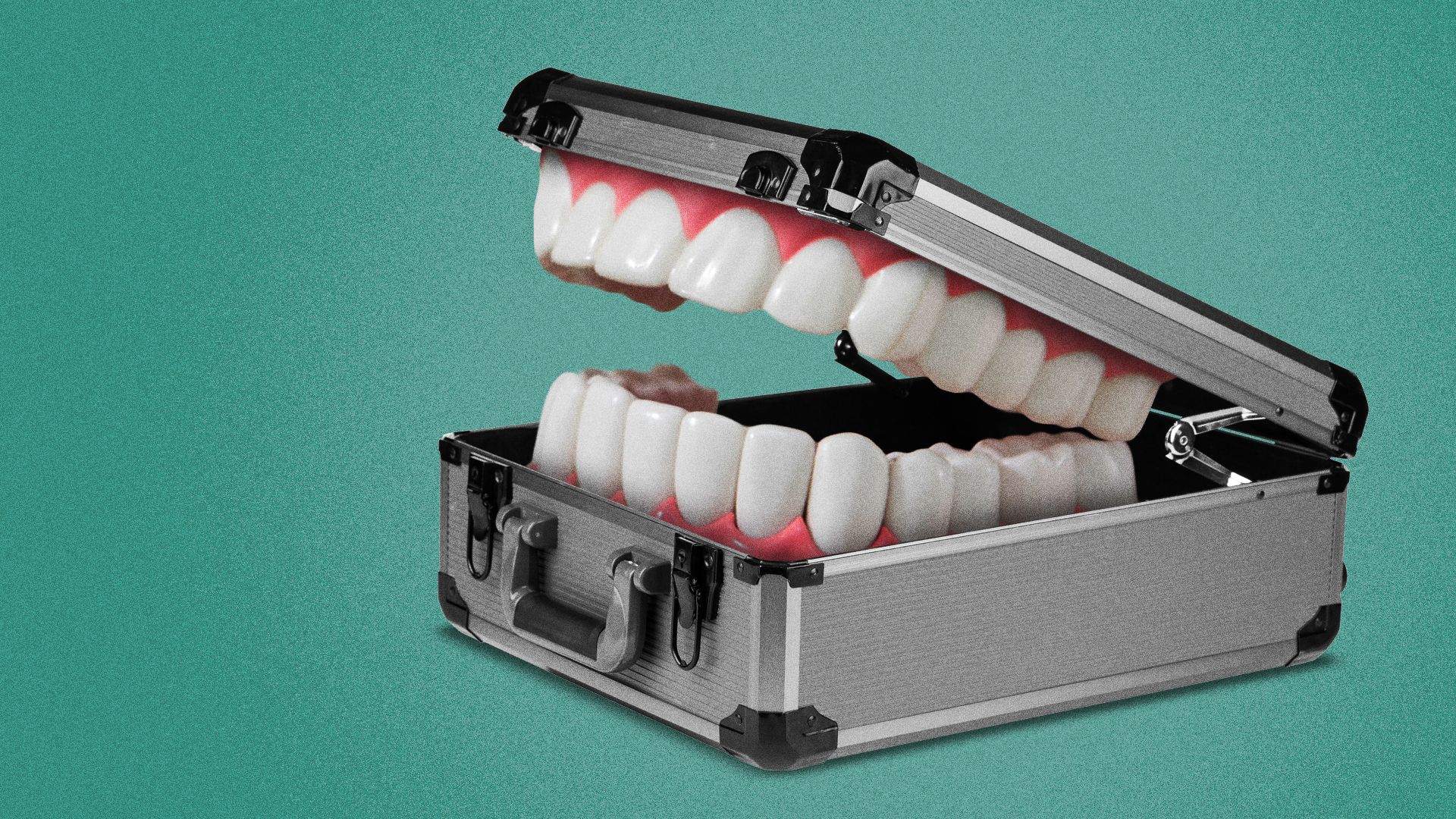
Nearly 9.6 million American adults may have traveled abroad to get dental care, according to a new report from CareQuest Institute for Oral Health.
Why it matters: Oral health procedures are generally more expensive in the U.S. than in other countries, making medical tourism a viable option.
By the numbers: About 4% of adults in a nationally representative survey of 9,450 people conducted last year said they'd traveled outside of the country for dental work.
- That translates to more than 9 million people.
- More than a quarter of those surveyed said they did not have dental insurance.
Zoom out: The global market for dental tourism is exploding, and is expected to be a more than $65 billion industry in 2033.
- Popular destinations include Mexico, Thailand and Hungary.
Yes, but: Traveling for any health procedure can make it difficult to get follow-up care if complications come up, and quality of care can vary, CareQuest's report notes.
4. Catch up quick
⚖️ The Justice Department unveiled charges against about 450 defendants for alleged health care fraud totaling over $6.5 billion. (WSJ)
🍫 A court ruled the federal government can't block benefits from the SNAP program from being used to buy candy, soda and other sugary drinks. (AP)
📈 Preliminary rate requests show insurers are seeking big Obamacare exchange premium increases in 2027 after huge hikes this year. (Modern Healthcare)
🦠 After weeks of turmoil and protests, construction of a U.S.-funded Ebola quarantine building in Kenya has officially been stopped by health authorities. (CIDRAP)
Thanks for reading Axios Vitals, and to editors Adriel Bettelheim and David Nather and copy editor Matt Piper. Please ask your friends and colleagues to sign up.
Sign up for Axios Vitals