Axios Vitals

May 05, 2025


😎 Happy Monday, Vitals readers. Today's newsletter is 953 words or a 3.5-minute read.
1 big thing: Longevity breakthroughs are already here

Silicon Valley billionaires like Sam Altman, Peter Thiel and Jeff Bezos are pouring billions into ventures trying to slow or reverse the aging process, wagering that reprogrammable cells and AI-driven drug design can deliver a fountain of youth — or at least ward off death.
- Physician-researcher Eric Topol offers this dose of reality: The real game-changers are already here.
The big picture: In "Super Agers," his new book due out tomorrow, the founder of the Scripps Research Translational Institute writes that the answer doesn't lie in turning back time, but in harnessing our improved capabilities to predict and prevent chronic diseases.
The hunt for immortality is as old as life itself. But in the last decade, the once niche longevity field has exploded into the mainstream, drawing in scientists, biotechs, longevity clinics and wellness influencers.
Topol says the work, while promising, has largely been shown to work in animals and carries safety concerns, such as the potential to cause cancer. Ultimately, it may never achieve the goal of reversing aging in humans — and could be prohibitively expensive.
Between the lines: Instead, the cause for optimism is that the top age-related diseases — cancer, cardiovascular disease and neurodegenerative diseases like Alzheimer's — take decades to develop and give us time to prevent them, he said.
- There are now much better ways to accurately narrow down who's most at risk of developing disease using certain relatively inexpensive tests for biomarkers that measure the biological age of different organs in the body.
- Armed with that data and AI, doctors will be able to target increased disease surveillance and lifestyle interventions accordingly for an individual rather than following general population-based guidance.
2. Budget proposes deep cuts to NIH, CDC funding

Health care providers and researchers say President Trump's partial budget proposal for fiscal year 2026 would gut the United States' ability to make biomedical advancements.
The big picture: The proposal, released Friday, calls for a nearly $18 billion decrease to NIH funding and a $3.6 billion decrease to the CDC.
- Congress gets to pass the final budget, and it doesn't have to follow the president's proposal.
What they're saying: Slashing funding for NIH and CDC initiatives will "set this nation back dramatically in our ability to reduce death and suffering" from cancer, said Lisa Lacasse, president of the American Cancer Society Cancer Action Network.
- "This budget proposal would gut the nation's biomedical research infrastructure and cede leadership in the field to global competitors like China," Danielle Turnipseed, chief public policy officer of the Association of American Medical Colleges, said in a statement.
Zoom in: The administration says it is eliminating duplicative and unnecessary health programs, as well as funding for diversity, equity and inclusion efforts. The proposal aims to rebuild Americans' broken trust in NIH and align research with the administration's priorities, it says.
Between the lines: The proposed 22.6% cut to non-defense discretionary spending would have a disproportionate effect on the poorest Americans if enacted, Axios' Emily Peck reports.
- For example, the budget proposes eliminating the Low Income Home Energy Assistance Program, an HHS-run program that helps people pay utility bills.
Meanwhile, the budget would give $500 million to the new so-called Make America Healthy Again Commission, which the document says will let HHS invest in programs for nutrition, physical activity and "over-reliance on medication and treatments."
3. Out-of-pocket drug spending hit $98B in 2024
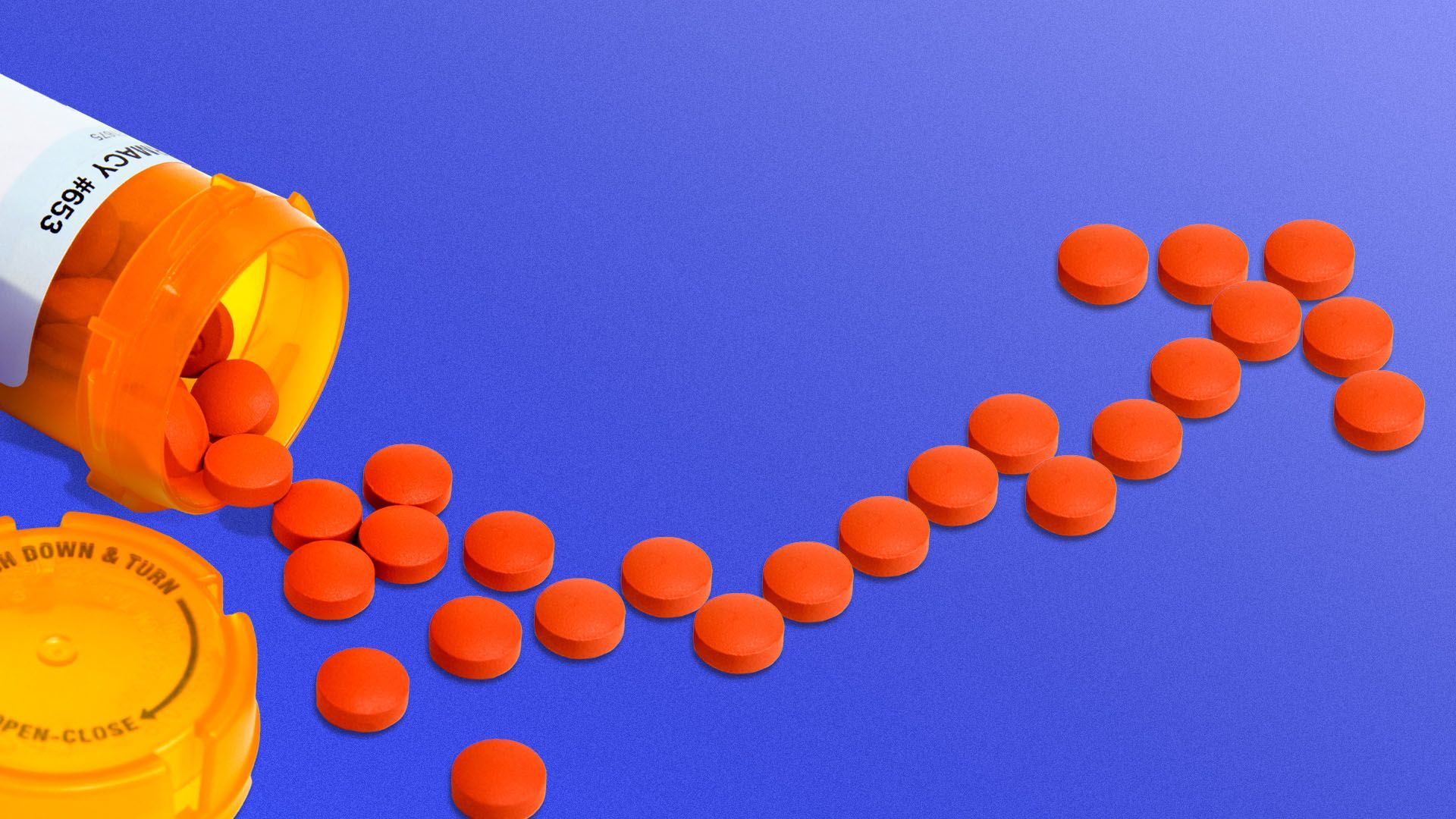
Americans spent $98 billion out of pocket on prescription drugs in 2024, marking a 25% increase over five years, according to an annual report from IQVIA.
Why it matters: Lowering prescription drug costs for patients has become a political priority in recent years. President Trump is continuing the focus, and recently signed an executive order aimed at further cutting prescription drug prices.
What they found: Net spending on medicine rose 11.4% in 2024 to $487 billion. Prescription costs on average were flat compared with 2023, but there was greater use of medicines with significant clinical benefits, IQVIA said.
- More than one-quarter of new prescriptions were not filled in 2024, mostly because they aren't covered by insurers.
Zoom out: Prescription medicine use increased 1.7% last year, the report found.
- Overall, retail and long-term care prescriptions reached 7.1 billion, a nearly 1 billion increase since 2019.
What's next: Total net spending on medications in the U.S. will exceed $600 billion by 2029, with obesity and oncology drugs driving growth, IQVIA estimates.
Stunning stat: Prescription opioid use fell to the lowest level since 1999, and overdose deaths decreased 29% in 2024.
4. Fluoride supplements advised after Utah ban


Utah health department officials are encouraging residents to "prevent tooth decay" by talking to their medical providers about fluoride supplements.
The big picture: The guidance, released Friday, comes after Utah became the first state in the U.S. to ban adding fluoride to public water systems.
- The ban, which takes effect May 7, was celebrated by Health Secretary Robert F. Kennedy Jr.
What they're saying: "We recognize the benefits of fluoride to overall health," Stacey Swilling, the state dental director at the Utah Department of Health and Human Services (DHHS), said in a statement.
- "While community water fluoridation will no longer be available, there are measures that can be taken to reduce the risk of developing cavities."
Zoom in: Under the law, pharmacists are allowed to prescribe fluoride supplements to patients, in addition to doctors and dentists.
- Dental providers recommend them for children ages 6 months to 16 years "who live in areas where there isn't enough fluoride in the water to adequately protect their teeth," per DHHS, and some adults.
5. While you were weekending

Thanks for reading Axios Vitals, and to senior health care editor Adriel Bettelheim, managing editor Alison Snyder and copy editor Matt Piper. Please ask your friends and colleagues to sign up.
Sign up for Axios Vitals