Axios Vitals

April 09, 2026



Almost Friday, gang. Today's newsletter is 1,039 words, a 4-minute read.
🔮 "The Axios Show": Kalshi founders Tarek Mansour and Luana Lopes Lara talk prediction markets vs. gambling, insider trading and Donald Trump Jr. with Dan Primack on the latest episode. Watch it on YouTube.
1 big thing: Iran ceasefire won't end pharma fallout

The Iran war is highlighting the fragile nature of global drug supply chains as disruptions ripple far beyond the Persian Gulf.
Why it matters: Even if the ceasefire holds, disruptions to air cargo and the Strait of Hormuz bring the threat of higher prices for generic drugs and spot shortages, especially in developing countries.
- The conflict is also disrupting clinical trials of experimental cancer, heart and other treatments in countries like Turkey, Israel and Egypt, according to data science company Phesi.
State of play: 10-20% of global pharmaceutical commerce passes through the Middle East, according to Prashant Yadav, senior fellow at the Council on Foreign Relations.
- The conflict set off a scramble to find alternate arrangements for generic medicines made in India that require temperature controls and other complex handling and often are flown through hubs like Dubai.
- Pharmaceuticals and drug ingredients also had to compete with fertilizer and other commodities held up by the bottleneck, creating a logistics nightmare.
- There are no assurances that the two-week ceasefire will bring a lasting peace, keeping key players up in the air.
What they're saying: "The disruption to the operations of the Gulf airlines is a big cargo disruption," Yadav told Axios on Tuesday, before the ceasefire was announced.
- "People are trying to find reroutings and people are trying to find alternative carriers," he added. "But anytime you look for reroutings and alternative carriers, it's ... more expensive."
Zoom in: One particularly vulnerable area is clinical trials, which hinge on time-sensitive drug shipments.
- Phesi found 6.7% of global clinical trials were impacted by disruptions in the Middle East, with the biggest effects on drugs for lung cancer, breast cancer, heart failure and multiple myeloma.
2. Top drug industry lobbyist is stepping down

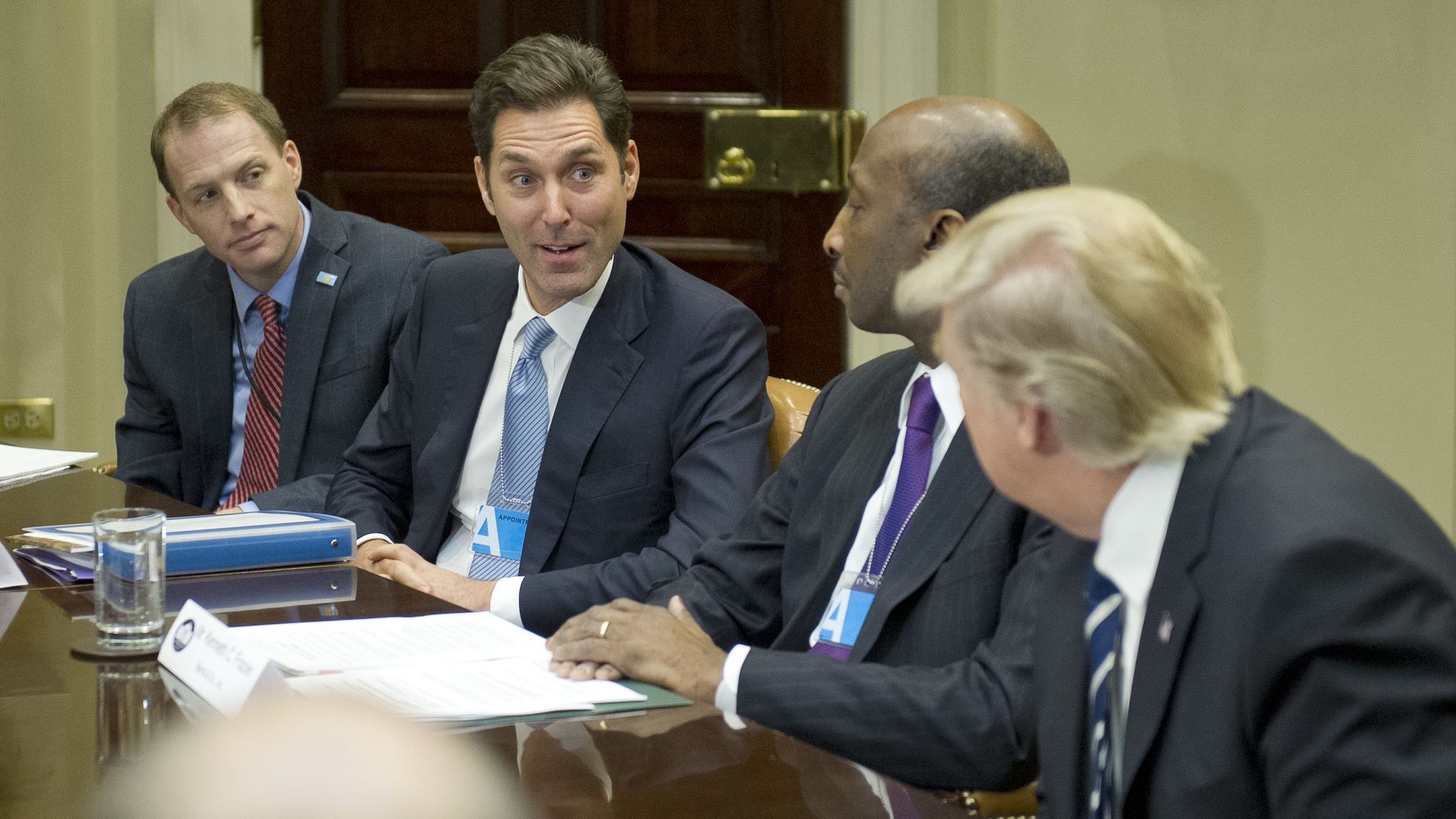
The head of the pharmaceutical industry's top trade group is stepping down from his role at the end of the year, the trade group confirmed yesterday.
Why it matters: Steve Ubl led PhRMA through a tumultuous decade in which lowering prescription drug prices was a top political priority for both parties.
The big picture: Ubl's tenure included Democrats' passage of a law enabling Medicare to directly negotiate drug prices with manufacturers, over the industry's vehement objections.
- But the version of Medicare negotiations that became law was ultimately much less aggressive than initial proposals, a silver lining for the industry.
- Since then, the industry has navigated multiple risks posed by the Trump administration, including discredited theories about the safety of vaccines, instability at the FDA and the administration's push to lower U.S. drug prices relative to other developed countries.
- More than a dozen drug companies ultimately made pricing deals with the White House last year, though PhRMA distanced itself from those deals.
What they're saying: "I am not surprised," one source told Axios. "I don't think there needs to be any intrigue here, it's a natural transition point."
3. AbbVie sues to narrow 340B patient definition

Humira and Botox maker AbbVie sued the Trump administration to get a clearer definition of who counts as an eligible patient in the government's discount drug program.
Why it matters: While it might seem like an arcane debate, drugmakers contend an overly broad definition allows hospitals and other providers to bilk them for more discounted medications than they're due.
- AbbVie's complaint is the latest twist in an ongoing fight between the drug industry and hospitals over the federal 340B program, which provides discounted drugs to safety-net providers but has been mired in litigation.
Safety-net providers in the 340B program can only claim discounts on medicines dispensed to their own patients.
- But the law that created 340B more than three decades ago didn't define criteria including how long the provider had to serve the patient to claim a discount.
- The Health Resources and Services Administration said in 1996 that patients must have an "established relationship" with the provider in question.
Where it stands: AbbVie's lawsuit, filed in U.S. District Court for the District of Columbia yesterday, said that definition is "overly inclusive, capturing individuals who may have had only a cursory encounter with the covered entity a long time ago."
4. Navy tries to lure dissatisfied doctors

The U.S. Navy has a new pitch for clinicians: Join us and leave the health system's administrative burdens behind.
Why it matters: Paperwork, health insurance hoop jumps and red tape are a leading cause of burnout and one reason why thousands of doctors and nurses are leaving their jobs.
- The Navy is trying to tap into that discontent and recruit providers to help ease health worker shortages some experts warn could leave the armed forces shorthanded to care for troops during conflicts.
Where it stands: The Navy launched a campaign this month targeted at early-career doctors, dentists and nurses who want to focus on patient care, "without the administrative challenges that often characterize civilian medical careers."
- The campaign features online ads and public notices near major health facilities in Chicago, Los Angeles, New York and San Diego.
- It also includes a series of YouTube interviews with current Navy health providers.
What they're saying: "I personally don't have to worry about the insurance that my patient has," Angela Viers, a neurosurgeon, said in one spot. "I'm able to take care of the patient and give them what they need and I don't have to worry about 'Can you afford this?'"
- "The biggest perk is just always feeling appreciated," John Steely, a Navy physician, said in another.
5. Catch up quick
🗳️ Conservative-led states are raising the bar for the type of ballot initiatives that were recently used to protect abortion rights and expand Medicaid. (NYT)
⚖️ An appeals court ruled that a Tennessee law on pharmacy benefit managers is preempted by federal law, in the latest loss for states trying to curb the industry. (Bloomberg Law)
🧑🏻💻 Health Secretary Robert F. Kennedy Jr. is launching a new podcast that he says will begin "a new era of radical transparency in government." (AP)
Thanks for reading Axios Vitals, and to editors Adriel Bettelheim and David Nather and copy editor Matt Piper. Please ask your friends and colleagues to sign up.
Sign up for Axios Vitals