Axios Vitals

March 21, 2024

Good morning, all. Today's newsletter is 979 words or a 3.5-minute read.
1 big thing: The gap in cyber insurance

Illustration: Shoshana Gordon/Axios
Many health care providers struggling to get paid after the hack of a UnitedHealth Group subsidiary are still trying to figure out if their cyberattack insurance will help cover their losses, Tina writes.
Why it matters: Providers ranging from large health systems to small independent practices are racking up big bills and say efforts to advance payments while Change Healthcare restores medical claims systems are falling short.
- Insurance that health care providers bought for a cyberattack on their own organizations might not provide much protection when they're affected by an attack elsewhere, experts told Axios.
The big picture: While many cyber insurance plans cover business disruption, the value of such coverage varies greatly, and experts warn many may be underinsured for an unprecedented attack of this magnitude.
- It's also possible some providers affected by the Change Healthcare outage wouldn't have thought to ask for coverage of an attack on a vendor or didn't want to pay the additional cost, said Josephine Wolff, a cybersecurity policy expert at Tufts University.
- Many other providers have been unable to afford any coverage due to soaring cyber insurance rates amid surging attacks on the industry.
In the initial aftermath of the Change Healthcare attack, some large health systems estimated they were losing over $100 million per day.
- Many cyber insurance carriers limit coverage to no more than $5 million for larger systems, said Nir Perry, CEO of Cyberwrite.
- For smaller providers like doctors' offices, add-on coverage is likely far less comprehensive than they realize, he said.
Zoom in: Bay Area Therapy Group Marriage and Family Counseling, a lead plaintiff on one of the class-action lawsuits providers have filed against UnitedHealth, has cybersecurity coverage — but attacks against a vendor are "pretty clearly excluded," said co-owner Katy Ross.
2. Senate probing risky biotech research
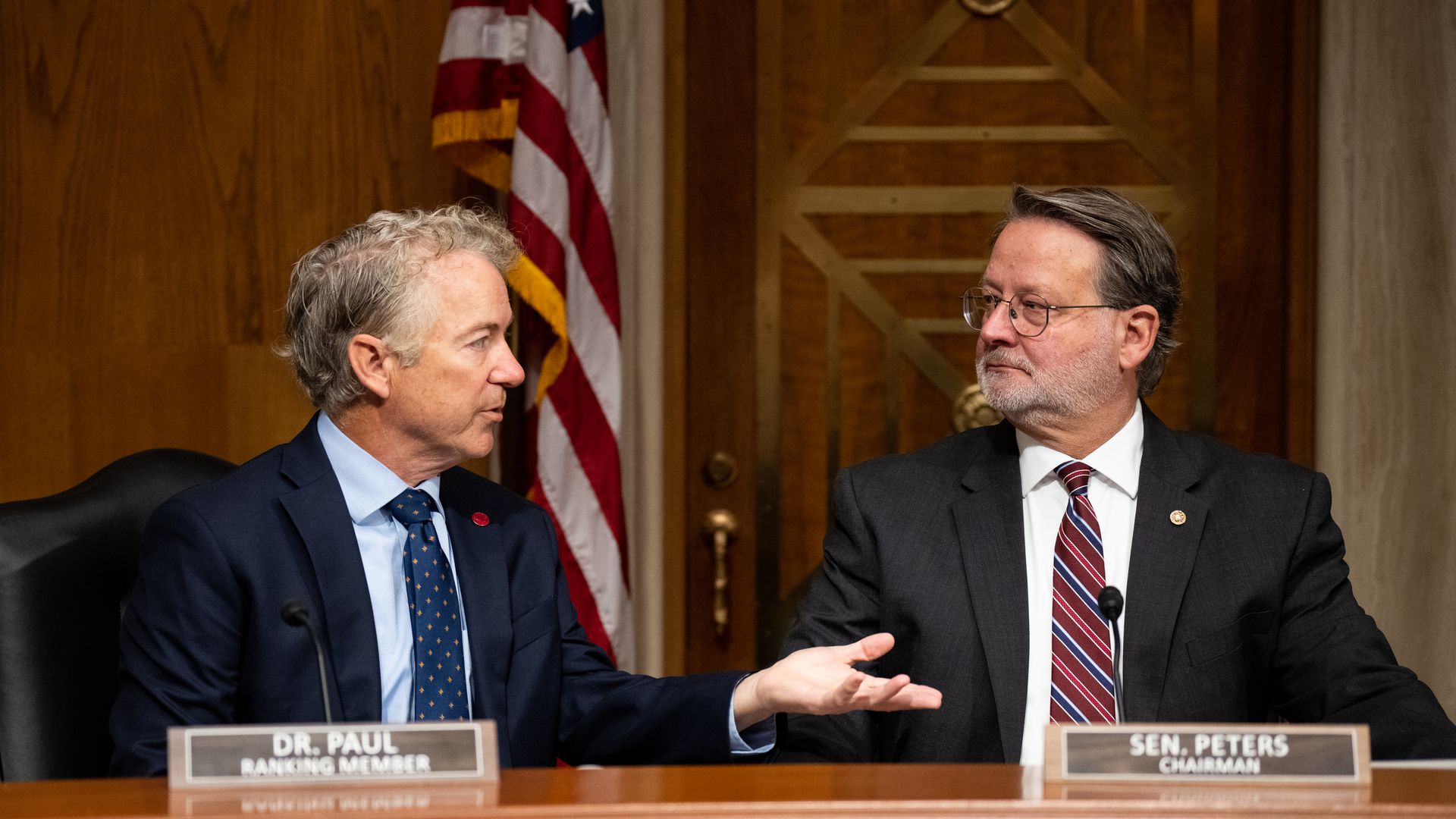
Sens. Rand Paul (R-Ky.) and Gary Peters (D-Mich.). Photo: Bill Clark/CQ-Roll Call via Getty Images
Senators are launching an investigation of national security threats posed by high-risk biological research amid intensifying concern over U.S.-China biotech competition and lingering questions about COVID's origins.
Why it matters: The probe by the top lawmakers on the homeland security panel could help fuel a push for new restrictions on Chinese contract research firms like WuXi AppTec that critics say are tied to Beijing and pose a security risk, Axios' Adriel Bettelheim writes.
Driving the news: Committee Chairman Gary Peters (D-Mich.) and ranking member Rand Paul (R-Ky.) said they'd focus hearings and oversight on high-risk life science research, biodefense, synthetic biology, biosafety and biosecurity lapses.
- The inquiry also will take up early warning of emerging outbreaks or possible attacks and potential origins of the COVID-19 pandemic, they said.
Between the lines: Peters is emphasizing the need to minimize the risk that developments in the life sciences like CRISPR gene editing can be manipulated by bad actors.
- Paul wants to use the probe to hold accountable individuals who conduct "gain-of-function" research and will likely highlight what he contends are Biden administration efforts to conceal information on the coronavirus.
3. 1 big number: Record-setting drug price

Illustration: Sarah Grillo/Axios
At $4.25 million, a newly approved one-time gene therapy for the fatal hereditary condition metachromatic leukodystrophy, or MLD, is the world's most expensive drug.
- Orchard Therapeutics' Lenmeldy is the first FDA-approved treatment for a devastating neurodegenerative disease that about 40 U.S. children are born with each year.
- Drugmakers say the high list prices for a new wave of gene therapies are justified by their big benefits and the cost of development, but health experts worry about the system's ability to afford these revolutionary treatments.
Worthy of your time: Lenmeldy, already available in Europe, has transformed the lives of kids who've received it, Stat reports.
4. Patient portal disparity

Illustration: Aïda Amer/Axios
Black patients at large health systems may be less likely than white patients to get responses from doctors to emailed questions, a new JAMA Network Open study suggests.
Why it matters: Online patient portals, which grew in popularity during the pandemic, could be another example of how technology is furthering health care disparities, Maya writes.
What they found: Researchers examined responses to portal messages sent from 39,000 primary care patients at Boston Medical Center, a large safety-net provider.
- When looking at all provider types, such as registered nurses and physicians in training, there were similar response rates regardless of a patient's race.
- However, there were differences in response rates from attending physicians, who oversee patient care.
- That suggests health care providers may view messages from Black patients as a lower priority when triaging patient questions, the researchers wrote.
Between the lines: Researchers said this may be due to triage nurses, who typically are the first to see patient messages, passing along fewer messages from minority patients.
- That could stem from differences in the types and content of messages or implicit bias, the researchers noted.
5. Trump's miscalculation on abortion ban
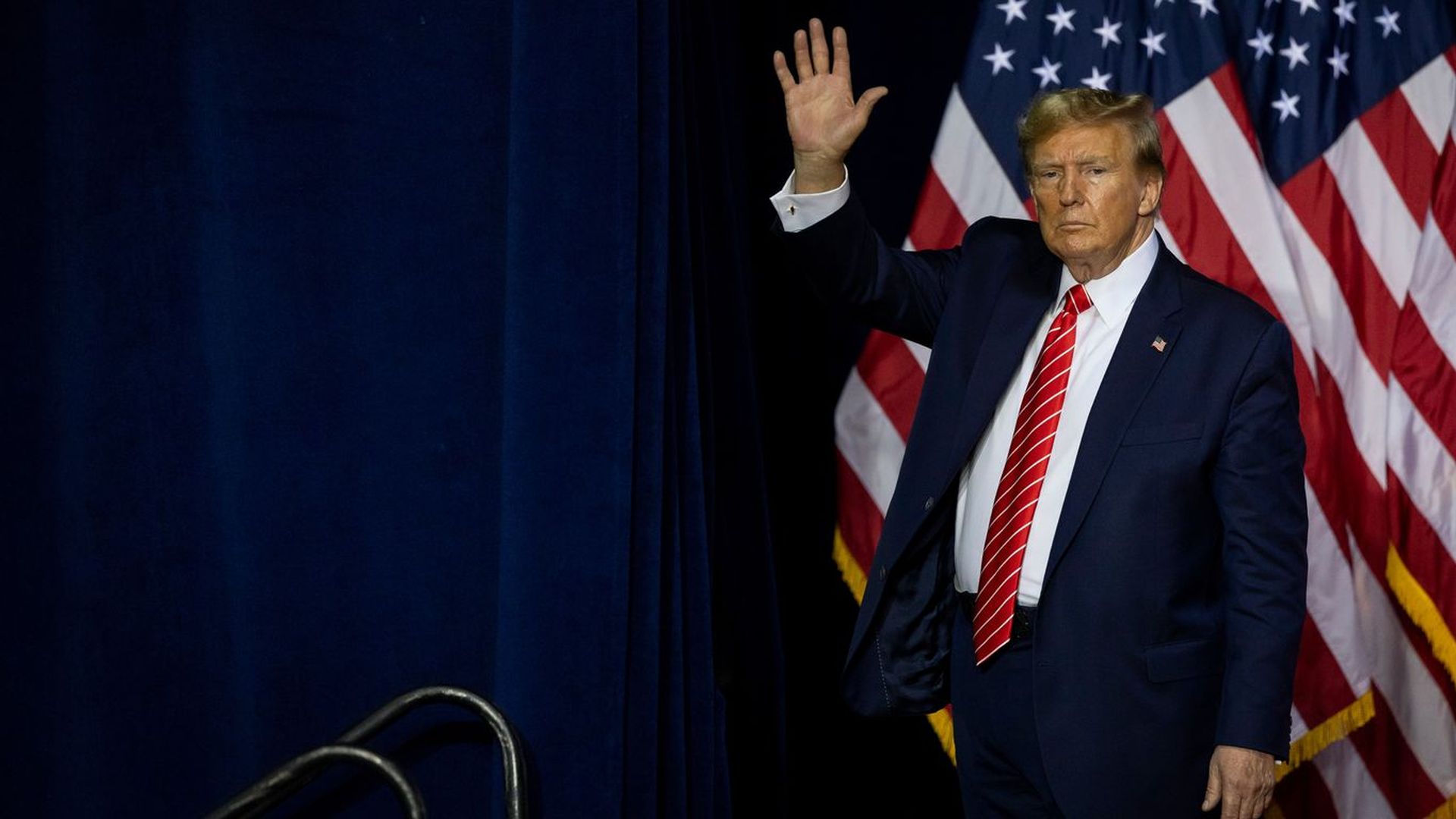
Former President Trump in Rome, Georgia, on March 9. Photo: Christian Monterrosa/Bloomberg via Getty Images
Former President Trump's suggestion this week that a 15-week abortion ban could be a "very reasonable" compromise doesn't square with public attitudes toward the idea.
- "The number of weeks now, people are agreeing on 15, and I'm thinking in terms of that, and it'll come out to something that's very reasonable," Trump said during a radio interview without taking a firm position on a national limit, reports Axios' Jacob Knutston.
Zoom in: Trump talks about abortion in a way that "often implies there's a national consensus," which doesn't comport with political reality, observed NBC political reporter Sahil Kapur on X.
- Our polling with Ipsos just a few weeks ago found the idea of a 16-week ban doesn't have backing beyond the GOP base, with 57% of the public opposing it and 40% supporting.
6. Catch up quick
💵 GSK is the third drugmaker in recent weeks to cap out-of-pocket inhaler costs at $35 per month for some patients. (Reuters)
🔎 House Republicans are asking why billions of dollars intended for mental health haven't been spent yet. (Washington Post)
💉 Safety issues with Chinese-made syringes in the U.S. are more extensive than previously known, the FDA said. (CNBC)
👯 Hospitals and insurers in contract disputes make nice. (Wall Street Journal)
Thanks for reading Axios Vitals, and to health care editor Jason Millman and copy editor Matt Piper. Please ask your friends and colleagues to sign up.
Sign up for Axios Vitals

Healthcare policy and business analysis from Tina Reed, Maya Goldman, and Caitlin Owens.