Axios Vitals

May 15, 2025

Happy Thursday, Vitals fam. Today's newsletter is 1,284 words or a 5-minute read.
1 big thing: Sweeping Medicaid overhaul approved
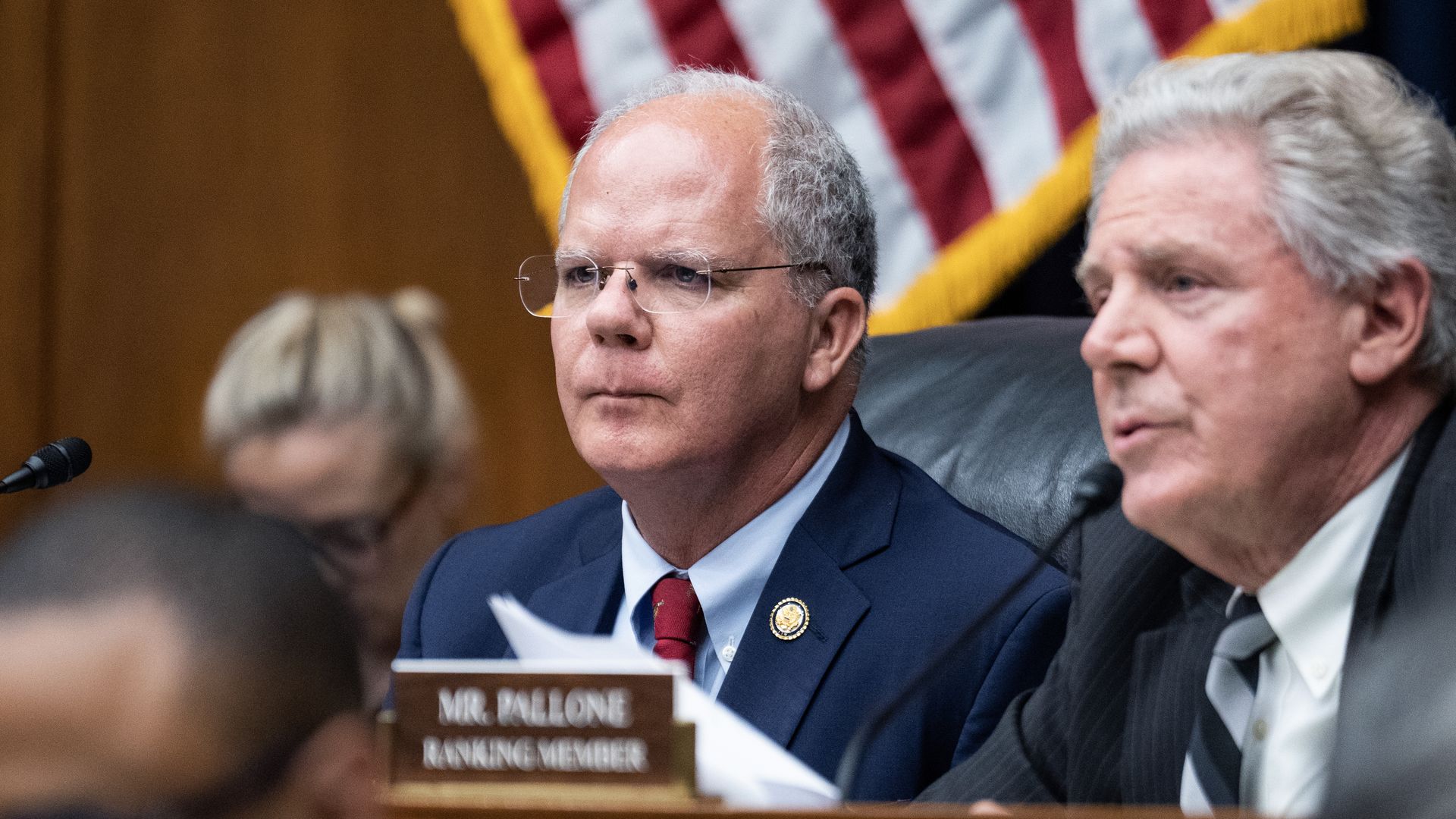
The House Energy and Commerce Committee on Wednesday approved the biggest Medicaid rewrite in the program's 60-year history, marking a major step in Republicans' efforts to overhaul a safety-net program that covers more than 70 million Americans, Victoria Knight wrote first on Pro.
Why it matters: The policy changes, adopted in a 30-24 party-line vote, include the first-ever federal work requirements on "able-bodied" Medicaid recipients and other provisions that are expected to result in nearly 8 million people dropping off program rolls.
- The changes also are expected to generate at least $715 billion in savings for the GOP's tax package.
Driving the news: The markup lasted more than 26 hours, with much of the health portion considered in the early hours of Wednesday morning.
- If the legislation isn't significantly changed, Medicaid enrollees ages 19-64 would have to show they're working or participating in community engagement for 80 hours per month to continue receiving benefits.
- Some Medicaid enrollees would also have to pay a share of the cost of their care. And eligibility checks would double.
What they're saying: "All of this is part of our effort to strengthen Medicaid for the people that need it most," Energy and Commerce Chair Brett Guthrie (R-Ky.) said in his opening remarks.
Democrats unsuccessfully offered numerous amendments that would have watered down Medicaid cuts and removed a ban on Medicaid funds going to organizations that provide abortions.
- Notably, there was no amendment vote on removing a ban on Medicaid funding going toward gender-affirming care.
The bottom line: The Medicaid portion of the package marks huge changes ahead if the legislation isn't changed on the House floor and in the Senate, where lawmakers are more leery about Medicaid cuts.
- Before going to the House floor, GOP hardliners may seek deeper cuts.
If you need smart, quick intel on health care policy for your job, get Axios Pro Policy.
2. RFK Jr. faces a dual grilling on the Hill
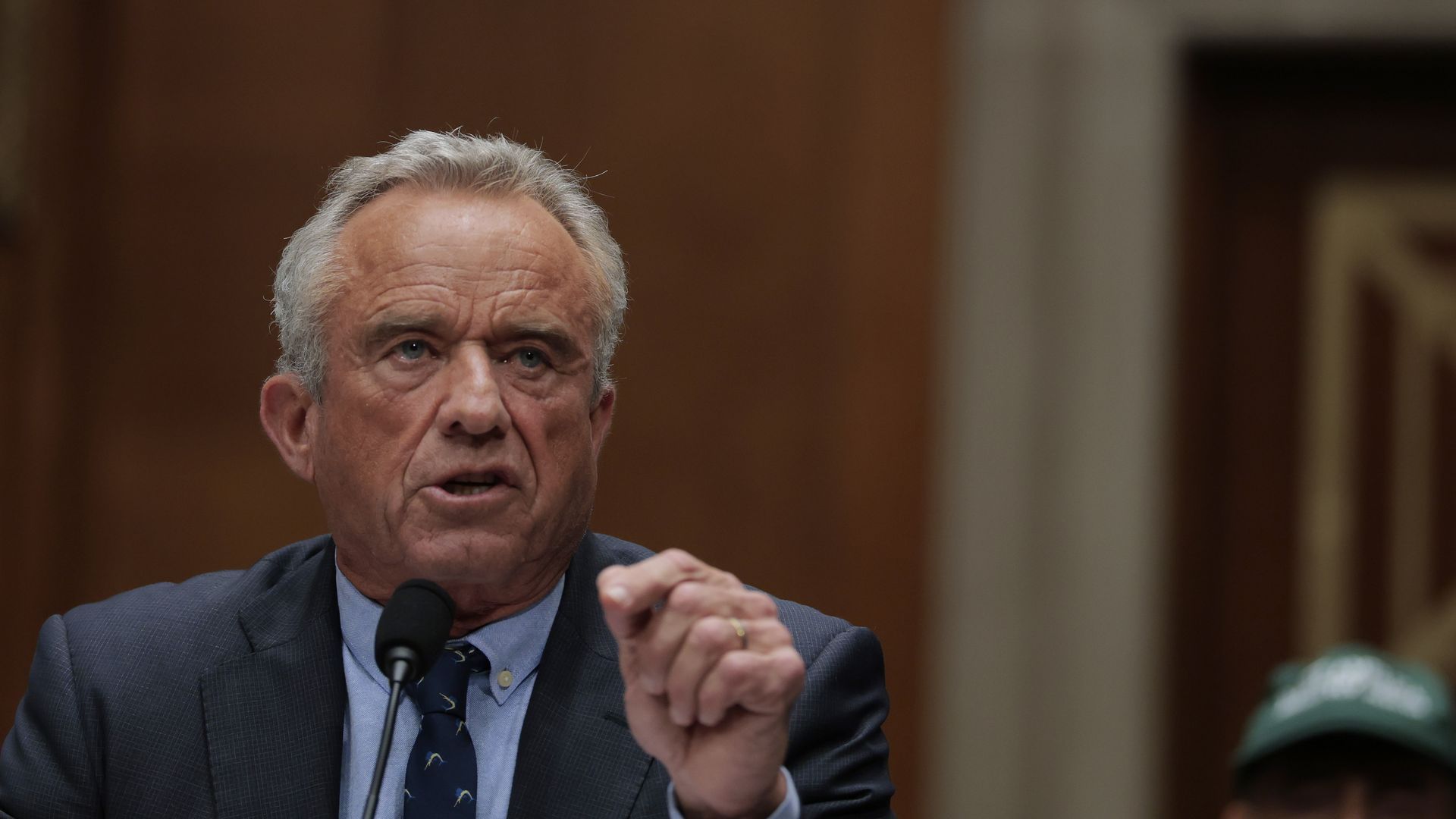
HHS Secretary Robert F. Kennedy Jr. on Wednesday faced House and Senate lawmakers for the first time since being confirmed — and didn't backtrack from some of his most controversial views on vaccines and federal research cuts, Peter Sullivan wrote first on Pro.
Here are takeaways from his appearances before the House Appropriations and Senate health committees:
1. Kennedy didn't categorically recommend the measles vaccine.
- Under intense questioning from Sen. Chris Murphy (D-Conn.), Kennedy didn't definitively say that people should get the measles vaccine.
- "I am not going to just tell people everything is safe and effective if I know that there's issues," Kennedy responded.
- Earlier, at the House hearing, Kennedy dodged questions from Rep. Mark Pocan (D-Wis.) over whether he would vaccinate his children today. He said he would "probably" vaccinate them for measles but said his opinions on vaccines "are irrelevant."
2. Senate health Chair Bill Cassidy was not an aggressive questioner.
- Cassidy (R-La.) was perhaps the most closely watched senator going into Wednesday's hearings, given his public struggle during the confirmation process with whether to confirm Kennedy given his vaccine criticism.
- Cassidy took a more measured approach during his questioning Wednesday, and did not focus on vaccines.
- Cassidy had pressed for the hearing, saying it was a way for Kennedy to "set the record straight" on his moves at HHS, rather than get the story from "anonymous sources" in the press.
3. Kennedy tried to reassure on layoffs.
- Kennedy faced a range of questions about HHS paring the federal health workforce, including FDA and CDC employees.
- He and lawmakers sometimes seemed to be talking past one another, with Kennedy insisting that vital functions had not been harmed, and that the department was simply being streamlined.
- When lawmakers brought up specific problems, Kennedy assured them he would look into them.
4. NIH cuts drew bipartisan concern.
- Senate Appropriations Chair Susan Collins pressed Kennedy on the department's move to cap NIH funding for universities' overhead research costs at 15%.
- The move has set off alarm from universities and researchers who say it amounts to damaging cuts that will undermine biomedical research.
- Collins called the move "arbitrary" and "one size fits all" and said it would hurt basic research.
- Kennedy defended the move as being in line with how private foundations fund research, but also referred to "a plan" for how to address the issue at places like the University of Maine and University of Alabama, which he said he would share in private.
5. Kennedy and Bernie Sanders found some common ground.
- Some of the less divisive moments came between the odd couple of Sanders (I-Vt.) and Kennedy when it came to lowering drug prices.
- Kennedy said he "absolutely" would work with Sanders on legislation to lower U.S. drug prices to be in line with what other countries pay.
- Passing legislation is unlikely, though, given the more traditional free market drug pricing ideas of GOP congressional leadership.
If you need smart, quick intel on health care policy for your job, get Axios Pro Policy.
3. Calley Means: Kennedy has "spiritual mandate"
There is a war from special interests against transparency surrounding America's chronic health problems, White House health adviser Calley Means said Wednesday at Axios' Future of Health Summit in D.C.
Why it matters: The former health entrepreneur turned White House aide has become an ally of Kennedy, who shares his disillusionment with the U.S. medical system.
- Kennedy "has a spiritual mandate" from voters "to reform our broken institution," Means told Maya during a mainstage interview.
- He said the American people have a "crisis of trust" in health care institutions.
Zoom in: "I'm in the party of Elon Musk, who saw an environmental catastrophe that everyone on the left was complaining about for years and years and years, and has become the greatest environmentalist in the history of modern civilization," Means said.
- The White House adviser said he believes there are "almost genocidal levels of children's chronic disease" and Trump ordered an assessment via executive order to find out why.
- He said an upcoming report from the MAHA Commission, expected out next week, is "the strongest statement in the history of the U.S. government" on the root causes of chronic disease.
Zoom out: His sister, Casey Means, a wellness influencer, was tapped by the White House this month to serve as surgeon general.
4. Overdose deaths drop to pre-pandemic level


Drug overdose deaths last year dropped to their lowest annual level since 2019, according to preliminary CDC data.
- There were an estimated 80,391 drug overdose deaths in the U.S. last year — a drop of of 26.9% from the 110,037 deaths estimated in 2023.
Why it matters: Fatal overdoses initially rose during the COVID pandemic, but have been falling since 2023.
- The drop in overdose deaths is partly due to the wider availability of naloxone, which reverses an opioid overdose, per CBS News.
- Narcan, the best-known version of the drug, was made available over the counter in 2023. It is standard issue for first responders and available in other public places.
By the numbers: Overdose deaths involving opioids declined from an estimated 83,140 in 2023 to 54,743 in 2024, per provisional CDC statistics.
- Overdose deaths involving cocaine and psychostimulants (like methamphetamine) decreased too.
Zoom in: Almost all states saw decreases in overdose fatalities.
- Louisiana, Michigan, New Hampshire, Ohio, Virginia, West Virginia and Wisconsin and Washington, D.C., experiencing declines of 35% or more, according to the data.
- However, South Dakota and Nevada recorded slight rises compared with the same period in 2023, the CDC notes.
5. Catch up quick
💰 The firm running Georgia's struggling Medicaid experiment was also paid millions to sell it to the public. (ProPublica)
🏥 In a reversal, Gavin Newsom proposed cutting back on health care benefits for undocumented immigrants. (NBC News)
📉 Bayer shares plunged as Roundup ingredient glyphosate was reportedly singled out in RFK Jr.'s upcoming report. (WSJ)
Thanks for reading Axios Vitals, and to senior health care editor Adriel Bettelheim, managing editor Alison Snyder and copy editor Matt Piper. Please ask your friends and colleagues to sign up.
Sign up for Axios Vitals