Axios Vitals

August 19, 2026


Good morning. Today's newsletter is 1,121 words, a 4-minute read.
1 big thing: Trump taps White House aide to lead FDA

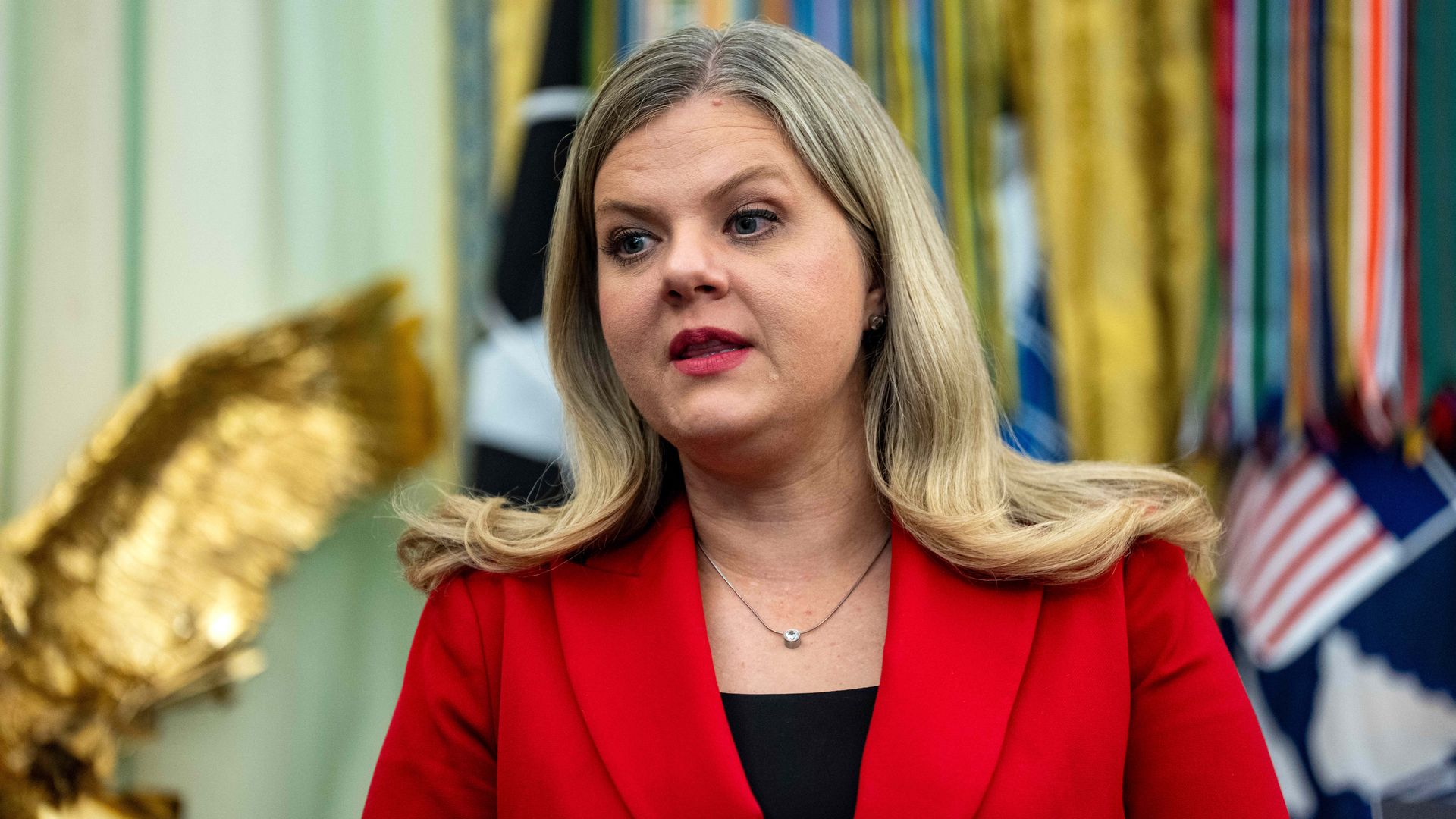
President Trump has decided to nominate White House aide Heidi Overton to lead the FDA, according to a senior administration official.
Why it matters: The agency was left in turmoil after the exit of former commissioner Marty Makary earlier this year, threatening the stability of U.S. drug development.
Context: Overton, currently deputy director of the White House Domestic Policy Council, was one of several candidates the White House had been considering for weeks.
- Though other top FDA positions still don't have permanent leadership, the senior administration official said more decisions will likely follow closely behind.
- Bloomberg first reported that she was the president's choice.
The intrigue: Overton appeared at last week's signing of an executive order calling for an overhaul of the childhood vaccine schedule, including slimming down the number of federally recommended shots and splitting up the MMR vaccine into three different shots.
- "We do still recommend the measles vaccine for all children, but we want parents to be informed about the timing and to have the option to separate them out," Overton said at the event.
Between the lines: Overton may not offer the reassurance the pharmaceutical industry was looking for in new leadership, though acting commissioner Kyle Diamantas has taken big steps toward repairing the agency's relationship with industry.
What they're saying: "Overton has degrees but seemingly no real experience running anything. Her claim to fame is having been a Makary protege who has bought further into anti-science and anti-vaccine messaging of elements of MAHA," Raymond James analyst and former Trump health official Chris Meekins told Axios.
- "Industry will view this pick as extremely troublesome, and FDA career staff will continue to flee the agency. Any progress made since Makary's departure is likely to be immediately reversed if she is confirmed."
The other side: Brian Blase, president of the Paragon Health Institute, called Overton a "great choice."
- "Heidi has the highest character and is dedicated to improving American well-being and helping American patients get the best possible care," Blase wrote on X.
What we're watching: Whether Overton faces resistance from senators who'll have to vote on the nomination.
2. Doctors argue their role in the age of AI

The American Medical Association is out with a new framework for physicians' role in the age of AI, provided first to Axios, that insists doctors remain central to patient care.
Why it matters: The debate over whether AI will supplant doctors in clinical care is heating up, but the AMA has remained adamant that humans not only must remain in the loop but can't be replaced.
Driving the news: The framework, released in partnership with the Digital Medicine Society, argues that as technologies evolve, "the practice of medicine must evolve alongside them."
- "Individual tasks will evolve as technology advances, but the physician's enduring responsibilities remain remarkably stable," the intro adds.
- Those include human connection, clinical judgment and serving as stewards for the responsible use of technology.
"As it is today, physicians have to be in the loop. We're talking about the delivery of health care to people," AMA CEO and executive vice president John Whyte told Axios.
- "Do you really want to go to the ER and be treated by an LLM if you have chest pain? I don't think so."
State of play: A provocative opinion piece published Monday in JAMA made the opposite case: AI is or soon will be better than doctors at providing health care, and keeping humans in the loop may actually lead to worse outcomes.
- "Superior autonomous AI will likely be ready to be deployed for real-world cognitive medical tasks in some, maybe many, workflows by 2030," conclude the authors, including former White House health policy adviser Zeke Emanuel.
3. New DHS health test criteria for green cards


The Department of Homeland Security issued guidance yesterday for how immigration officers will decide on a case-by-case basis whether immigrants' use of programs like Medicaid and CHIP could disqualify them from getting permanent residency.
Why it matters: The possibility of being deemed a "public charge" who's likely to be dependent on the government could discourage immigrant families from seeking health coverage if it puts their legal status at risk.
- The new guidelines override previous policies that limited which public benefits could exclude people from becoming lawful permanent residents.
Driving the news: U.S. Citizenship and Immigration Services said its officers beginning Sept. 18 will consider the receipt of means-tested public benefits when assessing the likelihood an immigrant could become a public charge.
- Immigrants' application for, or certification to receive, means-tested benefits in the future can also be considered.
- Spouses, children and parents of U.S. citizens would be subject to public charge determinations.
Between the lines: Applicants for permanent residency generally have to undergo a public charge assessment that examines their income, health and financial stability.
- The policy was expanded during Trump's first term and then rolled back during the Biden years.
- Homeland Security officials have estimated that more than $13 billion could be saved annually through the total reduction in transfer payments from federal and state governments.
The other side: The Center on Budget and Policy Priorities said the rule is excessively harsh and predicts that children, who are likelier to qualify for public benefits, will be disproportionately affected.
4. 1 big number: Altered federal health data

The Trump administration has taken down or altered 158 federal health datasets that don't align with its priorities, according to a tracker maintained by dataindex.us and first reported by The Guardian.
Why it matters: If taxpayer-funded data is wiped out or seen as untrustworthy, it could have far-reaching consequences.
By the numbers: About 42% of the total terminated or altered data collections the group tracked across more than 60 government agencies had to do with health.
- Agencies most affected by data deletions were the CDC (51) and the Administration for Children and Families (42).
Between the lines: Many of the changes to health datasets had to do with gender identity — an outgrowth of Trump's early 2025 executive order on "gender ideology extremism."
- Affected data included the CDC's National HIV Surveillance System. At least four datasets also are no longer being updated, including the Substance Abuse and Mental Health Services Administration's Drug Abuse Warning Network, per The Guardian.
5. Catch up quick
🩺 Costco is gearing up to enter the Medicare market with a limited rollout of branded Medicare Advantage plans sold with the nonprofit insurer SCAN Group. (WSJ)
⚖️ A former senior adviser at the National Institute of Allergy and Infectious Diseases pleaded guilty to hiding federal records during the pandemic. (CBS)
👩🏼💻 Meta faced sharp accusations at a trial over whether social media companies are accountable for alleged harms to young users' mental health. (NPR)
Thanks for reading Axios Vitals, and to editors Adriel Bettelheim and copy editor Matt Piper. Please ask your friends and colleagues to sign up.
Sign up for Axios Vitals