Axios Vitals

March 17, 2026

☘️ Welcome to St. Patrick's Day. Today's newsletter is 988 words, a 3.5-minute read.
1 big thing: Kennedy's vaccine changes halted
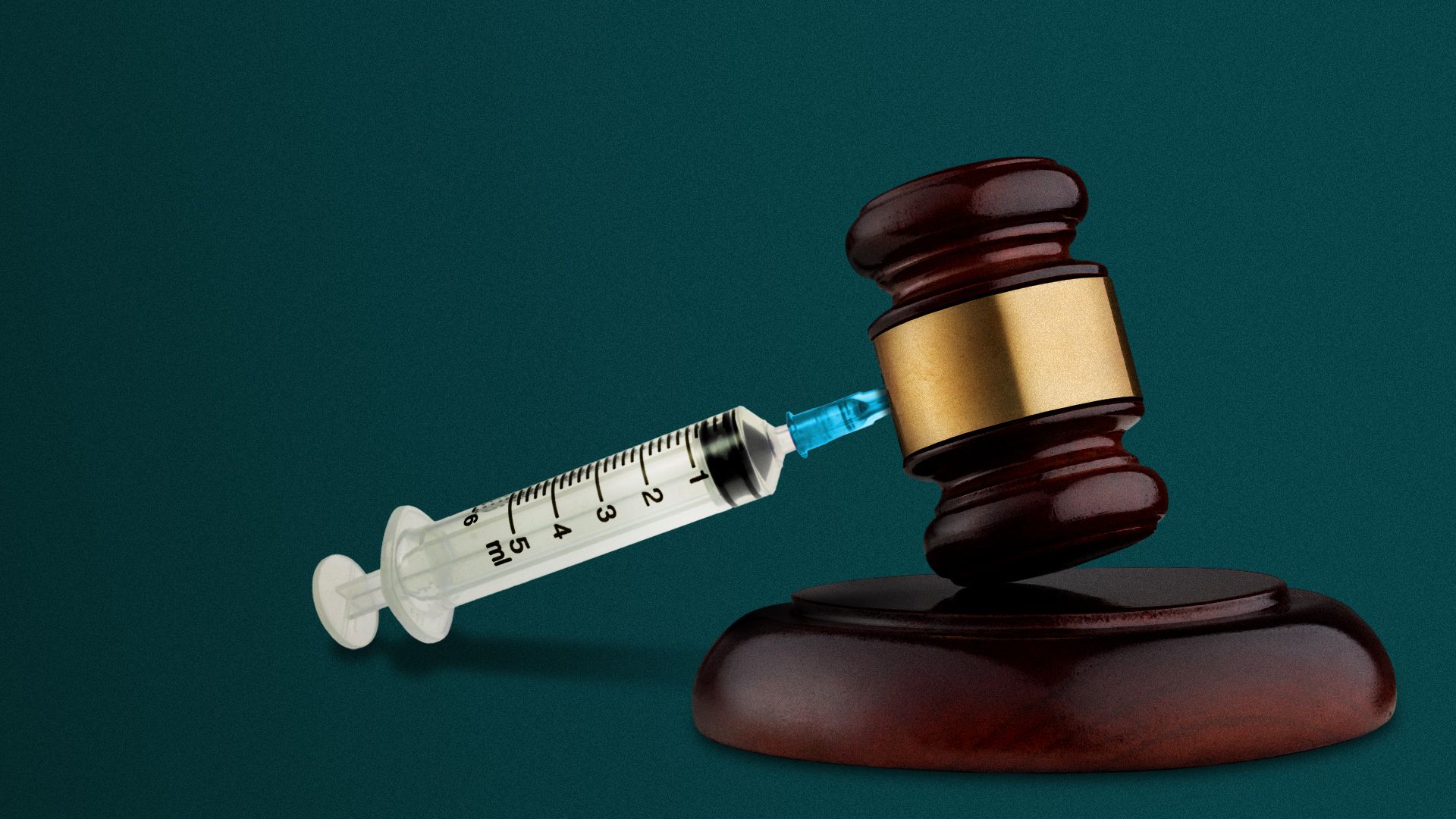
Health Secretary Robert F. Kennedy Jr.'s push to upend federal vaccine policy — already a friction point with the White House — is now on hold after a federal judge yesterday ruled the effort is likely illegal.
Why it matters: While the pause is temporary, it marks a major win for public health advocates who've bitterly contested changes such as the narrowing of the federal childhood vaccination schedule endorsed by Kennedy's handpicked advisers.
- The department also limited who is eligible for COVID vaccines and rescinded emergency use authorizations for Pfizer and Moderna mRNA shots. U.S. District Court Judge Brian Murphy's decision doesn't cover the policy change to no longer recommend COVID shots for healthy pregnant women and children.
- HHS "looks forward to this judge's decision being overturned," a spokesperson told Axios.
Driving the news: Murphy, a Biden appointee, temporarily blocked the CDC's January decision to cut the list of recommended vaccines for kids to 11, down from 17.
- It also idles the advisers Kennedy appointed last year after he ousted a 17-member expert panel, and stays their past and future votes.
- The committee can't endorse new vaccine recommendations unless the stay is lifted.
The decision came in response to a lawsuit from the American Academy of Pediatrics and other medical groups that sought to void all of the votes taken by the Advisory Committee on Immunization Practices over the past year.
- Kennedy replaced the vetted advisers on the committee with new members, including several known vaccine critics, "without undertaking any of the rigorous screening that had been the hallmark of ACIP member selection for decades," Murphy wrote.
Zoom out: An ACIP meeting scheduled for later this week has been postponed.
2. Axios-Ipsos poll: Trust in vax recommendations falls

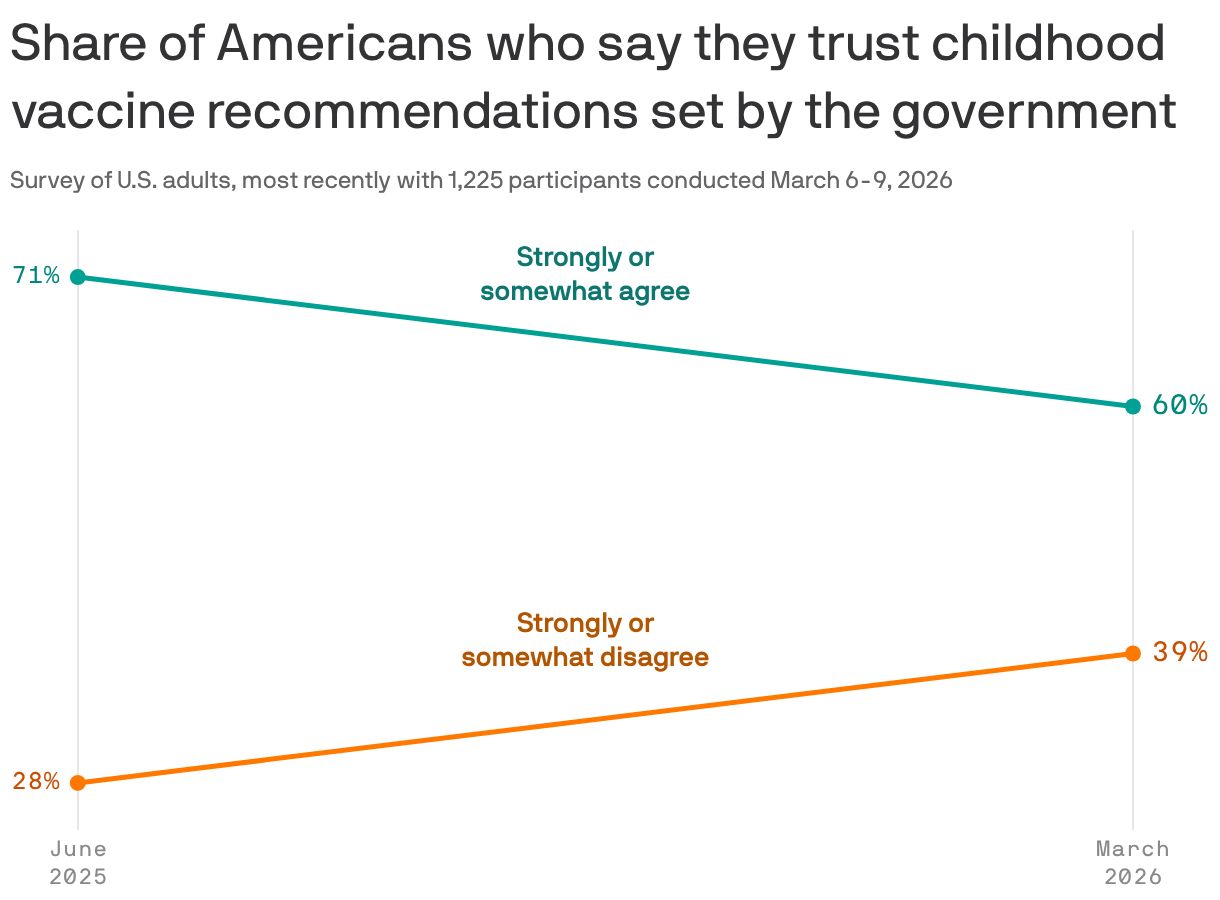
Just 6 in 10 Americans now trust the government's vaccination recommendations for children, reflecting the dramatic erosion of public trust during Kennedy's tenure.
- At the same time, nearly 1 in 3 Americans say they personally identify with Kennedy's "Make American Healthy Again" movement, according to the Axios-Ipsos American Health Index survey of 1,225 adults conducted March 6-9.
The big picture: Vaccines are becoming a third rail in administration efforts to overhaul America's public health system before the midterm elections, to the consternation of some of Kennedy's most ardent supporters.
- Trust in the current childhood vaccination schedule — which was dramatically overhauled in January to more closely align with Denmark's — now stands at 60%, down from 71% when we asked the question last June.
Zoom in: The poll shows Americans overwhelmingly trust pediatricians over the administration for medical advice.
- 35% said they place more confidence in the American Academy of Pediatrics while 8% said they have more confidence in the CDC. The rest said they have equal confidence in both, don't know, or don't have confidence in either.
- 70% have little or no trust in health information from Kennedy, which, for context, is actually marginally better than respondents' mistrust in President Trump or congressional Republicans or Democrats.
- 68% also said they have little or no trust in health information from surgeon general nominee Casey Means, compared with 28% who have a great deal or fair amount of trust.
3. New GLP-1 pill shows promise in trial

A Bay Area biotech's next-generation obesity pill helped patients in a clinical trial reach a mean weight loss of 16.3% in 44 weeks, raising hopes for another daily oral option in the booming GLP-1 drug market.
Why it matters: The results add to the buzz around Structure Therapeutics, which could be a top takeover target for big drugmakers looking to boost their product pipelines for metabolic diseases.
Driving the news: Structure said patients taking 180- and 240-milligram doses of its aleniglipron pill lost about 39 and 37 pounds, respectively, without plateauing in a placebo-controlled trial.
- Analysts said that signaled greater efficacy at higher doses than an experimental pill from Eli Lilly called orforglipron.
- Structure said late-stage trials are on track to begin in the second half of this year.
The big picture: A broad set of companies could be interested in new oral weight-loss products that are often cheaper to manufacture and preferred by patients to injectable versions, Katherine Davis wrote first on Pro.
- Seven companies — including some with an existing GLP-1 drug pipeline — did due diligence on drugmaker Metsera before it sold to Pfizer in a high-profile bidding war last year.
4. Red tape, lack of need drove insurance opt-outs

Uninsured Americans adults were likelier to conclude they didn't need health insurance or want to go through the hassle of applying than to opt out because of cost concerns, the CDC found in surveys from 2019 to 2024.
Why it matters: The findings offer a counternarrative to the current election-year cost concerns and messaging around rising health care premiums.
- But the CDC surveys also covered a period during which enhanced Affordable Care Act subsidies lowered health insurance costs for many enrollees. Those subsidies expired in January.
What they found: About 21% of uninsured adults in 2024 cited affordability concerns alone when asked why they didn't have coverage, compared with 28% in 2019.
- Asked about reasons other than cost, 44% said they didn't want or need coverage, compared with about 41% in 2019.
- The share citing an overly complicated sign-up process grew to 21% from 17%.
The CDC analyzed data from the National Health Interview Survey of adults ages 18 to 64.
5. Catch up quick
⚕️ CMS administrator Mehmet Oz pressed leading medical societies on the evidence for transgender medical care for teens during a tense meeting over the winter. (NYT)
💊 FDA commissioner Marty Makary said changes are needed to the way institutional review boards oversee clinical trials in order to keep pace with China. (Endpoints News)
🥣 Food companies are racing to meet demand for higher-protein diets — without asking shoppers to give up the chips, mac and cheese and cereal they love. (Axios)
Thanks for reading Axios Vitals, and to editors Adriel Bettelheim and David Nather and copy editor Matt Piper. Please ask your friends and colleagues to sign up.
Sign up for Axios Vitals