Axios Vitals

April 01, 2026


Midweek already, gang. Today's newsletter is 1,088 words, a 4-minute read.
🏦 On the next episode of "The Axios Show," JPMorgan Chase CEO Jamie Dimon defends the Iran war as overdue: "They've been killing people around the world for 45-plus years," he told Axios CEO Jim VandeHei. Watch the clip.
1 big thing: States live with Medicaid austerity
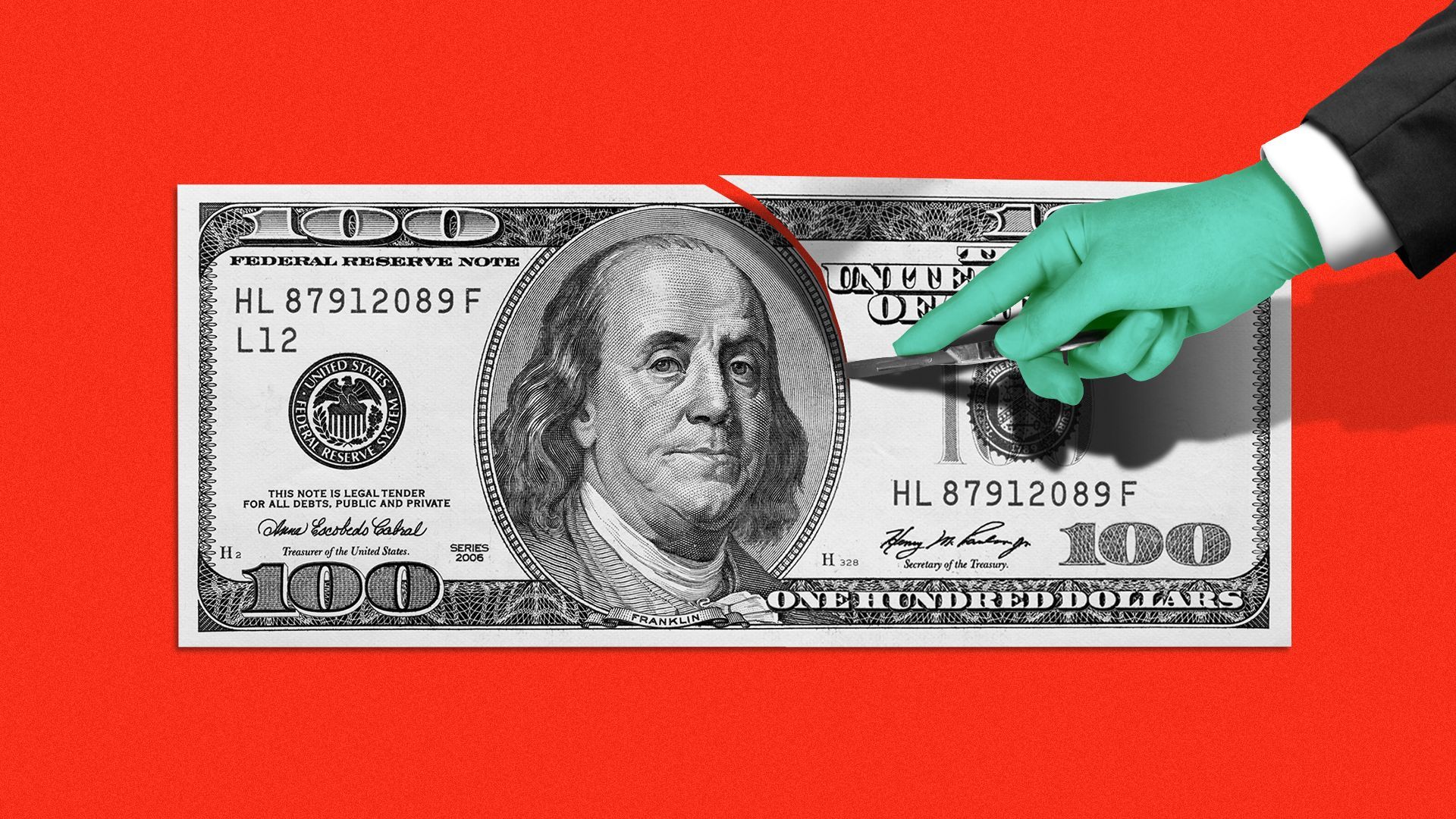
Republicans' massive Medicaid overhaul and rising health costs are forcing state legislatures to begin cutting medical spending for the poor, raise taxes and take other steps to deal with a first-of-its-kind budget squeeze.
Why it matters: State budgets are due to shrink by $664 billion over the next decade because of the cuts in last year's GOP budget law, while medical costs are rising and state tax collections are lagging.
- That's creating a perfect storm for a program that typically accounts for about 30% of a state's budget each year.
Congress delayed the biggest changes until 2027, but Medicaid programs are "like massive ocean liners," said Kathryn Costanza, a fellow at the National Conference of State Legislatures. "They're in the process of pivoting this year" as they also deal with other pressures, she said.
Where it stands: Idaho legislators this week approved $22 million in cuts to Medicaid disability services.
- Iowa legislators approved a new tax on certain health insurers to help cover an existing Medicaid shortfall and the looming federal cuts from last year's GOP budget law.
- Colorado, which faces a $1.5 billion budget shortfall driven largely by Medicaid spending that predates the congressional changes, is debating controversial benefit cuts and lower provider payments.
- But lawmakers in the state have also introduced a bill that would tax large employers who have part-time employees enrolled in Medicaid. Similar policies have been floated in Washington state and New Jersey.
What they're saying: "Everyone is pissed and everyone is stressed," said Colorado state Rep. Lisa Feret (D), the lead sponsor of the new tax proposal.
- But as her bill advances, "there's a growing number of people that are starting to rally and say, 'Let's do this. You're trying. We appreciate it.'"
States with more of a budget cushion are making investments in hopes of easing possible coverage losses.
- New Jersey Gov. Mikie Sherrill (D) proposed $10 million in her budget last month to strengthen the state's Medicaid enrollment system.
- Wisconsin, Vermont and other states are in talks to pay millions to consultants like Deloitte and Accenture to help set up improved Medicaid eligibility tech systems, KFF Health News reported.
- Some like Oregon are also repurposing state revenue to fill gaps.
2. Supreme Court rejects conversion therapy ban



The Supreme Court yesterday ruled that therapists' conversations with patients are a form of constitutionally protected speech, in a case surrounding a Colorado ban on the discredited practice of conversion therapy.
Why it matters: The 8-1 decision rolls back protections for LGBTQ+ youth and likely renders similar bans in more than 20 states unenforceable, legal experts said.
Driving the news: Justices sided with a Christian talk therapist, Kaley Chiles, who argued that the 2019 Colorado ban is a viewpoint-based infringement on her freedom of speech.
- "Colorado's law does not just regulate the content of Ms. Chiles's speech. It goes a step further, prescribing what views she may and may not express," Justice Neil Gorsuch wrote in the majority opinion.
- The Colorado Attorney General's Office had defended the law as a necessary regulation on professional conduct to protect patients from harmful treatment.
- Justice Ketanji Brown Jackson was the lone dissenter, arguing medical speech is different from generic free speech.
Catch up quick: Conversion therapy is a practice aimed at changing youths' sexual orientations or gender identities.
- Some mental health professionals were concerned treating this as First Amendment speech could set a precedent under which any counseling is claimed to be free speech and no longer subject to professional standards, even if it's dangerous or inappropriate.
What's next: The case, which has already been argued at two appeals courts, now goes back to the 10th U.S. Circuit, where it must be reconsidered under higher scrutiny.
3. Novo Nordisk tests new Wegovy subscriptions


Novo Nordisk is testing new Wegovy pricing across telehealth platforms — a sign it's rethinking how to sell its once-dominant weight-loss drugs under pressure from Eli Lilly and digital health upstarts.
Why it matters: The weight-loss drug boom is entering a new phase where access may matter as much as the drugs themselves.
Driving the news: Novo yesterday launched a subscription-style pricing model for Wegovy, offering lower monthly costs for patients who commit to three, six or 12 months.
- The program is available through telehealth platforms including Ro, Weight Watchers and LifeMD, with Hims & Hers and others coming soon.
Between the lines: Novo is trying to standardize pricing across telehealth channels while avoiding broader list price cuts.
- The subscription model also helps lock in patients — key in a category where long-term adherence drives results and revenue.
By the numbers: Wegovy injections cost as low as $249 per month with a 12-month subscription, with higher prices for shorter commitments.
- Pill versions follow a similar structure, also dropping to $249 per month at longer commitments.
Yes, but: The program mainly targets self-pay patients, while insured patients may pay as little as $25 per month through other programs.
4. Spring fever for pharma M&A

Two more drug industry megadeals yesterday put an exclamation point on what was a dizzying month of acquisitions and partnerships.
The big picture: Some of the transactions aim to replenish product pipelines and anticipate blockbuster drugs coming off patent, Katherine Davis wrote first on Pro.
Driving the news: Eli Lilly on Tuesday agreed to buy sleep disorder biotech Centessa Pharmaceuticals in a deal worth up to $7.8 billion.
- London-based Centessa develops medicines to treat excessive daytime sleepiness and other neurological conditions.
- Its lead candidate, cleminorexton, is being studied to treat narcolepsy and hypersomnia.
Biogen also agreed to buy Apellis Pharmaceuticals for $5.6 billion.
- The deal will bolster Biogen's immunology and rare disease portfolios and immediately add sales revenue.
Last week, Merck agreed to buy rare blood and bone cancer biotech Terns Pharmaceuticals in a deal valued at $6.7 billion — one of a series of moves as it prepares for blockbuster cancer drug Keytruda to come off patent.
If you need smart, quick intel on health tech dealmaking for your job, get Axios Pro.
5. Catch up quick
💉 The FDA is moving toward allowing compounding pharmacies to produce more than a dozen injectable peptides that were banned because of potential safety risks. (NYT)
⚕️ Health insurers for the first time are publicly posting data on how often they deny prior authorization requests and how often denials are overturned. (Becker's)
✋🏻 Gilead Sciences was accused of blocking global access to its HIV prevention drug lenacapavir. (Politico)
Thanks for reading Axios Vitals, and to editors Adriel Bettelheim and David Nather and copy editor Matt Piper. Please ask your friends and colleagues to sign up.
Sign up for Axios Vitals