Axios Vitals

September 04, 2025



Thursday's here. Today's newsletter is 1,006 words or a 4-minute read.
1 big thing: GOP unease with RFK Jr. builds
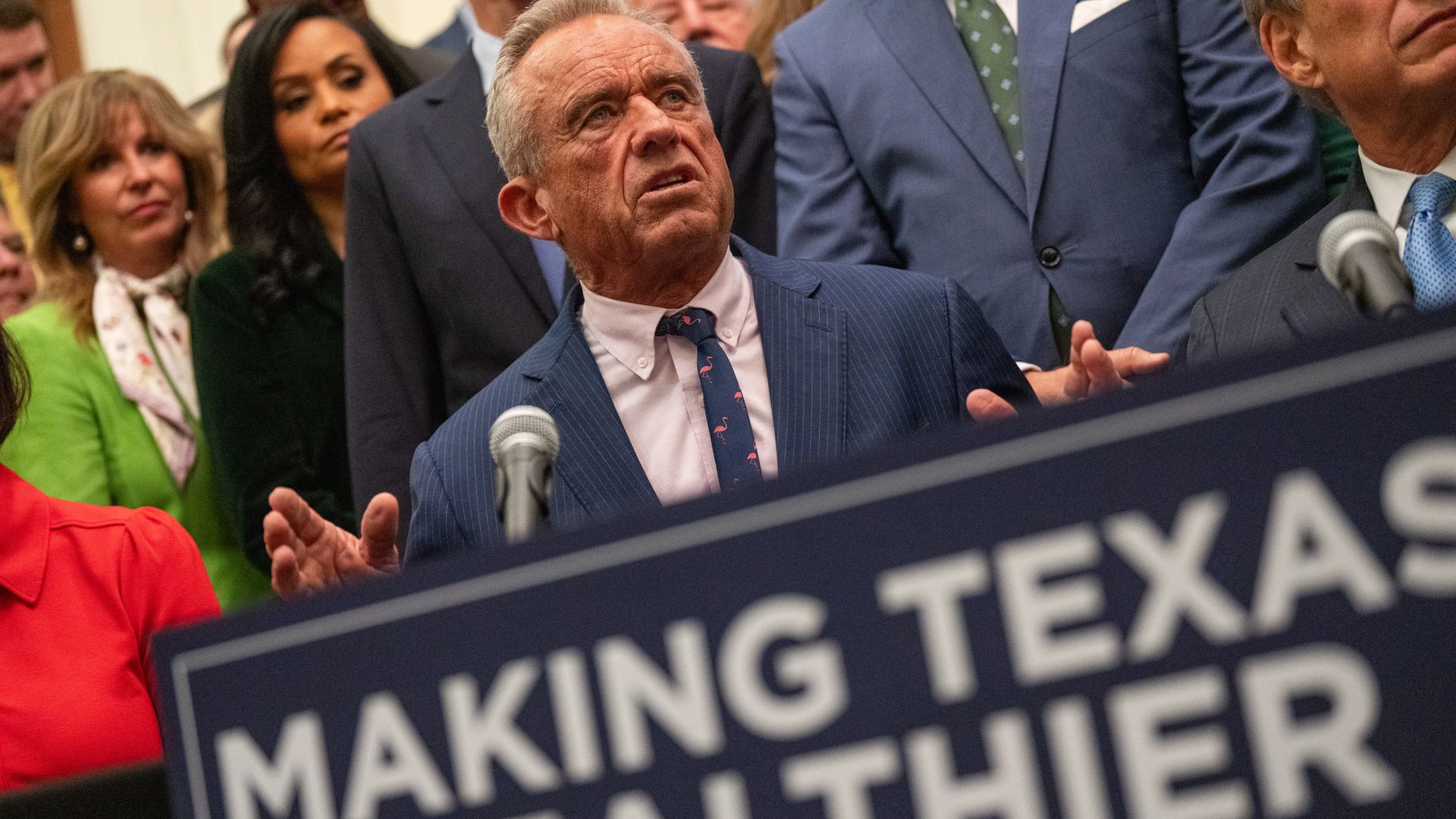
Republican senators are growing impatient with Health Secretary Robert F. Kennedy Jr. and vowing to use a high-profile hearing today to crank up oversight following last week's ouster of CDC director Susan Monarez.
Why it matters: Kennedy has had relatively free rein to shake up health policy, and President Trump has his back. But criticism from the Hill GOP would be the first public sign that he could be reeled in.
What they're saying: "I need to know why ... his words in his confirmation hearing aren't matching up with some of the deeds," said Sen. Thom Tillis (R-N.C.), a member of the Senate Finance Committee, where Kennedy will testify about the administration's health agenda.
- Senate Majority Leader John Thune (R-S.D.) told Semafor that Kennedy will face "hard questions," noting the Senate went through the work of confirming Monarez only to have her removed from office after just a month.
- "I want the chaos to stop," said Sen. John Kennedy (R-La.). "You can't have the institution of public health in turmoil."
- Sen. John Cornyn (R-Texas), another panel member, said "of course" when asked if he has questions about Monarez's firing.
But Cornyn deferred to the White House on questions about Kennedy's future at HHS.
The big picture: So far, Trump hasn't shown concern over Kennedy's limiting access to COVID-19 vaccines, cutting funding for research on mRNA shots or raising doubts about their safety and effectiveness.
- Concerns from congressional Republicans can eventually add up and weigh on Trump, though.
- While GOP senators still are choosing their words carefully, there's a belief in some circles that Kennedy could be a liability heading into the midterm elections.
Between the lines: Senate health committee Chair Bill Cassidy (R-La.), a physician who supplied a key vote to advance Kennedy's nomination despite concern about his vaccine views, is urging patience.
- "We're in a process ... so let's just go through that process," Cassidy told Axios Tuesday night when asked if he is frustrated with Kennedy.
2. More states craft their own vaccine policies


The governors of California, Oregon and Washington said yesterday they would collaborate on developing their own vaccine guidelines, in response to what they called the politicization of the CDC.
Why it matters: The newly formed West Coast Health Alliance is the first blue state public health partnership to push back against Trump administration policies.
- Eight northeastern states are also reportedly considering coordinated vaccine recommendations.
The western states said they envision issuing guidelines driven by evidence-based recommendations from national medical organizations.
- The effort also includes releasing shared principles on how to build public trust in vaccines, they said.
- Colorado Gov. Jared Polis (D) separately said yesterday his state will sidestep "ridiculous" new Trump administration restrictions on COVID vaccines and allow pharmacists to give the shots without a prescription.
Meanwhile in Florida, Surgeon General Joseph Ladapo announced yesterday that the state will end all of its vaccine mandates, comparing the public health directives to "slavery."
- The state already leads the southeast in non-medical vaccine exemptions among kindergartners, and the rollback could mean fewer school children are inoculated against deadly viruses like measles and polio.
- Gov. Ron DeSantis said that the state Department of Health can end vaccine mandates not written into state law, but any others will require action by the legislature.
- He acknowledged neither he nor Ladapo have spoken with state lawmakers about pursuing those changes.
Related: Trump "worthy of the Nobel Peace Prize" for COVID vaccines, Pfizer CEO says
3. Seniors get poor care for opioid misuse

More than 60% of Medicare enrollees with opioid use disorder are getting substandard care, according to a new study in Health Affairs.
Why it matters: Opioid use is a growing health problem for older adults in the U.S.
- Drug overdose deaths for people age 65 and older increased 11.4% between 2022 and 2023, per CDC data — the largest increase of any age group that year.
The big picture: Fewer than 40% of Medicare beneficiaries with diagnosed opioid use disorder in 2020 received treatment that met the eight nationally recognized quality standards for the care, the study found.
- The findings show that Medicare needs to routinely monitor the quality of opioid use treatment it covers for seniors, researchers said.
- The study echoes federal findings from last year that found just 4% of traditional Medicare enrollees who survived drug overdoses got medication-assisted treatment for opioids like methadone or buprenorphine.
- Medicare Advantage plans were significantly worse at meeting six out of the eight quality measures compared with traditional Medicare.
4. Trump's Harvard funding freeze struck down

A federal judge ruled yesterday that the Trump administration illegally froze more than $2 billion in federal grants to Harvard.
Why it matters: The April funding freeze halted medical studies and resulted in researcher layoffs. Harvard president Alan Garber warned about the consequences for work on diseases like Alzheimer's and Parkinson's, as well as critical technologies such as AI and quantum computing.
Driving the news: The Trump administration's demands on Harvard were unconstitutional and violated the university's First Amendment rights, U.S. District Court Judge Allison D. Burroughs ruled.
- Her order also bars the administration from issuing new freeze orders in retaliation against Harvard.
- Burroughs agreed with Harvard's argument that the freeze stemmed from the university's refusal to give in to demands to end its diversity, equity and inclusion programs and do more to address antisemitism on campus.
5. Catch up quick
💉 FDA vaccine chief Vinay Prasad overrode staff scientists who favored widespread access to COVID shots and decided to issue narrow eligibility criteria, according to newly released memos. (NYT)
📲 An Idaho parental consent law is hampering minors in the state from accessing the 988 Suicide and Crisis Hotline. (Idaho Capital Sun)
🦊 The CDC's rabies team says it's tracking 15 different likely outbreaks driven by wild animals from New York to Oregon. (NBC News)
🤕 E-scooter injuries in the U.S. rose by 80% last year, with more kids suffering head trauma. (Axios)
Thanks for reading Axios Vitals, and to senior health care editor Adriel Bettelheim and copy editor Matt Piper. Please ask your friends and colleagues to sign up.
Sign up for Axios Vitals