Axios Vitals

February 05, 2026

Welcome back. Today's newsletter is 1,043 words, a 4-minute read.
1 big thing: The obesity drug boom keeps growing
Eli Lilly's expectation-busting financial results yesterday underscore how for all the attention anti-obesity drugs have already received, the age of medication-induced weight loss is just getting started.
Why it matters: Lilly's weight loss shots are only the first generation of effective anti-obesity treatments to hit the market, and the race is on to develop even better options.
Driving the news: Eli Lilly on Wednesday announced its fourth-quarter net income was $6.64 billion, up from $4.41 billion in 2024.
- Worldwide revenue for Mounjaro, which is its GLP-1 used to treat diabetes, increased by 110% year-over-year. U.S. revenue of Zepbound, which is used for weight loss, increased 122%.
The big picture: Analysts predict that only a fraction of the weight loss market has been tapped so far, and pharmaceutical giants are spending billions to make sure they can compete for market share going forward.
- The end of 2025 featured a bidding war between Pfizer and Novo Nordisk over Metsera, an anti-obesity biotech without any approved products on the market.
- And AstraZeneca recently announced a multibillion-dollar licensing deal with Chinese biotech CSPC Pharmaceuticals, giving it the rights outside of China to the company's four experimental weight loss drugs.
Where it stands: Eli Lilly has established itself as the player to beat in what's been a two-horse race with Novo Nordisk — the maker of Ozempic and Wegovy — which has fallen behind in market share.
- Novo reported more sober earnings yesterday, saying it expects sales and profits to decrease in 2026. It cited patent expirations of its GLP-1 in some markets and a deal it struck with President Trump last year in which it agreed to charge lower prices in certain markets.
- Yet the company's January rollout of a daily pill version of Wegovy has become "the fastest drug launch ever," Leerink analyst David Risinger wrote in a recent note.
- Lilly is preparing to launch its own oral anti-obesity drug in the second quarter of this year.
2. PBM settles case over inflated insulin prices
Cigna's Express Scripts pharmacy benefit manager yesterday struck a settlement with the Federal Trade Commission over charges it illegally inflated the price of insulin and drove up costs to diabetes patients.
Why it matters: The case was part of a broader litigation the Biden administration brought in 2024 against the three largest U.S. PBMs that outlined a system in which industry consolidation allowed prescription drug supply middlemen to manipulate markets.
- The FTC estimated the settlement would drive down patients' out-of-pocket costs for drugs like insulin by up to $7 billion over a decade.
Driving the news: Under a proposed consent order, Express Scripts would change its business practices over 10 years and agree to restrictions on using rebates from drugmakers to benefit itself.
- It would also relocate its group purchasing organization Ascent from Switzerland to the United States and provide access to the government's TrumpRx drug portal as part of its standard offering.
- The settlement also calls for added transparency requirements.
Express Scripts late last year said it was moving away from the rebate system, in which drug companies pay PBMs for placement on health plan formularies.
The cases against the two other PBMs, Caremark and OptumRx, are ongoing. The public has 30 days to comment on the Express Scripts settlement.
Go deeper: PBMs hit by Trump transparency rule
3. Charted: Hard-to-fill health jobs


Health providers are struggling to find qualified professionals in clinical care, according to the results of a new Gallup survey out today.
Why it matters: It's further evidence of the tight health labor market, in which half of the executives surveyed said staffing shortages have at least moderately hampered their ability to serve patients.
State of play: Physician specialists are the hardest to hire, with 59% of executives saying there are "significant" challenges to fill open roles and another 33% saying the hiring is "somewhat" challenging.
- More than half of executives said hiring registered nurses is somewhat challenging, while 31% said it's a significant challenge.
- The survey of 167 health care executives and 1,347 clinicians was commissioned by Covista, the largest health care education company in the U.S., which was formerly known as Adtalem.
- The company's name change, announced today, marks the for-profit educator's second rebrand in the last decade.
Zoom out: Health care hiring has powered new job growth in the U.S. in recent years, but now it's stalling out — even as clinician shortages loom.
What we're watching: Whether AI can close any clinician staffing gaps.
- 54% of executives and 39% of clinicians surveyed said AI has "somewhat" of a role to play in solving health care staffing issues.
4. Estimate: COVID shots cut worst outcomes 79%
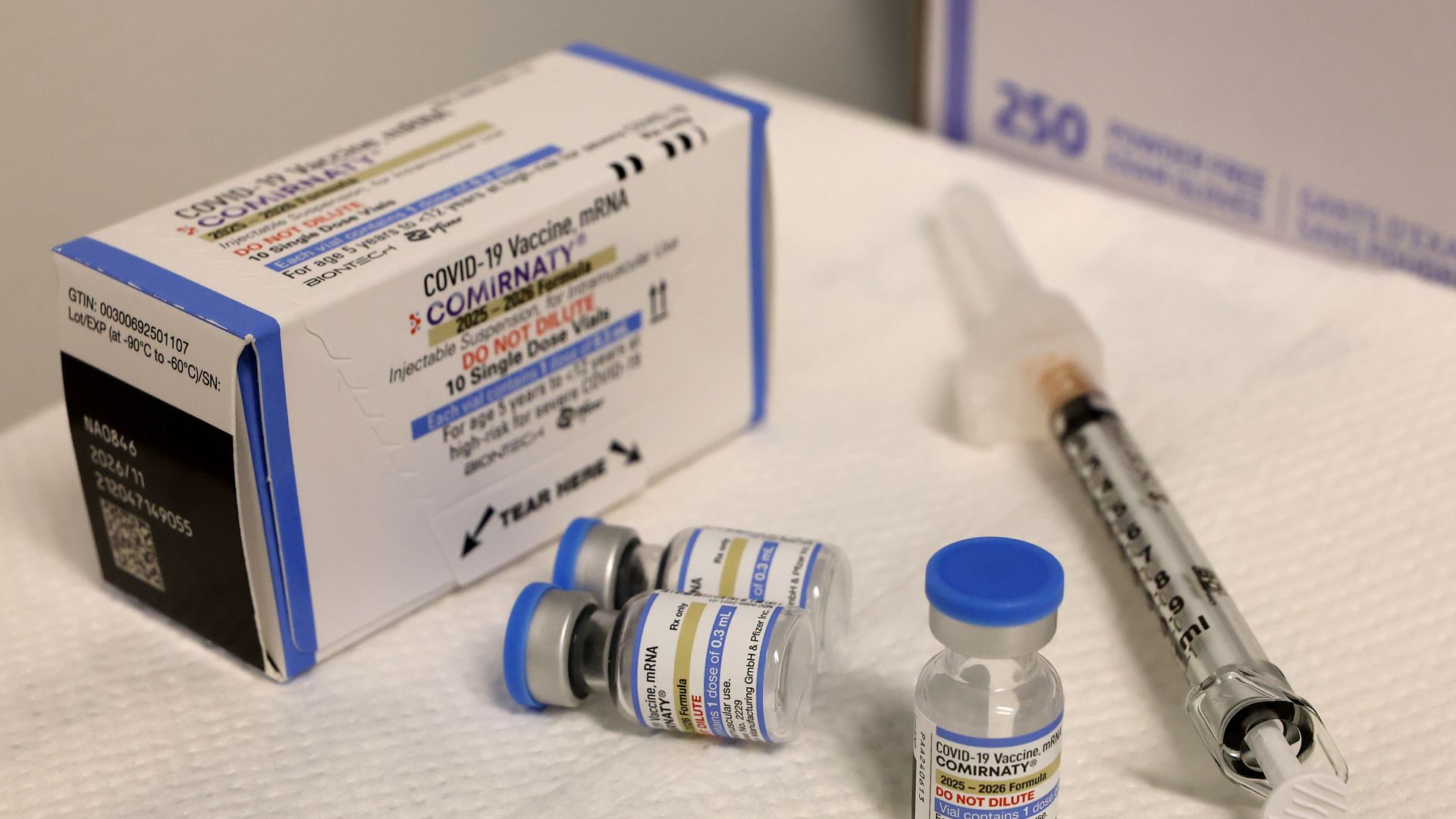
Last year's COVID-19 vaccine was 40% effective against hospitalization and 79% effective against death or the need to ventilate patients to help them breathe, CDC researchers wrote this week in JAMA Network Open.
Why it matters: The findings suggest that COVID shots offered protection against severe illness during the 2024-2025 season, when multiple JN.1 variants were circulating.
- The Trump administration and vaccine critics are now at odds over whether to remove COVID vaccines from the market entirely.
What they found: The study involving almost 1,900 patients who tested positive for the virus and 6,605 uninfected people in a control group found protection was sustained for at least 3 to 6 months following vaccination.
- About 19% of the patients experienced acute respiratory failure, 17.6% were admitted to the ICU and 8.6% received mechanical ventilation or died.
- Despite the fact the vaccine was recommended at the time for everyone age 6 months or older, overall uptake was just 23% — and 44% among adults 65 or older.
The CDC in October dropped a broad recommendation that Americans age 65 and older get a COVID-19 vaccine.
5. Catch up quick
💉 HHS is developing an AI tool to find patterns in a vaccine monitoring database and to generate hypotheses on the negative effects of vaccines. (Wired)
📺 Hims & Hers is returning to the Super Bowl a year after its controversial ad sparked backlash from lawmakers and pharmaceutical companies. (Modern Healthcare)
☕️ As anxiety about longevity and end-of-life care grows, "death cafes" are part of a movement to make death talk less taboo. (Axios)
Thanks for reading Axios Vitals, and to editors Adriel Bettelheim and David Nather and copy editor Matt Piper. Please ask your friends and colleagues to sign up.
Sign up for Axios Vitals