Axios Vitals

November 17, 2025

Welcome to Monday. Today's newsletter is 1,102 words, a 4-minute read.
⚡️ Join Axios' Caitlin Owens in Washington, D.C., this Wednesday at 5:30pm ET for a conversation on expanding and improving access to health care with Reps. Bob Onder (R-Mo.) and Robin Kelly (D-Ill.). RSVP here.
1 big thing: Crunch time for ACA subsidy deal
The battle over renewing Affordable Care Act tax credits is entering a new phase, with shifting alliances and a tight timetable complicating prospects for any bipartisan deal.
Why it matters: Without an extension by the end of the year, premiums will more than double on average for roughly 20 million Americans on the ACA marketplaces.
- The impact of that increase will put more focus on health costs ahead of the midterms.
Driving the news: The focus of efforts to extend the subsidies is shifting from the bipartisan "gang" of senators who led talks to reopen the government to the Senate Finance Committee, which has scheduled a Wednesday hearing on health care costs.
- Finance Chairman Mike Crapo (R-Idaho) is expected to play a leading role on the GOP side, along with health committee Chair Bill Cassidy (R-La.).
- Finance Ranking Member Ron Wyden of Oregon is a key player on the Democratic side, along with Minority Leader Chuck Schumer.
- A Schumer spokesperson said: "The bill Democrats bring to the floor will be a caucus product."
The big picture: There is plenty of skepticism about a deal getting done in the remaining weeks of the session, since it would take 60 senators to overcome a filibuster.
- If efforts to negotiate an extension go nowhere, Senate Republicans are likely to put forward an alternative plan that would be voted alongside Democrats' bill.
- Prospects are even dimmer in the House and in the White House, where President Trump has suggested sending subsidy money directly to consumers, in the form of a health savings account or flexible spending account.
Between the lines: Democrats, whose starting position is a clean subsidy extension, believe they're on strong political footing heading into an election year when rising costs will be Topic A.
- But if the Democrats want a deal, they'll have to agree to certain changes to the subsidies, which most Senate Republicans say are called for.
Stef W. Kight contributed reporting.
2. Cannabis industry threatened by shutdown deal

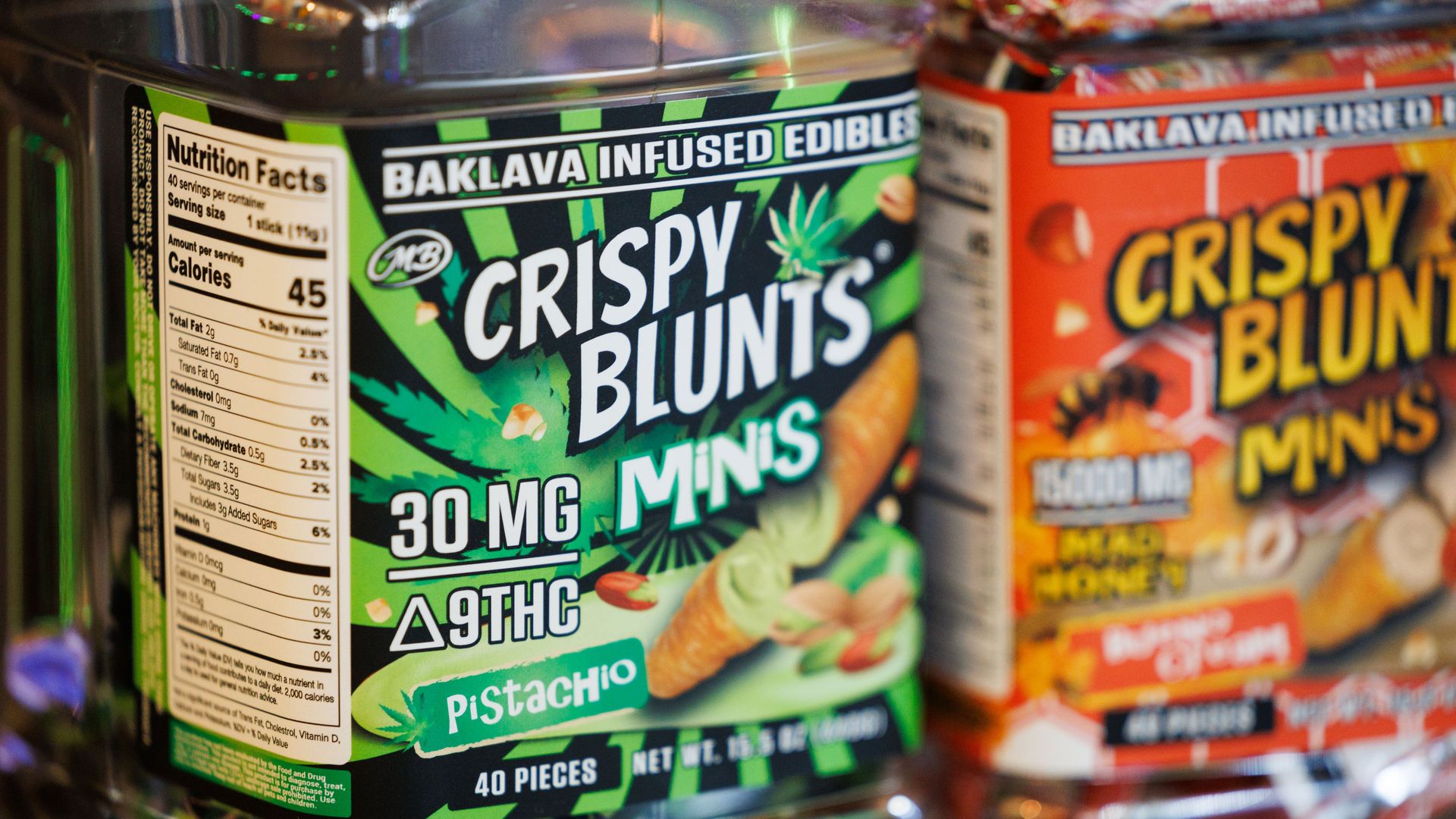
The deal to end the government shutdown dealt a huge blow to the $28 billion legal cannabis industry by criminalizing many hemp-derived products.
Why it matters: States use hemp taxes to fund addiction services, public health programs and county budgets.
Driving the news: The provision reversed the legal sale of hemp products outlined by the 2018 Farm Bill, which included many items containing THC, the psychoactive ingredient in the cannabis plant.
Catch up quick: The Farm Bill allowed THC to be sold in low doses, Carol Moss, a cannabis attorney for Hellmuth & Johnson, told Axios.
- The shutdown deal effectively criminalized the sale of anything with more than 0.4 milligrams of hemp-derived THC — essentially encompassing seltzers, lotions and other products.
What they're saying: Queen Hemp Company's Nicole Burnette, a former teacher who obtained the first industrial hemp license in Mecklenburg County, North Carolina, is hopeful the language will be revised. She says the hemp industry has gone through many ups and downs before, used as a "political football."
- Hemp advocates are expected to lobby intensely to fight the ban.
- But the alcohol and marijuana industry could fight to keep the restrictions intact, since consumers are increasingly choosing THC as a healthier alternative to alcohol.
What we're watching: The spending package funds the government only through Jan. 30, which could present an opportunity to renegotiate.
3. Court to approve settlement in OxyContin case
A federal bankruptcy court this week is due to give a formal sign-off to a $7.4 billion bankruptcy settlement for OxyContin maker Purdue Pharma that will end years of litigation over the company's role in the opioid epidemic.
Why it matters: The plan ends the Sackler family's control of Purdue Pharma and states' litigation against the company.
- It's the result of more than a year of negotiations after the Supreme Court rejected a settlement that would have protected family members from future opioid-related lawsuits.
- The company's assets will be transferred to a new public benefit company called Knoa Pharma, which will be oriented around addiction treatments and addressing the opioid crisis.
The bankruptcy proceedings drew more than $40 trillion in creditor claims against the company.
- Under the revised deal, the Sackler family will contribute as much as $7 billion to be distributed over 15 years to states, communities and tribes that were harmed by the opioid addiction crisis.
- Claims for individual victims of the opioid epidemic are expected to range from $7,000 to $16,000 and will arrive in a lump sum, not parceled out over years like the money for governments, according to the New York Times.
Purdue Pharma, which the Sackler family owned privately, became a focal point of the opioid crisis because of the way it aggressively marketed OxyContin despite rampant abuse of the painkiller.
4. U.S. stuck with D+ in preterm-birth report

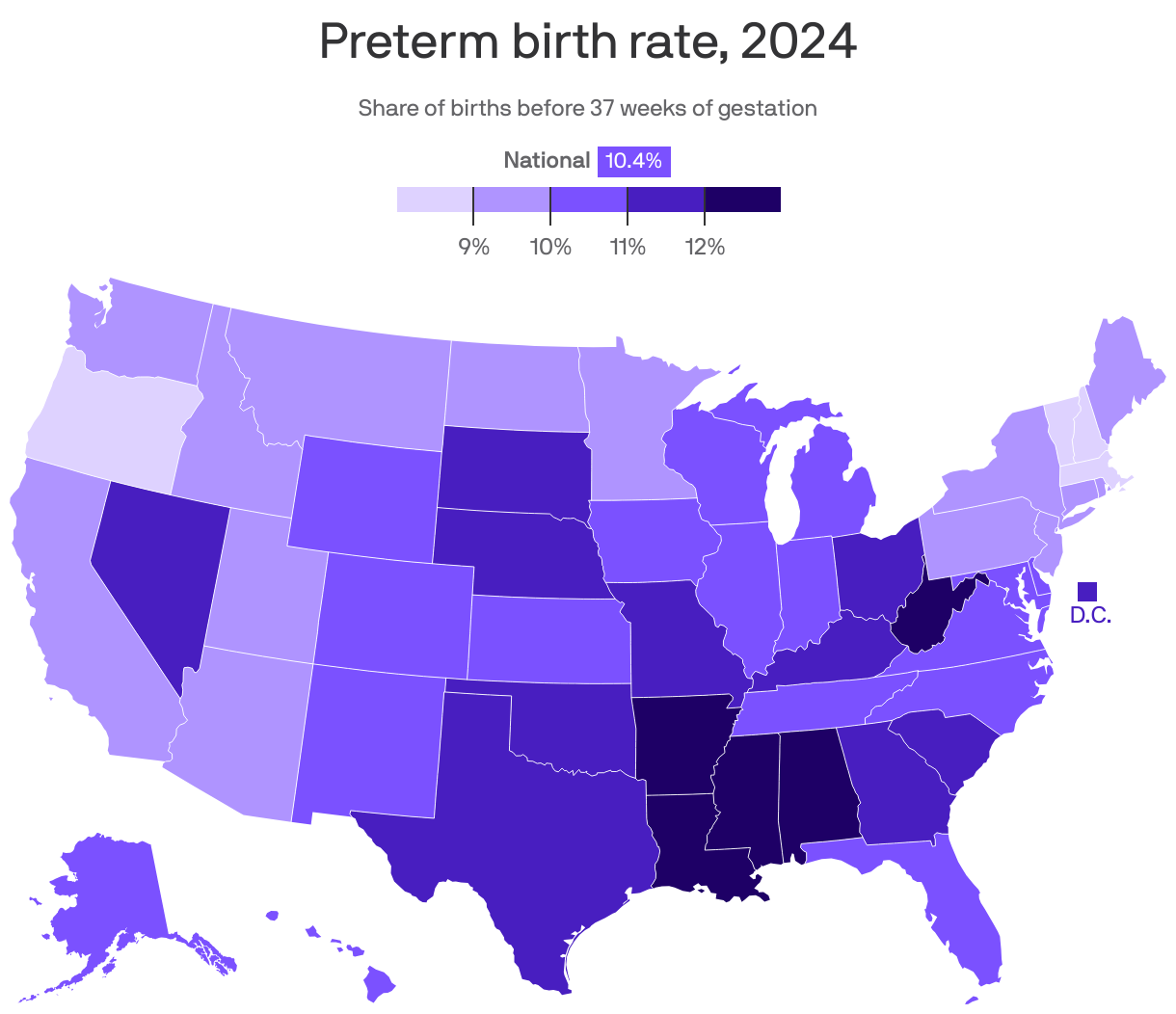
The U.S. earned a D+ for its preterm-birth rate for the fourth straight year in an annual report from March of Dimes, with about 1 in 10 babies born, or about 370,000 births, happening before 37 weeks of gestation.
Why it matters: The report underscores persistent gaps in equity, access and maternal care.
- Many expectant mothers lack access to maternity-care services and may skip prenatal visits and other appointments. A separate March of Dimes report found that more than a third of U.S. counties lack a single obstetric clinician.
By the numbers: Although 19 states improved their preterm-birth percentages, 21 states worsened, per the report, which relies on CDC data.
- South Dakota saw the biggest rate decrease (10% lower), while the District of Columbia saw the steepest rate increase (8% higher).
- New Hampshire received the best grade: an A- for its 7.9% preterm-birth rate. And Mississippi got the lowest: an F for its 15% rate.
What we're watching: Whether funding cuts from the GOP budget law lead to more maternity-care deserts across the country.
5. While you were weekending

👀 Trump administration officials have discussed scaling back the role of FDA commissioner Marty Makary amid concerns over how he's leading the agency. (WSJ)
🏛️ Senate health committee Chair Bill Cassidy and Sen. Jeanne Shaheen (D-N.H.) laid out opposing approaches for how Congress should address expiring ACA subsidies and the urgency of extending the credits. (Politico)
🚩 The FDA added its strongest warning to a gene therapy for Duchenne's muscular dystrophy that's been linked to two patient deaths. (AP)
Thanks for reading Axios Vitals, and to editors Adriel Bettelheim and David Nather and copy editor Matt Piper. Please ask your friends and colleagues to sign up.
Sign up for Axios Vitals