Looming THC ban could kill small businesses in North Carolina

Add Axios as your preferred source to
see more of our stories on Google.
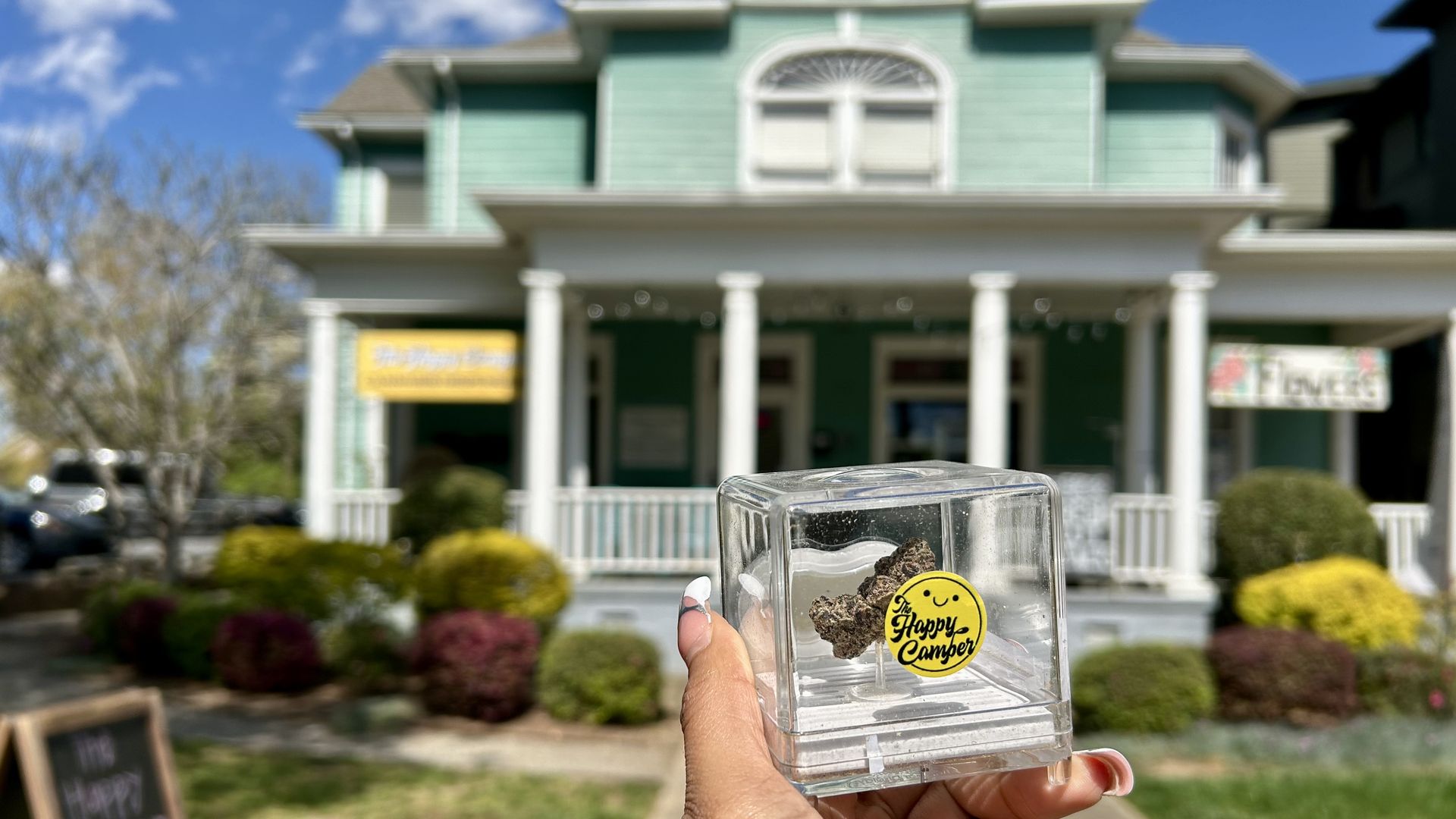
Photo: Alexis Clinton/Axios
Many small businesses could be forced to shutter if an unexpected provision in the federal government funding bill takes effect as planned in November 2026.
Why it matters: North Carolina companies — such as Crowntown Cannabis or Happy Camper — see their only hope as advocating for a less restrictive law, but the clock is ticking.
"When I go to sleep tonight, we'll have one less day," Crowntown owner Michael Sims tells Axios. "The anxiety is real. I can't lie and tell you my wife and I haven't shed some tears in the last 24 to 48 hours."
- Sims says he has 100 employees who depend on him for a paycheck. He calls this looming reversal of the 2018 Farm Bill "100% an industry killer."
Catch up quick: The provision criminalizes and bans the sale of any product with more than 0.4 milligrams of hemp-derived THC — essentially encompassing all products on the market, from seltzers at your local brewery to "grandma's lotion that has CBD in it," Sims says.
- Republicans tucked the provision into the spending bill, which President Trump signed on Wednesday, at the last minute. The bill ended the longest-ever federal government shutdown, which left thousands of federal workers without pay, disrupted airport operations and paused Supplemental Nutrition Assistance Program (SNAP) benefits.
- Happy Camper's Michael Angelicola argues these important issues shouldn't be packaged with a bill that "regulates an industry."
- "They used some of the grimiest tactics you could possibly do to push an agenda," he says.
What they're saying: Queen Hemp Company's Nicole Burnette, a former teacher who obtained the first industrial hemp license in Mecklenburg County, is hopeful the language will be federally redefined again before the deadline. She says the hemp industry has gone through many ups and downs before, used as a "political football."
- "I'm not going to freak out yet," Burnette says. "As evolved as it's become and the number of different businesses that have popped up from it — I just don't see them shuttering an entire $28 billion industry over this."
State of play: Hemp advocates are expected to lobby intensely to fight the ban.
- But the alcohol and marijuana industry could fight to keep the restrictions intact, as consumers are increasingly choosing THC as a healthier alternative to alcohol.
- The spending package funds the government only through Jan. 30, which could present an opportunity to renegotiate.
The intrigue: Although federal law supersedes state law, North Carolina law regulating THC is still among the most lax in the nation.
- Marijuana remains federally illegal. But in states where it's being sold, federal enforcement is rare.
Yes, but: UNC's School of Government professor Phil Dixon says this federal change will still restrict North Carolina's industry. Banks will treat hemp proceeds as illicit money proceeds, and products can't be shipped across state lines under the forthcoming rules.
- "It's possible a state could still try and keep the hemp industry alive as it stands now after the federal ban," Dixon says, "but even then, it would be massively altered."
- Dixon says lawyers would likely advise business owners that they'd be operating at their own risk — "and given those risks, my speculation is that you would see a lot of people just move on to a different business."
Between the lines: North Carolina lawmakers have been debating and proposing state-level regulations for the hemp industry. Right now, there are no limits or age restrictions on any cannabinoids with psychoactive effects, including delta-9 products.
- Jeff Jackson, North Carolina's attorney general, was one of 39 state attorneys general who signed a letter on Wednesday asking Congress to outlaw intoxicating hemp products at the federal level. He's previously said unregulated THC products are currently too easy for children to access.
- Business owners tell Axios they're in favor of THC regulation, like dosage limits, but not to the extent of the Washington agreement.
The bottom line: "If I have to leave anybody any message, it is: get involved," Sims says. "Start writing your senators, your house representatives, politely, professionally, tell them what this plant means to you."