Axios Vitals

October 22, 2024


Happy Tuesday! Today's newsletter is 939 words or a 3.5-minute read.
📡 Tune in here starting at 2pm ET to hear conversations with Ro CEO Zach Reitano, Peloton's Robin Arzón and more top dealmakers live from Axios BFD in New York.
1 big thing: Better vibes for digital health deals

After two years in the doldrums, digital health deals are showing signs of life, with venture capital firms making more focused bets and interest rate cuts rekindling some of the COVID-era optimism around the sector.
Why it matters: The pandemic experience was supposed to be a boon for direct-to-consumer disease treatments, digital therapeutics and decentralized care.
- But adoption turned out to be much slower than expected, and massive failures such as Pear Therapeutics sent investors scrambling for the exits.
The big picture: The outlook could be improving for a few digital health companies — especially those offering novel uses of artificial intelligence.
- "Certain things are getting funded. Certain things are not getting funded. It's just a much tougher operating environment out there," Evercore ISI analyst Elizabeth Anderson told Axios on the sidelines of the annual HLTH conference in Las Vegas.
- After dealmaking hit its nadir last year, insiders say they are seeing more realistic valuations of companies and more signs that venture capital is flowing to startups that can demonstrate better outcomes, cheaper delivery of care or both.
A growing number of publicly traded digital health companies are going private or being bought out in response to reporting and regulatory pressures, per Rock Health.
- Others are drawing attention for how they address high-cost specialty care, manage complex populations, boost mental health or deliver value-based care with digital tools.
Yes, but: A lot of investors are shying away from tools sold to providers saddled with rising health costs and instead turning to pharmaceuticals or payers.
- Health systems and their investment arms that are placing bets are looking hard for clear evidence they'll get a return on their investment, especially when it comes to the glut of companies claiming to have innovative AI solutions, said Todd Schwarzinger, partner at Cleveland Clinic Ventures.
2. Infant death rates rose in months post-Roe


Infant death rates were higher than expected for several months after the Supreme Court struck down the federal right to abortion, with most of the increase coming from infants with birth defects, researchers reported on Monday in JAMA Pediatrics.
Why it matters: It's the latest evidence suggesting infants born in states with more abortion restrictions are likelier to die before they're 1 year old.
- The new findings potentially indicate that frail fetuses were more often carried to term following the implementation of state abortion curbs, the Ohio State University epidemiologists wrote.
What they found: A review of infant mortality trends for the 18 months after the Supreme Court's Dobbs decision concluded there were an average of 247 more deaths in October 2022, March 2023 and April 2023, corresponding to a 7% absolute increase in infant mortality.
- There was a 10% increase in infant mortality with birth defects, which can cover heart abnormalities, spina bifida and other disorders.
- Infant mortality wasn't lower than expected for any month after the Dobbs decision, in June 2022.
The findings track with earlier research showing a spike in infant deaths in Texas after the state in 2021 enacted a strict abortion ban with no exceptions for birth defects, the researchers wrote.
3. Big gender gap seen in health center visits
Women visit community health centers at almost double the rate of men, according to data the CDC compiled from 2022.
Why it matters: The report adds to the evidence that women are likelier to be proactive about their health — and their family's health.
- Still, while women tend to live longer than men, they do so in worse health, research shows.
The big picture: About 445 out of every 1,000 adult women visited federally qualified health centers in 2022, the CDC found.
- But just 249 out of every 1,000 men went to a health clinic that year.
- The rates are based on a sample of more than 4.6 million visits to 64 health centers in every state.
Federally qualified health centers get government funding to provide care in medically underserved areas. The clinics care for patients regardless of their ability to pay.
- 18% of health center patients are uninsured and 62% have public insurance like Medicare or Medicaid, according to the National Association of Community Health Centers.
4. IV fluid airlift underway to relieve shortages
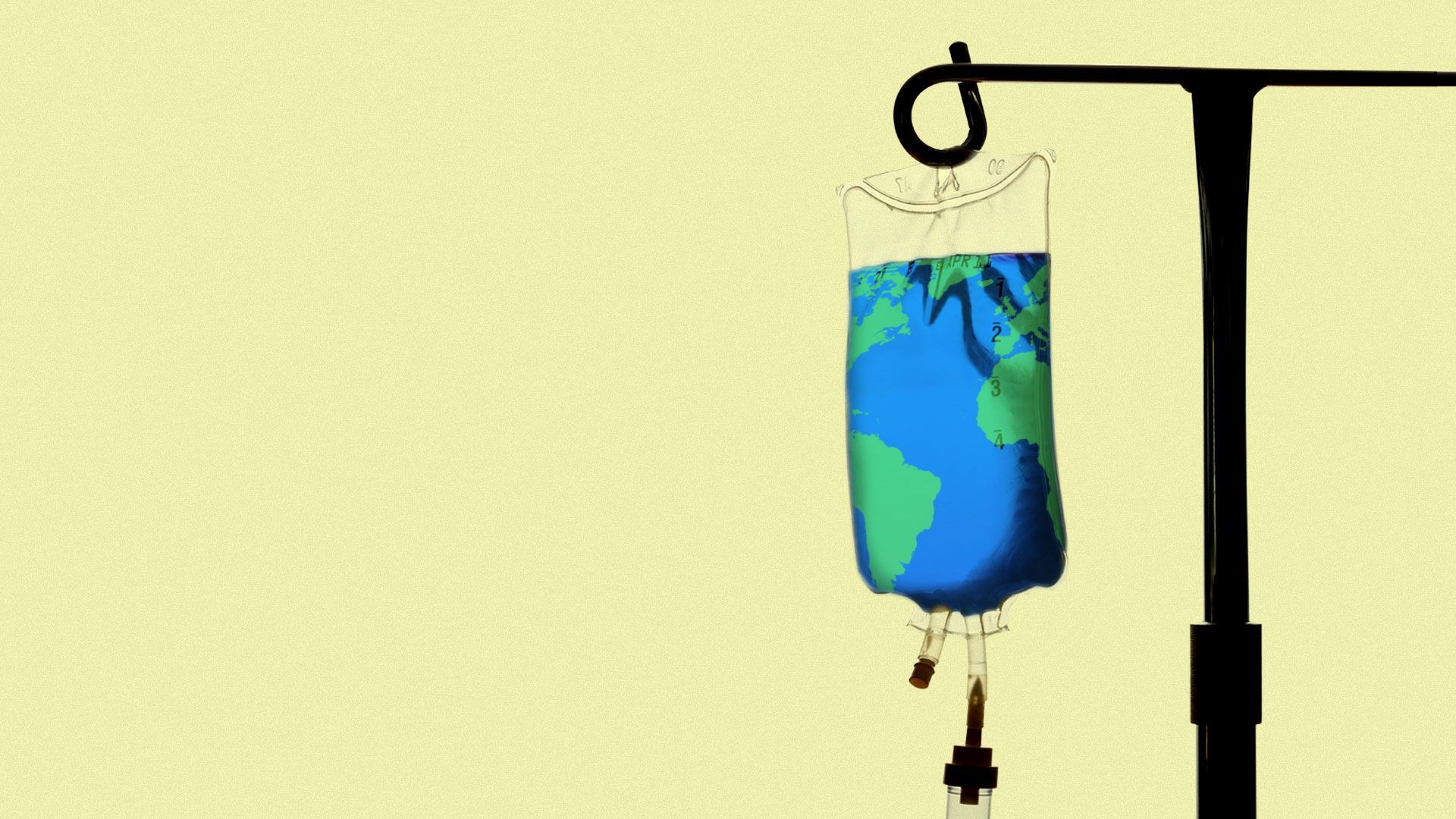
IV fluids from as far away as China are being flown to the U.S. to alleviate nationwide shortages stemming from hurricane damage to a key manufacturing plant in North Carolina.
Why it matters: Hospitals now have 50% more IV fluid available to them than immediately after Hurricane Helene swamped Baxter International's North Cove manufacturing site in Marion, North Carolina, per HHS. But providers expect shortages to last weeks longer.
State of play: The first IV fluids imported from Baxter facilities in other countries reached the U.S. on Saturday, HHS said.
- The FDA has authorized temporary importation from Baxter plants in Canada, China, Ireland and the U.K., the company said. Baxter is working with the FDA to authorize imports from its other international sites.
- Baxter, working with HHS's Administration for Strategic Preparedness and Response, expects to deliver nearly 18,000 tons of products from Europe and Asia by the end of the year.
- The FDA has also added more IV solutions to the drug shortage list, which allows for the distribution of compounded substances
Meanwhile, pre-hurricane staffing levels will resume at Baxter's North Carolina plant this week, the company said on Monday.
5. Catch up quick
⚖️ Eli Lilly sued three medical spas and online vendors for selling products that claimed to contain the main ingredient in its popular weight-loss drug Zepbound. (Reuters)
🪧 Nearly 2,400 Kaiser mental health professionals went on strike after management turned down proposals that the union said would stanch employee turnover and improve care. (Los Angeles Times)
🏥 Why hospital gowns are so ugly, and whether it's intentional. (NYT)
Thanks for reading Axios Vitals, and to senior health care editor Adriel Bettelheim, managing editor Alison Snyder and copy editor Matt Piper. Please ask your friends and colleagues to sign up.
Sign up for Axios Vitals