Axios Twin Cities

July 07, 2026

Goooood morning!
- Mostly sunny with a high of 90.
🎂 Happy birthday to our members Royston (Roy) Kruse and Lynn Fleming!
🤝 Join our members in supporting trusted local journalism. Become one today.
Today's newsletter is 960 words — a 3.5-minute read.
1 big thing: Why nobody is building shopping centers
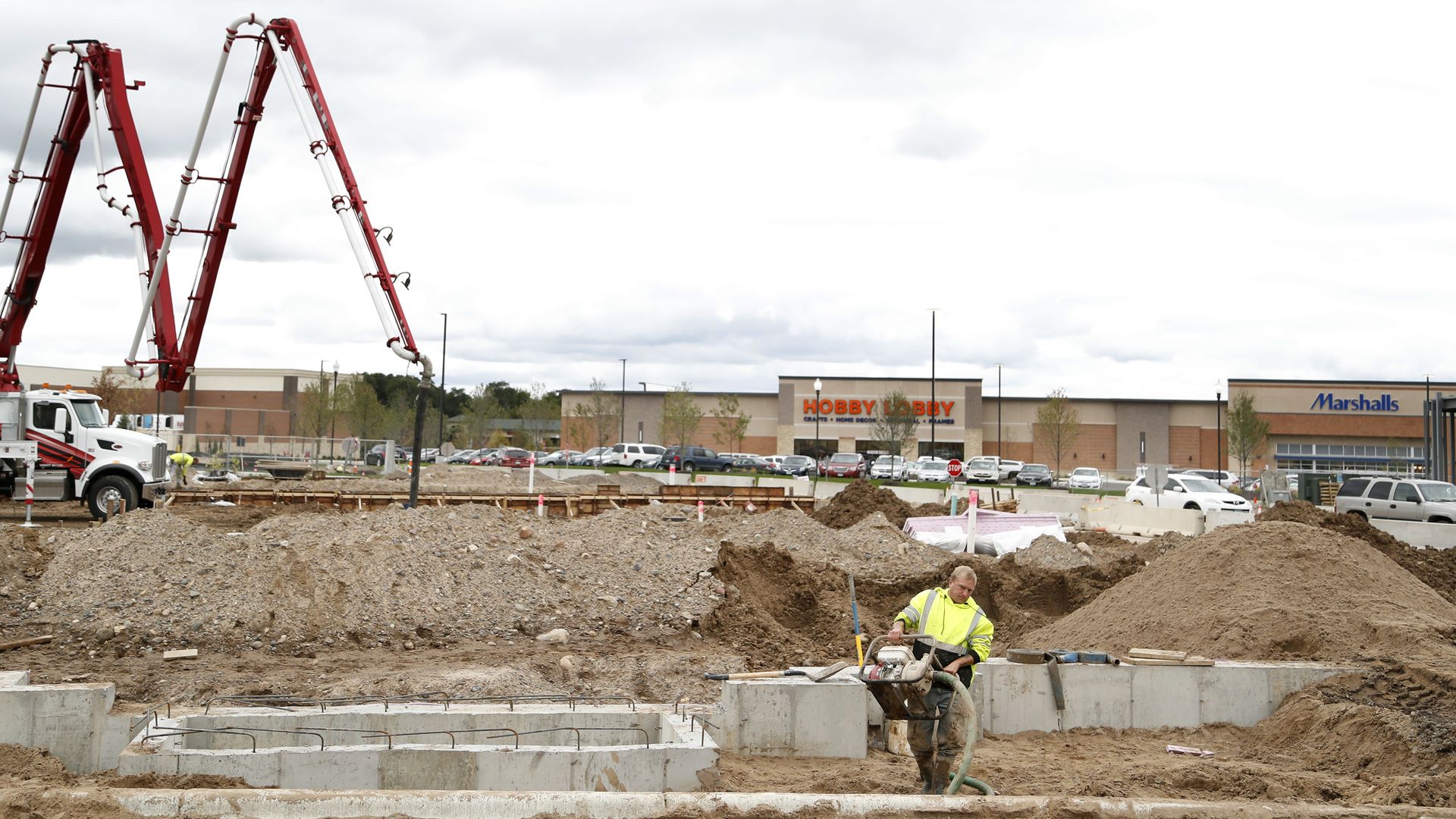
It's been nearly 10 years since a large-scale shopping center opened in the Twin Cities, and despite a growing appetite for more space, there are no imminent plans for another.
Why it matters: Retailers and restaurants looking to open shop are feeling the pinch. A recent JLL report says Twin Cities retail rents last quarter grew by 6.7% year-over-year, the largest hike in the nation.
What they're saying: "It's gotten more and more difficult for retailers to execute on their growth plans with a lack of space," says Johnny Reimann, a broker for Mid-America Real Estate who helps retailers and restaurants find space.
- He notes that the Twin Cities ranks near the bottom in terms of new retail construction in the U.S.
Flashback: Two big shopping centers opened in 2016 and 2017: Eagan's Central Park Commons and Woodbury's City Place.
- Since then, developers have built smaller strip malls and redeveloped other shopping centers, but nothing as large-scale as the 434,000-square-foot Central Park Commons.
Between the lines: It's an uneven landscape. Hundreds of thousands of square feet are vacant in downtowns, and landlords are basically giving away skyway storefronts. Indoor regional malls have also struggled.
- But it's much harder to find space in the suburbs. The type of shopping center in high demand is called a "power center" — usually a few hundred thousand square feet of open-air storefronts surrounded by surface parking.
- It's typical to see them anchored by a large grocer or general merchandiser, such as Target.
Friction point: The problem, says JLL real estate broker Ted Gonsior, is that land and construction costs have gotten so expensive that developers need to charge high rents to make the finances work. But those rents are too high for what many midsize retailers are able to pay.
Zoom in: Reimann agrees the economics are out of whack, but should the market balance out again, he points to Rosemount, the northwest part of Maple Grove, northeast Blaine and Lakeville as the areas most ripe for a big development.
- "If you live on the outer edge of the growth in Rosemount ... you would have to drive 20 minutes, give or take, to get to sizable pockets of retail."
The bottom line: Reimann says cities could reduce regulations and property taxes to make it easier for developers to build.
- "If we want to see continual growth and new stores, then we have to make our market a place where it's affordable for people to do deals," Reimann says.
2. The Spoon: Goodbye Whiteys
🍔 St. Paul Midway's White Castle has closed its doors, marking the first time in a century that the neighborhood doesn't have access to the chain's sliders. (Minneapolis/St. Paul Business Journal)
🕯️ Yesterday marked the 10th anniversary of the death of Philando Castile, a beloved St. Paul cafeteria worker who was shot and killed by a St. Anthony police officer during a traffic stop. (MPR News)
🚧 Ongoing road construction on 394 between downtown Minneapolis and Golden Valley will shift tomorrow, providing more lanes heading out of the city while reducing lanes for motorists headed toward downtown. (Star Tribune)
A 16-year-old boy was killed in a Brooklyn Park shooting Sunday night. (KARE 11)
3. How Minnesota booze taxes stack up

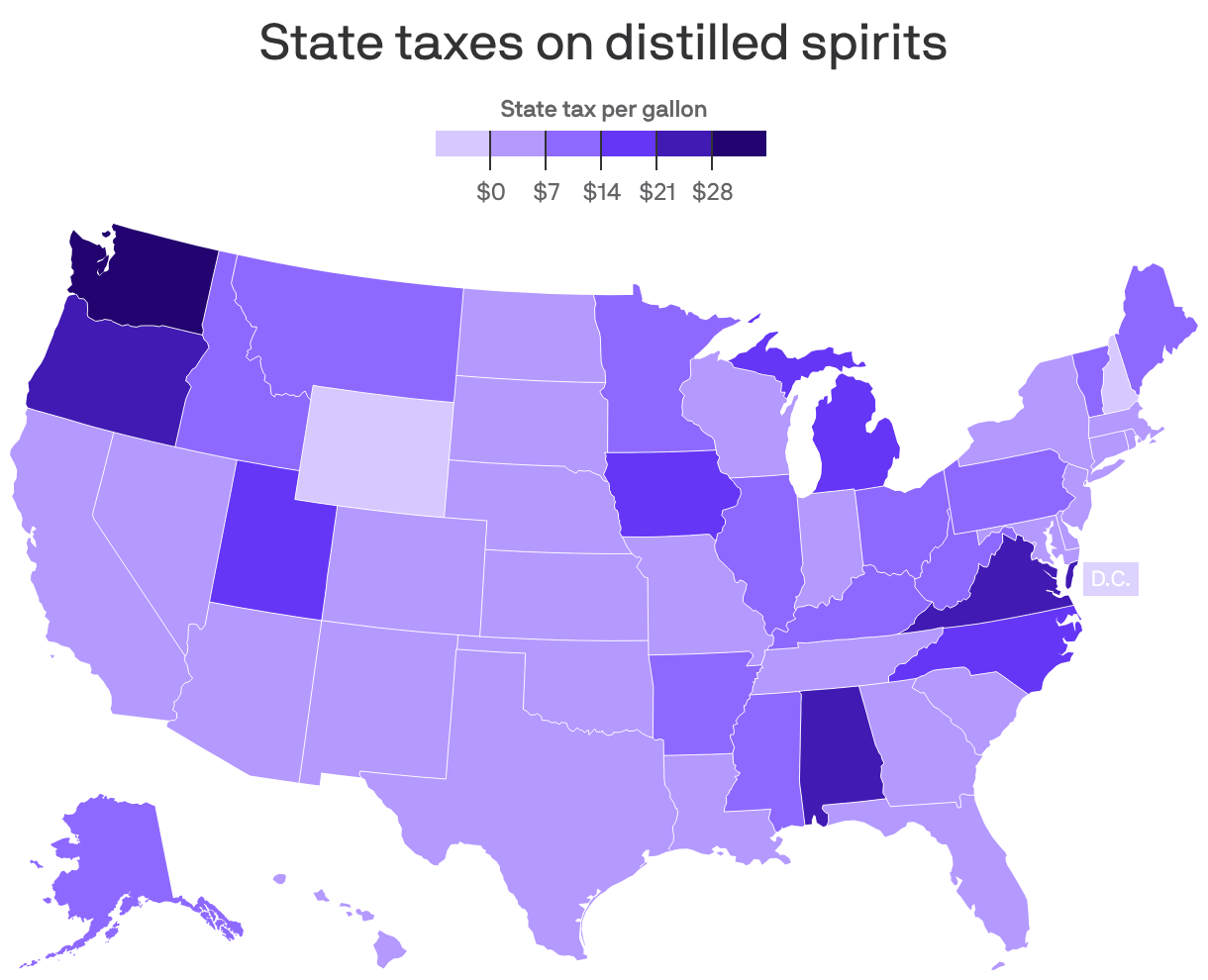
Open embedded content from datawrapper.dwcdn.netThose summer cocktails cost a little more in Minnesota than most other states.
The big picture: Alcohol taxes vary dramatically from state to state, meaning the same can of beer, glass of wine or fancy cocktail can cost significantly more depending on where you order it.
Zoom in: Minnesota has the 11th highest taxes on beer, 17th highest on wine and 19th highest tax on spirits, according to Tax Foundation, an independent policy research organization.
Zoom out: Alcohol taxes don't follow a single regional pattern. Each state weighs its own needs and interests.
- Washington taxes distilled spirits far more heavily than any other state — $36.68 per gallon compared to the median state spirits tax of $5.98.
What we're watching: Distilled spirits have topped beer and wine as the U.S. leader in alcohol sales for the past four years, according to taxfoundation.org. That place atop the sales charts is driven by newer products like hard seltzers and ready-to-drink cocktails.
- But the alcoholic beverage industry as a whole has been slumping, with more consumers opting for nonalcoholic beverages, or at least fewer alcoholic ones.
- The craft beer industry, for example, has been downsizing significantly.
4. Hunting for Detroit Lakes' trolls
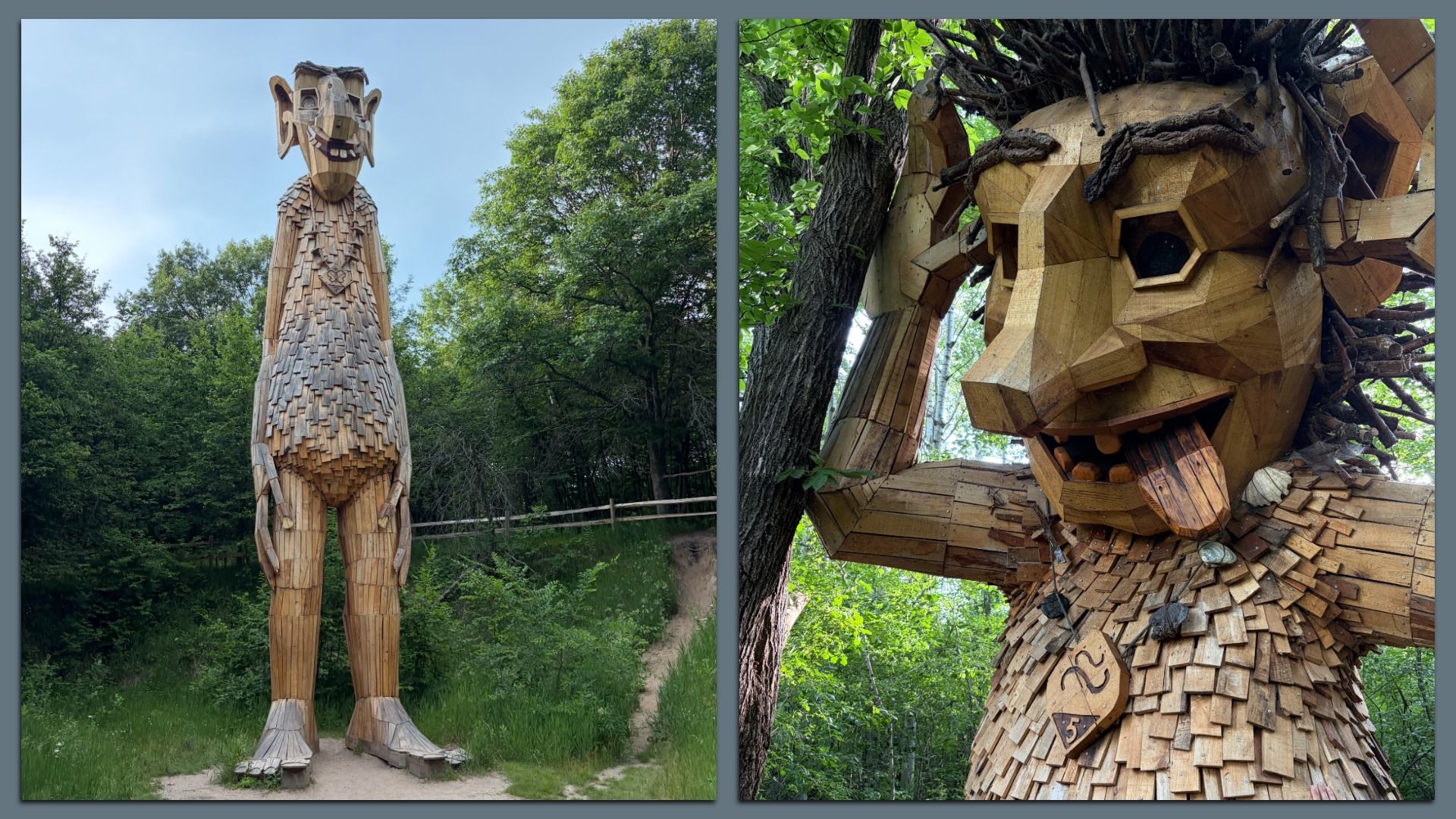
Nick here. My wife and I took our three kids to Detroit Lakes as a one-day side excursion while camping in Maplewood State Park over the holiday weekend.
We did it to hunt for the city's trolls, which were built by Danish recycling artist Thomas Dambo and installed in 2024.
- We found five of the six massive creatures scattered about the area, including the 36-foot-tall Long Leif.
We also checked out the Ortenstone Gardens, which not only had a troll, but an impressive lineup of other sculptures in the rolling prairie land.

Why it matters: This was a great way to get our kids to take short hikes through the woods to find the trolls.
If you go: Detroit Lakes has a 1-mile beach that is top notch by Minnesota standards.
- It's a nice place to cool off after troll hunting, and there's plenty of lakeside restaurants.
Congratulations to reader Anne S., randomly selected for a tote bag after she correctly identified yesterday's photo trivia as St. Paul's Swede Hollow Park. The rocks in the foreground are "Swedehenge."
🏖️ Kyle is on vacation while Torey and Audrey are on sabbatical.
😢 Nick is listening to this song.
This newsletter was edited by Larry Graham.
Sign up for Axios Twin Cities