Axios from Tel Aviv
January 04, 2023

Welcome back to Axios from Tel Aviv.
- Happy New Year! This week's edition (1,958 words, 7½ minutes) starts with the heightened tensions over Israeli National Security Minister Itamar Ben-Gvir's visit to a sensitive Jerusalem holy site yesterday.
- It also brings you a scoop on why Morocco hasn't opened an embassy in Tel Aviv and gives an update on the political paralysis in Lebanon.
1 big thing: New Israeli government already facing condemnation
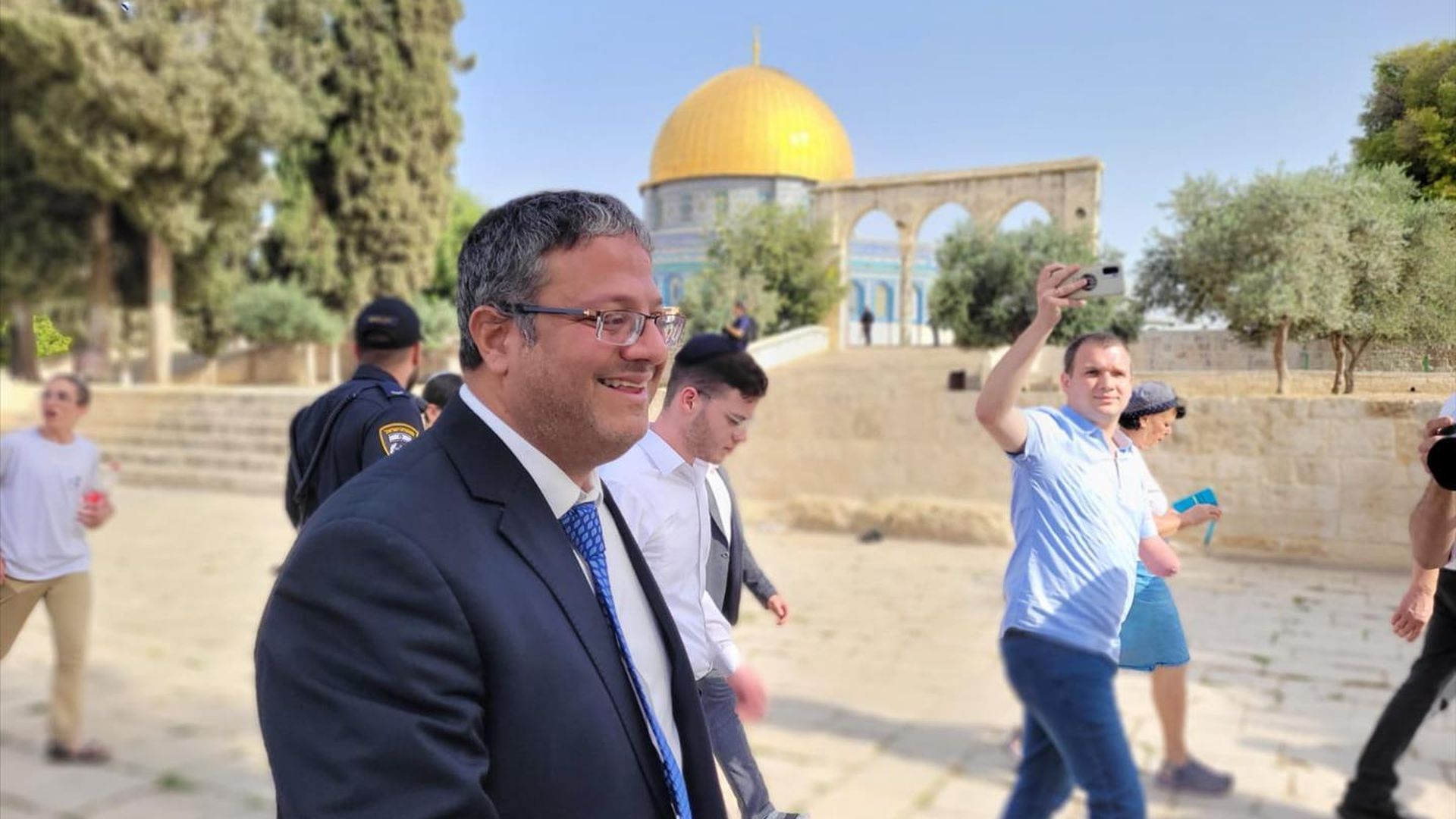
Ben-Gvir visits the Temple Mount on Jan. 3. Photo: Handout/The Temple Mount Directorate
The new Israeli government is facing international condemnation less than a week after being sworn in after Israel's new radical right-wing minister of national security Itamar Ben-Gvir visited the Al-Aqsa Mosque compound in Jerusalem yesterday.
The latest: The UN Security Council is scheduled to hold an emergency meeting, pushed for by Jordan and the Palestinians, on Ben-Gvir's visit to the holy site.
- The UAE, who represents the Arab League at the Security Council, and China asked for the emergency meeting on behalf of the Palestinian Authority and Jordan, Israeli and U.S. officials said.
Catch up quick: Ben-Gvir's visit to Jerusalem's most religiously sensitive site raised tensions in the region.
- The compound is the holiest site for Jews, who call it the Temple Mount, and the third holiest for Muslims, who refer to it as Haram al-Sharif.
- Several rounds of violence between Israelis and Palestinians have erupted over previous incidents at the compound, which is administered by the Jordanian Islamic Waqf and protected by the Israeli police, per the status quo rules.
- According to the status quo, Jews and Christians can visit the site, but only Muslims can pray. In recent years, the status quo has been challenged by a number of Jews who visited the site and conducted unofficial prayers.
Last week, Ben-Gvir was sworn in as the minister in charge of the police responsible for security at the holy site.
- Ben-Gvir, a right-wing extremist who has expressed Jewish supremacist views, has for years advocated to change the status quo on the Temple Mount, stop the activity of the Jordanian Waqf, and even build a synagogue in the compound.
The big picture: The Palestinian presidency and Hamas, as well as several Arab and Muslim countries, condemned Ben-Gvir's visit to the site this week.
- The U.S. said it was "deeply concerned" and that the visit has "the potential of exacerbating tensions and lead to violence."
- The Israeli government claimed several ministers had visited the site before and, therefore, Ben-Gvir's visit wasn’t a violation of the status quo.
- Late Tuesday, a rocket was launched from Gaza toward Israel. The Israeli military said the launch failed and the rocket landed inside the Gaza Strip.
What to watch: The UN Security Council meeting will take place on Thursday at 3pm ET. It is still unclear whether there will be any resolution or statement proposed by any of the council members.
- The Israeli Foreign Ministry sent a cable, obtained by Axios, to the embassies in the capitals of the Security Council member states asking them to lobby the local foreign ministries against holding the meeting and against any possible statement.
- Riyad Mansour, the Palestinian ambassador to the UN, said he is holding meetings with the ambassadors of all Arab and Muslim countries as well as the president of the Security Council to ensure the international community condemns Ben-Gvir and the Israeli government.
2. New Israeli government does damage control in first week
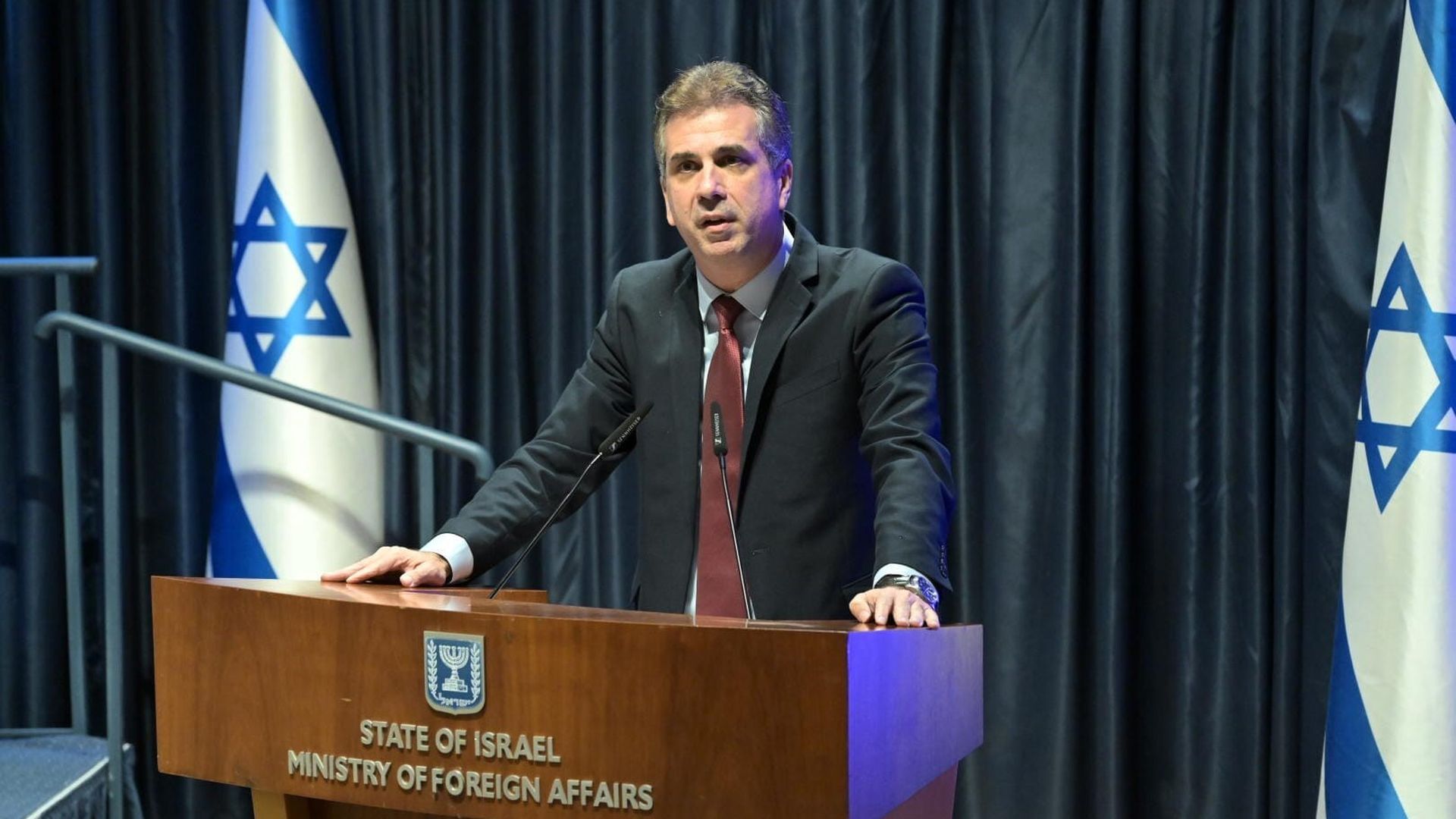
Israeli Foreign Minister Eli Cohen speaks during a press conference in Jerusalem on Jan. 2. Photo: Handout/Israel Foreign Ministry/Anadolu Agency via Getty Images
New Israeli Foreign Minister Eli Cohen's inaugural speech and a phone call he had with his Russian counterpart this week drew criticism inside Israel and from Ukraine and the U.S.
Why it matters: Cohen's remarks hinting that Israel would no longer condemn Russia publicly for the war in Ukraine and his call with Russian Foreign Minister Sergei Lavrov — some of his first moves since taking office last week — raised questions about a possible policy shift toward Russia by the incoming Israeli government.
- "On the issue of Russia and Ukraine, we will do one thing for sure — speak less in public," he said.
Driving the news: In his speech on Monday, Cohen said he was going to draft a “responsible” new policy on the war in Ukraine and stressed the Foreign Ministry “will prepare a detailed presentation to the Security Cabinet on this issue."
- Cohen spoke to Lavrov on Tuesday in the first communication between Israeli and Russian foreign ministers since the Russian invasion of Ukraine began last February.
- The call and Cohen's speech were interpreted by some as an Israeli policy shift on Ukraine toward a more pro-Russian line.
Catch up quick: Israel has largely taken a careful approach to the war, fearing that certain Israeli statements and actions could push Moscow to limit Israel’s freedom of operation against Iranian targets in Syria.
- Former Israeli Prime Minister Naftali Bennett attempted to mediate between Russia and Ukraine early in the war.
- When then-Foreign Minister Yair Lapid became prime minister last June, he took a much more pro-Ukraine line in public but still refused to supply Ukraine with a defensive weapon system.
Meanwhile, Prime Minister Benjamin Netanyahu, who was not in power when Russia began its invasion of Ukraine, for months avoided criticizing Russian President Vladimir Putin, with whom he had a very close relationship for many years.
- But after his bloc won the Israeli elections in November, Netanyahu voiced criticism of Putin and his decision to invade Ukraine. He also told U.S. media that he would consider supplying weapons to Ukraine once he is in office.
What they're saying: Cohen’s comments this week immediately drew a lot of criticism on social media, including from one of Israel’s staunchest allies in Congress, Sen. Lindsey Graham (R-S.C.).
- "The idea that Israel should speak less about Russia’s criminal invasion of Ukraine is a bit unnerving," Graham tweeted on Monday.
- "To stay quiet about Russia’s criminal behavior will not age well," he added.
The other side: Israeli officials, appearing to do damage control on Tuesday, stressed that it was Lavrov who requested the call with Cohen.
- A senior Israeli official also said Cohen's speech didn’t mean to imply that Israel shouldn’t criticize Russia publicly. Instead, Cohen's remarks were aimed at former Prime Minister Bennett’s mediation efforts, which he conducted in public and not in private, the official said.
Israeli officials also stressed that Cohen briefed Secretary of State Tony Blinken about his intention to speak with the Russian foreign minister.
- The senior Israeli official told me Blinken didn’t object to the call with Lavrov and asked Cohen to pass on a message to the Russian foreign minister. State Department officials didn’t respond to questions about this issue.
3. Scoop: Morocco's new demand for Israel
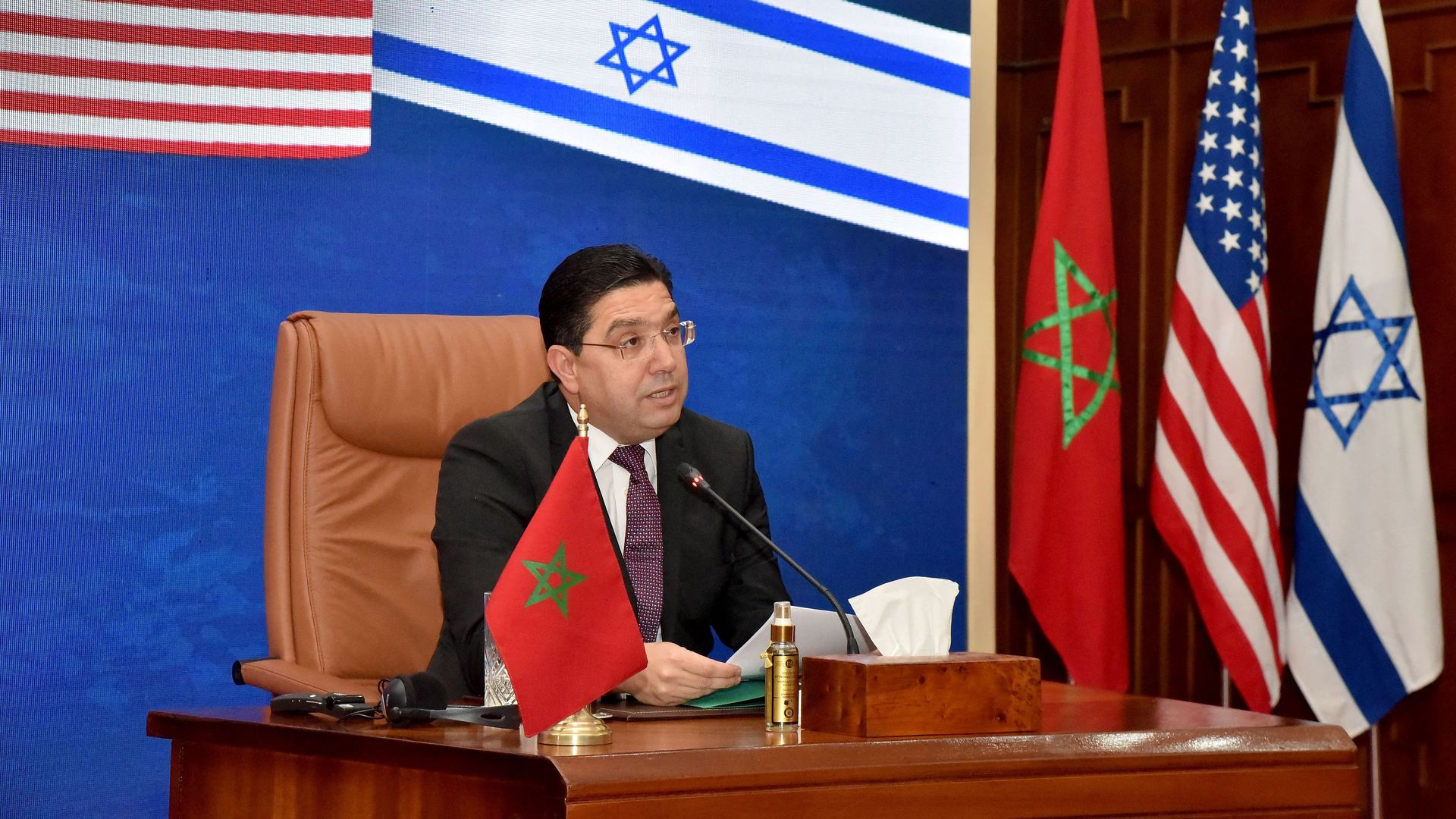
Moroccan Foreign Minister Nasser Bourita takes part in a virtual meeting with his U.S. and Israeli counterparts in his office in the capital Rabat, on Dec. 22, 2021. Photo: AFP via Getty Images
Morocco in recent months has started to link the opening of an embassy in Tel Aviv to formal recognition by the Israeli government of its sovereignty in Western Sahara, four current and former Israeli officials directly involved in the issue told me.
The big picture: Then-President Trump’s recognition of Western Sahara as part of Morocco two years ago was part of a broader deal that included the reestablishment of diplomatic relations between Israel and Morocco.
- Morocco opened diplomatic liaison offices in Israel in lieu of embassies, but in January 2021, King Mohammed VI told Netanyahu in a call that he was committed to opening embassies as part of the next phase of the process.
Flashback: During a visit to Morocco last June, then-Israeli Interior Minister Ayelet Shaked told local media that Israel recognizes Moroccan sovereignty over Western Sahara.
- But the Israeli Foreign Ministry quickly walked back Shaked’s statement, saying “Morocco’s autonomy plan for Western Sahara is a positive development."
- Several weeks later, Israel’s then-Justice Minister Gideon Saar visited Morocco and said publicly that Western Sahara is part of Morocco. But the Israeli Foreign Ministry once again distanced itself from the statement and reiterated its more nuanced position.
Context: The Moroccan government has been locked in a long-standing dispute over the territory with the Saharawi Polisario Front, an armed group in Western Sahara that calls for independence
Behind the scenes: Four current and former Israeli officials told me that in recent months, Moroccan officials have demanded formal Israeli recognition of Western Sahara every time Israeli officials raised the issue of the liaison office upgrade.
- So far, the Israeli government has decided not to engage on this issue, the Israeli officials said.
- The Israeli Foreign Ministry believes the Moroccans are using the recognition issue as a pretext to not open a full embassy in Tel Aviv because of criticism back home, per the Israeli officials.
- The Moroccan Foreign Ministry and the Moroccan liaison office in Tel Aviv did respond to a request for comment.
What’s next: Israeli officials believe the incoming government won’t have a problem recognizing Western Sahara as part of Morocco, pointing to Netanyahu’s hopes to visit the kingdom in the coming months.
4. Lebanon starts the new year without a president
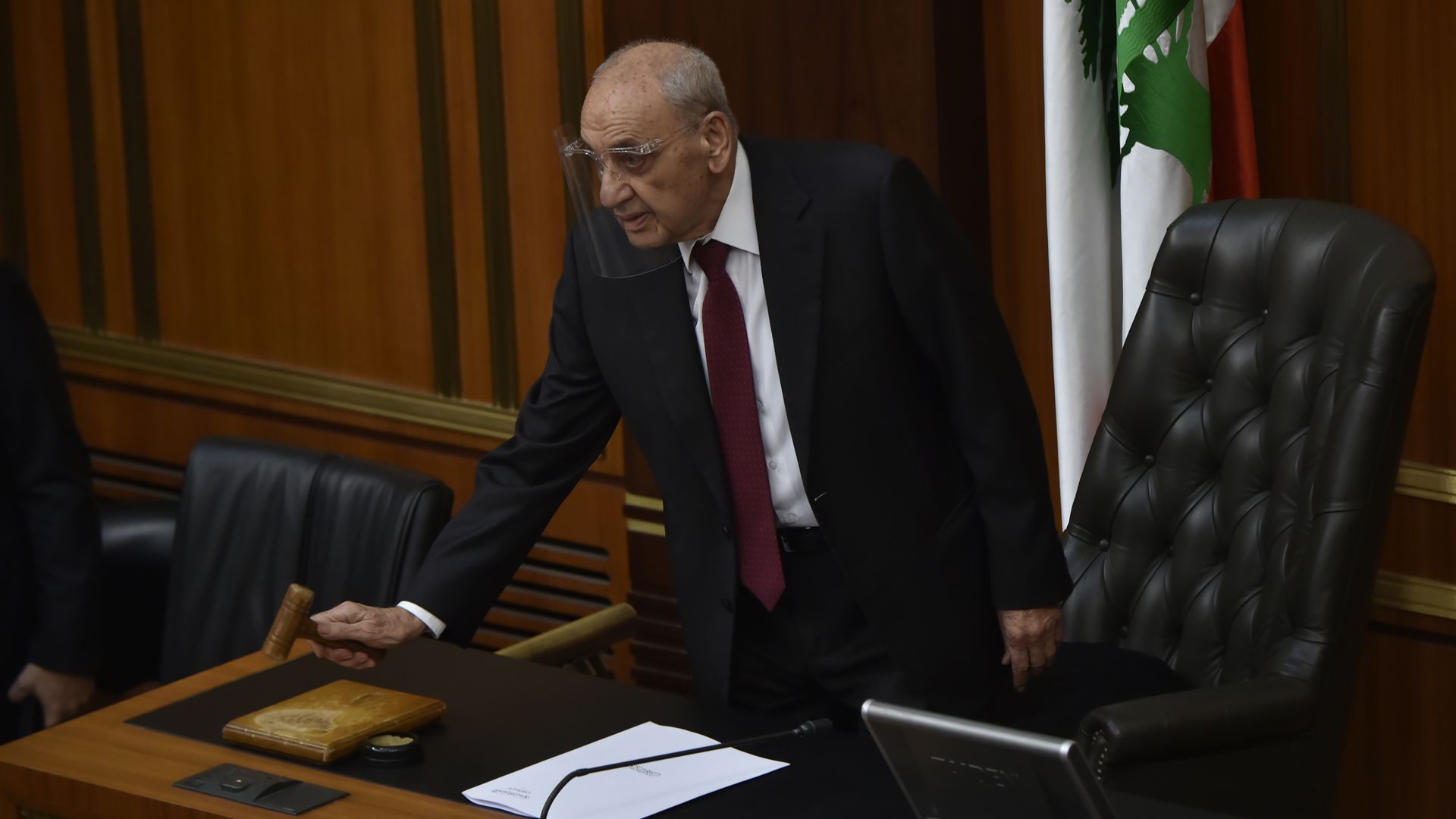
The speaker of the Lebanese Parliament leads the session for the president election in Beirut on Dec. 15. Photo: Hussam Shbaro/Anadolu Agency via Getty Images
Lebanon entered the new year without a president or a fully empowered Cabinet, stalling any progress on the financial reforms needed to bring the country out of an unprecedented economic meltdown, Hanna Davis writes for Axios.
Why it matters: The "only exit out of the crisis" is a billion-dollar bailout package the International Monetary Fund has offered, conditioned on a host of structural and financial reforms, says Sami Nader, the director of the Levant Institute for Strategic Affairs.
- "But without a government and with no president, there is no hope for a deal" on the reforms, he tells Axios.
Catch up quick: Lebanon’s caretaker Prime Minister Najib Mikati, a Sunni Muslim as per the country’s sectarian power-sharing arrangement, has been unable to form a new government since June, largely disagreeing with Maronite Christian former President Michel Aoun over the line-up.
- Aoun left office on Oct. 30, and since then, the country’s parliamentarians, divided along sectarian lines, have failed 10 times to reach a consensus on Aoun's successor.
- Meanwhile, the Lebanese pound has lost over 90% of its value since 2019 and nearly two-thirds of the population now live in poverty.
- The country faces widespread blackouts, severe medicine shortages and frequent stoppages of water supplies.
State of play: Lebanon’s government is largely divided into two camps: one opposed to and one allied with the heavyweight political party and Iran-backed Hezbollah.
- The Zgharta party's Michel Moawad, the presidential candidate who is backed by much of the camp opposed to Hezbollah, has received the most votes, but he's fallen well short of the two-thirds needed to win the first round, L’Orient-Le Jour reported.
- The electoral sessions have been short-lived, with MP walkouts commonplace and many discarded ballots, either blank or with irrelevant names like Martin Luther King and Nelson Mandela.
5. Scoop: Deputy Iran envoy leaving the State Department
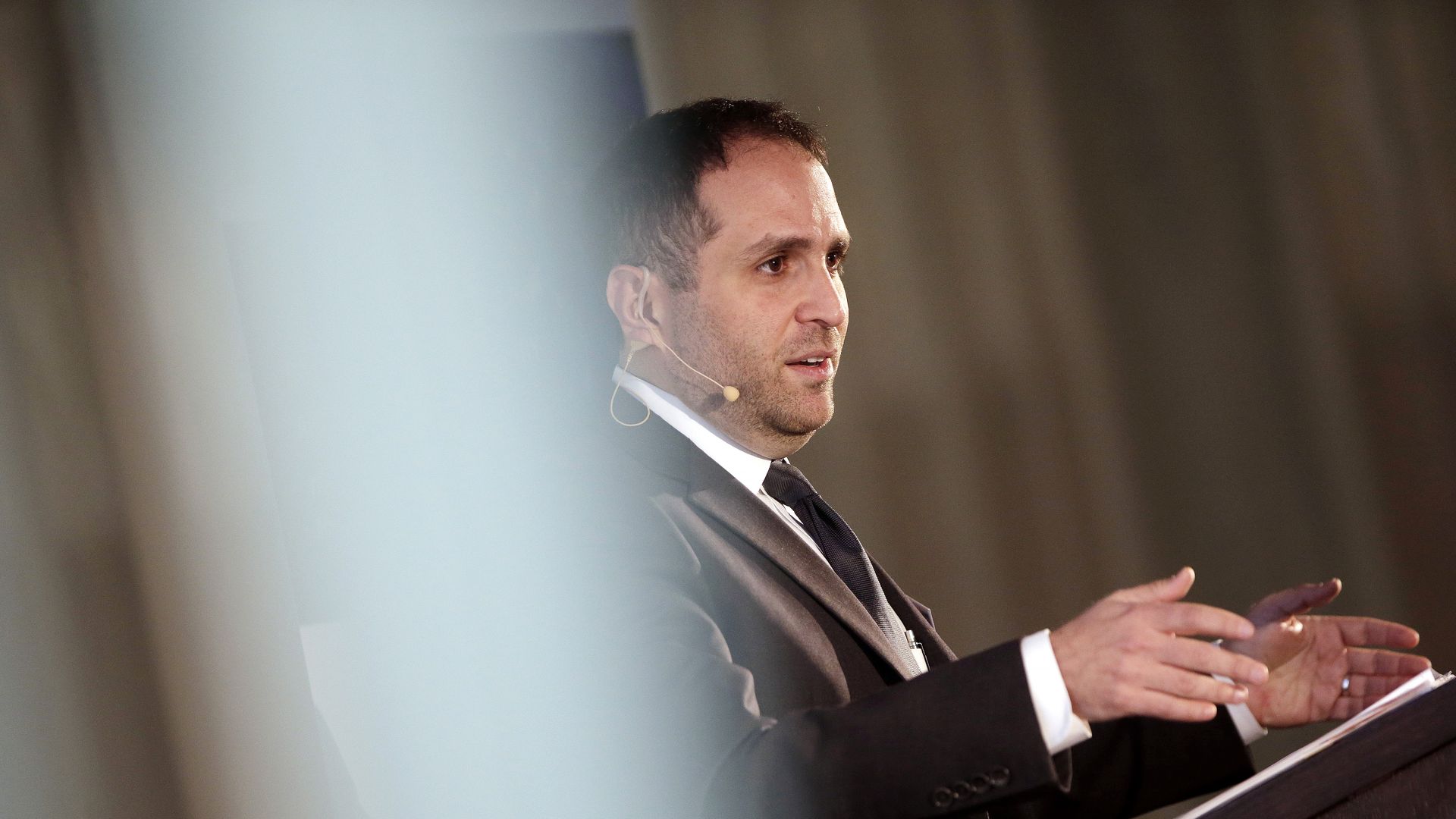
Jarrett Blanc speaks at the Europe-Iran Forum in Zurich, Switzerland, on May 4, 2016. Photo: Matthew Lloyd/Bloomberg via Getty Images
Jarrett Blanc, the U.S. deputy special envoy for Iran, is leaving the State Department Iran team and returning to the Department of Energy to work on nuclear policy-related issues, according to three U.S. officials.
Why it matters: Blanc's departure is yet another sign that the Biden administration believes there is currently no path forward for a return to the 2015 nuclear deal with Iran.
- Blanc was U.S. envoy for Iran Rob Malley’s deputy and a key player in the indirect negotiations with Iran over its nuclear program over the last two years.
Driving the news: In late October, Malley said that the administration is not going to "waste time" on trying to revive the Iran nuclear deal, considering Tehran's crackdown on protesters, Iranian support for Russia's war in Ukraine, and Iran's positions on its nuclear program.
- On the sidelines of an election rally in November, President Biden said that the 2015 nuclear deal with Iran was “dead,” but stressed the U.S. won’t formally announce it, according to a video that surfaced on social media last month.
What they're saying: A senior U.S. official told me that Blanc, a Department of Energy National Nuclear Safety Administration employee, is returning to his home agency after nearly two years on detail to the Department of State “which is a normal personnel move."
- "Jarrett has displayed in the last two years exceptional diplomatic skills, creativity and commitment to promoting U.S. national security interests. … Jarrett will be sorely missed, but the State Department's loss will be the Department of Energy's tremendous gain," the senior U.S. official said.